
BuddhistCatholicContemplativeEvangelicalGeneral ChristianHinduJewishLatter-day SaintMuslimNew VisionsProgressive Christian
Beliefs
- Buddhist
- Catholic
- Contemplative
- Evangelical
- General Christian
- Hindu
- Jewish
- Latter-day Saint
- More Voices
- Muslim
- New Visions
- Pagan
- Progressive Christian
Topics
- Religion News
- Food and Religion
- Sports and Religion
- Religious Art
- Religious Music and Entertainment
- Religious Events
- History and Religion
- Style and Religion
- Politics and Religion
- Women in Religion
- Recreation Outdoors and Religion
- Business Finance and Religion
- Careers Workplace and Religion
- Education and Religion
- Family Parenting and Religion
- Health Fitness and Religion
- Home and Religion
- Relationships and Religion
- Technology and Religion
- Travel and Religion
Columnists
- Buddhist Columnists
- Business Finance and Religion Columnists
- Careers Workplace and Religion Columnists
- Catholic Columnists
- Contemplative Columnists
- Education and Religion Columnists
- Evangelists Columnists
- Family Parenting and Religion Columnists
- General Christian Columnists
- Health Fitness and Religion Columnists
- Hindu Columnists
- History and Religion Columnists
- Home and Religion Columnists
- Jewish Columnists
- More Voices Columnists
- Latter Day Columnists
- Muslim Columnists
- New Visions Columnists
- Nonreligious Columnists
- Pagan Columnists
- Politics and Religion Columnists
- Progressive Columnists
- Recreation Outdoors and Religion Columnists
- Relationships and Religion Columnists
- Religion News Columnists
- Religious Art Columnists
- Religious Events Columnists
- Religious Music and Entertainment Columnists
- Sports and Religion Columnists
- Style and Religion Columnists
- Technology and Religion Columnists
- Travel and Religion Columnists
- Women in Religion Columnists
Resource Library
- 2026 Calendar
- Library of World Religions
- The 100 Most Holy Places on Earth
- Patheos Answers
- Podcasts
- Videos
- Faith Leaders Database
- Anglican Episcopalian
- Bahai
- Baptist
- Buddhism
- Christianity
- Confucianism
- Eastern Orthodoxy
- Hinduism
- Holiness and Pentecostal
- ISKCON
- Islam
- Judaism
- Lutheran
- Methodist
- The Church of Jesus Christ of Latter-day Saints
- New Age
- Paganism
- Presbytarian and Reformed
- Protestantism
- Religion Behind the Scenes
- Roman Catholic
- Scientology
- Shia Islam
- Sikhism
- Sufism
- Sunni Islam
- Taoism
- Zen
- See all religions
Research Tools
 Ad-Free & Subscriber Log-In Subscription Support
Ad-Free & Subscriber Log-In Subscription Support
Follow Patheos 

- Trending:
- Forgiveness
- |
- Marriage
- |
- Consciousness
- |
- Death Penalty
- |
- Election
- |
- Halloween
 The Northampton Seminar
- Home
- Evangelical
- Religion News
- 5 Reasons Why Israel Should Matter to Christians
5 Reasons Why Israel Should Matter to Christians
Last updated on: June 26, 2017 at 7:29 am by Gerald McDermott
5 Reasons Why Israel Should Matter to Christians 2017-06-26T07:29:22-04:00 Gerald McDermott
Patheos Explore the world's faith through different perspectives on religion and spirituality! Patheos has the views of the prevalent religions and spiritualities of the world.
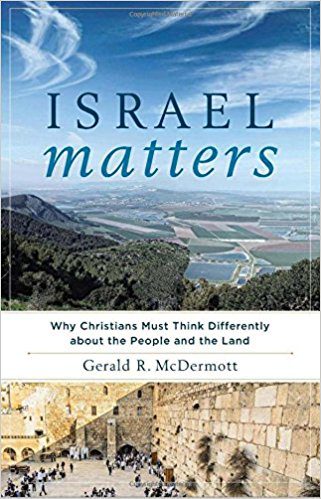 For most of the last 2000 years Christians have thought that Israel doesn’t matter. The people of Israel don’t matter because God (supposedly) transferred the covenant from Jewish Israel to the Gentile church. And the land of Israel doesn’t matter because Jesus said the meek shall inherit the earth, (supposedly) leaving behind that little strip of land on the Mediterranean.
But Israel should matter to Christians because Israel mattered to Jesus. The gospels indicate that Jesus predicted a future return of Jews to a restored Israel. In Matt. 24 he says that when the Son of Man returns “all the tribes of the land will mourn,” quoting Zechariah’s prophecy about the twelve tribes of Israel mourning when “the LORD will give salvation to the tents of Judah” (Zech 12:7, 10). Then in Matthew 19 Jesus tells his disciples that “in the new world . . . you who have followed me will also sit on twelve thrones, judging the twelve tribes of Israel.” E.P. Sanders observed in Jesus and Judaism that these repeated references to the twelve tribes imply restoration of Israel, particularly in Jerusalem. Luke records Anna speaking of the baby Jesus “to all who were waiting for the redemption of Jerusalem” (Luke 2:38), and Jesus’ expectation that when he returns Israel will welcome him: “You will not see me again until you say, ‘Blessed is he who comes in the name of the Lord’” (Luke 13:34-35). He suggests that the return will be in Jerusalem (Luke 21:24-28). When Jesus’ disciples asked Jesus just before his ascension, “Lord, are you at this time going to restore the kingdom to Israel?” (Acts 1:6), Jesus did not challenge their assumption that one day the kingdom would be restored to physical Israel. He simply said the Father had set the date, and they did not need to know it yet. It was these sorts of indications in the gospels and Acts that caused Oxford historian Marcus Bockmuehl to write that “the early Jesus movement evidently continued to focus upon the restoration of Israel’s twelve tribes in a new messianic kingdom.”
What about the meek inheriting the “earth” (Mt 5:5)? Jesus was quoting Psalm 37:11, where the clear meaning is “Blessed are the meek, for they shall inherit the land.” That last phrase is used five times in this psalm, and each time it refers to the land of Israel, not the whole earth. Jesus was probably referring to the new heavens and new earth which he described later in Matthew as the palingenesia or “renewal of all things” (19:28 NRSV).
Israel should matter to Christians because Israel mattered to Paul. The apostle to the Gentiles insisted that Jews who rejected Jesus were still beloved by God and that God kept his covenant with them as a people. He told the church in Rome that “they are enemies of the gospel for your sake,” but they “are still beloved of God because of their forefathers” and “because the gifts and calling of God are irrevocable” (Rom. 11:28–29). He does not say that non-messianic Jews “were beloved” but “are beloved.” Not past but present tense. Even though they chose not to believe the gospel, they are still beloved of God. God still loves them. And not in the way that God loves all people, but with a special kind of love. That is clear from Paul’s long discussion of Jews in Romans 9–11. Their “gifts and calling” were still in place. Their “calling” was their covenant, enacted when God called Abraham into a special relationship with himself, so that Abraham and his descendants would be God’s chosen people.
Israel should matter to Christians because Israel mattered to Peter. In his second speech in Jerusalem after the Pentecost miracle, Peter spoke of a future apokatastasis or restoration that was to come (Acts 3:21). This was the Greek word used in the Septuagint—which was the early church’s Greek translation of the Old Testament—for the future return of Jews from all over the world to the land of Israel to reestablish a Jewish nation.
Israel should matter to Christians because Israel mattered to John the author of the book of Revelation. He says in Rev. 7:4-9 that the 144,000 from “every tribe of the sons of Israel” will be distinct from the “great multitude that could not be counted from every nation, from all tribes and peoples and languages”–traditional biblical language for gentiles. The book of Revelation also says that Christ in glory will “hold the key of David” (3:7) and that he is “the lion of the tribe of Judah, the Root of David” (5:5). Revelation names all twelve tribes of the nation of Israel (7:1-8), says the two witnesses will be killed in Jerusalem (11:8), and predicts that the battle of Armageddon will be in a valley in northern Israel (16:16). The new Jerusalem will have twelve gates inscribed with the names of the “twelve tribes of the sons of Israel” (21:2, 12).
Israel should matter to Christians because it was through her that we came to know God. Jesus said “salvation is from the Jews” (Jn 4:22). Paul wrote that not only Jewish light but also Jewish resistance to light helped save us gentiles. In Romans 11:25 he said that God sent Israel a “partial hardening” so that there would be space and time for “the fullness of the Gentiles” to come in. The rabbis had taught—and apparently Paul believed the same—that when all Israel accepted their Messiah, the end of the world would come. Apparently this was why, according to Paul, most Jews were not accepting the Messiah. It was “for your sake” (11:28)—for the sake of the gentiles. They were given light to recognize the Messiah because God was withholding light from most Jews. Somehow the laws of the kingdom were such that if most Jews embraced their Messiah, it would close the door to future gentiles who might have come in. Paul does not disclose why this was so, but he seems to have believed in this zero-sum-like kingdom principle for the times of the Messiah. If most Jews came under the lordship of their Messiah, somehow that would close the door to a future world in which billions of gentiles would be able to come into the Messiah’s kingdom. So it was necessary, in God’s mysterious outworking of his providence, for him to harden the hearts of most Jews toward the identity of Yeshua of Nazareth.
So we gentiles owe Jews a debt. Because of what God did to them, we have been able to know their Messiah and become associate members of the “commonwealth of Israel” (Eph. 2:12). We have come to know the God of Israel and have become adopted sons and daughters of the Father of Israel (Gal. 4:5; Rom. 8:15).
Israel should matter to us.
Previous Post

June 1, 2017
How far back do Palestinians go?
Next Post

July 4, 2017 20-somethings on freedom
Browse Our Archives
Select a Category Uncategorized
Select a Month March 2023 November 2022 October 2022 August 2022 July 2022 June 2022 May 2022 April 2022 November 2021 October 2021 August 2021 July 2021 June 2021 May 2021 April 2021 March 2021 February 2021 January 2021 December 2020 November 2020 October 2020 September 2020 July 2020 June 2020 April 2020 March 2020 February 2020 January 2020 August 2019 July 2019 May 2019 April 2019 February 2019 January 2019 December 2018 November 2018 October 2018 August 2018 July 2018 June 2018 May 2018 April 2018 March 2018 February 2018 January 2018 December 2017 November 2017 October 2017 September 2017 August 2017 July 2017 June 2017 May 2017 April 2017 March 2017 February 2017 January 2017 December 2016 November 2016 October 2016 September 2016 August 2016 July 2016 June 2016 May 2016 April 2016 March 2016 February 2016 January 2016 December 2015 November 2015 October 2015 September 2015 August 2015 July 2015 June 2015 May 2015 April 2015 March 2015 February 2015 January 2015 December 2014 November 2014 October 2014 September 2014 August 2014 July 2014 June 2014 May 2014 April 2014 March 2014 February 2014 January 2014 December 2013 November 2013 October 2013 September 2013 August 2013 July 2013 June 2013 May 2013 April 2013 March 2013 February 2013 January 2013 December 2012 November 2012 October 2012 September 2012 August 2012 July 2012 June 2012 May 2012 April 2012 March 2012 February 2012 January 2012 December 2011 November 2011 October 2011 September 2011 August 2011 July 2011 June 2011 May 2011 April 2011 March 2011 February 2011 January 2011 December 2010 November 2010 October 2010
Follow Us!
TAKE THE
Religious Wisdom Quiz
Which book in the New Testament is the shortest?
Select your answer to see how you score.
Jude 3 John Philemon 2 John
Related posts from The Northampton Seminar


Interview on what difference Jesus' Jewishness makes and...

News from Israel--the election and Messianic Jews

The third rail in conservative churches
TRENDING AT PATHEOS Evangelical

The REST of Your Life: A Creative Wrestles...
This week I had a conversation with a good friend from church....

How the author of the world's best hymn...
I've been working with John Newton for a while now. This makes...

Long before this Lectio Divina, Psalm 130 - the song - started...

What About the Trees? Another Living Parable
After I finished writing the last article about falling leaves as a...

Why Classical Education Is a Conversation, Not a...
Come and Read: Joy in Classical Education When I was a little...

Cornell University has received a great deal of negative publicity and intense...
view all Evangelical blogs
Ad-Free & Subscriber Log-In Subscription Support
- About Us
- 2026 Calendar
- Videos
- Podcasts
- Library of World Religions
- Faith In Media Tracker
- Advertise With Us
- Write for Us
- Privacy Policy
- Terms of Service
- Do Not Sell My Data
- Contact Us
- Radiant Digital
- Manage Newsletter Subscriptions
- Unsubscribe From Notifications
- Sitemap
Copyright 2008-2026, Patheos. All rights reserved.
Subscription Support Ad-Free & Subscriber Log-In
Follow Patheos