
BuddhistCatholicContemplativeEvangelicalGeneral ChristianHinduJewishLatter-day SaintMuslimNew VisionsProgressive Christian
Beliefs
- Buddhist
- Catholic
- Contemplative
- Evangelical
- General Christian
- Hindu
- Jewish
- Latter-day Saint
- More Voices
- Muslim
- New Visions
- Pagan
- Progressive Christian
Topics
- Religion News
- Food and Religion
- Sports and Religion
- Religious Art
- Religious Music and Entertainment
- Religious Events
- History and Religion
- Style and Religion
- Politics and Religion
- Women in Religion
- Recreation Outdoors and Religion
- Business Finance and Religion
- Careers Workplace and Religion
- Education and Religion
- Family Parenting and Religion
- Health Fitness and Religion
- Home and Religion
- Relationships and Religion
- Technology and Religion
- Travel and Religion
Columnists
- Buddhist Columnists
- Business Finance and Religion Columnists
- Careers Workplace and Religion Columnists
- Catholic Columnists
- Contemplative Columnists
- Education and Religion Columnists
- Evangelists Columnists
- Family Parenting and Religion Columnists
- General Christian Columnists
- Health Fitness and Religion Columnists
- Hindu Columnists
- History and Religion Columnists
- Home and Religion Columnists
- Jewish Columnists
- More Voices Columnists
- Latter Day Columnists
- Muslim Columnists
- New Visions Columnists
- Nonreligious Columnists
- Pagan Columnists
- Politics and Religion Columnists
- Progressive Columnists
- Recreation Outdoors and Religion Columnists
- Relationships and Religion Columnists
- Religion News Columnists
- Religious Art Columnists
- Religious Events Columnists
- Religious Music and Entertainment Columnists
- Sports and Religion Columnists
- Style and Religion Columnists
- Technology and Religion Columnists
- Travel and Religion Columnists
- Women in Religion Columnists
Resource Library
- 2026 Calendar
- Library of World Religions
- The 100 Most Holy Places on Earth
- Patheos Answers
- Podcasts
- Videos
- Faith Leaders Database
- Anglican Episcopalian
- Bahai
- Baptist
- Buddhism
- Christianity
- Confucianism
- Eastern Orthodoxy
- Hinduism
- Holiness and Pentecostal
- ISKCON
- Islam
- Judaism
- Lutheran
- Methodist
- The Church of Jesus Christ of Latter-day Saints
- New Age
- Paganism
- Presbytarian and Reformed
- Protestantism
- Religion Behind the Scenes
- Roman Catholic
- Scientology
- Shia Islam
- Sikhism
- Sufism
- Sunni Islam
- Taoism
- Zen
- See all religions
Research Tools
 Ad-Free & Subscriber Log-In Subscription Support
Ad-Free & Subscriber Log-In Subscription Support
Follow Patheos 

- Trending:
- Forgiveness
- |
- Marriage
- |
- Consciousness
- |
- Death Penalty
- |
- Election
- |
- Halloween
 The Northampton Seminar
- Home
- Evangelical
- Religion News
- Were Jews absent from the land before the late 19th century?
Were Jews absent from the land before the late 19th century?
Last updated on: May 31, 2017 at 7:06 am by Gerald McDermott
Were Jews absent from the land before the late 19th century? 2017-05-31T07:06:47-04:00 Gerald McDermott
Patheos Explore the world's faith through different perspectives on religion and spirituality! Patheos has the views of the prevalent religions and spiritualities of the world.
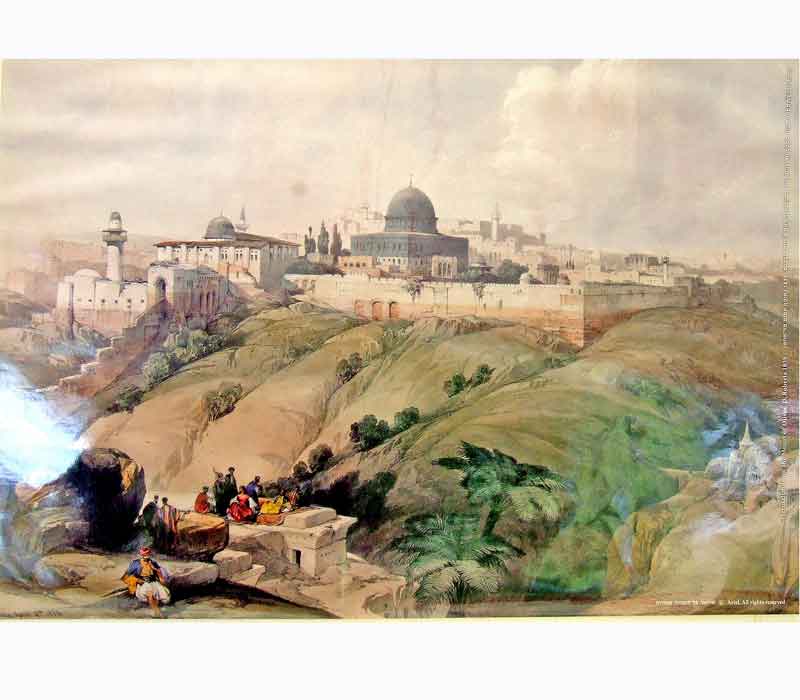 One of the many modern myths about Israel is that Jews were absent from the land from 70 AD until the late 19th century when Zionists came from Europe. In contrast, it is alleged, Palestinians have been on the land for more than 2000 years.
In a future post I will show that the second part of this is untrue, for Palestinians have had that identity only since 1967, and most of the current population comes from Arab and other immigrants in the 19th and 20th centuries.
This post will show that the first part is also untrue. In Reclaiming Israel’s History, David Brog demonstrates that Jews have been living on the land for more than 3000 years. For example, even after the Roman conquest of Jerusalem in 70 AD the Judean hillsides remained overwhelmingly Jewish, and as the second century dawned, the Jews were still a majority in their land.
Even after the Romans killed 580,000 Jews during the Bar Kochba revolt (132-35 AD), the Jews remained a majority on the land, and Galilee’s Jewish communities actually grew.
This was still true after a third Jewish revolt, this time against the Byzantine ruler Gallus in the 4th century. The Jews remained a majority in Galilee. This continued into the 5th century as the Jerusalem Talmud was written. This Talmud shows there were 205 villages in Galilee, 101 in the Jerusalem region, and 67 on the coastal plain and what is now Jordan.
When the Persians arrived in 614 Jews were able to muster a fighting force of 20,000 to help oust the Byzantines, who had reduced the Jews to 2nd-class citizens in their own land. But when the Persians double-crossed the Jews and made peace with the Byzantines, the latter reconquered Jerusalem and massacred most of its Jews. Yet when the Arabs conquered the land between 636 and 640, there was still a significant Jewish population. Caliph Omar permitted 70 Jewish families to return to their holy city and build a synagogue on the Temple Mount.
A little later Muslim persecution began. They built mosques on every major Jewish holy site, including the Temple Mount. Nevertheless, in the 10th century Jews still had a substantial presence, with over 50 Jewish towns and villages.
When the Crusaders conquered Jerusalem in 1099 most of its defenders were Jews. Jews defended Haifa. There were other Jewish cities such as Safed and Tiberias in Galilee.
In the first part of the 13th century 300 rabbis from England and France immigrated to Palestine, most settling in Jerusalem. Even though the Mamluk period (1250-1517) was humiliating for Jews, there were repeated waves of Jewish immigration from Spain, Italy, North Africa and Syria.
When Suleiman the Magnificent opened the Ottoman period (1517-1918), he warmly welcomed Jewish immigration. Students from around the world flocked to Safed to study under famous rabbis, and 3000 looms were manufacturing clothing shipped to Damascus, Constantinople, and beyond. Jews began to rebuilt Tiberias.
Then decline set in during the 18th century, when Jewish numbers dipped to between 6000 and 8000. Yet by the last quarter of the century immigration resumed, this time from Russia and Lithuania to Safed.
Palestine sank to rock bottom in the early 19th century, when Palestine as a whole only had 200,000 residents. As late as 1867 Mark Twain famously wrote that on his visit he found a “desolate” and “mournful” landscape that contained only a handful of people on his entire route.
Then suddenly, when the Ottomans buckled to European pressure and permitted foreign consulates in Jerusalem to protect their own citizens, Jews felt safer. Jewish immigration exploded. By 1840 there were 5000 Jews in Jerusalem alone. By 1882 there were another 2000 Jews living outside the city’s walls. Jews were a majority of the city’s population. In 1895 Jews numbered 30,000, roughly 60% of the city’s population.
“Thus by the time the modern Zionist movement was founded in 1897, a modern wave of Jewish immigration to Palestine had already been underway for decades. Zionism was not some dramatic rediscovery of Palestine after 2000 years. Zionism is merely the latest–and the most successful–of the long list of Jewish efforts to return to their homeland” over the last 2000 years. (Brog, 37)
Previous Post

May 27, 2017
Fact-checking Palestinian President Mahmoud Abbas
Next Post
June 1, 2017 How far back do Palestinians go?
Browse Our Archives
Select a Category Uncategorized
Select a Month March 2023 November 2022 October 2022 August 2022 July 2022 June 2022 May 2022 April 2022 November 2021 October 2021 August 2021 July 2021 June 2021 May 2021 April 2021 March 2021 February 2021 January 2021 December 2020 November 2020 October 2020 September 2020 July 2020 June 2020 April 2020 March 2020 February 2020 January 2020 August 2019 July 2019 May 2019 April 2019 February 2019 January 2019 December 2018 November 2018 October 2018 August 2018 July 2018 June 2018 May 2018 April 2018 March 2018 February 2018 January 2018 December 2017 November 2017 October 2017 September 2017 August 2017 July 2017 June 2017 May 2017 April 2017 March 2017 February 2017 January 2017 December 2016 November 2016 October 2016 September 2016 August 2016 July 2016 June 2016 May 2016 April 2016 March 2016 February 2016 January 2016 December 2015 November 2015 October 2015 September 2015 August 2015 July 2015 June 2015 May 2015 April 2015 March 2015 February 2015 January 2015 December 2014 November 2014 October 2014 September 2014 August 2014 July 2014 June 2014 May 2014 April 2014 March 2014 February 2014 January 2014 December 2013 November 2013 October 2013 September 2013 August 2013 July 2013 June 2013 May 2013 April 2013 March 2013 February 2013 January 2013 December 2012 November 2012 October 2012 September 2012 August 2012 July 2012 June 2012 May 2012 April 2012 March 2012 February 2012 January 2012 December 2011 November 2011 October 2011 September 2011 August 2011 July 2011 June 2011 May 2011 April 2011 March 2011 February 2011 January 2011 December 2010 November 2010 October 2010
Follow Us!
TAKE THE
Religious Wisdom Quiz
In Revelation, what is the correct order of the first four seals opened by the Lamb?
Select your answer to see how you score.
White horse, red horse, black horse, pale horse White horse, black horse, red horse, pale horse Red horse, white horse, pale horse, black horse Pale horse, red horse, white horse, black horse
Related posts from The Northampton Seminar


Interview on what difference Jesus' Jewishness makes and...

News from Israel--the election and Messianic Jews

The third rail in conservative churches
TRENDING AT PATHEOS Evangelical

The REST of Your Life: A Creative Wrestles...
This week I had a conversation with a good friend from church....

How the author of the world's best hymn...
I've been working with John Newton for a while now. This makes...

Long before this Lectio Divina, Psalm 130 - the song - started...

What About the Trees? Another Living Parable
After I finished writing the last article about falling leaves as a...

Why Classical Education Is a Conversation, Not a...
Come and Read: Joy in Classical Education When I was a little...

Cornell University has received a great deal of negative publicity and intense...
view all Evangelical blogs
Ad-Free & Subscriber Log-In Subscription Support
- About Us
- 2026 Calendar
- Videos
- Podcasts
- Library of World Religions
- Faith In Media Tracker
- Advertise With Us
- Write for Us
- Privacy Policy
- Terms of Service
- Do Not Sell My Data
- Contact Us
- Radiant Digital
- Manage Newsletter Subscriptions
- Unsubscribe From Notifications
- Sitemap
Copyright 2008-2026, Patheos. All rights reserved.
Subscription Support Ad-Free & Subscriber Log-In
Follow Patheos