
BuddhistCatholicContemplativeEvangelicalGeneral ChristianHinduJewishLatter-day SaintMuslimNew VisionsProgressive Christian
Beliefs
- Buddhist
- Catholic
- Contemplative
- Evangelical
- General Christian
- Hindu
- Jewish
- Latter-day Saint
- More Voices
- Muslim
- New Visions
- Pagan
- Progressive Christian
Topics
- Religion News
- Food and Religion
- Sports and Religion
- Religious Art
- Religious Music and Entertainment
- Religious Events
- History and Religion
- Style and Religion
- Politics and Religion
- Women in Religion
- Recreation Outdoors and Religion
- Business Finance and Religion
- Careers Workplace and Religion
- Education and Religion
- Family Parenting and Religion
- Health Fitness and Religion
- Home and Religion
- Relationships and Religion
- Technology and Religion
- Travel and Religion
Columnists
- Buddhist Columnists
- Business Finance and Religion Columnists
- Careers Workplace and Religion Columnists
- Catholic Columnists
- Contemplative Columnists
- Education and Religion Columnists
- Evangelists Columnists
- Family Parenting and Religion Columnists
- General Christian Columnists
- Health Fitness and Religion Columnists
- Hindu Columnists
- History and Religion Columnists
- Home and Religion Columnists
- Jewish Columnists
- More Voices Columnists
- Latter Day Columnists
- Muslim Columnists
- New Visions Columnists
- Nonreligious Columnists
- Pagan Columnists
- Politics and Religion Columnists
- Progressive Columnists
- Recreation Outdoors and Religion Columnists
- Relationships and Religion Columnists
- Religion News Columnists
- Religious Art Columnists
- Religious Events Columnists
- Religious Music and Entertainment Columnists
- Sports and Religion Columnists
- Style and Religion Columnists
- Technology and Religion Columnists
- Travel and Religion Columnists
- Women in Religion Columnists
Resource Library
- 2026 Calendar
- Library of World Religions
- The 100 Most Holy Places on Earth
- Patheos Answers
- Podcasts
- Videos
- Faith Leaders Database
- Anglican Episcopalian
- Bahai
- Baptist
- Buddhism
- Christianity
- Confucianism
- Eastern Orthodoxy
- Hinduism
- Holiness and Pentecostal
- ISKCON
- Islam
- Judaism
- Lutheran
- Methodist
- The Church of Jesus Christ of Latter-day Saints
- New Age
- Paganism
- Presbytarian and Reformed
- Protestantism
- Religion Behind the Scenes
- Roman Catholic
- Scientology
- Shia Islam
- Sikhism
- Sufism
- Sunni Islam
- Taoism
- Zen
- See all religions
Research Tools
 Ad-Free & Subscriber Log-In Subscription Support
Ad-Free & Subscriber Log-In Subscription Support
Follow Patheos 

- Trending:
- Forgiveness
- |
- Marriage
- |
- Consciousness
- |
- Death Penalty
- |
- Election
- |
- Halloween
 The Northampton Seminar
- Home
- Evangelical
- Religion News
- Liturgy and Eucharist – Part VI
Liturgy and Eucharist – Part VI
Last updated on: April 6, 2017 at 10:58 am by Gerald McDermott
Liturgy and Eucharist – Part VI 2017-04-06T10:58:46-04:00 Gerald McDermott
Patheos Explore the world's faith through different perspectives on religion and spirituality! Patheos has the views of the prevalent religions and spiritualities of the world.
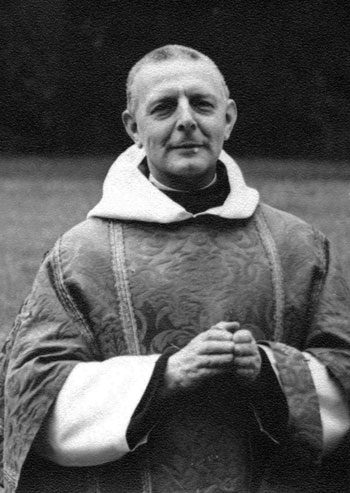 More from Dix, The Shape of the Liturgy . . .
Chap 11: The Sanctification of Time
As the church became accepted by the Empire in the 4th century, and then in fact became the directing conscience of the merging civilization (Christendom), the church came to feel at home in time, and the eschatological emphasis in the Eucharist faded. It ceased to be the rite which manifested the eternal consequences of redemption by transporting its partakers from the world of time into the Kingdom of God and the World to Come. Instead, it came to be thought of as the representation of the historical process of redemption, of the historical events of crucifixion and redemption by which redemption had been achieved. The pliable idea of anamnesis was there to ease the transition. 305
The English Puritans’ crusade against all forms of sensuous beauty in worship has had more effect than we realize on our notions of worship in the early church. [For Dix] “Puritanism” is the theory that worship is a purely mental activity, to be exercised by psychological attention to a subjective emotional or spiritual experience. All external things which might distract from this experience have no rightful place in worship. The principal defect of this view is to suppose that words alone can express or stimulate the act of worship. 312
Over against this Puritan theory is the “ceremonious” conception of worship, which sees worship as not purely intellectual or affective but something in which the whole person—body and soul, aesthetic and volitional and intellectual—must take part. It regards worship as an act as much as an experience. 312
The elaborate ceremonial worship of the Jerusalem Temple was never condemned on those grounds by our Lord. The apostles continued to frequent it until they were driven from Jerusalem. The second-century Xns still found it natural to think of their worship in terms of the ceremonious worship of the Temple. Xn corporate worship in the 2nd c. centered in the sacraments. What is striking about the pre-Nicene liturgies is its directness, its insistence on the external sacramental action as what really mattered, and its exclusion of all devotional accretions which would stimulate or satisfy a subjective piety. This is the reverse of the Puritan theory, where the subjective experience, not the external action, is always the important thing. 313
Music and painting, incised chalices of precious metal, and even sculpture, can all be proved to have been parts of worship before 250 AD by literary evidence or actual remains. It is significant that in John’s Revelation, there is worship “in spirit and in truth” yet also with majestic ceremonial, with all the external accompaniments of lights and incense. 314
Of course there is always the danger of formalism, mere ceremonialism replacing true surrender of heart and will. But the Hebrew prophets denounced this without also recommending the end of all ceremony. And this danger can be found even in Puritan worship. 314
The serious results came with the disappearance of the people’s offertory in the East during the 4th c., and the decline of lay communion. The corporate action of the church disappeared, and what was left was a rite conducted chiefly by the prayers of the clergy, in which the people still made a few responses but otherwise had little part. 319
The organization of the divine office at Jerusalem—church services at the times of monastic prayers–was an achievement of Cyril in the 4th c. It brought into public worship for the first time the monastic ideal of sanctifying human life as a whole and the passage of time by corporate worship. It was probably also Cyril who originated the “proper” of saints and the “proper” of seasons of the church year. 329, 334
The change of public worship from Saturday to Sunday was already an accomplished fact when Paul wrote 1 Cor 16.2 in AD 57. 337
A fully developed doctrine of purgatory was accepted in the Acts of the African martyrs Perpetua and Felicity (c. 200) of which hints are to be found in the baptisms for the dead in 1 Cor 15.29 and our Lord’s preaching to the dead in 1 Pet 3.19 [needless to say, there are great debates over the meaning of these passages]. Tertullian and others speak of the “annual oblation” of the eucharist on the anniversary of the death of departed Xns, which Cyprian calls a “sacrifice for their repose” (Ep. 1.2). 344-45
In sum, the church’s liturgy is an entering into Jesus’ liturgy. In the synaxis the Church proclaims the gospel to herself and, so far as it will listen, to the world. She does this through the readings, the announcement of the Word, and by the explanatory sermon of her prophetic teachers, under their bishop. The Church speaks not as one arguing or speculating but as a witness or messenger delivering a message which is not his to change or invent, but only to deliver faithfully in the Spirit of the sender.
Then the Church enters as His Body into the liturgy of His Body, in the eucharist which is the anamnesis of Him, the Sacrificed. She takes bread and a cup and gives thanks and breaks and distributes, entering into, not merely repeating, His own act. The Church thereby brings herself and all her members into the “coming” of the Kingdom of God, which comes fully and perfectly in Jesus. That is the Eucharist of the first four centuries. 393-94
Previous Post
April 5, 2017
Liturgy and Eucharist - Part V
Next Post

April 7, 2017 Liturgy and eucharist - Part VII
Browse Our Archives
Select a Category Uncategorized
Select a Month March 2023 November 2022 October 2022 August 2022 July 2022 June 2022 May 2022 April 2022 November 2021 October 2021 August 2021 July 2021 June 2021 May 2021 April 2021 March 2021 February 2021 January 2021 December 2020 November 2020 October 2020 September 2020 July 2020 June 2020 April 2020 March 2020 February 2020 January 2020 August 2019 July 2019 May 2019 April 2019 February 2019 January 2019 December 2018 November 2018 October 2018 August 2018 July 2018 June 2018 May 2018 April 2018 March 2018 February 2018 January 2018 December 2017 November 2017 October 2017 September 2017 August 2017 July 2017 June 2017 May 2017 April 2017 March 2017 February 2017 January 2017 December 2016 November 2016 October 2016 September 2016 August 2016 July 2016 June 2016 May 2016 April 2016 March 2016 February 2016 January 2016 December 2015 November 2015 October 2015 September 2015 August 2015 July 2015 June 2015 May 2015 April 2015 March 2015 February 2015 January 2015 December 2014 November 2014 October 2014 September 2014 August 2014 July 2014 June 2014 May 2014 April 2014 March 2014 February 2014 January 2014 December 2013 November 2013 October 2013 September 2013 August 2013 July 2013 June 2013 May 2013 April 2013 March 2013 February 2013 January 2013 December 2012 November 2012 October 2012 September 2012 August 2012 July 2012 June 2012 May 2012 April 2012 March 2012 February 2012 January 2012 December 2011 November 2011 October 2011 September 2011 August 2011 July 2011 June 2011 May 2011 April 2011 March 2011 February 2011 January 2011 December 2010 November 2010 October 2010
Follow Us!
TAKE THE
Religious Wisdom Quiz
What did fire from heaven consume to prove Elijah's God was real?
Select your answer to see how you score.
A chariot Sacrifice on Mount Carmel The temple A golden calf
Related posts from The Northampton Seminar


Interview on what difference Jesus' Jewishness makes and...

News from Israel--the election and Messianic Jews

The third rail in conservative churches
TRENDING AT PATHEOS Evangelical

The REST of Your Life: A Creative Wrestles...
This week I had a conversation with a good friend from church....

How the author of the world's best hymn...
I've been working with John Newton for a while now. This makes...

Long before this Lectio Divina, Psalm 130 - the song - started...

What About the Trees? Another Living Parable
After I finished writing the last article about falling leaves as a...

Why Classical Education Is a Conversation, Not a...
Come and Read: Joy in Classical Education When I was a little...

Cornell University has received a great deal of negative publicity and intense...
view all Evangelical blogs
Ad-Free & Subscriber Log-In Subscription Support
- About Us
- 2026 Calendar
- Videos
- Podcasts
- Library of World Religions
- Faith In Media Tracker
- Advertise With Us
- Write for Us
- Privacy Policy
- Terms of Service
- Do Not Sell My Data
- Contact Us
- Radiant Digital
- Manage Newsletter Subscriptions
- Unsubscribe From Notifications
- Sitemap
Copyright 2008-2026, Patheos. All rights reserved.
Subscription Support Ad-Free & Subscriber Log-In
Follow Patheos