
BuddhistCatholicContemplativeEvangelicalGeneral ChristianHinduJewishLatter-day SaintMuslimNew VisionsProgressive Christian
Beliefs
- Buddhist
- Catholic
- Contemplative
- Evangelical
- General Christian
- Hindu
- Jewish
- Latter-day Saint
- More Voices
- Muslim
- New Visions
- Pagan
- Progressive Christian
Topics
- Religion News
- Food and Religion
- Sports and Religion
- Religious Art
- Religious Music and Entertainment
- Religious Events
- History and Religion
- Style and Religion
- Politics and Religion
- Women in Religion
- Recreation Outdoors and Religion
- Business Finance and Religion
- Careers Workplace and Religion
- Education and Religion
- Family Parenting and Religion
- Health Fitness and Religion
- Home and Religion
- Relationships and Religion
- Technology and Religion
- Travel and Religion
Columnists
- Buddhist Columnists
- Business Finance and Religion Columnists
- Careers Workplace and Religion Columnists
- Catholic Columnists
- Contemplative Columnists
- Education and Religion Columnists
- Evangelists Columnists
- Family Parenting and Religion Columnists
- General Christian Columnists
- Health Fitness and Religion Columnists
- Hindu Columnists
- History and Religion Columnists
- Home and Religion Columnists
- Jewish Columnists
- More Voices Columnists
- Latter Day Columnists
- Muslim Columnists
- New Visions Columnists
- Nonreligious Columnists
- Pagan Columnists
- Politics and Religion Columnists
- Progressive Columnists
- Recreation Outdoors and Religion Columnists
- Relationships and Religion Columnists
- Religion News Columnists
- Religious Art Columnists
- Religious Events Columnists
- Religious Music and Entertainment Columnists
- Sports and Religion Columnists
- Style and Religion Columnists
- Technology and Religion Columnists
- Travel and Religion Columnists
- Women in Religion Columnists
Resource Library
- 2026 Calendar
- Library of World Religions
- The 100 Most Holy Places on Earth
- Patheos Answers
- Podcasts
- Videos
- Faith Leaders Database
- Anglican Episcopalian
- Bahai
- Baptist
- Buddhism
- Christianity
- Confucianism
- Eastern Orthodoxy
- Hinduism
- Holiness and Pentecostal
- ISKCON
- Islam
- Judaism
- Lutheran
- Methodist
- The Church of Jesus Christ of Latter-day Saints
- New Age
- Paganism
- Presbytarian and Reformed
- Protestantism
- Religion Behind the Scenes
- Roman Catholic
- Scientology
- Shia Islam
- Sikhism
- Sufism
- Sunni Islam
- Taoism
- Zen
- See all religions
Research Tools
 Ad-Free & Subscriber Log-In Subscription Support
Ad-Free & Subscriber Log-In Subscription Support
Follow Patheos 

- Trending:
- Forgiveness
- |
- Marriage
- |
- Consciousness
- |
- Death Penalty
- |
- Election
- |
- Halloween
 The Northampton Seminar
- Home
- Evangelical
- Religion News
- Liturgy and Eucharist – Part IV
Liturgy and Eucharist – Part IV
Last updated on: April 5, 2017 at 7:21 am by Gerald McDermott
Liturgy and Eucharist – Part IV 2017-04-05T07:21:23-04:00 Gerald McDermott
Patheos Explore the world's faith through different perspectives on religion and spirituality! Patheos has the views of the prevalent religions and spiritualities of the world.
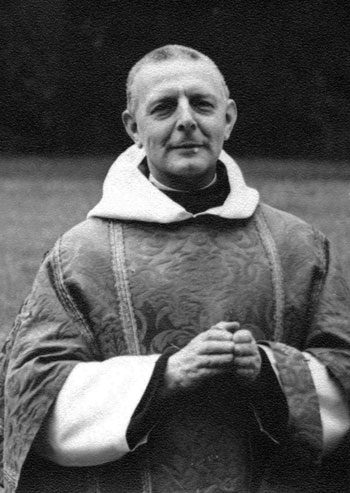
We continue our series looking at two books on the history of the liturgy and Eucharist. Today we pick up where we left off in Dom Gregory Dix, The Shape of the Liturgy (1945).
-
The Eucharistic prayer
-
Diversity of form but fundamental identity of meaning were the marks of the local tradition everywhere.
-
“As the Word of God Jesus Christ our Saviour was made flesh and blood for our salvation, so also we have been taught that this food ‘eucharistised’ by a formula of prayer which comes from Him . . . is the flesh and blood of that Jesus Who was made flesh” ( 1, 66)
-
“Jesus said, ‘Do this for the anamnesis of me” ibid.
-
anamnesis is the past coming into the present, as Jews believed took place every Passover. It was also thought of as being lifted up into eternity, a sacramental time in heaven, where the High Priest Messiah is “now appearing in the presence of God on our behalf” (Heb 9.24; 9.12, 14).
-
More common in Roman writers than elsewhere in pre-Nicene times, it has the sense of “re-calling or re-presenting before God an event in the past, so that it becomes here and now operative by its effects. 161
-
Not by way of repetition but re-presentation of the same offering by the church.
-
Cyprian: “”The passion is the Lord’s sacrifice, which we offer” ( 63, 17)
-
Bishop Serapion (353-360): “For to Thee we have offered this living sacrifice, this unbloody oblation.” 163
-
“Let thy holy Word come upon this bread that the bread may become the Body of the Word, and upon this cup that the cup may become Blood of the Truth.”
-
“Make all who partake receive a medicine of life, for the healing of every sickness.”
- This was considered medicine for the body and the soul. 169
-
“The sacrifices which are offered to God by us gentiles everywhere, that is the bread of the eucharist, and the cup likewise of the eucharist” (Dialogue, 41*)*
-
“He desired not so much to eat as to suffer that he might deliver us from suffering by [our] eating” (Hip., On the Pascha5)
-
Some Eucharistic rites, like Addai and Mari (Syrian rite possibly from 3rd Edessa), had no narrative of institution.
- It was addressed not to the Father but to the Son, as were three Ethiopic liturgies.
- Then there is an address to the Trinity, perhaps a later addition. 181
-
What is universal is thinking of the eucharist s sacrifice.
-
-
-
-
-
The liturgy of St James (early 5th, possibly an expansion of the 4th c. rite of Jerusalem).
-
“We offer Christ sacrificed for our sins, propitiating God who loves mankind on their behalf as well as our own.” 195
-
In the East it was believed that there is special efficacy for prayers in the presence of the Blessed Sacrament.
-
What is missing, here and in Addai and Mari, is mention of the theology of communion.
- This led to the non-communicant piety of the Byzantines and the later middle ages in the Western church.
-
-
Behind the local tradition
-
It is a medieval and modern myth that there was a single apostolic or sub-apostolic text of a Eucharistic prayer.
-
What was fixed and immutable instead was the outline or shape: offertory, prayer, fraction, communion.
-
What our Lord instituted was not a service or something said, but an action, something done, the continuation of a traditional Jewish action but with new meaning. 215
-
The new meaning was that this action was to be done “for the anamnesis of Me.” The consequence was that “This is My Body” and “This cup is the New Covenant in My Blood.”
-
This shape went back to the end of the first century, perhaps the last years of the apostolic generation.
-
What formed the chief content of the prayer that gave meaning to the action?
-
Opening address and “Naming” of God
-
The name eucharist, thanksgiving
- To be followed by a series of thanks and praises
- On themes: creation, incarnation, redemption 219
-
The old meaning that Our Lord had done this at the last supper.
-
Retention of dialogue between host and guests: “Let us give thanks”
-
New Christian meaning for the old berakhah (blessing) 215
-
-
-
-
Three main periods in the early history of the Eucharistic prayer
-
Late 4th-early 5th By borrowing and adaptation all the rites of the great sees are evolving toward a general uniformity of structure and content
-
Behind this is period from late 2nd thru early 4th cs: considerable variety in both structure and contents of the local traditions of prayer
-
Further back is late 1st and early 2nd cs: even here there was a multiplicity of meanings in a single action. 237
- What grew was the meaning drawn from the words, “Do this for the anamnesis of Me.”
-
The meaning of the Eucharist
-
Anglicans are forbidden to think that Christ is freshly destroyed or eaten 241
-
Before the end of the apostolic age it was understood that X’s sacrifice was something that began with His Humanity and which has its eternal continuance in heaven
-
Heb 10.5 “When he comes into the world He says, . . . .You have fitted a body for me . . . Lo, I come to do your will, O God”
-
Heb 9.12, 24: “By his own blood He entered the Holy Place . . . into heaven itself, now to appear in the presence of God for us.”
-
Calvary here is the final moment, the climax of the offering of a sacrifice whose opening is at Bethlehem, and whose acceptance is the resurrection and ascension. 242
-
The anamnesis is not of his death only but “of Me”—of the Redeemer in the fullness of his offered Self, and work and life and death, perpetually accepted by the Father in the world to come. 243
-
Bec the eucharist is an action, and the church in doing that action is simply X’s Body performing His will, the Eucharistic action is necessarily His action of sacrifice, and what is offered must be what He offered. 246
-
The early church took the “Body of Christ” as both itself and the sacrament, and in both senses an absolute truth and not merely a metaphor.
-
In the early church there was only one eschaton, one coming, coming to the Father of redeemed mankind, which is the realization of the Kingdom of God. That Kingdom is realized in its fullness in the sacrifice of X and its acceptance, of which the eucharist is the anamnesis. The eucharist is the contact of time with the eternal fact of the Kingdom of God through Jesus. In it the church within time continually enters into its own eternal being in that Kingdom, “in Him,” as Body of Christ, through his act.
- This is plain from the language of the early liturgies 265
-
Eucharist is the contact of the church within time with the single eschaton, the coming of the Kingdom of God beyond time.
-
In the early eschatology, by the Christian life in this world you “become what you are.”
- By the sacraments you receive “what you are,” your true Christian being. By your life you must become what they convey.
-
-
-
Previous Post
April 3, 2017
Liturgy and Eucharist-Part III
Next Post
April 5, 2017 Liturgy and Eucharist - Part V
Browse Our Archives
Select a Category Uncategorized
Select a Month March 2023 November 2022 October 2022 August 2022 July 2022 June 2022 May 2022 April 2022 November 2021 October 2021 August 2021 July 2021 June 2021 May 2021 April 2021 March 2021 February 2021 January 2021 December 2020 November 2020 October 2020 September 2020 July 2020 June 2020 April 2020 March 2020 February 2020 January 2020 August 2019 July 2019 May 2019 April 2019 February 2019 January 2019 December 2018 November 2018 October 2018 August 2018 July 2018 June 2018 May 2018 April 2018 March 2018 February 2018 January 2018 December 2017 November 2017 October 2017 September 2017 August 2017 July 2017 June 2017 May 2017 April 2017 March 2017 February 2017 January 2017 December 2016 November 2016 October 2016 September 2016 August 2016 July 2016 June 2016 May 2016 April 2016 March 2016 February 2016 January 2016 December 2015 November 2015 October 2015 September 2015 August 2015 July 2015 June 2015 May 2015 April 2015 March 2015 February 2015 January 2015 December 2014 November 2014 October 2014 September 2014 August 2014 July 2014 June 2014 May 2014 April 2014 March 2014 February 2014 January 2014 December 2013 November 2013 October 2013 September 2013 August 2013 July 2013 June 2013 May 2013 April 2013 March 2013 February 2013 January 2013 December 2012 November 2012 October 2012 September 2012 August 2012 July 2012 June 2012 May 2012 April 2012 March 2012 February 2012 January 2012 December 2011 November 2011 October 2011 September 2011 August 2011 July 2011 June 2011 May 2011 April 2011 March 2011 February 2011 January 2011 December 2010 November 2010 October 2010
Follow Us!
TAKE THE
Religious Wisdom Quiz
What city did Paul and Silas sing hymns in while imprisoned, leading to a miraculous jailbreak?
Select your answer to see how you score.
Corinth Philippi Athens Ephesus
Related posts from The Northampton Seminar


Interview on what difference Jesus' Jewishness makes and...

News from Israel--the election and Messianic Jews

The third rail in conservative churches
TRENDING AT PATHEOS Evangelical

The REST of Your Life: A Creative Wrestles...
This week I had a conversation with a good friend from church....

How the author of the world's best hymn...
I've been working with John Newton for a while now. This makes...

Long before this Lectio Divina, Psalm 130 - the song - started...

What About the Trees? Another Living Parable
After I finished writing the last article about falling leaves as a...

Why Classical Education Is a Conversation, Not a...
Come and Read: Joy in Classical Education When I was a little...

Cornell University has received a great deal of negative publicity and intense...
view all Evangelical blogs
Ad-Free & Subscriber Log-In Subscription Support
- About Us
- 2026 Calendar
- Videos
- Podcasts
- Library of World Religions
- Faith In Media Tracker
- Advertise With Us
- Write for Us
- Privacy Policy
- Terms of Service
- Do Not Sell My Data
- Contact Us
- Radiant Digital
- Manage Newsletter Subscriptions
- Unsubscribe From Notifications
- Sitemap
Copyright 2008-2026, Patheos. All rights reserved.
Subscription Support Ad-Free & Subscriber Log-In
Follow Patheos