
BuddhistCatholicContemplativeEvangelicalGeneral ChristianHinduJewishLatter-day SaintMuslimNew VisionsProgressive Christian
Beliefs
- Buddhist
- Catholic
- Contemplative
- Evangelical
- General Christian
- Hindu
- Jewish
- Latter-day Saint
- More Voices
- Muslim
- New Visions
- Pagan
- Progressive Christian
Topics
- Religion News
- Food and Religion
- Sports and Religion
- Religious Art
- Religious Music and Entertainment
- Religious Events
- History and Religion
- Style and Religion
- Politics and Religion
- Women in Religion
- Recreation Outdoors and Religion
- Business Finance and Religion
- Careers Workplace and Religion
- Education and Religion
- Family Parenting and Religion
- Health Fitness and Religion
- Home and Religion
- Relationships and Religion
- Technology and Religion
- Travel and Religion
Columnists
- Buddhist Columnists
- Business Finance and Religion Columnists
- Careers Workplace and Religion Columnists
- Catholic Columnists
- Contemplative Columnists
- Education and Religion Columnists
- Evangelists Columnists
- Family Parenting and Religion Columnists
- General Christian Columnists
- Health Fitness and Religion Columnists
- Hindu Columnists
- History and Religion Columnists
- Home and Religion Columnists
- Jewish Columnists
- More Voices Columnists
- Latter Day Columnists
- Muslim Columnists
- New Visions Columnists
- Nonreligious Columnists
- Pagan Columnists
- Politics and Religion Columnists
- Progressive Columnists
- Recreation Outdoors and Religion Columnists
- Relationships and Religion Columnists
- Religion News Columnists
- Religious Art Columnists
- Religious Events Columnists
- Religious Music and Entertainment Columnists
- Sports and Religion Columnists
- Style and Religion Columnists
- Technology and Religion Columnists
- Travel and Religion Columnists
- Women in Religion Columnists
Resource Library
- 2026 Calendar
- Library of World Religions
- The 100 Most Holy Places on Earth
- Patheos Answers
- Podcasts
- Videos
- Faith Leaders Database
- Anglican Episcopalian
- Bahai
- Baptist
- Buddhism
- Christianity
- Confucianism
- Eastern Orthodoxy
- Hinduism
- Holiness and Pentecostal
- ISKCON
- Islam
- Judaism
- Lutheran
- Methodist
- The Church of Jesus Christ of Latter-day Saints
- New Age
- Paganism
- Presbytarian and Reformed
- Protestantism
- Religion Behind the Scenes
- Roman Catholic
- Scientology
- Shia Islam
- Sikhism
- Sufism
- Sunni Islam
- Taoism
- Zen
- See all religions
Research Tools
 Ad-Free & Subscriber Log-In Subscription Support
Ad-Free & Subscriber Log-In Subscription Support
Follow Patheos 

- Trending:
- Forgiveness
- |
- Marriage
- |
- Consciousness
- |
- Death Penalty
- |
- Election
- |
- Halloween
 Normalizing the Paranormal
- Home
- Pagan
- Relationships and Religion
- Normalizing The Paranormal
Normalizing The Paranormal
Last updated on: May 21, 2024 at 3:31 pm by Dr. Megan Rose
Normalizing The Paranormal 2024-05-21T15:31:19-07:00 Dr. Megan Rose
Patheos Explore the world's faith through different perspectives on religion and spirituality! Patheos has the views of the prevalent religions and spiritualities of the world.
Why your extraordinary spiritual experiences are important and valid.
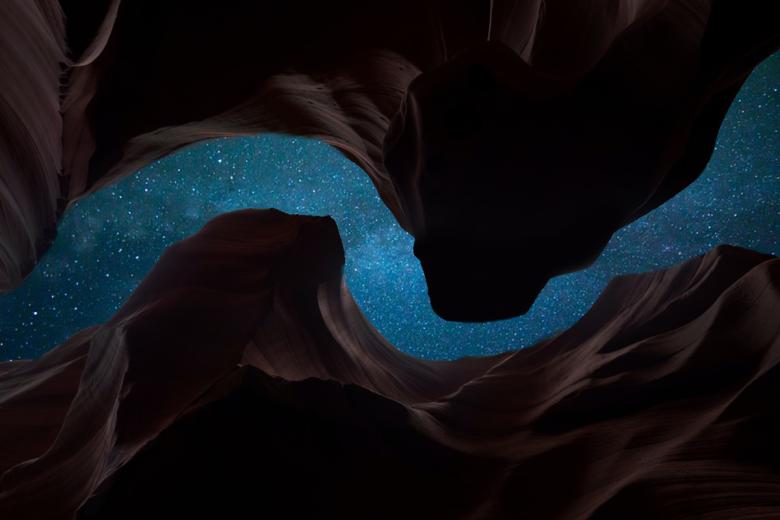
Photo by Mark Basarab on Unsplash
Have you ever had an extraordinary or numinous experience that you didn’t have a context for—like a precognitive dream, a waking vision, or contact with an extraordinary being like an ancestor or spirit? Perhaps it was something so strange or unusual from your regular way of experiencing the world that you dismissed it as something you imagined. Or worse, as something scary or dangerous. Well, you’re not the only one.
But extraordinary, or paranormal, experiences are more normal than you might expect. These experiences can happen quite frequently. However, folks tend to be a bit cagey about when and with whom they share them. That is if they even pause long enough to contemplate them. Sadly, many extraordinary experiences are discounted outright because we just don’t have a framework within which to understand or validate them.
It’s not that surprising, really. Here in the West we prioritize measurable, quantitative metrics over deep, qualitative insight. “If something can’t be scientifically proven—reduced down to its bits and bytes—then it must not be ‘real’,” says most of our culture.
But here’s the problem with that approach to life—it leaves no room for the mystery!
You see here in the West, because we’re so convinced that our way of perceiving the world is right—namely through a scientific materialist lens, that when you start talking about extraordinary human experiences—like the perception of and encounters with the paranormal—you quickly get labeled as “woo-woo” or “airy fairy.” Even practitioners within the esoteric and pagan communities will sometimes preface a paranormal statement by saying, “This may sound a little woo-woo, but…”
Here’s why these terms are problematic. According to Dictionary.com woo-woo is a derogatory term that means irrational and superstitious. And airy fairy isn’t any better. Did you know that the Fairy Faith is an Earth-based spiritual tradition rooted primarily in Celtic folklore and folkmagic? I don’t know about you, but I make it a point not to use other people’s spiritual traditions derisively.
Paranormal or highly sensitive?

Photo by pawel szvmanski on Unsplash
Here’s a bit of data for you, a 2014 study on the highly sensitive brain indicated that about 20% of the human population (and over 100 other species!) are what psychologist Elaine Aron and her colleagues describe as highly sensitive. Highly Sensitive People (HSP) have qualities like expanded perception, heightened sensation, and awareness of subtle cues and changes in one’s environment. That sure sounds like the precursors to paranormal perception to me. So if almost a quarter of the population is highly sensitive, with the potential for perceiving exceptional spiritual or psychic phenomena, then maybe it’s not so abnormal after all?
In fact, there’s a growing field of anthropology, led by Dr. Jack Hunter, called Paranthropology. Paranthropology is focused on the promotion of social-scientific approaches to the study of paranormal experiences, beliefs, and phenomena in all of their varied guises. The Paranthropological approach is devoted to an open-minded and exploratory perspective on a wide range of experiences, beliefs, and phenomena often called paranormal, supernatural, or anomalous. In his book Engaging the Anomalous: Collected Essays on Anthropology, the Paranormal, Mediumship and Extraordinary Experience Dr. Hunter says, “The ultimate aim …. is to interpret religious, spiritual and paranormal beliefs and experiences from a perspective that does not, from the very outset, reduce the complexity of the phenomenon or ignore the significance of personal, subjective experience.”
Religious strangeness
Here’s the deal—pretty much all religions believe some strange things. Resurrection? Divine birth? Yogic siddhis (psychic powers)? Communication with angels or djinn? The ability to perform miracles? Most mainstream religions believe something that involves the paranormal or otherworldly. But I don’t think anyone would call the Dali Lama or the Pope “woo-woo” for talking about extraordinary religious experiences. We simply call it faith.
Other terms that get thrown around to devalue non-traditional ways of being are “freak” or “weird.” But one possible definition of the word freak is something that is singular or unique. And originally the word weird meant something supernatural or otherworldly. Sounds about right.
And who gets to define what is considered weird, anyway? Performance artist and MacArthur Genius Grant recipient Taylor Mac says their drag mother, the Mother Flawless Superior, was fond of saying that, “Normal is just a setting on the dryer,” and, “Reality is a mass hunch.” Certainly, one group of people, or even one part of the world, shouldn’t get to set the standards of normalcy for everyone else!
In fact, feminist, queer, and indigenous scholarship criticizes the West for the reality chokehold it’s traditionally held on the rest of the world. The West tends to police so-called “reality norms” according to its own prioritization of male, heterosexual, gender-binary whiteness. But these standards are actually quite arbitrary, and don’t really reflect the diversity of all of human life. So, let’s reclaim these words—freak and weird—by unabashedly letting our paranormal freak flags fly!
Let’s normalize the paranormal
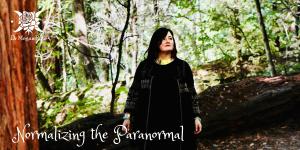
A walk in the woods
Paranormal perception—which one could define as “just a little bit outside the typical way of seeing things”—is often rooted in multi-dimensional ways of perceiving the world. The good news is you don’t have to be an HSP to foster your paranormal perception, everyone has access to it—to varying degrees. Paranormal perception comes from the intuitive, numinous part of us—what I like to call the weird self. It’s the part of us that is connected to our depths, our magic, our big Self.
Let’s make a deal. As a scholar of esoteric spirituality and transpersonal psychology, I invite you to normalize the paranormal with me. Let’s acknowledge that there are mysteries inherent in life itself, and way more things “out there” than our science has been able to or may ever be able to prove, Horatio.
One simple way we can do this is to stop framing our conversations about the numinous or spiritual experiences we’ve had as “woo-woo” or “airy fairy,” or even “new age.” Instead, try leading into a paranormal conversation with, “This may be a little different from your current frame of reference” or “This might not live within your typical spiritual framework,” or simply use the term “esoteric.” As pagans, it will make the work of taking our rightful seat at the table of serious religious dialog so much easier.
Get to know your weird self
Finally, one way we can get to know and make friends with your weird, magical self is through building a relationship with it. And like any relationship, this takes time. We must devote ourselves to the relationship—like we would any serious relationship, develop the discernment of its presence in our lives, and then foster a discipline of regular practice. I call this the 3 D’s of spirit contact. And the best way to approach your weird self is through slowing down and getting out into nature, rewilding yourself. Out in nature we are taken beyond the frame of our carefully curated lives. There we can find the time and space to drop into our subtle, animal body, so that we can hear its wild, intuitive voice.
And what better time to do this than now? As we head into the in-between days of the year’s end—the liminal time that holds deep magic during the holiday season—let’s all give ourselves a little extra time and space outside to drop down and into our normal paranormal selves.
History and Religion
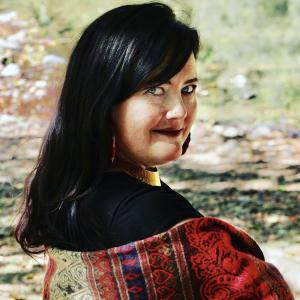
About Megan Rose, PhD
Dr. Megan Rose holds a Ph.D. in East-West Psychology from the California Institute of Integral Studies and a M.A. in Religion and Society from the Graduate Theological Union. Dr. Rose is an initiated ceremonial magician, Shakta Tantric, and Faery Seer in the folkloric Pagan tradition of Faery Seership. Visit DrMeganRose.com You can read more about the author here.
Previous Post
June 20, 2024
Embracing Animism: Discovering the World Soul
Next Post

December 18, 2023 Exploring the Ancient Practice of Spirit Marriage
Recent Comments
Browse Our Archives
Select a Category Uncategorized
Select a Month June 2024 January 2024 December 2023
Follow Us!
TAKE THE
Religious Wisdom Quiz
After healing a leper, Jesus sternly warned him to tell no one but show himself to the priest. Did the man obey?
Select your answer to see how you score.
Partially, he told his family only No, he spread the news widely Yes, he remained silent Yes, he told only the priest
Related posts from Normalizing the Paranormal
Embracing Animism: Discovering the World Soul
Exploring the Ancient Practice of Spirit Marriage
TRENDING AT PATHEOS Pagan

I was recently chatting with someone on Instagram. She asked me what...

While there are many people who share their results, the end of...

On July 23, I saw Christopher Nolan's The Odyssey which is Homer’s...

As I write this two big events have just finished up. One...

Restoring the Watershed of Divine Love
Perhaps cooperation is not something we manufacture through legislation, ideology, or moral...

Many UUs don’t pray because of bad experiences in a previous religion,...
view all Pagan blogs
Ad-Free & Subscriber Log-In Subscription Support
- About Us
- 2026 Calendar
- Videos
- Podcasts
- Library of World Religions
- Faith In Media Tracker
- Advertise With Us
- Write for Us
- Privacy Policy
- Terms of Service
- Do Not Sell My Data
- Contact Us
- Radiant Digital
- Manage Newsletter Subscriptions
- Unsubscribe From Notifications
- Sitemap
Copyright 2008-2026, Patheos. All rights reserved.
Subscription Support Ad-Free & Subscriber Log-In
Follow Patheos