
BuddhistCatholicContemplativeEvangelicalGeneral ChristianHinduJewishLatter-day SaintMuslimNew VisionsProgressive Christian
Beliefs
- Buddhist
- Catholic
- Contemplative
- Evangelical
- General Christian
- Hindu
- Jewish
- Latter-day Saint
- More Voices
- Muslim
- New Visions
- Pagan
- Progressive Christian
Topics
- Religion News
- Food and Religion
- Sports and Religion
- Religious Art
- Religious Music and Entertainment
- Religious Events
- History and Religion
- Style and Religion
- Politics and Religion
- Women in Religion
- Recreation Outdoors and Religion
- Business Finance and Religion
- Careers Workplace and Religion
- Education and Religion
- Family Parenting and Religion
- Health Fitness and Religion
- Home and Religion
- Relationships and Religion
- Technology and Religion
- Travel and Religion
Columnists
- Buddhist Columnists
- Business Finance and Religion Columnists
- Careers Workplace and Religion Columnists
- Catholic Columnists
- Contemplative Columnists
- Education and Religion Columnists
- Evangelists Columnists
- Family Parenting and Religion Columnists
- General Christian Columnists
- Health Fitness and Religion Columnists
- Hindu Columnists
- History and Religion Columnists
- Home and Religion Columnists
- Jewish Columnists
- More Voices Columnists
- Latter Day Columnists
- Muslim Columnists
- New Visions Columnists
- Nonreligious Columnists
- Pagan Columnists
- Politics and Religion Columnists
- Progressive Columnists
- Recreation Outdoors and Religion Columnists
- Relationships and Religion Columnists
- Religion News Columnists
- Religious Art Columnists
- Religious Events Columnists
- Religious Music and Entertainment Columnists
- Sports and Religion Columnists
- Style and Religion Columnists
- Technology and Religion Columnists
- Travel and Religion Columnists
- Women in Religion Columnists
Resource Library
- 2026 Calendar
- Library of World Religions
- The 100 Most Holy Places on Earth
- Patheos Answers
- Podcasts
- Videos
- Faith Leaders Database
- Anglican Episcopalian
- Bahai
- Baptist
- Buddhism
- Christianity
- Confucianism
- Eastern Orthodoxy
- Hinduism
- Holiness and Pentecostal
- ISKCON
- Islam
- Judaism
- Lutheran
- Methodist
- The Church of Jesus Christ of Latter-day Saints
- New Age
- Paganism
- Presbytarian and Reformed
- Protestantism
- Religion Behind the Scenes
- Roman Catholic
- Scientology
- Shia Islam
- Sikhism
- Sufism
- Sunni Islam
- Taoism
- Zen
- See all religions
Research Tools
 Ad-Free & Subscriber Log-In Subscription Support
Ad-Free & Subscriber Log-In Subscription Support
Follow Patheos 

- Trending:
- Forgiveness
- |
- Marriage
- |
- Consciousness
- |
- Death Penalty
- |
- Election
- |
- Halloween
 The Nonprofit Entrepreneur
- Home
- Sponsored (Progressive Christian)
- The Way We Perceive Nonprofit Leadership is Way Wrong!
The Way We Perceive Nonprofit Leadership is Way Wrong!
Last updated on: January 21, 2016 at 3:34 pm by Hugh Ballou
The Way We Perceive Nonprofit Leadership is Way Wrong! 2016-01-21T15:34:29-04:00 Hugh Ballou
Patheos Explore the world's faith through different perspectives on religion and spirituality! Patheos has the views of the prevalent religions and spiritualities of the world.
“You have inherited a lifetime of tribulation. Everybody has inherited it. Take it over, make the most of it and when you have decided you know the right way, do the best you can with it.” – Murray Bowen

The Confused Leader
Leadership As We Have Been Taught is Wrong!
This post has been inspired by the TED Talk by Dan Pallotta on “How We Think of Charity Is Way Wrong.”
I must admit that I’ve been struggling with this topic for many, many years as I work with leaders functioning under a limit to their effectiveness…how they have been taught! When I was having lunch with a local clergyperson nearing retirement, he proudly stated, “I voted for Obama because I’m a Yellow Dog Democrat. That’s what I’ve been taught and that’s what I do.” I thought that it was a shame that this man has lived his life under the pressure of what had been taught to him. I have realized that many of us are unaware of the DNA imposed on us by our family of origin and how it impacts our decisions. This leads us down a troubled road, indeed. I’ve given definition of leadership alternatives. The work of Murray Bowen has been especially helpful in my work. His perspective is to learn about ourselves by learning about our family of origin. Things are neither right nor wrong. They just are.
In 2013, the Meyer Foundation surveyed nearly 100 executive directors of nonprofit organizations to learn how it could best support them. Executive directors reported a range of challenges affecting their effectiveness; some of the most commonly cited were fundraising, personnel management, and working with boards of directors.
“These people are sacrificing so much to take on the executive roles of these groups,” Julie Rogers, President of the Meyer Foundation in Washington, D.C., said. “We are watching people not just burn out but make themselves sick in service of their communities. It’s our job to take care of them.” *
We have been taught leadership in ways that inhibit our ability to lead. We think that the leader is the boss and must have all the right answers. We think, therefore, that asking others for input into decisions, delegation, collaboration, and observing group process are examples of weak leadership, when, in fact, these are examples of effective leadership.

Charismatic vs. Transformational Leadership
The Autocratic leadership model is what many people view as strong leadership. It’s an example of Charismatic Leadership, an example of leadership that’s all about the leader. It’s all about power of position. It’s ultimately a bottle-neck for decision-making if every decision must come to the leader for approval. It also represents a lack of trust by the leader in the members of the team.
Reframing leadership means learning a different style of leadership. Both Transformational Leadership and Bowen Family Systems are effective systems for leaders to embrace. There’s a synergy in these two systems. Transformational Leadership is about building high-performing cultures by building leaders on teams. Bowen Systems is about managing self as a leader.
Here is a summary of the major points of these powerful and scalable systems.
Transformational Leadership
The transformational leader:
- Clearly Articulates Vision And Goals – Having a vision and being able to effectively communicate that vision is key.
- Defines Things Others Can Do – Getting things off their plate, so to speak, is a primary team-building skill.
- Builds Leaders Within Teams – Elevating others and mentoring others in the culture of transformation is the culture of high performance.
- Effectively Delegates – A very underutilized and misunderstood skill that must be mastered.
- Encourages Boldness – Creating a culture of affirmation and a safe culture to learn from mistakes is healthy.
- Gives Information And Support – Withholding information, whether intentional or not, is a barrier to success.
- Affirms And Celebrates Competence – Give as much or more attention to affirmation as to correction. Celebrate often!
- Respects The Individual – Effective leadership is based on effective relationships.
- Avoids Micromanaging – This is the ultimate team killer! It’s not good.
- Models What They Preach – The leader sets the bar and creates the pace for the culture.
Books on Transformational Leadership **
Transforming Power: Stories from Transformational Leaders for Encouragement and Inspiration, Hugh Ballou
Transforming Leadership, James Alexander Burns
Transformational Leadership, Bernard M. Bass
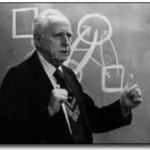
Murray Bowen
Bowen Systems
There are 8 concepts of Bowen Theory. Here’s a summary of the concepts. Check the link to the Bowen Center at Georgetown University (http://www.thebowencenter.org) for more information.
8 Concepts of Bowen Family Systems
- Triangles – When there are three people in a relationship. Triangles are neither good nor bad – they are. Triangles sometimes have one person on the outside when the other two are strongly connected, causing tension.
- Differentiation of Self – Strong grounding in personal guiding principles where a person does not depend on the approval of others for decisions. Each person in a group emotional system thinks for themselves rather than opting in to the will of the group in what’s called “group think.”
- Nuclear Family Emotional System – The basic family unit is where we learn patterns and behaviors. By observing our family, we learn about ourselves and gain abilities to observe other emotional systems.
- Family Projection Process – We all inherit problems and strengths from our parents who have projected their fears and hopes onto us. Observing these patterns frees us to be independent and function in basic self.
- Multigenerational Transmission Process – We all possess learned behaviors that have been taught to us knowingly and unknowingly through multiple generations. Response to these emotional triggers results in less differentiation of self. Observing these patterns allows us to make good decisions, staying true to our basic self.
- Emotional Cutoff – This is where we avoid or minimize contact with people with whom we have unresolved tension. Often, we establish new relationships as a substitute with the same issues appearing over time. Meanwhile, the tension continues with the original person, creating unresolved anxiety.
- Sibling Position – Bowen continues the research of Walter Toman on the patterns of sibling position. Be aware of our position as well as the position of others in our emotional systems.
- Societal Regression/Societal Emotional Process – There are parallel patterns in society and family systems. Observing these patterns of regression and progression can inform us about our personal relationship patterns in families and in organizations.
Books by Roberta Gilbert on Bowen Systems:**
The Eight Concepts of Bowen Theory
Extraordinary Relationships: A New Way of Thinking About Human Interactions
Enjoy learning and leading!
* Post by Lori Bartczak on Stanford Social Innovation Review
** Affiliate fees benefit SynerVision Leadership Foundation.
Hugh Ballou The Transformational Leadership Strategist TM Read about me on Forbes
(c) 2016 Hugh Ballou. All rights reserved.
The Transformational Leadership Strategist
Previous Post
January 1, 2016
The Nonprofit Entrepreneur: A New Paradigm for Leadership
Next Post

January 15, 2016 The Friday Forum...The Way We Think of Charity Leadership is Wrong!
Browse Our Archives
Select a Category Culture Friday Forum Leadership Skills Planning Uncategorized
Select a Month April 2016 March 2016 February 2016 January 2016
Follow Us!
TAKE THE
Religious Wisdom Quiz
In what city was Jesus born?
Select your answer to see how you score.
Jerusalem Nazareth Bethlehem Jericho
Related posts from The Nonprofit Entrepreneur

The "Earl Grey Pastor” - doing nothing is...

In the Name of God - Disruption

Hire a Church Consultant - Sucker!

No More BS...The Church Needs Resurrecting
TRENDING AT PATHEOS Sponsored (Progressive Christian)

Why Christians Have a Sacred Duty to Vote:...
The Bible offers strong support for the sacred duty to vote. Here...

What Being a Modern-Day Apostle Means to Me
In my last column, I discussed the ins and outs of modern-day...

Did Ancient China Once Worship the God of...
Across human history, a common thread weaves through the origins of the...

Love Your Neighbor – Including Earth-Kin: Lev. 19,...
God’s command to love your neighbor means acting in an ethical and...

Lead a Church Study of “Jesus and Lao...
Guest writer Jack Thomas (The Irreverent Reverend) reflects on leading his church...

Principles for Understanding the Apostolic Ministry Today
Whenever people discover that my formal ministry title is "apostle," as in...
view all Sponsored (Progressive Christian) blogs
Ad-Free & Subscriber Log-In Subscription Support
- About Us
- 2026 Calendar
- Videos
- Podcasts
- Library of World Religions
- Faith In Media Tracker
- Advertise With Us
- Write for Us
- Privacy Policy
- Terms of Service
- Do Not Sell My Data
- Contact Us
- Radiant Digital
- Manage Newsletter Subscriptions
- Unsubscribe From Notifications
- Sitemap
Copyright 2008-2026, Patheos. All rights reserved.
Subscription Support Ad-Free & Subscriber Log-In
Follow Patheos