
BuddhistCatholicContemplativeEvangelicalGeneral ChristianHinduJewishLatter-day SaintMuslimNew VisionsProgressive Christian
Beliefs
- Buddhist
- Catholic
- Contemplative
- Evangelical
- General Christian
- Hindu
- Jewish
- Latter-day Saint
- More Voices
- Muslim
- New Visions
- Pagan
- Progressive Christian
Topics
- Religion News
- Food and Religion
- Sports and Religion
- Religious Art
- Religious Music and Entertainment
- Religious Events
- History and Religion
- Style and Religion
- Politics and Religion
- Women in Religion
- Recreation Outdoors and Religion
- Business Finance and Religion
- Careers Workplace and Religion
- Education and Religion
- Family Parenting and Religion
- Health Fitness and Religion
- Home and Religion
- Relationships and Religion
- Technology and Religion
- Travel and Religion
Columnists
- Buddhist Columnists
- Business Finance and Religion Columnists
- Careers Workplace and Religion Columnists
- Catholic Columnists
- Contemplative Columnists
- Education and Religion Columnists
- Evangelists Columnists
- Family Parenting and Religion Columnists
- General Christian Columnists
- Health Fitness and Religion Columnists
- Hindu Columnists
- History and Religion Columnists
- Home and Religion Columnists
- Jewish Columnists
- More Voices Columnists
- Latter Day Columnists
- Muslim Columnists
- New Visions Columnists
- Nonreligious Columnists
- Pagan Columnists
- Politics and Religion Columnists
- Progressive Columnists
- Recreation Outdoors and Religion Columnists
- Relationships and Religion Columnists
- Religion News Columnists
- Religious Art Columnists
- Religious Events Columnists
- Religious Music and Entertainment Columnists
- Sports and Religion Columnists
- Style and Religion Columnists
- Technology and Religion Columnists
- Travel and Religion Columnists
- Women in Religion Columnists
Resource Library
- 2026 Calendar
- Library of World Religions
- The 100 Most Holy Places on Earth
- Patheos Answers
- Podcasts
- Videos
- Faith Leaders Database
- Anglican Episcopalian
- Bahai
- Baptist
- Buddhism
- Christianity
- Confucianism
- Eastern Orthodoxy
- Hinduism
- Holiness and Pentecostal
- ISKCON
- Islam
- Judaism
- Lutheran
- Methodist
- The Church of Jesus Christ of Latter-day Saints
- New Age
- Paganism
- Presbytarian and Reformed
- Protestantism
- Religion Behind the Scenes
- Roman Catholic
- Scientology
- Shia Islam
- Sikhism
- Sufism
- Sunni Islam
- Taoism
- Zen
- See all religions
Research Tools
 Ad-Free & Subscriber Log-In Subscription Support
Ad-Free & Subscriber Log-In Subscription Support
Follow Patheos 

- Trending:
- Forgiveness
- |
- Marriage
- |
- Consciousness
- |
- Death Penalty
- |
- Election
- |
- Halloween

- Home
- Progressive Christian
- Education and Religion
- Chapter 11: The Continued Quest for the Systemic Fix
Chapter 11: The Continued Quest for the Systemic Fix
Last updated on: July 21, 2026 at 3:00 pm by Dorian Scott Cole
Chapter 11: The Continued Quest for the Systemic Fix 2026-07-21T15:00:29-06:00 Dorian Scott Cole
Patheos Explore the world's faith through different perspectives on religion and spirituality! Patheos has the views of the prevalent religions and spiritualities of the world.
Open and Relational Theology & Social Psychology
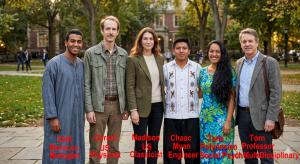
The Group. Gemini Generated Image
The 60-Second Read
The Architecture of the Tipping Point
In Chapter 11, the students examine historical movements to transform their localized failure at city hall into a scalable blueprint for societal change. Retreating to the Vault, they analyze the change-management methodologies of Jesus, who bypassed adversarial ideological debates to awaken a latent, grass-roots resonance through parables. Recognizing that human systems are naturally risk-averse, the team studies how historic tipping points—from the silent defiance of Rosa Parks to the viral boundaries of the #MeToo movement—were triggered not by top-down persuasion, but by small but high-leverage actions that reshaped cultural identity.
By shifting their focus to the Zeitgeist, the group unlocks the raw power of visual communication and community inclusivity. They discover that the public’s resistance to “Housing First” frameworks is fundamentally driven by a legacy of negative imagery. To subvert this cultural script, they resolve to flip the narrative entirely, mimicking Shania Twain’s legendary subversion of the music industry’s stereotypes. The chapter culminates in a tactical, inclusive plan to empower front-line leadership and deploy a visual micro-lever on the ground, setting up an inevitable confrontation with the status quo.
The Insight: True systemic movements do not occur by seeking top-down administrative permission or trying to out-argue entrenched interests. Lasting change is an exercise in engineering a mechanical advantage—aligning grassroots interests, shifting public imagery, and utilizing small, concentrated levers to make the old world too costly to maintain.
The Action: When encountering massive, institutional risk-aversion, abandon macro-level persuasion entirely. Study the prevailing spirit of the times—the Zeitgeist—and identify a highly focused, visual action that forces people to look into a mirror of shared class identification or baseline morality.
The Task: Examine a deadlocked problem in your own arena. Stop trying to pass a sweeping new rule or policy. Instead, create a single, low-stakes prototype or localized visual narrative that proves the existing rules are structurally inefficient, leaving the status quo running at an unsustainable deficit.
Themes: Mechanical Advantage, Narrative Subversion, and the Dynamics of the Zeitgeist.
The Series:
- Chapter 1: The Quest for Peace
- Chapter 2: The Stress Test
- Chapter 3 Quest: The Ivory Tower Hits the Ground
- Chapter 4 Quest: The Friction of the Street
- Chapter 5: Quest for the Architect’s Blueprint
- Chapter 6: Quest – Preparing to Defeat the System
- Chapter 7: The quest for working with opponents
- Chapter 8: The Quest for Doing it Right
- Chapter 9: The Quest for Societal Protection
- Chapter 10: The Quest for the Systemic Fix
- Chapter 11: The Continued Quest for the Systemic Fix
- Chapter 12: The Quest to Confront the System
- Chapter 13: The Quest for the Spear of Truth
- Chapter 14: The Quest for the Apocalypse (Revealing)
Chapter 11: The Continued Quest for the Systemic Fix
The atmosphere inside the Vault was quiet, but it was no longer heavy with defeat. The students gathered around the main ledger, studying the behavioral patterns they had compiled. Professor Torn stood by the whiteboard, waiting until they had fully settled into their thoughts.
“You’ve created a very thorough case study of how to create social change through practical, analytical analysis, practical groundwork, and experience to meet the obstacles,” Torn began, gesturing toward the displays. “Did you find anything helpful in Dorian Cole’s book, Unleash Movements that Matter: Break Through Barriers to Change?”
The group nodded in agreement. Just then, the heavy wooden door opened, and Loki entered the room.
Gerard gave him a sour look as the others instinctively turned away. “I suppose you’re here to celebrate some kind of failure,” Gerard muttered.
“Loki works for me,” Torn said calmly, catching everyone off guard. “Everything you ever try in life is going to run into opposition and subversion. People will try their best to discourage you and find ways to stop you. It’s a functional requirement of the testing phase.” Torn paused, looking at the trickster. “Though I admit, Loki, you went a bit far. Going to the Dean wasn’t part of the plan.”
Loki gave Torn a big smile, raising his hands. “I’m not some mindless robot for Professor Torn. I saw champions in you, so I upped the stakes to see if your skill would hold. As for me, I’m simply what happens when you get a PhD in philosophy. You become a TA, you work part-time driving people from here to there on a campus bus, and you endlessly try to land a full-time job as a professor.”
Torn laughed softly. “Not quite. Loki can’t just up and move to another college right now. He and his wife take care of his mother, who is quite ill.”
Loki’s smirk vanished, replaced by a rare flash of genuine vulnerability. “Look, I felt your glares and maybe even your hatred on that bus, and it hurt. But it was entirely just. The goal wasn’t to tear your project down, but to force you to build a more solid foundation—which you did. I just want to say how proud I am of all of you for completely ignoring my constant derision and criticism. Lesser people would have fallen for it and walked away.”
The room went quiet as the weight of the revelation settled. Slowly, Gerard stood up. Everyone followed, stepping forward to shake Loki’s hand.
“At this point, I think you’ve officially passed the test,” Loki said, a bit of his old humor returning. “You’ve been successfully ignoring my every word. I would like to formally join you in the next part of this quest. You’re entering a political minefield, and that’s territory I have no experience with.”
“Can we honestly trust you, you trickster?” Zaid asked, narrowing his eyes with a half-smile. “Is this just another elaborate trick?”
Loki laughed. “Being a trickster is fun, but being part of what you’re attempting to build is genuinely rewarding. I wouldn’t miss this for the world. And who knows? Maybe I have an extra trick up my sleeve to help this work.”
They all sat down again around the ledger, the defensive barriers completely removed.
“This week we began by analyzing how Jesus worked with people,” Tane said, breaking the silence as she reviewed her social psychology notes. “When you look at the historical records, He didn’t waste his precious time or energy arguing with people who had a closed mind. Head-on arguments just trigger a defense to identity, making opponents completely unable to listen, and they even become more firmly opposed. It’s entirely counterproductive.”
“And it can get you killed,” Loki said. “In philosophy that’s a big deal.”
The others laughed.
“Instead, He bypassed their defenses entirely by explaining things through parables. If a story resonated with a person’s core values, they naturally understood the message hidden within it. He knew that the underlying conditions were already established. The common Jewish people desperately wanted a change; they were utterly sick of endless occupation and war, even though their institutional leaders adamantly preferred the status quo.”
“It’s a problem of engineering,” Gerard said, leaning forward as the realization hit him. “I think we’ve experienced this in our work. Change isn’t about delivering a beautiful speech to a closed mind; it’s about establishing resonance and authentic connection. If we align the interests of everyone in the room, we can turn an endless list of grievances into a practical, localized to-do list. We don’t need to ask an administrative manager for permission to build a new world. We just have to prove to the community that the old world is already far too expensive to keep running.”
Torn nodded approvingly. “Jesus explicitly warned that we cannot afford to be blind to the signs of the times. In the sixteenth chapter of Matthew, the Pharisees and Sadducees came demanding a spectacular, miraculous sign from the sky to prove His authority. He rebuked them sharply. He pointed out that while they could accurately predict the weather by reading the color of the morning sky, they completely failed to recognize the spiritual and psychological realities unfolding right in front of their eyes. The true sign of the times was happening in their very midst—the baseline works of mercy, the restoration of human agency through forgiveness, and the message of salvation taking root on the streets. It was already supported by the depth of their own history and validated through practical action.”
“Weather forecasts on the end of the world have always been wrong,” Loki said, leaning back. “The proof we can see with our own eyes. ‘I think, therefore I am,’ discounting where consciousness may actually be and whether we construct the entire world in our minds. This goes directly to those who forecast doom, which always asks the question: was your theology, your observational assessment, or your math wrong?”
The group chuckled, enjoying his philosophical slant.
“But discerning those signs is the real challenge of spiritual insight,” Madison observed, flipping through a chapter on cognitive frameworks. “The difficulty is separating an objective reading of the signs from what you subjectively want to see happen in the world. People constantly search for confirmation bias, hunting for specific events in the news that happen to appeal to their own anxieties or expectations. Those who view the world as inherently condemned because of a rigid theology or a negative worldview will look at every single disaster as proof of their theory. Instead of analyzing what aggregate data actually means, their construct is a conspiracy theory, endlessly chasing outliers to support an unstable foundation. True change movements require an empirical foundation, not a conspiracy theory.”
“To break through that bias, we have to look at the core themes of change management,” Chaac said. “People are naturally risk-averse. The social cost of stepping outside the cultural box is simply too high for most. Tane tried to chip away at the Mayor’s personal identity, but to shift an entire city, we need to understand momentum. Momentum is a strong force that keeps things just as they are. But resistance can weaken it and make it susceptible to tipping points. We need a tipping point. We need to activate the Zeitgeist—the defining spirit and mood of this specific period of history, driven by the collective beliefs of the people, and many are very much against homelessness.”
“I think this moment is pregnant with possibility regarding solving homelessness,” Zaid said, his voice rising with excitement. “The data is there, the need is undeniable, and the birth of the idea into concrete substance is almost inevitable. But just because you recognize that the conditions of the Zeitgeist are established doesn’t guarantee a smooth transition. There will always be fierce pushback from those for whom the status quo is highly profitable or who are paralyzed by the perceived cost of change.”
“So how do we tip the scales?” Madison asked.
“Through the power of community and the profound influence of images,” Tane explained, pulling up a gallery of local media clips on the ledger display. “Right now, all this community ever sees are pictures of people living in squalor on the streets or movies where the unhoused are portrayed exclusively as individuals broken by insurmountable problems. Those negative images appeal to the press because they evoke an emotion, so they sell. But they justify exclusion to the community’s defensive risk-averse attitudes. To change the attitude, we have to change the imagery. We need to show pictures of David and the other operators actively working on the line, proving a positive image of capability and success to the public.”
“We have to adopt a comprehensive view,” Gerard added. “Whether you are analyzing a complex musical composition, a new technology, or our social structure, you can’t get an in-depth understanding if you only look at it through a narrow lens of self-interest.”
“And We need to look at inspiring examples of how just a few people used small things to create change,” Loki said. “In Dorian Cole’s book on movements, he gives several examples. Look at Penn State’s THON initiative. In February of 2024, a student-run philanthropy broke records by raising over sixteen million dollars to support pediatric cancer care at Children’s Hospital. They didn’t do it through traditional corporate bureaucracy; they did it through a forty-six-hour dance marathon. It was agile thinking in action. They empowered front-line student leadership, using passion and raw energy to drive a large-scale initiative. They leveraged personal, emotional narratives to inspire genuine generosity.”
“And they aren’t the only ones,” Chaac noted. “In that same year, Games Done Quick raised over three million dollars for charity by running a week-long video game speedrunning marathon. They engaged small, highly dedicated niche communities and utilized simple, interactive incentives.”
“History is full of people who found inspiration in simple, defiant acts,” Madison said, her eyes alight. “Think of Rosa Parks. Through the single, quiet act of refusing to surrender her seat on a bus, she ignited the conscience of the entire civil rights movement. Or think of Sammy Davis Jr., who faced the triple gauntlet of being Black, Jewish, and having only one eye in an era of intense prejudice. He titled his autobiography with three simple words: ‘Yes, I Can.’ That personal conviction served as his armor against racism and propelled him from ghetto obscurity to global stardom. Even Nick Vujicic, born without arms or legs due to tetra-amelia syndrome, overcame intense bullying and suicidal ideation to stand on global stages, using his own body as a visual testament of hope and resilience to millions.”
“I think it’s about subverting an ugly script,” Tane said, bringing up a music video on her tablet. “Remember Shania Twain’s breakthrough moment? She looked at the classic rock videos from Robert Palmer—songs like ‘Addicted to Love’ and ‘Simply Irresistible.’ Those videos were famous for using women as highly stylized, identical backdrops with superficially white face makeup, stoic expressions, and slicked-back hair. It stereotyped women in an unusual, highly objectified sexual way that felt cold and ugly, even if the music itself was great. You could strongly relate to that line, ‘You wonder where the money went,’ because when you’re under the thrall of romance, you give it all away, but the video images didn’t speak that language. Like negative images of the homeless, they stereotyped.”
“But Shania Twain didn’t just complain about it,” Madison said, smiling. “She executed a deliberate act of subversion. She made her own video for Man! I Feel Like a Woman! and flipped the script completely. She took the exact same aesthetic, but she stylized men in black vinyl costumes with stoic expressions, standing right behind her. The production was striking, beautiful, and bold. She refused to be apologetic for all the things the traditional industry had criticized her for—telling her she couldn’t wear certain clothes or that her style was too tight or too short. She used that song to declare that she was entirely comfortable in her own skin, and she knew that women across the world would totally get it. They did.”
“Not to be sexist,” Gerard interrupted, looking thoughtful, “but she made Palmer’s video look pale by comparison. She stood the country music industry completely on its head because she flipped the script, stylizing men in similar black vinyl costumes and stoic expressions. The colors were very beautiful and striking, and the song was fantastic.”
Madison smiled. “Exactly, Gerard. She refused to be apologetic for all the things the traditional industry had criticized her for, telling her she couldn’t wear certain clothes or that her style was too tight or too short. She used that song to declare that she was entirely comfortable in her own skin, and she knew that women across the world would totally get it. She crafted lyrics that centered on liberation, independence, and the human spirit. Despite initial concerns about potential country-radio backlash, the song resonated deeply with audiences, winning a Grammy in 2000 and signaling a permanent shift in the industry’s acceptance of female empowerment.”
“Given her crossover status, she created a banner for women and a stereotype challenge to men,” Chaac said. “Men loved the song, too. She one-upped Palmer. And she still makes great music.”
“And it created a different image in people’s minds, just like the homeless image does. Tarana Burke’s initial vision for the #MeToo movement in 2006,” Tane said, tracing the pattern on the screen. “Her decade-long work laid a quiet, unbreakable foundation for the front lines. Then, in 2017, journalists Megan Twohey and Jodi Kantor published the empirical data exposing decades of unchecked abuse by Harvey Weinstein, which he is still contesting. But it needed a public image.
”Once eighty women stepped forward into the light, the corporate mask slipped, and Weinstein was out. But the viral groundswell happened because Alyssa Milano did a very simple, high-leverage thing on social media. She didn’t write a long, academic policy paper. She just posted a tweet asking women who had experienced harassment to reply with two simple words: ‘me too.’ She wanted people to work together to set visible boundaries and speak out about them. This became the image in the public.”
“Within twenty-four hours, that single post generated thousands of replies and inspired millions of original stories worldwide,” Madison said. “The cumulative effect of those individual contributions created an unstoppable groundswell that reverberated through every hall of power. They aligned the Zeitgeist.”
The five students looked at one another, a framework clicking into place. They didn’t need the mayor’s administrative permission, and they didn’t need to fit inside the city’s bureaucratic box.
“We have our micro-lever,” Gerard said, a fierce smile spreading across his face as he closed his laptop. “Let’s stop trying to persuade the mayor. The cost of change might always be too high for him. So we need to make the cost of not changing too high for him. It’s time to start drafting the project map for our next effort.”
Our answer is God. God’s answer is us. Together we make the world better.
Author’s Website with life and spiritual resources: Dorian Scott Cole .com
Recent website articles
- Criteria for selecting a therapist and remaining authentic
- Can rural areas (and city depressed zones) become financially stabilized so every person can earn a living wage? Local-first. Yes!
- How might the Ancients have moved 100-ton stones using acoustics?
- Communications: The Trump Effect: Social Liquefaction
- Theology of Catastrophe: a dissertaton style paper on why catastrophes happen.
- Ekklesia: a new format for a Jesus Gathering.
- Systematic Theology for the 21st Century
- Major Decision Matrix
 Open and Relational Theology
General Christian
Education and Religion
Careers, Workplace and Religion

About Dorian Scott Cole
Additional information about the author is on the About tab. You can read more about the author here.
Previous Post

June 21, 2026
Chapter 10: The Quest for the Systemic Fix
Next Post

July 5, 2026 We the People: United at 250
Recent Comments
Browse Our Archives
Select a Category Uncategorized
Select a Month October 2026 September 2026 August 2026 July 2026 June 2026 May 2026 April 2026 March 2026 February 2026 January 2026 December 2025 November 2025 October 2025 September 2025 August 2025 July 2025 June 2025 May 2025 April 2025 March 2025 February 2025 January 2025 December 2024 November 2024 October 2024 September 2024 August 2024 July 2024 June 2024 May 2024 April 2024 March 2024 February 2024 January 2024 December 2023 November 2023 October 2023 September 2023 June 2023 May 2023 April 2023 March 2023 February 2023 January 2023 December 2022 November 2022 October 2022 September 2022 August 2022 July 2022 June 2022 May 2022 April 2022 March 2022 February 2022 January 2022 December 2021 November 2021
Follow Us!
TAKE THE
Religious Wisdom Quiz
What does "Levi" (as in the tribe and the priesthood) mean?
Select your answer to see how you score.
Attached/Joined Firstborn Blessed Strong
Books by This Author Books by New Generations Explore Faith
Related posts from New Generations Explore Faith

Chapter 9, Julian: The Menu and the Meal
Chapter 7: The Commencement and the Glowing Screen
Chapter 6, Elena: The Quest for Peaceful Connection
TRENDING AT PATHEOS Progressive Christian

The Pillar of the Boatmen: the Ancient Monument...
The Pillar of the Boatmen is a Romano-Gaulish sculpture that dates from...

In one sense walking into Westminster Abbey is like walking down the...

'Super Scam Me' Exposes AI Jon Bon Jovi...
Leslie Pickett believed she was in a relationship with Jon Bon Jovi....

The Brazilian Remake of Kendricks' 'Flywheel' Opens in...
“Flywheel,” the story that launched the Kendrick Brothers’ filmmaking career is getting...

The Dangers of Gradual Accommodation (Winking at Sin)
Recently, the “law of gradualness” resurfaced during the opening of a weeklong,...

The Iron Gates and the Lion of the...
Yesterday, I didn't finish my report about, well, yesterday. So I'll...
view all Progressive Christian blogs
What Are Your Thoughts?leave a comment
Ad-Free & Subscriber Log-In Subscription Support
- About Us
- 2026 Calendar
- Videos
- Podcasts
- Library of World Religions
- Faith In Media Tracker
- Advertise With Us
- Write for Us
- Privacy Policy
- Terms of Service
- Do Not Sell My Data
- Contact Us
- Radiant Digital
- Manage Newsletter Subscriptions
- Unsubscribe From Notifications
- Sitemap
Copyright 2008-2026, Patheos. All rights reserved.
Subscription Support Ad-Free & Subscriber Log-In
Follow Patheos