
BuddhistCatholicContemplativeEvangelicalGeneral ChristianHinduJewishLatter-day SaintMuslimNew VisionsProgressive Christian
Beliefs
- Buddhist
- Catholic
- Contemplative
- Evangelical
- General Christian
- Hindu
- Jewish
- Latter-day Saint
- More Voices
- Muslim
- New Visions
- Pagan
- Progressive Christian
Topics
- Religion News
- Food and Religion
- Sports and Religion
- Religious Art
- Religious Music and Entertainment
- Religious Events
- History and Religion
- Style and Religion
- Politics and Religion
- Women in Religion
- Recreation Outdoors and Religion
- Business Finance and Religion
- Careers Workplace and Religion
- Education and Religion
- Family Parenting and Religion
- Health Fitness and Religion
- Home and Religion
- Relationships and Religion
- Technology and Religion
- Travel and Religion
Columnists
- Buddhist Columnists
- Business Finance and Religion Columnists
- Careers Workplace and Religion Columnists
- Catholic Columnists
- Contemplative Columnists
- Education and Religion Columnists
- Evangelists Columnists
- Family Parenting and Religion Columnists
- General Christian Columnists
- Health Fitness and Religion Columnists
- Hindu Columnists
- History and Religion Columnists
- Home and Religion Columnists
- Jewish Columnists
- More Voices Columnists
- Latter Day Columnists
- Muslim Columnists
- New Visions Columnists
- Nonreligious Columnists
- Pagan Columnists
- Politics and Religion Columnists
- Progressive Columnists
- Recreation Outdoors and Religion Columnists
- Relationships and Religion Columnists
- Religion News Columnists
- Religious Art Columnists
- Religious Events Columnists
- Religious Music and Entertainment Columnists
- Sports and Religion Columnists
- Style and Religion Columnists
- Technology and Religion Columnists
- Travel and Religion Columnists
- Women in Religion Columnists
Resource Library
- 2026 Calendar
- Library of World Religions
- The 100 Most Holy Places on Earth
- Patheos Answers
- Podcasts
- Videos
- Faith Leaders Database
- Anglican Episcopalian
- Bahai
- Baptist
- Buddhism
- Christianity
- Confucianism
- Eastern Orthodoxy
- Hinduism
- Holiness and Pentecostal
- ISKCON
- Islam
- Judaism
- Lutheran
- Methodist
- The Church of Jesus Christ of Latter-day Saints
- New Age
- Paganism
- Presbytarian and Reformed
- Protestantism
- Religion Behind the Scenes
- Roman Catholic
- Scientology
- Shia Islam
- Sikhism
- Sufism
- Sunni Islam
- Taoism
- Zen
- See all religions
Research Tools
 Ad-Free & Subscriber Log-In Subscription Support
Ad-Free & Subscriber Log-In Subscription Support
Follow Patheos 

- Trending:
- Forgiveness
- |
- Marriage
- |
- Consciousness
- |
- Death Penalty
- |
- Election
- |
- Halloween

- Home
- Progressive Christian
- Politics and Religion
- Chapter 10: The Quest for the Systemic Fix
Chapter 10: The Quest for the Systemic Fix
Last updated on: July 21, 2026 at 3:00 pm by Dorian Scott Cole
Chapter 10: The Quest for the Systemic Fix 2026-07-21T15:00:48-06:00 Dorian Scott Cole
Patheos Explore the world's faith through different perspectives on religion and spirituality! Patheos has the views of the prevalent religions and spiritualities of the world.
Open and Relational Theology & Social Psychology
▶ 60 Second Read
The 60-Second Read
The Quest for the Systemic Fix
In Chapter 10, the students confront the rigid boundaries of municipal governance when they present their data-backed “Housing First” framework to Mayor Jack Hollis. They give evidence that stable housing is 90% effective at returning people to work, and they hit an ideological wall of political risk and institutional preservation. The mayor relegates systemic transformation to temporary charity and defaults to problem management rather than true leadership. This leaves the students temporarily demoralized.
Refusing to accept a systemic impasse, Tane stages an unyielding, five-minute intervention that targets the mayor’s self-conception. By drawing a sharp distinction between a manager who works within existing rules and a leader who envisions and inspires new horizons, she challenges him to alter his identity. The chapter marks the team’s shift from head-on administrative persuasion to the precise change-management strategy of deploying micro-levers to unlock systemic shifts.
The Insight: Entrenched gatekeepers will consistently choose the status quo of “problem management” to avoid systemic disruption and political fallout. To break an institutional deadlock, change agents must shift their target from external compliance to the internal identity and role of the leader.
The Action: When an executive structure rejects a human-centered, data-driven solution, do not escalate into a combative argument over the metrics. Tense, binary diagnostic questioning can safely pierce a gatekeeper’s defensive script and compel them to look into the mirror of their true role.
The Task: Evaluate a blocked scenario in your professional or civic environment. Identify the gatekeeper whose “hands are tied” and formulate three strategic questions designed to challenge them to step out of the manager’s box and assume the identity of an innovative solver.
Themes: Political Reality, Institutional Management, and Changing Identity.
The Series:
- Chapter 1: The Quest for Peace
- Chapter 2: The Stress Test
- Chapter 3 Quest: The Ivory Tower Hits the Ground
- Chapter 4 Quest: The Friction of the Street
- Chapter 5: Quest for the Architect’s Blueprint
- Chapter 6: Quest – Preparing to Defeat the System
- Chapter 7: The quest for working with opponents
- Chapter 8: The Quest for Doing it Right
- Chapter 9: The Quest for Societal Protection
- Chapter 10: The Quest for the Systemic Fix
- Chapter 11: The Continued Quest for the Systemic Fix
- Chapter 12: The Quest to Confront the System
- Chapter 13: The Quest for the Spear of Truth
- Chapter 14: The Quest for the Apocalypse (Revealing)
Chapter 10: The Quest for the Systemic Fix

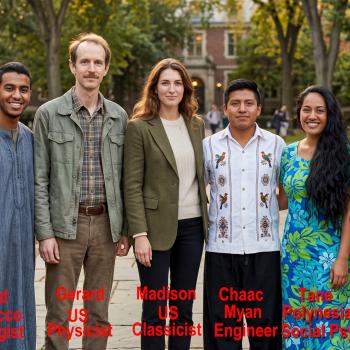
The Group. Gemini Generated Image
The group sat in silence on the bus, intentionally avoiding Loki, who they knew would try to misdirect them. After a while, they had learned to tune out his voice entirely, which was an important lesson in itself. Loki started to say something but saw they weren’t listening. As they departed the bus, he called out to them with a smirk, “Go get that mayor!. As if he would ever listen to you.”
The group smiled tightly, keeping their focus.
They went inside the Vault and meticulously built their case. They had secured a pivotal meeting with the mayor at noon, right after his morning administrative duties were finished.
Mayor Jack Hollis made them sit in the outer office for over half an hour before letting his assistant usher them in. Even then, he continued making notes on a pad for a full minute before he finally acknowledged them.
He glanced up, then went straight back to shuffling his papers. “Hello, everyone. What can I help you with?”
“We’re working on the homeless situation in our city,” Madison said, stepping forward. “And we have some researched and implemented, actionable ideas.”
“You have just a few minutes,” Jack replied flatly. “Then I have a lunch appointment and have to leave. I’ve heard you’re making some minor progress with local placements. I hope it lasts.”
Chaac said, “It may not last without formal assistance. We’ve shown what can be done on the ground with very little assistance. But right now, it’s a prototype, not something sustainable over the long term with graduate students running the day-to-day logistics.”
“Well, students running it is a good thing,” Jack countered. “Get more volunteers from the local churches. It’s a social endeavor, and we try not to get dragged down that fiscal rabbit hole. Government is about governing, not charity. My role is to make this city as prosperous as I can, not give away the city’s resources to beggars.”
“We think getting the homeless securely employed is the direct catalyst for city financial growth,” Zaid argued. “Three and a half million people get laid off from work and go homeless every year in the US. That represents a massive loss of consumer spending and tax revenue. Helping them find jobs by supporting their basic infrastructure is a major boon to the city, not to mention the compound multiplier effect of that local money moving through small businesses.”
The mayor sat back in his chair for a moment and cocked his head to listen.
“This is what works in other cities,” Tane began, introducing the blueprint. “Housing First instead of housing later solves around ninety percent of chronic homelessness. By giving people a stable residential place as a food, contact, and medical anchor, people skip the trauma of living on the streets and get back to work immediately.”
The mayor held up a sharp hand to stop her from talking. “Housing, food, medicine—that sounds like giving a lot of money away and creating dependency. If I open that door and start supporting people with public funds, that signals that we are open to creating systematic dependency. I’ll get voted out of office before the budget is printed. There might even be a recall petition and a special election. The City Council and the people simply won’t stand for it.”
“Does the idea that this is fundamentally the humane way to go mean anything to this community’s values?” Gerard asked. “The way I see the data, the long-term societal benefits far outweigh the initial costs.”
“That may be,” Jack said defensively. “But it’s not the political reality. This is social work, and that’s something for churches and other charitable organizations to do. Government has other statutory priorities. And did I mention that I would like to stay in office?”
The group fell completely silent. They could see this line of reasoning was going nowhere. The mayor was entirely unreceptive to academic metrics.
The mayor sighed, tempering his tone. “Look, I hate that the homeless are on the street, and I really do appreciate the fine work you’re doing. But I know the city council, and I know this city. They won’t go for this. The homeless just need to ‘get on with it’ and find their own solutions. That’s how we do it in the real world.”
Madison rose, keeping her composure. The others took her cue and rose smoothly alongside her.
“Thanks for your time, Mayor,” Madison said evenly. “It’s been highly instructive.”
As they walked down the concrete sidewalk away from the city building, Gerard shook his head. “That was instructive all right. I mean, this is a serious roadblock. I don’t know if we can gain enough social leverage to change this administration’s position.”
“Maybe Dorian Cole’s book on unleashing movements that matter has some ideas on navigating executive gridlock,” Chaac suggested.
Tane stopped dead in her tracks on the hot pavement. “I need to talk to the mayor alone.” Before anyone could answer, she turned on her heel and ran back toward the city building. The others looked after her, completely bewildered, but continued on toward the bus. In the dead of August, it was simply too hot to stand around waiting on the street.
She burst back into the mayor’s outer office. “I need to see the mayor. I believe we had a few minutes left on our scheduled appointment.”
The assistant studied her for a moment, recognizing the absolute, calm determination in her expression. She reached over and buzzed the mayor on the intercom. “Sir, Ms. Tane thinks the group left prematurely and wants a couple more minutes.”
The mayor’s voice crackled through the line, sounding exhausted. “I thought we finished that conversation. All right, send her in.”
When Tane sat back down in the leather chair for those few remaining minutes, her posture wasn’t angry or combative. She was completely calm, composed, soft-spoken, and clinical.
She began, “Like you, Mr. Mayor, I’m trained to hear what people are actually saying, even if they don’t say the words aloud.”
He smiled at her, assuming it was a standard follow-up. But the contrast between her quiet, clinical voice and the razor-sharp clarity of her statement made the mayor feel as if he were suddenly being targeted by a surgical laser beam.
She quickly moved on, delivering the diagnostic pivot. “Do you see yourself as a city manager or a leader?” It was one of those binary questions that was completely impossible to escape.
He answered quickly, leaning back comfortably in his high-backed leather executive chair, using his standard, polished campaign voice. “A leader, of course. We have a city manager to handle the spreadsheets.”
She asked, “Then do you see yourself as a problem solver or a problem manager?”
With his political acuity, the mayor instantly sensed these clinical questions were leading somewhere uncomfortable. He replied noncommittally, “That’s a difficult question. Some societal problems can’t be solved, young lady. They can only be managed.”
“In our conversation just now, I heard you repeatedly tell us how your hands are tied. That must be an incredibly uncomfortable way to work.” The mayor went still as she held his gaze. She continued, “That says to me that others are entirely defining your role for you.”
He leaned forward, his elbows hitting the mahogany desk as his standard political mask slipped away. “That is simply the nature of politics. You serve at the will of the people.”
“To me, that sounds exactly like managing,” Tane countered softly. “Managers work within the existing rules and boundaries. But leaders choose entirely new directions and think outside the box. So which one do you actually want to be? Because I think you have it in you to take the next step to becoming a stronger leader.”
The mayor opened his mouth to deliver a rehearsed soundbite but stopped. He fell completely silent, staring down at his desk, caught off guard in a mirror he had never expected to look into.
Tane kept the momentum, maintaining her soft, steady tone. “You have built an identity. It’s partly your political party belief, and it’s partly the shifting will of the electorate. I believe that makes you a manager, not a leader. You are who you tell yourself you are. Are you telling yourself you’re a leader?”
She paused for a beat, letting that sink into the quiet office. The mayor was conflicted and dared not answer for fear of falling into a trap.
She continued, “And here’s the most vital part of change architecture: the people are who you tell them they are. If you tell them they are a community that cares, a tribe that lifts its neighbors and restores productivity, then that is exactly what they will become. That’s true leadership. Please think about your identity and your role in helping those people who have been abandoned on the streets to get back to work and become financial contributors to this community.”
With that, she stood up and left the room before he could form an answer.
When Tane walked back into the Vault, the other four students were sitting entirely demoralized, fully expecting her to return downcast. Professor Torn looked up from his laptop and smiled warmly at her. Tane sat down at her workstation and flipped open her screen.
They looked at her, completely puzzled. “What on earth did you say to the mayor?” Gerard asked.
“Sometimes you have to help people realize their true identity,” Tane said quietly, typing her password into the secure system prompt. “The mayor won’t help us yet. His identity is currently hardwired as a manager working within the existing rules. But I just disrupted his identity and planted a seed. He’s thinking. Maybe he will find the courage to come out of that box he’s in. Maybe not.”
Professor Torn closed his ledger and tapped the desk with a purposeful grin. “Now, let’s open Dorian’s book on unleashing movements that matter and figure out the exact micro-lever on the ground that will force his hand.”
Our answer is God. God’s answer is us. Together we make the world better.
Author’s Website with life and spiritual resources: Dorian Scott Cole .com
Recent website articles
- Can rural areas (and city depressed zones) become financially stabilized so every person can earn a living wage? Local-first. Yes!
- How might the Ancients have moved 100-ton stones using acoustics?
- Communications: The Trump Effect: Social Liquefaction
- Theology of Catastrophe: a dissertaton style paper on why catastrophes happen.
- Ekklesia: a new format for a Jesus Gathering.
- Systematic Theology for the 21st Century
- Major Decision Matrix
 Open and Relational Theology
General Christian
Politics and Religion
Careers, Workplace and Religion

About Dorian Scott Cole
Additional information about the author is on the About tab. You can read more about the author here.
Previous Post

June 12, 2026
Chapter 9: How "Yes, And" Can Break a Political Deadlock
Next Post
June 30, 2026 Chapter 11: The Continued Quest for the Systemic Fix
Recent Comments
Browse Our Archives
Select a Category Uncategorized
Select a Month October 2026 September 2026 August 2026 July 2026 June 2026 May 2026 April 2026 March 2026 February 2026 January 2026 December 2025 November 2025 October 2025 September 2025 August 2025 July 2025 June 2025 May 2025 April 2025 March 2025 February 2025 January 2025 December 2024 November 2024 October 2024 September 2024 August 2024 July 2024 June 2024 May 2024 April 2024 March 2024 February 2024 January 2024 December 2023 November 2023 October 2023 September 2023 June 2023 May 2023 April 2023 March 2023 February 2023 January 2023 December 2022 November 2022 October 2022 September 2022 August 2022 July 2022 June 2022 May 2022 April 2022 March 2022 February 2022 January 2022 December 2021 November 2021
Follow Us!
TAKE THE
Religious Wisdom Quiz
Who was Abraham asked to offer as a sacrifice?
Select your answer to see how you score.
Isaac Ishmael Shem Jacob
Books by This Author Books by New Generations Explore Faith
Related posts from New Generations Explore Faith
Chapter 14: The Quest for the Apocalypse (Revealing)
Chapter 13: The Quest for the Spear of...

Stopping the Gun Violence Plague

TRENDING AT PATHEOS Progressive Christian

'Super Scam Me' Exposes AI Jon Bon Jovi...
Leslie Pickett believed she was in a relationship with Jon Bon Jovi....

The Brazilian Remake of Kendricks' 'Flywheel' Opens in...
“Flywheel,” the story that launched the Kendrick Brothers’ filmmaking career is getting...

The Dangers of Gradual Accommodation (Winking at Sin)
Recently, the “law of gradualness” resurfaced during the opening of a weeklong,...

The Iron Gates and the Lion of the...
Yesterday, I didn't finish my report about, well, yesterday. So I'll...

The Image: On the Horror of Capitalism and...
The Image Then went the Pharisees, and took counsel how they might...

We are approaching the date of our new American national holiday: October...
view all Progressive Christian blogs
What Are Your Thoughts?leave a comment
Ad-Free & Subscriber Log-In Subscription Support
- About Us
- 2026 Calendar
- Videos
- Podcasts
- Library of World Religions
- Faith In Media Tracker
- Advertise With Us
- Write for Us
- Privacy Policy
- Terms of Service
- Do Not Sell My Data
- Contact Us
- Radiant Digital
- Manage Newsletter Subscriptions
- Unsubscribe From Notifications
- Sitemap
Copyright 2008-2026, Patheos. All rights reserved.
Subscription Support Ad-Free & Subscriber Log-In
Follow Patheos