
BuddhistCatholicContemplativeEvangelicalGeneral ChristianHinduJewishLatter-day SaintMuslimNew VisionsProgressive Christian
Beliefs
- Buddhist
- Catholic
- Contemplative
- Evangelical
- General Christian
- Hindu
- Jewish
- Latter-day Saint
- More Voices
- Muslim
- New Visions
- Pagan
- Progressive Christian
Topics
- Religion News
- Food and Religion
- Sports and Religion
- Religious Art
- Religious Music and Entertainment
- Religious Events
- History and Religion
- Style and Religion
- Politics and Religion
- Women in Religion
- Recreation Outdoors and Religion
- Business Finance and Religion
- Careers Workplace and Religion
- Education and Religion
- Family Parenting and Religion
- Health Fitness and Religion
- Home and Religion
- Relationships and Religion
- Technology and Religion
- Travel and Religion
Columnists
- Buddhist Columnists
- Business Finance and Religion Columnists
- Careers Workplace and Religion Columnists
- Catholic Columnists
- Contemplative Columnists
- Education and Religion Columnists
- Evangelists Columnists
- Family Parenting and Religion Columnists
- General Christian Columnists
- Health Fitness and Religion Columnists
- Hindu Columnists
- History and Religion Columnists
- Home and Religion Columnists
- Jewish Columnists
- More Voices Columnists
- Latter Day Columnists
- Muslim Columnists
- New Visions Columnists
- Nonreligious Columnists
- Pagan Columnists
- Politics and Religion Columnists
- Progressive Columnists
- Recreation Outdoors and Religion Columnists
- Relationships and Religion Columnists
- Religion News Columnists
- Religious Art Columnists
- Religious Events Columnists
- Religious Music and Entertainment Columnists
- Sports and Religion Columnists
- Style and Religion Columnists
- Technology and Religion Columnists
- Travel and Religion Columnists
- Women in Religion Columnists
Resource Library
- 2026 Calendar
- Library of World Religions
- The 100 Most Holy Places on Earth
- Patheos Answers
- Podcasts
- Videos
- Faith Leaders Database
- Anglican Episcopalian
- Bahai
- Baptist
- Buddhism
- Christianity
- Confucianism
- Eastern Orthodoxy
- Hinduism
- Holiness and Pentecostal
- ISKCON
- Islam
- Judaism
- Lutheran
- Methodist
- The Church of Jesus Christ of Latter-day Saints
- New Age
- Paganism
- Presbytarian and Reformed
- Protestantism
- Religion Behind the Scenes
- Roman Catholic
- Scientology
- Shia Islam
- Sikhism
- Sufism
- Sunni Islam
- Taoism
- Zen
- See all religions
Research Tools
 Ad-Free & Subscriber Log-In Subscription Support
Ad-Free & Subscriber Log-In Subscription Support
Follow Patheos 

- Trending:
- Forgiveness
- |
- Marriage
- |
- Consciousness
- |
- Death Penalty
- |
- Election
- |
- Halloween

- Home
- Progressive Christian
- History and Religion
- The Devastation of Shame
The Devastation of Shame
Last updated on: July 29, 2025 at 4:21 pm by Dorian Scott Cole
The Devastation of Shame 2025-07-29T16:21:49-06:00 Dorian Scott Cole
Patheos Explore the world's faith through different perspectives on religion and spirituality! Patheos has the views of the prevalent religions and spiritualities of the world.
Radical Forgiveness series
Shame severely hinders people from moving forward in their lives, from becoming better individuals, from achieving effectiveness, and from advancing. Well, some do get promoted beyond the level of their competence. While it’s true psychology and the Bible aren’t exact sciences when it comes to human behavior, we know shame can be horribly devastating.
We often tend to think, “Others think less of me. I’m not a worthy person.” This is Absolutely wrong! You’re worthy and you can improve if you halt the destructive influence of shame.
It’s time for healing. But how?
We need to understand, as Richard Rohr’s Daily Devotional puts it in a series parallel to this topic “… we are enough just as we are and … we are worthy of love and belonging.”
Being w****orthy doesn’t mean deserving or very worthwhile in the traditional sense**. It means we qualify for the grace of God even with all our blemishes, just as we are. Love** and acceptance aren’t things we earn.
Shame has two objectives. First to tell us we’re never good enough. Second to say, “Who do you think you are?” “Shame is the swampland of the soul.” – Brené Brown, Ph. D.
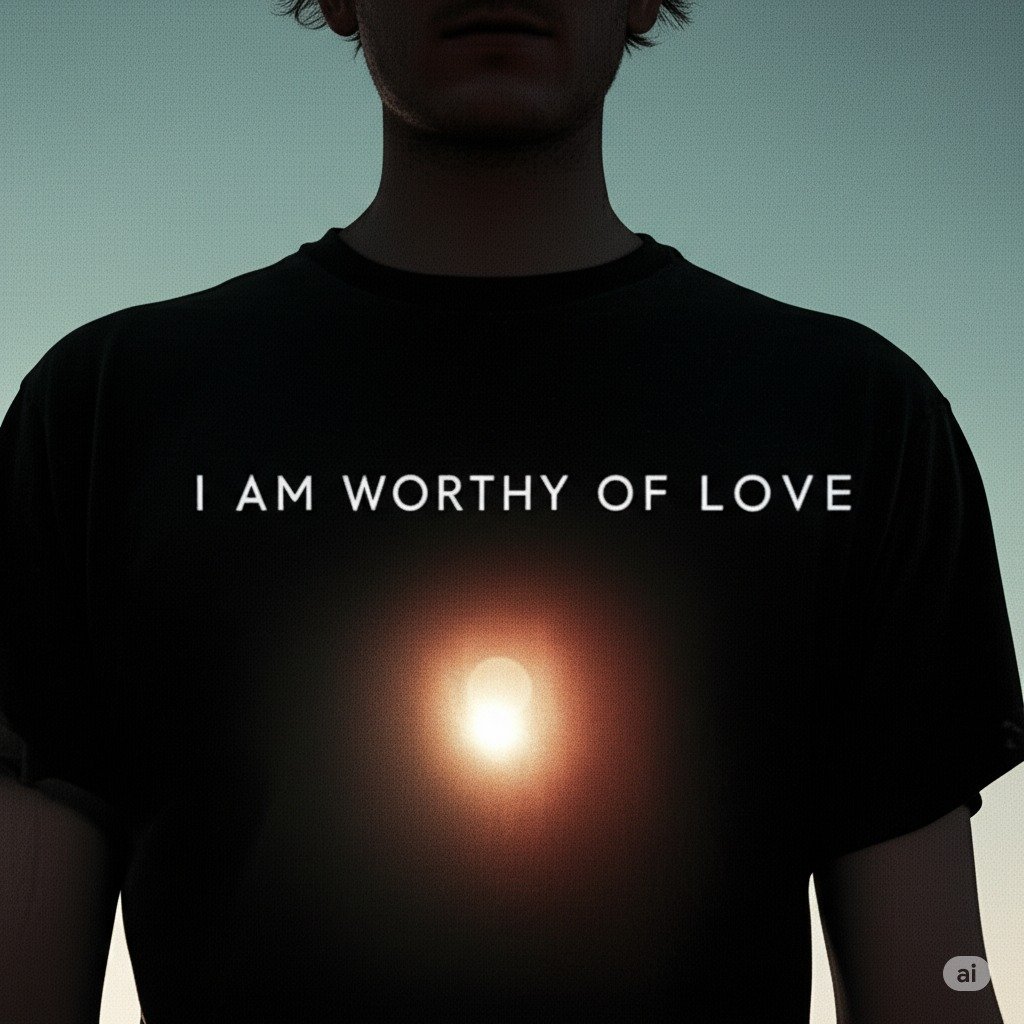
I Am Worthy ofLove image by Google AI
About this Series: Feeling Worthy of Love
This series of blog articles explores how to truly feel worthy of love. This isn’t just self-help; it’s a biblically sound approach, enriched with insights from from noted psychologists who specialize in this.
Just like children we are always growing and making mistakes. We love our children while they grow despite their mistakes. Some of mine tested this endlessly and they all turned into great people.
Knowing versus feeling
The “fix it mentality” doesn’t work. This blog article is meant to challenge you to”fix it.” In my early years of working with people, like many others, I thought “the right information” was all that was needed to resolve personality problems. Was I ever wrong about that! People aren’t objects that can be fixed just by changing a bad part. The roots are anchored in many different influential experiences.
I studied psychology in college and emphasized social psychology. Over decades, I confirmed that people don’t make decisions rationally (logically). How they “feel,”—especially if they become shame-based—guides their decisions and compels their actions.
I don’t have pliers for fixing people. I don’t diagnose or do therapy. All I can do is call things to people’s attention and raise awareness of the consequences so they are more compelled to address the devastating impact of shame in their lives. I hate to see people limited—it really bothers me. People can have much better lives and feel more worthy if shame is removed. It often takes a licensed clinical therapist to work through it, as it requires consistent effort.
Let’s learn about the consequences.
Why Resolve Guilt and Shame ?
Shame produced by others is undeserved. It creates a disease that consumes us, destroying us from within like a cancer. When people look down on others as if they are special or entitled, they make others feel like they are “less than.” The person being looked down on isn’t the problem. The one looking down their nose is the actual problem.
People who look down on others often have an inflated sense of self because of some inadequacy within themselves. The inflated sense of self is a reaction to their own inadequacy, along with belittling others, is a reaction to their internal failings. Put them in a different environment and they would likely feel their inadequacy. The point is: it’s their problem, not yours. Understanding this helps you deflect shame.
People who have learned to accept themselves as they are neither look down on others nor feel looked down on. They understand we’re all human, all make mistakes, or have different abilities and limitations. Most of us, and God, accept us just as we are. This doesn’t mean they will promote us into positions we can’t handle, but it means we’re accepted as we are.
With shame consuming us from within, we never truly feel we’re good enough or worthy of love. To grow, shame demands secrecy, silence, and judgment. We judge ourselves harshly and hide from others. (See the YouTube video, Shame the Swampland of the Soul, by Brené Brown, Ph. D.)
As a result of our feelings, we hide from others. We certainly don’t want to see people we perceive as “better than us.” We seek out and want to talk with people who are imperfect like ourselves so we feel more accepted. Actually we always prefer this—few people like to be around those who seem “perfect.” But shame pushes us to extremes.
By continuing to ignore shame, the powerfully destructive emotion can negatively impact many aspects of our lives including mental and physical health, self-esteem, and relationships. It can lead to self-destructive behaviors, social isolation, and even contribute to the development of mental health conditions like depression and anxiety.
Shame produces feelings such as:
- I’m unlovable.
- I’m a bad person.
- I’m a failure.
- I don’t deserve happiness.
- I’m not important.
So, are you feeling flawed? Often depressed and anxious for no clear reason? Feeling isolated and having trouble making friends? Experiencing physical pain and often physical illness? These can all be symptoms of unresolved shame. Shame can result in doing all kinds of self-destructive behaviors, consistently erecting obstacles to love and taking on more responsibility.
While I can help you recognize possible symptoms, it often takes a clinical psychologist and consistent work to identify and treat what you are experiencing. A major step forward is to understand that you are accepted by God and others just as you are, warts and all. God is always understanding of our human condition and quick to forgive. We should not carry this horrible burden—God’s load is light. Jesus tells us this.
(Watch the video: What Happens When Two Shame-Based People Start a Relationship)
Start now: breaking the downward spiral of shame
As long as we believe others look down on us, we’ll remain stuck. If necessary, find a new group of friends who accept you and leave the old group behind. This will safeguard your well-being.
Recognize that those who criticize you usually do so from a place of their own feelings of inadequacy. Just “shake it off” as Taylor Swift’ song says. Just smile and feel empathy for them. To handle those who are deliberately cruel, for whatever reason, such as the “entitled,” avoid them rather than risking your health and well-being.
We are worthy
It’s very difficult to separate our actions from our identity. If others regard us as bad, we may internalize that, thinking of ourselves as inherently bad—a “bad boy.” This can even influence our behavior into doing bad things, or make us believe we can’t be “good people.” Yet we still love our children when they misbehave. We don’t throw them into a bonfire like so much trash, which often reflects some Biblical imagery.
We even think that telling people God hates their sin doesn’t register as “God hates you and you’re not welcome here.” Such statements may seem like easy ways to accept others, but they are still often perceived as rejection.
Misunderstanding the Bible can drive this problem. For instance, somehow the supposed laws of Judaism sometimes seem to prevail over unconditional love. We still rub what we perceive as sin into the heart strings of our neighbors.
Mistreating someone is unacceptable behavior. But regardless of how some treat us, we’re still accepted by God and most others. In reality, we will always have trouble being accepted by a few, but that’s their problem to resolve. Tolerance and forgiveness are responsibilities for those who follow God.
In my youth I thought that any sin meant banishment from God, parents, and society. Unfortunately this is what many churches taught in an effort to control people. But God is incredibly tolerant, leaving plenty of room for us to learn and change. I’m proof, and I suspect, so are you. God doesn’t abandon God’s children. Only we have the ability to abandon God.
God forgives our mistreatment and it is remembered no more. God loves us and wants us to improve. We may tell ourselves that we can’t, but we are asked to continuously try and eventually we’ll get there.
Conclusion
We are not meant to live with shame; it is our choice. We choose shame when we allow others to make us feel undervalued, and this is a self-destructive choice.
The next blog article will focus on constructive approaches to breaking the downward spiral of guilt. Following that, we’ll examine how shame can originate from others.
Brené Brown, Ph. D, calls shame the swampland of the soul your journey to feeling worthy. This TED Talk is a good place to start: https://www.youtube.com/watch?v=psN1DORYYV0&t=422s)
Following are the key points from the video:
-
Vulnerability is not weakness: Brown defines vulnerability as emotional risk, exposure, and uncertainty. She argues it’s the most accurate measure of courage [04:44, 05:05].
-
Vulnerability is the birthplace of innovation, creativity, and change: She emphasizes that creating something new and adapting to change inherently involves vulnerability [05:55].
-
The importance of discussing shame: Brown explains that her understanding of vulnerability, courage, creativity, and innovation came from studying shame [09:36]. She believes it’s crucial to talk about shame to understand its impact.
-
Shame vs. Guilt: Shame is a focus on self (“I am bad”), while guilt is a focus on behavior (“I did something bad”) [14:06]. Shame is correlated with negative outcomes like addiction and depression, while guilt is inversely correlated with these [14:31].
-
Shame is organized by gender:
-
Empathy is the antidote to shame: Shame thrives on secrecy, silence, and judgment. Empathy, and hearing the words “me too,” can help overcome shame [19:06, 19:18].
-
Daring Greatly: Brown encourages people to enter “the arena” and be vulnerable, rather than waiting for perfection or to be bulletproof, because that’s what connects us [12:52, 19:40].Concluding challenge
Remind yourself many times a day that God loves you despite anything you may have done or how others see you. Most people do—it’s only our perception of ourselves that makes us think others see us as “less than.” God’s love is unconditional; we can’t earn it, and our misdeeds cannot make us lose it. God loves us no matter what we do
If you find yourself unable to take these actions, the subsequent articles in this series may provide further guidance. Otherwise, please consider seeking help from a qualified therapist. Your future well-being depends on it.
“Our answer is God. God’s answer is us. Together we make the world better.” – Dorian Scott Cole
“With hate we have more to lose than gain. Break the cycle.” – Dorian Scott Cole
Note: I use “em dashes.[—]” AI learns from us who do, so AI also uses it. It doesn’t indicate AI writing—it indicates a pause or break and is grammatically correct according to Merriam-Webster and The Chicago Manual of Style.
I use em dashes [—] to indicate a pause or break in thought, and often in place of semicolons, especially in less formal writing. My use of them does not indicate AI writing as some purport; rather, it reflects a deliberate stylistic choice.
Writing, like language itself, continually evolves, despite those who may criticize new forms. It’s an open system.
Now, if we could just join words together and eliminate the hyphen, such as in well-being (wellbeing). We could even have ultra-long [ultralong] words like the German language (I jest) and not hyphenate commonly joined words like some mad rule run amuck.
Author’s website: DorianScottCole.com
General Christian
History and Religion

About Dorian Scott Cole
Additional information about the author is on the About tab. You can read more about the author here.
Previous Post

July 22, 2025
I Am Worthy of Love
Next Post
August 5, 2025 How to Forgive Yourself
Recent Comments
Browse Our Archives
Select a Category Uncategorized
Select a Month October 2026 September 2026 August 2026 July 2026 June 2026 May 2026 April 2026 March 2026 February 2026 January 2026 December 2025 November 2025 October 2025 September 2025 August 2025 July 2025 June 2025 May 2025 April 2025 March 2025 February 2025 January 2025 December 2024 November 2024 October 2024 September 2024 August 2024 July 2024 June 2024 May 2024 April 2024 March 2024 February 2024 January 2024 December 2023 November 2023 October 2023 September 2023 June 2023 May 2023 April 2023 March 2023 February 2023 January 2023 December 2022 November 2022 October 2022 September 2022 August 2022 July 2022 June 2022 May 2022 April 2022 March 2022 February 2022 January 2022 December 2021 November 2021
Follow Us!
TAKE THE
Religious Wisdom Quiz
True or False: Hebrews teaches that Jesus is the same yesterday, today, and forever.
Select your answer to see how you score.
FALSE TRUE
Books by This Author Books by New Generations Explore Faith
Related posts from New Generations Explore Faith

The Beautiful Generation and Vulnerability

Expectations of prayer - Part 3 of Why...

Chapter 9, Julian: The Menu and the Meal
TRENDING AT PATHEOS Progressive Christian

Emotion in Early Christianity by Andrew Crislip
Andrew Crislip’s Emotion in Early Christianity examines an often overlooked dimension of...

16 Spiritual Touchstones for a More Grounded Life
After decades of spiritual study, here are 16 principles I try...

Catholic Evangelization: Sharing Your Faith Every Day
Welcome back to the Graceful Awakening mini-series called, “From Faith to Mission.” ...

The Pillar of the Boatmen: the Ancient Monument...
The Pillar of the Boatmen is a Romano-Gaulish sculpture that dates from...

In one sense walking into Westminster Abbey is like walking down the...

'Super Scam Me' Exposes AI Jon Bon Jovi...
Leslie Pickett believed she was in a relationship with Jon Bon Jovi....
view all Progressive Christian blogs
What Are Your Thoughts?leave a comment
Ad-Free & Subscriber Log-In Subscription Support
- About Us
- 2026 Calendar
- Videos
- Podcasts
- Library of World Religions
- Faith In Media Tracker
- Advertise With Us
- Write for Us
- Privacy Policy
- Terms of Service
- Do Not Sell My Data
- Contact Us
- Radiant Digital
- Manage Newsletter Subscriptions
- Unsubscribe From Notifications
- Sitemap
Copyright 2008-2026, Patheos. All rights reserved.
Subscription Support Ad-Free & Subscriber Log-In
Follow Patheos