
BuddhistCatholicContemplativeEvangelicalGeneral ChristianHinduJewishLatter-day SaintMuslimNew VisionsProgressive Christian
Beliefs
- Buddhist
- Catholic
- Contemplative
- Evangelical
- General Christian
- Hindu
- Jewish
- Latter-day Saint
- More Voices
- Muslim
- New Visions
- Pagan
- Progressive Christian
Topics
- Religion News
- Food and Religion
- Sports and Religion
- Religious Art
- Religious Music and Entertainment
- Religious Events
- History and Religion
- Style and Religion
- Politics and Religion
- Women in Religion
- Recreation Outdoors and Religion
- Business Finance and Religion
- Careers Workplace and Religion
- Education and Religion
- Family Parenting and Religion
- Health Fitness and Religion
- Home and Religion
- Relationships and Religion
- Technology and Religion
- Travel and Religion
Columnists
- Buddhist Columnists
- Business Finance and Religion Columnists
- Careers Workplace and Religion Columnists
- Catholic Columnists
- Contemplative Columnists
- Education and Religion Columnists
- Evangelists Columnists
- Family Parenting and Religion Columnists
- General Christian Columnists
- Health Fitness and Religion Columnists
- Hindu Columnists
- History and Religion Columnists
- Home and Religion Columnists
- Jewish Columnists
- More Voices Columnists
- Latter Day Columnists
- Muslim Columnists
- New Visions Columnists
- Nonreligious Columnists
- Pagan Columnists
- Politics and Religion Columnists
- Progressive Columnists
- Recreation Outdoors and Religion Columnists
- Relationships and Religion Columnists
- Religion News Columnists
- Religious Art Columnists
- Religious Events Columnists
- Religious Music and Entertainment Columnists
- Sports and Religion Columnists
- Style and Religion Columnists
- Technology and Religion Columnists
- Travel and Religion Columnists
- Women in Religion Columnists
Resource Library
- 2026 Calendar
- Library of World Religions
- The 100 Most Holy Places on Earth
- Patheos Answers
- Podcasts
- Videos
- Faith Leaders Database
- Anglican Episcopalian
- Bahai
- Baptist
- Buddhism
- Christianity
- Confucianism
- Eastern Orthodoxy
- Hinduism
- Holiness and Pentecostal
- ISKCON
- Islam
- Judaism
- Lutheran
- Methodist
- The Church of Jesus Christ of Latter-day Saints
- New Age
- Paganism
- Presbytarian and Reformed
- Protestantism
- Religion Behind the Scenes
- Roman Catholic
- Scientology
- Shia Islam
- Sikhism
- Sufism
- Sunni Islam
- Taoism
- Zen
- See all religions
Research Tools
 Ad-Free & Subscriber Log-In Subscription Support
Ad-Free & Subscriber Log-In Subscription Support
Follow Patheos 

- Trending:
- Forgiveness
- |
- Marriage
- |
- Consciousness
- |
- Death Penalty
- |
- Election
- |
- Halloween

- Home
- Progressive Christian
- I Am Worthy of Love
I Am Worthy of Love
Last updated on: July 22, 2025 at 1:06 pm by Dorian Scott Cole
I Am Worthy of Love 2025-07-22T13:06:20-06:00 Dorian Scott Cole
Patheos Explore the world's faith through different perspectives on religion and spirituality! Patheos has the views of the prevalent religions and spiritualities of the world.
Radical Forgiveness Series
“I did something bad therefore I am bad. Even the Bible says we are all sinners.” These are common, yet fundamentally wrong perspectives!
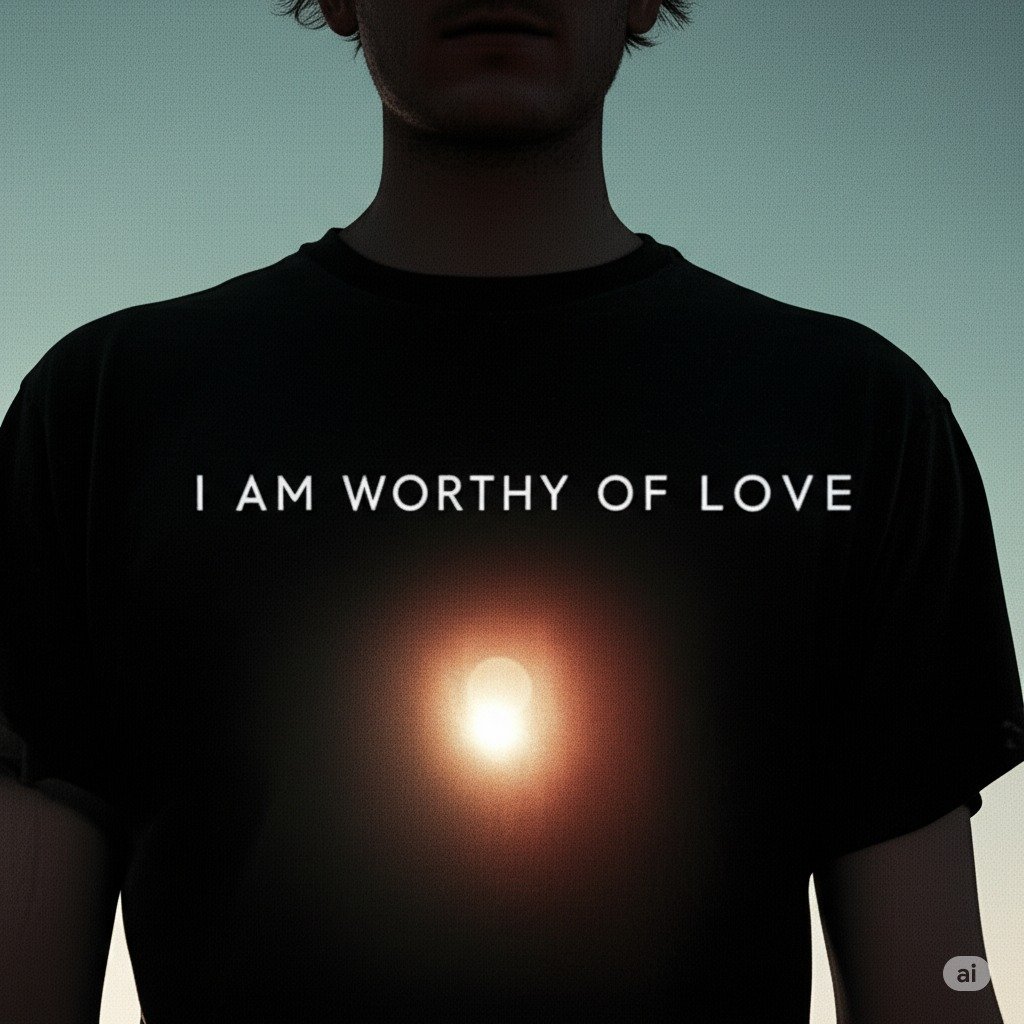
I Am Worthy ofLove image by Google AI
This series of blog articles will explore how to truly feel worthy of love. This isn’t just about self-help; it’s a Biblically sound approach, with references to helpful information from noted psychologists who specialize in this. Feeling worthy is a major problem many people face. Sadly, even religion can sometimes contribute to feelings of guilt and shame, preventing us from recognizing our inherent worthiness of love from God and others. Love isn’t something we earn.
Somehow in some interpretations the message is, “we can never be enough.” Yet in God’s eyes we are always enough. Like children we are always growing. We love our children while they grow. Some of mine tested that endlessly. They all turned into great people.
Hopefully this series will help many break the chain of suffering from feelings of unworthiness. It will go in depth on the causes of feeling unworthy and practical cures.
Identifying the root of the problem is just the first step, and for some, even this may require professional guidance. Overcoming feelings of unworthiness often demands consistent effort, and frequently, the support of a licensed clinical psychologist or therapist is invaluable. I utilize “social psychology” to understand the intricate relationship between individuals and the external world. Often, this relationship is a key part of the problem. Diagnoses and therapy aren’t something I can offer.
Those who don’t find this series helpful, especially if they see feeling unworthy is an obstacle in their lives, should see a clinical therapist.
I’m writing this series partly out of empathy for those suffering from feelings of unworthiness. More importantly, because it not only hinders our effectiveness as Christians or followers of the way of God, it also impedes our spiritual growth.
We don’t have to live with low self-worth (self esteem)
Sophie Sierra on Soinspo, shares her compelling story of overcoming low self-esteem. She could hardly look in a mirror or appear in public. It’s a common experience. We’re often surrounded by people who belittle and ignore us, especially in our younger years when lasting impressions are formed.
Sophie began to shake off the negative people and influences. She made changes to her appearance so she felt better about herself, which is a temporary approach. Crucially, She focused on making true friends and avoiding those with personal problems who diminish others to make themselves feel better about themselves.
Eventually She met the right guy and started a successful fashion business. Follow the links to read Sophies inspiring story.
Gaining self-worth propels you forward in life in relationships and paves the way for accomplishments.
God did not mean for us to suffer from a lack of self-worth
Forgiveness is the keynote of Christianity. It’s God’s clear intention to remove the pain of guilt and shame from all who follow God’s ways. The Good News from Jesus is forgiveness: The stain of bad deeds is gone forever and completely forgotten by God. Romans 10:11 says,“those who trust in Him [Christ] shall not be put to shame.”
The persistent difficulty for us is forgiving ourselves. We can’t shake the stain. as Shakespeare famously wrote in Lady Macbeth (Act 5, Scene 1) of the play, “Out, out, Damned spot.” She says it while sleepwalking, attempting to wash imaginary blood from her hands, a powerful manifestation of her guilt over her murder of King Duncan.
This series aims to guide you in finding forgiveness, learning to forgiving ourselves, and overcoming feelings of low self-worth that impede our lives.
I would have more success with this if I didn’t keep repeating the same bad deeds. My wife says i suffer from “Big Oaf-ism.” She’s always right, I’ve discovered. 🙂
How feeling unworthy destroys us
Feeling unworthy can originate from outside of us or within. To put it succinctly: being treated like dirt makes us feel like dirt. Conversely, mistreating others can cause us to lose self-respect, making us become dirt in our own eyes.
Often, feelings of unworthiness stem from guilt and the resulting shame, whether from being mistreated by others or from mistreating others ourselves.
When we are mistreated, it’s interpreted by our mind as being “less than” in everyone’s eyes. This results from other people who ridicule us, never give us approval, make us feel flawed, abuse us, reject us, oppress us, or stigmatize us with derogatory labels. They make us feel broken, impossibly flawed, and unacceptable. We may even feel we deserve their contempt and feel excluded. Even if their motives were well meaning, the damaging effect is the same.
Mistreating others has a more subtle, but profound effect on ourselves. We inevitably feel guilt for what we’ve done and unresolved guilt leads to shame. Shame becomes an endless downward cycle of self doubt and even self-hate. It interferes in relationships by making us feel unlovable. The person you mistreated you may start tofeel animosity toeard and you may exclude them and even treat them as enemies as a way to rationalize tjat they deserved what you did to them.
It’s very hard for us to mistreat another human being … or even an animal. It’s inevitable that guilt and shame follow. By ignoring these feelings we sear our own conscience. Ignoring feelings doesn’t make us tougher. It makes us less human. Allowing vulnerability makes us tougher.
Shame tells us we aren’t good enough.
Shame relentlessly tears away at our sense of self-worth and feeling of worth to others. It can make us depressed and anxious. You can develop destructive coping mechanisms, such as not allowing ourselves to get close to others. It can isolate us socially and interfere in relationships since we feel unworthy of love.
We are worthy
It’s very difficult to separate our actions from our identity. If we do something bad we think of ourselves as inherently bad: “Bad boy.” Yet we still love our children when they misbehave. We don’t throw them into a bonfire like so much trash, which often comes from Biblical imagery.
We even think that telling people God hates their sin doesn’t register as “God hates you and you’re not welcome here.” Such statements may seem like easy ways to accept others, but they are still perceived as rejection. Somehow the supposed laws of Judaism still prevail over unconditional love. We still rub what we perceive as sin into the heart strings of our neighbors.
Mistreating someone is unacceptable behavior. But we’re still accepted by God and most others. In reality, we will always have trouble being accepted by a few who know what we did, but that’s their problem to resolve. Forgiveness is a responsibility for those who follow God. However, it’s our view of ourselves that suffers the most. Often others forgive us but we can’t forgive ourselves.
In my youth I thought that any sin meant banishment from God, parents, and society. Unfortunately this is what many churches taught in an effort to control people. But God is incredibly tolerant, leaving plenty of room for us to learn and change. I’m proof. So are you. God doesn’t abandon God’s children. Only we have the ability to abandon God.
God forgives our mistreatment and it is remembered no more. God loves us and wants us to improve. We may tell ourselves that we can’t, but we are asked to continuously try and eventually we’ll get there.
We can’t forgive ourselves with the burden of past mistreatment of others hanging over us like a storm cloud. The pivotal first step is to go to the offended person and make things right, if possible. Undo the hardship you put on them and get their forgiveness.
Keep in mind that asking for forgiveness is a somewhat selfish act to unburden your conscience. Forgiveness is up to them. Making it right is up to you.
Conclusion
We might believe we can simply bear the consequences of feeling unworthy, but this perspective actually hinders our effectiveness as followers of Christ and adherents to the Way God has shown us. Unworthiness eats away at us until it’s resolved.
In the upcoming articles in this series, we’ll delve deeper into reconciling with others and eliminating feelings of unworthiness, whther from within or from others.
Brené Brown, Ph. D, calls shame the swampland of the soul. This TED Talk is a good plae to start your journey to feeling worthy: https://www.youtube.com/watch?v=psN1DORYYV0&t=422s)
Concluding challenge
Remind yourself many times a day that God loves you despite anything you may have done. God’s love is unconditional. We can’t earn God’s love, and our misdeeds can’t make us lose it.
Think of those you have mistreated. Apologize to them and ask how you can make things right. By taking these steps, you can eliminate guilt, shame, and animosity, potentially regain a friend, and set yourself on the path to spiritual growth.
If you find yourself unable to take these actions, the subsequent articles in this series may provide further guidance. Otherwise, please consider seeking help from a qualified therapist. Your future well-being depends on it.
“Our answer is God. God’s answer is us. Together we make the world better.” – Dorian Scott Cole
“With hate we have more to lose than gain. Break the cycle.” – Dorian Scott Cole
Author’s website: DorianScottCole.com
General Christian

About Dorian Scott Cole
Additional information about the author is on the About tab. You can read more about the author here.
Previous Post

July 14, 2025
Can We Trust the Spirits? A Homily
Next Post

July 29, 2025 The Devastation of Shame
Recent Comments
Browse Our Archives
Select a Category Uncategorized
Select a Month October 2026 September 2026 August 2026 July 2026 June 2026 May 2026 April 2026 March 2026 February 2026 January 2026 December 2025 November 2025 October 2025 September 2025 August 2025 July 2025 June 2025 May 2025 April 2025 March 2025 February 2025 January 2025 December 2024 November 2024 October 2024 September 2024 August 2024 July 2024 June 2024 May 2024 April 2024 March 2024 February 2024 January 2024 December 2023 November 2023 October 2023 September 2023 June 2023 May 2023 April 2023 March 2023 February 2023 January 2023 December 2022 November 2022 October 2022 September 2022 August 2022 July 2022 June 2022 May 2022 April 2022 March 2022 February 2022 January 2022 December 2021 November 2021
Follow Us!
TAKE THE
Religious Wisdom Quiz
True or False: 1 Peter teaches that judgment must begin with the family of God.
Select your answer to see how you score.
FALSE TRUE
Books by This Author Books by New Generations Explore Faith
Related posts from New Generations Explore Faith


The Beautiful Generation and Vulnerability

TRENDING AT PATHEOS Progressive Christian

Jad Gillies on New Hillsong Worship Songs and...
For worship leader Jad Gillies, Hillsong Worship’s next chapter is not about...

Looking at the Largest Orthodox Cathedral on Earth
There is often a considerable amount of anger and, shall we...

The Problem with False Prophets
Miller’s Station UMC| 10/18/26| Anchor Verse: Jeremiah 23: 1, 9-23 I...

Emotion in Early Christianity by Andrew Crislip
Andrew Crislip’s Emotion in Early Christianity examines an often overlooked dimension of...

16 Spiritual Touchstones for a More Grounded Life
After decades of spiritual study, here are 16 principles I try...

Catholic Evangelization: Sharing Your Faith Every Day
Welcome back to the Graceful Awakening mini-series called, “From Faith to Mission.” ...
view all Progressive Christian blogs
What Are Your Thoughts?leave a comment
Ad-Free & Subscriber Log-In Subscription Support
- About Us
- 2026 Calendar
- Videos
- Podcasts
- Library of World Religions
- Faith In Media Tracker
- Advertise With Us
- Write for Us
- Privacy Policy
- Terms of Service
- Do Not Sell My Data
- Contact Us
- Radiant Digital
- Manage Newsletter Subscriptions
- Unsubscribe From Notifications
- Sitemap
Copyright 2008-2026, Patheos. All rights reserved.
Subscription Support Ad-Free & Subscriber Log-In
Follow Patheos