
BuddhistCatholicContemplativeEvangelicalGeneral ChristianHinduJewishLatter-day SaintMuslimNew VisionsProgressive Christian
Beliefs
- Buddhist
- Catholic
- Contemplative
- Evangelical
- General Christian
- Hindu
- Jewish
- Latter-day Saint
- More Voices
- Muslim
- New Visions
- Pagan
- Progressive Christian
Topics
- Religion News
- Food and Religion
- Sports and Religion
- Religious Art
- Religious Music and Entertainment
- Religious Events
- History and Religion
- Style and Religion
- Politics and Religion
- Women in Religion
- Recreation Outdoors and Religion
- Business Finance and Religion
- Careers Workplace and Religion
- Education and Religion
- Family Parenting and Religion
- Health Fitness and Religion
- Home and Religion
- Relationships and Religion
- Technology and Religion
- Travel and Religion
Columnists
- Buddhist Columnists
- Business Finance and Religion Columnists
- Careers Workplace and Religion Columnists
- Catholic Columnists
- Contemplative Columnists
- Education and Religion Columnists
- Evangelists Columnists
- Family Parenting and Religion Columnists
- General Christian Columnists
- Health Fitness and Religion Columnists
- Hindu Columnists
- History and Religion Columnists
- Home and Religion Columnists
- Jewish Columnists
- More Voices Columnists
- Latter Day Columnists
- Muslim Columnists
- New Visions Columnists
- Nonreligious Columnists
- Pagan Columnists
- Politics and Religion Columnists
- Progressive Columnists
- Recreation Outdoors and Religion Columnists
- Relationships and Religion Columnists
- Religion News Columnists
- Religious Art Columnists
- Religious Events Columnists
- Religious Music and Entertainment Columnists
- Sports and Religion Columnists
- Style and Religion Columnists
- Technology and Religion Columnists
- Travel and Religion Columnists
- Women in Religion Columnists
Resource Library
- 2026 Calendar
- Library of World Religions
- The 100 Most Holy Places on Earth
- Patheos Answers
- Podcasts
- Videos
- Faith Leaders Database
- Anglican Episcopalian
- Bahai
- Baptist
- Buddhism
- Christianity
- Confucianism
- Eastern Orthodoxy
- Hinduism
- Holiness and Pentecostal
- ISKCON
- Islam
- Judaism
- Lutheran
- Methodist
- The Church of Jesus Christ of Latter-day Saints
- New Age
- Paganism
- Presbytarian and Reformed
- Protestantism
- Religion Behind the Scenes
- Roman Catholic
- Scientology
- Shia Islam
- Sikhism
- Sufism
- Sunni Islam
- Taoism
- Zen
- See all religions
Research Tools
 Ad-Free & Subscriber Log-In Subscription Support
Ad-Free & Subscriber Log-In Subscription Support
Follow Patheos 

- Trending:
- Forgiveness
- |
- Marriage
- |
- Consciousness
- |
- Death Penalty
- |
- Election
- |
- Halloween

- Home
- Progressive Christian
- Can We Trust the Mystics and Prophets?
Can We Trust the Mystics and Prophets?
Last updated on: November 3, 2024 at 12:54 pm by Dorian Scott Cole
Can We Trust the Mystics and Prophets? 2024-11-03T12:54:01-06:00 Dorian Scott Cole
Patheos Explore the world's faith through different perspectives on religion and spirituality! Patheos has the views of the prevalent religions and spiritualities of the world.
Spirituality series
As explained in my previous article on Discerning Truth in a World of Spiritual Ideas, we know that every individual has some ability to transcend their physical boundaries. But the accuracy of information may be questionable. Many people have really good mystical abilities.
Mysticism concerns the preparation of the person for, the consciousness and the effect of a direct and transformative presence of God or divine love through contemplative practices.
Sometimes we get bogged down in the details and miss the point. For example, we had a Siamese cat that was a cross between a blue point and a seal point. It was a “What’s the point?”
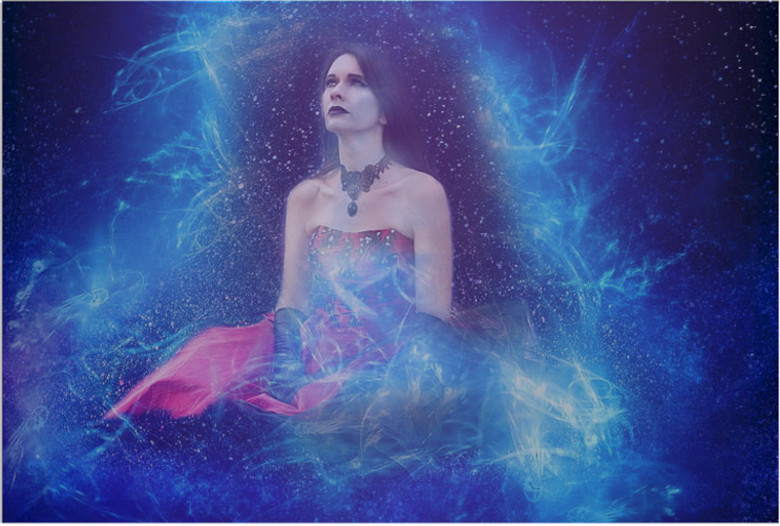
Transcendent, mystic, from Woman In Red Dress on Pickpic, CC0 License. Modified by Dorian Scott Cole
Reference verse:
“We are destroying speculations and every lofty thing raised up against the knowledge of God, and we are taking every thought captive to the obedience of Christ ….”
– 2 Corinthians 10:5
How does the church view mysticism?
Both Catholics and Protestants consider Christian mysticism to be valid additions to their faith. Catholics have a long tradition with mystics. Protestants lean more toward doctrine but at minimum tolerate mystics. Quakers, Anglicans, Methodists,Episcopalians, Lutherans, Presbyterians, Local Churches, Pentecostals, Adventists, and Charismatics have in various ways remained open to the idea of mystical experiences.
The Catholic Church views mysticism as a union with Christ through the sacraments and the Holy Trinity, and a participation in the mystery of Christ. The Church also teaches that God calls all people to this union, but only some are given special graces or signs of this mystical life.
The famous Baptist preacher, C.H. Spurgeon, was considered a mystic. “Baptists are certainly resistant to esoteric spirituality, and dismissive of gnostic claims to special extra-biblical revelation. We are deeply committed to a biblically shaped faith and experience,” as mentioned on Living Witily.
Contemplation drives mysticism
Contemplative practices range from simple prayerful meditation of holy scripture (i.e. Lectio Divina) to contemplation on the presence of God, resulting in theosis (spiritual union with God) and ecstatic visions of the soul’s mystical union with God.
Three stages are discerned in contemplative practice, namely catharsis (purification), contemplation proper, and the vision of God.
This is probably different from what I do and many other religious people do. I focus on or “contemplate” certain aspects of Biblical thought or questions, and hope for divine leadership in my research. At some point things rationally and intuitively make sense and stand up to strict analysis using love as the standard. I don’t consider this mystical.
The value in mysticism
Is there any real value in mystical experiences and knowledge? If these are about knowledge, then secret knowledge that is only available to a few is viewed with disdain by Christianity. It’s Gnosticism. Christianity is about emulating divine love. It’s active. It’s not about knowledge.
I have conversations with cats. I learn very little from them. We have two new kittens. The conversation goes like this when they try to get on the table to sample our food:
Me: I don’t share food with cats. Do I go to your food bowl and eat?
The cat keeps coming toward my plate.
I put the cat on the floor.
Me: No kitties on tables.
Cat: But food.
The cat circles the table and comes up again.
I grab the cat and put it down.
Me: No kitties on tables.
Cat: You surely can’t mean that.
The cat circles the table and comes up again.
I grab the cat and put it down.
Me: No kitties on tables.
Cat: You have to share.
The cat circles the table and comes up again.
I grab the cat and put it down.
Me: No kitties on tables.
Cat: No is a definite maybe.
The cat circles the table and comes up again.
I grab the cat and put it down.
Me: No kitties on tables.
Cat: Okay, I’ll wait until you’re distracted and then it will be okay.
A moment later the cat circles the table and comes up again.
I grab the cat and put it down.
Me: No kitties on tables.
Cat: There will be leftovers. And my presence will be okay at the next meal.
This must be some form of circumlocution. No matter how much I speak, the cat goes round and round and just doesn’t get it.
It seems to be the same with love. Pastors speak on and on about love, but we just don’t get it. This may be why we need mystics.
The Catholic Church authenticates mystical experiences by the personal transformation of the mystic and the people they affect.
Since the protestant church depends more on the Bible and doctrine, mystics are viewed with skepticism. It’s sometimes better for them to remain silent.
Yet mystical experiences are thought to affirm the Bible, and could be tailored to the particular cultural and theological issues of the time. They can be a vehicle of deeper understanding, free from the clutter of self-serving religiosity grounded in culture and tradition.
Theologians study mysticism, thinking that it is a fundamental part of Christian theology. They believe mystics are witnesses to the origins of Christianity and central to it. Theologians and psychoanalysts view it as a bridge into knowing the human condition.
Modern mystics
Edgar Cayce. He was a devout Christian who had many psychic abilities in a trance state.
William S. Sadler. Surgeon and psychiatrist.
Richard Foster (theologian). Author.
Mysticism versus prophecy
MRI studies of people having mystical experiences show different areas of the brain to be more active. They may be in a state similar to meditation. Some have visions.
Mystics are usually people who examine their own conscience, not those of others. Mystical experiences can happen to anyone, and merit is not a consideration.
A mystical experience can be marked by these common features, according to the Mclean Meditation Institute:
- It’s expansive and transcends time and space.
- One’s self-image is overshadowed by the experience of the Divine.
- There’s a total abandonment of consciousness of the senses and material reality.
- There’s a realization of the perfection of life and intelligence of creation.
- There’s a sense of sacredness and a realization of deep inner peace.
- There’s a deep sense of interconnection with the whole universe and its Creator.
The purpose and temporary end of prophecy
By understanding the use of prophecy in the Bible, we can better understand the use of later prophecy.
Ancient prophets had very specific methods of calling from God to their position as prophets. They were very humble people who had dreams or visions to initiate their calling and messages from God. They might be considered protectors of their ancient scripture.
Prophecy in ancient times had specific purposes. It wasn’t about predicting the future, although there was an element of that.
Prophets called people who were drifting away from God back to God. These were usually calling the Israelites, but sometimes were sent to people in other lands. We understand from the wisdom literature of the Book of Jonah, that the prophet carried a picture of destruction, but destroying wasn’t the goal. Change was the goal.
Prophets brought messages of hope during difficult times. They foretold the Day of the Lord in which God would punish their invaders and oppressors and restore their land to them.
During the prophetic age before and during the Israelite deportation into Babylon, prophetic messages about a Messiah were common and very descriptive.
The new king of Babylon, Persian King Cyrus the Great, who allowed the Isrealites to return and rebuild their temple in 538 BCE, was considered to be the Messiah they expected. Prophecy ceased among the Israelites. It was believed later by the Sadducees and probably Pharisees that their scriptures were complete and there was no longer any need for God to speak. They had what they needed.
Some prophecy may have entered into end times predictions. This most likely satisfied the lust of some people for punishment of the wicked. But it was dangerous territory because no person, not even Jesus, knows the day of the end of the age or the end of the world. A thousand year period was unfathomable to ancient people and likely meant, “too far in the future to be known.”
Almost all prophecy was grounded in recent events. Coming events were meant to happen within a few years. Jesus’ prophecy about his return was thought to be within their lifetime by the apostles, and likely meant when the church had taken solid root, then Jesus would be among them as people who make up Jesus body on earth. That took 250 to 300 years to fully take root in the region.
The apostles were given the gift of prophecy with the coming of the Holy Spirit on them. But they usually had more questions than answers. Notably, the Apostle Paul had visions related to some questions about what Jewish law to put on the non-Jews. The answer, they finally realized, was none. Love was a sufficient requirement. We don’t know any specific prophecy the apostles gave except to repeat what Jesus told them.
The early church had prophets, but the various gifts the early church had were contentious. They were considered to be there for the development of the church and only for a season. They would diminish.
Prophets of today
I believe that God is still speaking. We serve a living God, not one as dead as an ancient language. God speaks to us through intuition as we read scripture or even a magazine. As we grow in experience and spiritually we see different things in scripture.
Are there those who have verifiable prophetic gifts? We have to ask, “Is there a Godly purpose for these gifts?” Perhaps some within the person’s sphere need reminded of scripture and the danger of ignoring God’s place in our lives. Could happen.
For those who think current events mean the end is near, and spend more time looking for those signs than for telling others about God’s gifts for us, I have very little affirmative to say. The world is a much better place in many ways than it was 100 to 2000 years ago. Things only look horrible when that is all you look for.
Mysticism seems to be an intensely personal experience that is transformative, and infrequently has a specific message for others. The actions of the mystics speak louder than their illuminating knowledge.
Prophecy has a very direct message about either a necessary transformation because people have drifted too far from God and must come back, or to bring hope for a better future.
Seeing what you’re looking for
I think people find exactly what they look for. If you’re looking for the worst in people and events, that’s what you find. If you’re looking for the best in people and a brighter future, this is what you find.
Experiments with people looking at a blank wall and trying to see the future seem to have two outcomes. For some they see destruction and a bleak world. For others they see a bright future of the earth in harmony. We program ourselves to see one outcome or another by what we feed ourselves. If we suck in all of the bad things in the world and ruminate on them, this is what we look for and find.
An example is the TV minister, Jack Van Impe. He spent his time preaching end of the world or age theology. In the 1990s he began talking about aliens visiting from other planets. He thought they were fallen angels and were going to bring a massive invasion of earth. Didn’t happen.
Others, if they think about aliens at all, may perceive them as beings far superior to us, either mentors or here to exploit resources.
From the evidence, my suspicion is that there are aliens, but I don’t speculate on who they are or what they want. They have no impact on my perception that God is love and this applies across the universe.
When evaluating these religious experiences, not that I spend any time evaluating them, my thoughts always turn to the Bible passage Philipians 4: 8-9: “Finally, brethren, whatever is true, whatever is honorable, whatever is right, whatever is pure, whatever is lovely, whatever is of good repute, if there is any excellence and if anything worthy of praise, dwell [ruminate] on these things. The things you have learned and received and heard and see in me, practice these things, and the God of peace will be with you.”
When we keep our minds on Jesus and the God of love, and the good that they bring, everything else diminishes in importance. Fear and hate diminish.
Conclusion
It’s not my place to evaluate mystic experiences and prophecy. Love is the evaluation. We have to remember, going beyond our physical limitations can be tricky. Are our egos in the way? Are our illusions about what our lives are benefited by in the way?
It is my place to remind others that people find what they’re looking for. Jesus said, “for where your treasure is, there your heart will be also.” (Matthew 6:21) and “But the things that proceed out of the mouth come from the heart, and those defile the man.” (Matthew 15:18 )
So when we think about good things, then our thoughts and words come from a good place. And when we ruminate on everything bad, then our thoughts and words come from a bad place.
We are or become what we think. Be careful what you think. No kitties on tables. But terrible things and fearful events!
Probability Space
What probability spaces can we open in our minds to start understanding what are valid mystical and prophetic experiences?
Potential Space
If you think creatively and allow your mind to wander and explore, do mystical experiences play a role in our spiritual lives?
Series links
Is Religion Spiritual or Stuck in Comfort?
The Life-Giving Power of Spiritual Development
Alley Cats to Angels: Spiritual Growth Transformative Power
Discerning Truth in a World of Spiritual Ideas
Can We Trust the Mystics and Prophets?
Would love to hear your thoughts in the comments below. This helps me improve my work.
Please subscribe to my Patheos Newsletter.
Hey! How can churches minister to new generations if they won’t come to church?
Our bucket has had a hole in it since 1925. We can’t find the plug!
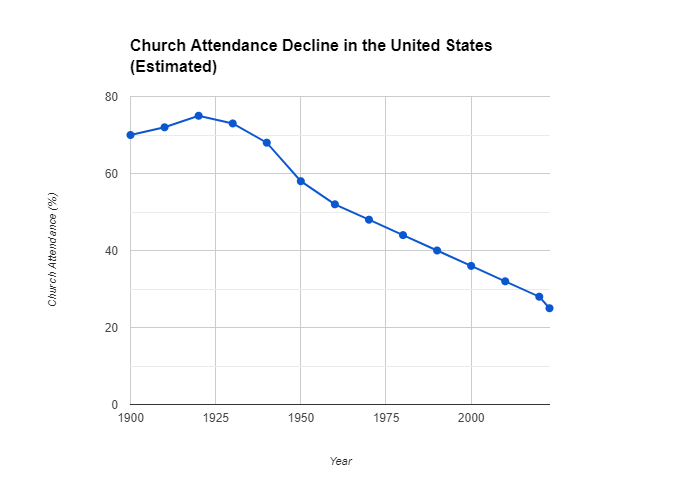
Church attendance decline from 1925 to present as a percentage of the population
I developed and presented a course on understanding and working with new generations. I would like to say I had rave reviews, but on a scale of 1 to 5 it averaged 4.5. Well, some of the people were raving.
The course helps people understand new generations, their values, and their differences. It helps people understand how to build a bridge to them and minister to them. The old worn-out things we used to do don’t work, and for good reason.
This solutions focused course enables people to find new ways, appropriate ways, to minister to these generations in their local circumstances. It’s for church groups and creates deep discussion.
Free video preview of the course:
If you made it this far, you’re a reader! Image two lawyers asking restaurant patrons for help writing their suicide notes, in this comedy. Intrigued? Please consider my novel, Death for Christmas: Be kind or it may kill you, on Amazon and Draft2Digital.
_________________________________
My friend, David Ketcherside, former Christian broadcaster, has written a book series that I gave feedback on. It’s for men, written from his experience, thoughtful analysis, and heart. Gen A, Z, and X (Millennials) would find it very helpful. It’s available in print, on Kindle, and as an audiobook on Audible. Check out The Whole Dude. His description: “My hope is to remind readers what being whole looks like, and help them recognize the distortions that stop us from feeling totally awesome all the time.” He’s also excellent at marketing if you have marketing needs.
________________________
– Dorian
Our answer is God. God’s answer is us. Together we make the world better.
Restore and recreate. Take time to celebrate life. Laugh, sing, and dance regularly, even every day. Happy. This is why we dance to celebrate life: Reindeer actually running and dancing.
Civic service opportunities
Do Unto Others Kindness Campaign, and civic engagement.
United Methodist Church Volunteer Opportunities.
Join or support Zero Hour and amplify the voices of youth organizing for climate action.
Peoples Hub. Resistance, Resilience, Restoration, Re-imagination. Online Popular Education. For movement workers to learn, connect, collaborate, and strategize – in and across the disability justice and solidarity economy movements.
Stakeholder Capitalism – a video podcast series from the World Economic Forum. Can capitalism be made to work for all of us – and to improve rather than destroy the state of the planet?
General service and aid opportunities (on One Spirit Resources Website). To add your service opportunity to the One Spirit Resources list, contact the author (me) through Facebook Messenger. Note that I only friend people I know.
————————————–
Education Opportunities for new generations
Becoming an Entrepreneur – MITx online
Evaluating Social Programs – MITx online
_______________________
Bible scripture verses are New American Standard Version (NASB), unless noted.
_______________________
Author and books
Appease the Volcano: What does God require from people? The voices of the ancients from many religions echo much of the same things: It starts with law, then mercy and forgiveness, then love. Love is a major emphasis in all major religions and replaces law.
The Prophetic Pattern: Ancient and Modern Prophecy: How to distinguish the intent of various types of prophecies and oracles, both ancient and modern.
Preparing For the Future Of Work and Education: Analysis of the kinds of jobs that AI and Robotics will displace, and the educational requirements for them. AI will replace or augment thirty percent of jobs. This is an in-depth analysis citing many authoritative sources.
Author Website: Dorian Scott Cole
Contemplative

About Dorian Scott Cole
Additional information about the author is at the bottom of the page, and on the About tab. You can read more about the author here.
Previous Post

October 23, 2024
Discerning Truth in a World of Spiritual Ideas
Next Post

November 6, 2024 Forging a New Way Forward in Politics
Recent Comments
Browse Our Archives
Select a Category Uncategorized
Select a Month October 2026 September 2026 August 2026 July 2026 June 2026 May 2026 April 2026 March 2026 February 2026 January 2026 December 2025 November 2025 October 2025 September 2025 August 2025 July 2025 June 2025 May 2025 April 2025 March 2025 February 2025 January 2025 December 2024 November 2024 October 2024 September 2024 August 2024 July 2024 June 2024 May 2024 April 2024 March 2024 February 2024 January 2024 December 2023 November 2023 October 2023 September 2023 June 2023 May 2023 April 2023 March 2023 February 2023 January 2023 December 2022 November 2022 October 2022 September 2022 August 2022 July 2022 June 2022 May 2022 April 2022 March 2022 February 2022 January 2022 December 2021 November 2021
Follow Us!
TAKE THE
Religious Wisdom Quiz
True or False: Paul instructs the Philippians to do everything without grumbling or arguing.
Select your answer to see how you score.
FALSE TRUE
Books by This Author Books by New Generations Explore Faith
Related posts from New Generations Explore Faith

Chapter 9, Julian: The Menu and the Meal
Chapter 7: The Commencement and the Glowing Screen
Chapter 6, Elena: The Quest for Peaceful Connection
TRENDING AT PATHEOS Progressive Christian

The Problem with False Prophets
Miller’s Station UMC| 10/18/26| Anchor Verse: Jeremiah 23: 1, 9-23 I...

Emotion in Early Christianity by Andrew Crislip
Andrew Crislip’s Emotion in Early Christianity examines an often overlooked dimension of...

16 Spiritual Touchstones for a More Grounded Life
After decades of spiritual study, here are 16 principles I try...

Catholic Evangelization: Sharing Your Faith Every Day
Welcome back to the Graceful Awakening mini-series called, “From Faith to Mission.” ...

The Pillar of the Boatmen: the Ancient Monument...
The Pillar of the Boatmen is a Romano-Gaulish sculpture that dates from...

In one sense walking into Westminster Abbey is like walking down the...
view all Progressive Christian blogs
What Are Your Thoughts?leave a comment
Ad-Free & Subscriber Log-In Subscription Support
- About Us
- 2026 Calendar
- Videos
- Podcasts
- Library of World Religions
- Faith In Media Tracker
- Advertise With Us
- Write for Us
- Privacy Policy
- Terms of Service
- Do Not Sell My Data
- Contact Us
- Radiant Digital
- Manage Newsletter Subscriptions
- Unsubscribe From Notifications
- Sitemap
Copyright 2008-2026, Patheos. All rights reserved.
Subscription Support Ad-Free & Subscriber Log-In
Follow Patheos