
BuddhistCatholicContemplativeEvangelicalGeneral ChristianHinduJewishLatter-day SaintMuslimNew VisionsProgressive Christian
Beliefs
- Buddhist
- Catholic
- Contemplative
- Evangelical
- General Christian
- Hindu
- Jewish
- Latter-day Saint
- More Voices
- Muslim
- New Visions
- Pagan
- Progressive Christian
Topics
- Religion News
- Food and Religion
- Sports and Religion
- Religious Art
- Religious Music and Entertainment
- Religious Events
- History and Religion
- Style and Religion
- Politics and Religion
- Women in Religion
- Recreation Outdoors and Religion
- Business Finance and Religion
- Careers Workplace and Religion
- Education and Religion
- Family Parenting and Religion
- Health Fitness and Religion
- Home and Religion
- Relationships and Religion
- Technology and Religion
- Travel and Religion
Columnists
- Buddhist Columnists
- Business Finance and Religion Columnists
- Careers Workplace and Religion Columnists
- Catholic Columnists
- Contemplative Columnists
- Education and Religion Columnists
- Evangelists Columnists
- Family Parenting and Religion Columnists
- General Christian Columnists
- Health Fitness and Religion Columnists
- Hindu Columnists
- History and Religion Columnists
- Home and Religion Columnists
- Jewish Columnists
- More Voices Columnists
- Latter Day Columnists
- Muslim Columnists
- New Visions Columnists
- Nonreligious Columnists
- Pagan Columnists
- Politics and Religion Columnists
- Progressive Columnists
- Recreation Outdoors and Religion Columnists
- Relationships and Religion Columnists
- Religion News Columnists
- Religious Art Columnists
- Religious Events Columnists
- Religious Music and Entertainment Columnists
- Sports and Religion Columnists
- Style and Religion Columnists
- Technology and Religion Columnists
- Travel and Religion Columnists
- Women in Religion Columnists
Resource Library
- 2026 Calendar
- Library of World Religions
- The 100 Most Holy Places on Earth
- Patheos Answers
- Podcasts
- Videos
- Faith Leaders Database
- Anglican Episcopalian
- Bahai
- Baptist
- Buddhism
- Christianity
- Confucianism
- Eastern Orthodoxy
- Hinduism
- Holiness and Pentecostal
- ISKCON
- Islam
- Judaism
- Lutheran
- Methodist
- The Church of Jesus Christ of Latter-day Saints
- New Age
- Paganism
- Presbytarian and Reformed
- Protestantism
- Religion Behind the Scenes
- Roman Catholic
- Scientology
- Shia Islam
- Sikhism
- Sufism
- Sunni Islam
- Taoism
- Zen
- See all religions
Research Tools
 Ad-Free & Subscriber Log-In Subscription Support
Ad-Free & Subscriber Log-In Subscription Support
Follow Patheos 

- Trending:
- Forgiveness
- |
- Marriage
- |
- Consciousness
- |
- Death Penalty
- |
- Election
- |
- Halloween

- Home
- Progressive Christian
- Profane or Sacred?
Profane or Sacred?
Last updated on: April 12, 2024 at 8:09 pm by Dorian Scott Cole
Profane or Sacred? 2024-04-12T20:09:38-06:00 Dorian Scott Cole
Patheos Explore the world's faith through different perspectives on religion and spirituality! Patheos has the views of the prevalent religions and spiritualities of the world.
Practical Spirituality series
We love to categorize things. Creating neural nodes that represent categories is how our brain works. To understand our world, we make categories and put things into them. We love the simplified categories, such as good versus evil. Things are one thing or another. Shades of gray are difficult to deal with. Without a category to shove things into, we have to think. Thinking! Yikes!
“Whatever you do in word or deed, do all in the name of the Lord Jesus, giving thanks through Him to God the Father.” – Colossians 3:17 (NASB)
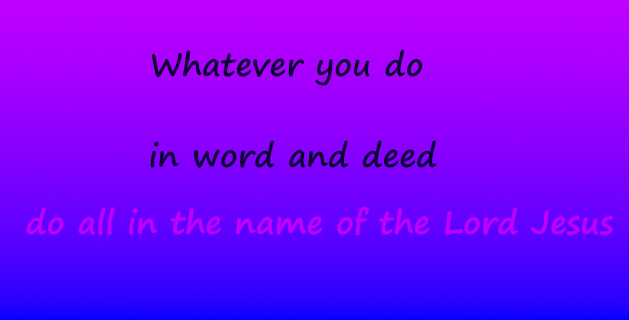
Word and Deed Image composition by Dorian Scott Cole
Profane or spiritual?
We typically connect the word profane with profanity. Profanity means disrespect toward God. But the word profane simply means not sacred. Common. Everyday. But is this just a category made by people, or is profane a real thing?
Set apart
One benefit of being a follower of Christ is that there is no final judgment. We’re forgiven. (All others are judged, and hopefully the balance is favorable.) As the Apostle Paul put it in Romans 6:22 about those who follow Christ, “But now having been freed from sin and enslaved to God, you derive your benefit, resulting in sanctification, and the outcome, eternal life.”
I’m not crazy about Paul’s wording. Enslaved isn’t an accurate characterization of free will, but in his defense he contrasted this with being a slave to sin. Sin has its mesmerizing appeal, tricking us into thinking we’re getting something we want while it drags us down like a slave. More on this later.
Sanctification is another word for holiness, which at its root means set apart. We set things apart to make them special. Religious days, celebrations, and holidays are typical special days. We don’t do common things on those days. We set aside our usual daily routines. Minister are set apart for their task.
We think of ourselves as set apart from our basic natures of jealousy, hate, anger, and other things that are detrimental or counterproductive.
The holy and common are a matter of personal perspective
The Apostle Paul and his congregations strained over this idea. Paul said in Romans 14 (NASB): “One person regards one day above another, another regards every day alike. Each person must be fully convinced in his own mind. He who observes the day, observes it for the Lord, and he who eats, does so for the Lord, for he gives thanks to God; and he who eats not, for the Lord he does not eat, and gives thanks to God. For not one of us lives for himself, and not one dies for himself; for if we live, we live for the Lord, or if we die, we die for the Lord. For to this end Christ died and lived again, that He might be Lord both of the dead and of the living.” “… to him who thinks anything to be unclean, to him it is unclean.”
If we feel something is incorrect for us, then we shouldn’t do it. But that doesn’t mean that its incorrect for everyone. In this same chapter, Paul said not to judge each other’s actions. We each have to understand and be responsible for what we do. No other person can assume that responsibility through their “advice.”
This teaching isn’t an excuse to do whatever you want. Paul ran into this – see 1 Corinthians 5:1-11.
We can be certain that if we do things out of love for others, then we’re okay. If we do things for selfish reasons and harm others, we have to change our ways and ask for forgiveness.
There isn’t an innate character of right or wrong in the things we do or the things that inspire or tempt us. Our view of them and use of them determine their character.
Reaching beyond ourselves
Common things compose most of what we do in life. It’s our view of them that establishes them as special or common, unless they are harmful to ourselves or others.
Examples:
If we eat to survive, or in celebration or communion with others, whatever we eat we do it for good. I like cake and pie and other deserts and have to watch my blood sugar, but if we eat continuously for the fun of doing it, we harm ourselves. (This is not a comment on eating disorders, which is different.) If we ignore others’ needs, we need to stop and consider caring for their needs. God is the author of good things, not famine.
If we lust for our significant other, we do it for good. If we allow ourselves to lust for others, we harm others and ourselves. We have to control our basic desires such as jealousy, hate, anger, and lust so they aren’t detrimental to ourselves and others. God isn’t the author of harm.
If we sing and dance about life, love, and encountering and conquering difficulties, we do something that is beneficial. If we sing and dance in lust for others, we’re detrimental to ourselves. God is the author of all beneficial things, and not the author of harmful things.
We reach for spiritual things. Those things are higher ideals that are not yet part of us. We need to explore them and make them common in our daily lives, and make our daily lives sacred.
Conclusion
In our lives, we each have a purpose that is special to us. It may not be unique, but it sets us apart. We’re here for one or more reasons. But we all must face the other aspects of life, such as our basic responses and temptations that can take us down the wrong path. Life is full of illusions and temptations.
We can view the many aspects of life we encounter as helpful or detrimental. We have to judge for ourselves. No other person can know our life or our life’s path. Most things are not inherently good or evil, but depend on what we use them for. Sometimes we need the wisdom (knowledge and experience) of others to help us figure it out.
Probability Space
As Paul said, we’re not just here for ourselves. Our lives are interconnected with many others. They help us and we help them.
Can we open this probability space of helping others? And not just for our own gain.
Potential Space
If you think creatively and allow your mind to wander and explore, how can we make the world more just, eliminate tragic inequality, and improve the lives of others?
Some do this through medicine, some government (legislation), technology, and direct help. Are there major changes we can make that enshrine our conscience and love into our way of life?
– Dorian
Our answer is God. God’s answer is us. Together we make the world better.
General Christian

About Dorian Scott Cole
Additional information about the author is on the About tab. You can read more about the author here.
Previous Post
April 3, 2024
Apostles’ Guidance
Next Post

April 18, 2024 Playing God
Recent Comments
Browse Our Archives
Select a Category Uncategorized
Select a Month October 2026 September 2026 August 2026 July 2026 June 2026 May 2026 April 2026 March 2026 February 2026 January 2026 December 2025 November 2025 October 2025 September 2025 August 2025 July 2025 June 2025 May 2025 April 2025 March 2025 February 2025 January 2025 December 2024 November 2024 October 2024 September 2024 August 2024 July 2024 June 2024 May 2024 April 2024 March 2024 February 2024 January 2024 December 2023 November 2023 October 2023 September 2023 June 2023 May 2023 April 2023 March 2023 February 2023 January 2023 December 2022 November 2022 October 2022 September 2022 August 2022 July 2022 June 2022 May 2022 April 2022 March 2022 February 2022 January 2022 December 2021 November 2021
Follow Us!
TAKE THE
Religious Wisdom Quiz
What does the rider of the White Horse in Revelations carry?
Select your answer to see how you score.
Scales A sword A bow A scroll
Books by This Author Books by New Generations Explore Faith
Related posts from New Generations Explore Faith

Chapter 9, Julian: The Menu and the Meal
Chapter 7: The Commencement and the Glowing Screen
Chapter 6, Elena: The Quest for Peaceful Connection
TRENDING AT PATHEOS Progressive Christian

In one sense walking into Westminster Abbey is like walking down the...

'Super Scam Me' Exposes AI Jon Bon Jovi...
Leslie Pickett believed she was in a relationship with Jon Bon Jovi....

The Brazilian Remake of Kendricks' 'Flywheel' Opens in...
“Flywheel,” the story that launched the Kendrick Brothers’ filmmaking career is getting...

The Dangers of Gradual Accommodation (Winking at Sin)
Recently, the “law of gradualness” resurfaced during the opening of a weeklong,...

The Iron Gates and the Lion of the...
Yesterday, I didn't finish my report about, well, yesterday. So I'll...

The Image: On the Horror of Capitalism and...
The Image Then went the Pharisees, and took counsel how they might...
view all Progressive Christian blogs
What Are Your Thoughts?leave a comment
Ad-Free & Subscriber Log-In Subscription Support
- About Us
- 2026 Calendar
- Videos
- Podcasts
- Library of World Religions
- Faith In Media Tracker
- Advertise With Us
- Write for Us
- Privacy Policy
- Terms of Service
- Do Not Sell My Data
- Contact Us
- Radiant Digital
- Manage Newsletter Subscriptions
- Unsubscribe From Notifications
- Sitemap
Copyright 2008-2026, Patheos. All rights reserved.
Subscription Support Ad-Free & Subscriber Log-In
Follow Patheos