
BuddhistCatholicContemplativeEvangelicalGeneral ChristianHinduJewishLatter-day SaintMuslimNew VisionsProgressive Christian
Beliefs
- Buddhist
- Catholic
- Contemplative
- Evangelical
- General Christian
- Hindu
- Jewish
- Latter-day Saint
- More Voices
- Muslim
- New Visions
- Pagan
- Progressive Christian
Topics
- Religion News
- Food and Religion
- Sports and Religion
- Religious Art
- Religious Music and Entertainment
- Religious Events
- History and Religion
- Style and Religion
- Politics and Religion
- Women in Religion
- Recreation Outdoors and Religion
- Business Finance and Religion
- Careers Workplace and Religion
- Education and Religion
- Family Parenting and Religion
- Health Fitness and Religion
- Home and Religion
- Relationships and Religion
- Technology and Religion
- Travel and Religion
Columnists
- Buddhist Columnists
- Business Finance and Religion Columnists
- Careers Workplace and Religion Columnists
- Catholic Columnists
- Contemplative Columnists
- Education and Religion Columnists
- Evangelists Columnists
- Family Parenting and Religion Columnists
- General Christian Columnists
- Health Fitness and Religion Columnists
- Hindu Columnists
- History and Religion Columnists
- Home and Religion Columnists
- Jewish Columnists
- More Voices Columnists
- Latter Day Columnists
- Muslim Columnists
- New Visions Columnists
- Nonreligious Columnists
- Pagan Columnists
- Politics and Religion Columnists
- Progressive Columnists
- Recreation Outdoors and Religion Columnists
- Relationships and Religion Columnists
- Religion News Columnists
- Religious Art Columnists
- Religious Events Columnists
- Religious Music and Entertainment Columnists
- Sports and Religion Columnists
- Style and Religion Columnists
- Technology and Religion Columnists
- Travel and Religion Columnists
- Women in Religion Columnists
Resource Library
- 2026 Calendar
- Library of World Religions
- The 100 Most Holy Places on Earth
- Patheos Answers
- Podcasts
- Videos
- Faith Leaders Database
- Anglican Episcopalian
- Bahai
- Baptist
- Buddhism
- Christianity
- Confucianism
- Eastern Orthodoxy
- Hinduism
- Holiness and Pentecostal
- ISKCON
- Islam
- Judaism
- Lutheran
- Methodist
- The Church of Jesus Christ of Latter-day Saints
- New Age
- Paganism
- Presbytarian and Reformed
- Protestantism
- Religion Behind the Scenes
- Roman Catholic
- Scientology
- Shia Islam
- Sikhism
- Sufism
- Sunni Islam
- Taoism
- Zen
- See all religions
Research Tools
 Ad-Free & Subscriber Log-In Subscription Support
Ad-Free & Subscriber Log-In Subscription Support
Follow Patheos 

- Trending:
- Forgiveness
- |
- Marriage
- |
- Consciousness
- |
- Death Penalty
- |
- Election
- |
- Halloween

- Home
- Progressive Christian
- History and Religion
- Bible Credibility In Context
Bible Credibility In Context
Last updated on: October 12, 2022 at 5:01 pm by Dorian Scott Cole
Bible Credibility In Context 2022-10-12T17:01:55-06:00 Dorian Scott Cole
Patheos Explore the world's faith through different perspectives on religion and spirituality! Patheos has the views of the prevalent religions and spiritualities of the world.
Which is easier to believe? That pigs can fly, or that you can put lipstick on a pig, or to believe the Bible is factual? Pigs love to be scratched behind the ear.

Picture of street art. Jean Beaufort on Public Domain Picures.net
Can the Bible help us?
I’ve written before that I regard the argument over Bible credibility to be a gold rush for fools gold. All that glitters isn’t gold. All that’s gold doesn’t glitter. You find what you’re looking for.
As someone recently put it, some can look at a beautiful garden and see one weed and think it’s horrible. Another can look at a field of weeds and see one beautiful flower and think it’s wonderful.
God can make anything speak to us in our time of need, for personal reflection, and for overall guidance. The Bible contains horrible examples of human behavior that indicate things we shouldn’t do, and wonderful examples that we should try to emulate. All are examples for our consideration.
The world of the spirit is not a guide, it’s things for us to consider, both good and bad. When God speaks to our heart, the good things resonate. We recognize them for what they are. I call this “God breathed,” meaning inspiration.
Was the Bible tampered with?
Yes and no. There are thousands of textual variations in older Bible translations just as there are in today’s translations. If you look at today’s translations you see a wide variety of opinion about what the verses say.
The writings are 2000 to 3200 years old and some stories come oral tradition that circulated in the region for centuries. While it’s very difficult to know what words meant in eras that are hundreds of years apart, what I see is less division over the reliability of these texts, not more. This isn’t to say that there isn’t wild disagreement by some. But even Jewish archaeologists view their own history with some skepticism, and archaeological finds most of the time attest to the Bible’s historical factual accuracy.
Different traditions show less tampering
For the Hebrew Bible (Old Testament), there are several translations that come from different traditions.
Dead Sea Scrolls versions
The Dead Sea Scrolls are from a makeshift document repository located near the Dead Sea. The Essene sect of Judaism is thought to be responsible for collecting them and hiding them from those who might destroy them. There are literally thousands of scrolls from as early as the Eighth Century BCE to as late as 100 CE. They include versions of the Hebrew Bible. This strongly suggests that there were several versions of these books that circulated in earlier centuries, and no single standard version.
Samaritan version
Another tradition is from the Samaritans who lived in Northern Israel. They believe themselves to be the keepers of the scrolls, which are the first five books of the Bible. Unlike the Jews they don’t accept the prophets of Israel.
“Some six thousand differences exist between the Samaritan and the Jewish Masoretic Text. Most are minor variations in the spelling of words or grammatical constructions, but others involve significant semantic changes, such as the uniquely Samaritan commandment to construct an altar on Mount Gerizim.”
Masoretic Text
This is the text of the Rabbis (Masoretes) during the Rabbinic period of thought of Jews who lived outside of Israel after the Diaspora. These Rabbis kept Judaism alive and did their best to keep the scriptures relevant to the Jews.
The Masoretic Text was produced by Jewish Rabis and distributed in the Seventh Century. There is one document in the Dead Sea Scrolls that is substantially the same.
Christian New Testament
In the late First Century the Apostle John called some of the apostles together to write down their memories of what Jesus said. This became the Book of John. Scholars debate who wrote it for good reason. It’s a collection of different apostles’ memories.
Tatian Diatessaron translation
In the Second Century Tatian translated some New Testament books into Syriac (Arabic). The oldest copy of that dates from around the Fourth Century. It differs in several respects from the Greek texts that exist from later dates. We don’t know for sure that there was no tampering, but it seems unlikely since it’s written in Syriac.
Bible Canon
Roman Emperor Constantine directed the church leaders (Bishops) to bring the approved books together into a canon. He died in 337. They didn’t complete reviewing the books and making the canon until nearly the end of the third century so Constantine is unlikely to have had much impact on what the Bible says.
A Fifth Century translation into Syriac, the Peshitta, was circulated widely. It’s still the official text of some churches. It includes both the Hebrew Bible and New testament.
Codex Vaticanus (The Latin Bible)
This version was written in 300 to 305 CE. “… it often agrees with the texts presumed to underlie the ancient Coptic, Syriac, and Latin versions against the later Greek manuscripts. It is relatively free of obvious transcriptional errors, and is usually taken as the best representative of the ancient “Alexandrian” form of the New Testament text.”
Codex Sinaiticus (The Sinai Bible)
Dating 330 – 360 AD.
Egyptian Coptic translation
The Egyptian Church (Coptic) translation is from the Greek. The Coptic church split from Catholics in 451 so their translations after that are unlikely to have been seriously affected by editing.
Ethiopian Bible
The Ethiopian Bible is one of several texts from different traditions. It’s unlikely all were substantially edited.
There are some variations between it and the later Jewish translations. It agrees more with the Dead Sea Scroll version which is older than later Jewish translations.
Doubt from new words and translators
All of these versions have variations but they aren’t really serious enough to cast doubt on the veracity of the Bible. In reality they simply indicate the proof is there.
Doubt comes more from translators who did things like coining new words with new meanings. There was no word for “homosexual,” and the word Sodom never had any sexual connotations. Both are travesties in current translations.
The Apostle Paul coined new Greek words to express some of his ideas, but with no historical reference for them prior to Paul we don’t know what they mean. Translators can interpret them any way they want.
What do you want to believe?
We could go on and on forever about each book of the Bible. Most of what I hear from critics is that they don’t know the history of the Bible and simply want to cast doubt and believe the worst.
On the other side are those who believe the most recent King James Version is the inerrant Word of God. They obviously don’t know the history either, they just want to believe in inerrancy. People find what they’re looking for.
Takeaway
The Bible tells us stories of peoples’ relationship with God and what they thought God asks of us. Some will never believe no matter how much proof there is. Some will find every word relevant in some way. God can speak to us through today’s news or any other way.
________________________
The standard of belief and conduct for Christianity is love. Legal standard.
________________________
If you find these articles intriguing, please consider joining the mailing list.
If I’ve challenged your thinking, I’ve done my job.
___________________
Our answer is God. God’s answer is us. Together we make the world better.
– Dorian
Contemplative
Evangelical
General Christian
Humanist
Interfaith
More Voices
New Visions
Nonreligious
History and Religion

About Dorian Scott Cole
Additional information about the author is on the About tab. You can read more about the author here.
Previous Post

October 6, 2022
Context of God
Next Post

October 14, 2022 The Bible In Context - series
Browse Our Archives
Select a Category Uncategorized
Select a Month October 2026 September 2026 August 2026 July 2026 June 2026 May 2026 April 2026 March 2026 February 2026 January 2026 December 2025 November 2025 October 2025 September 2025 August 2025 July 2025 June 2025 May 2025 April 2025 March 2025 February 2025 January 2025 December 2024 November 2024 October 2024 September 2024 August 2024 July 2024 June 2024 May 2024 April 2024 March 2024 February 2024 January 2024 December 2023 November 2023 October 2023 September 2023 June 2023 May 2023 April 2023 March 2023 February 2023 January 2023 December 2022 November 2022 October 2022 September 2022 August 2022 July 2022 June 2022 May 2022 April 2022 March 2022 February 2022 January 2022 December 2021 November 2021
Follow Us!
TAKE THE
Religious Wisdom Quiz
What was the name of the disciple who doubted Jesus' resurrection?
Select your answer to see how you score.
James John Thomas Peter
Books by This Author Books by New Generations Explore Faith
Related posts from New Generations Explore Faith
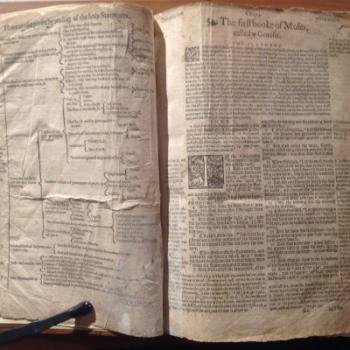

Biblical context – toward a philosophy of Christian...
Biblical Context – it’s everything

Chapter 9, Julian: The Menu and the Meal
TRENDING AT PATHEOS Progressive Christian

'Super Scam Me' Exposes AI Jon Bon Jovi...
Leslie Pickett believed she was in a relationship with Jon Bon Jovi....

The Brazilian Remake of Kendricks' 'Flywheel' Opens in...
“Flywheel,” the story that launched the Kendrick Brothers’ filmmaking career is getting...

The Dangers of Gradual Accommodation (Winking at Sin)
Recently, the “law of gradualness” resurfaced during the opening of a weeklong,...

The Iron Gates and the Lion of the...
Yesterday, I didn't finish my report about, well, yesterday. So I'll...

The Image: On the Horror of Capitalism and...
The Image Then went the Pharisees, and took counsel how they might...

We are approaching the date of our new American national holiday: October...
view all Progressive Christian blogs
Ad-Free & Subscriber Log-In Subscription Support
- About Us
- 2026 Calendar
- Videos
- Podcasts
- Library of World Religions
- Faith In Media Tracker
- Advertise With Us
- Write for Us
- Privacy Policy
- Terms of Service
- Do Not Sell My Data
- Contact Us
- Radiant Digital
- Manage Newsletter Subscriptions
- Unsubscribe From Notifications
- Sitemap
Copyright 2008-2026, Patheos. All rights reserved.
Subscription Support Ad-Free & Subscriber Log-In
Follow Patheos