
BuddhistCatholicContemplativeEvangelicalGeneral ChristianHinduJewishLatter-day SaintMuslimNew VisionsProgressive Christian
Beliefs
- Buddhist
- Catholic
- Contemplative
- Evangelical
- General Christian
- Hindu
- Jewish
- Latter-day Saint
- More Voices
- Muslim
- New Visions
- Pagan
- Progressive Christian
Topics
- Religion News
- Food and Religion
- Sports and Religion
- Religious Art
- Religious Music and Entertainment
- Religious Events
- History and Religion
- Style and Religion
- Politics and Religion
- Women in Religion
- Recreation Outdoors and Religion
- Business Finance and Religion
- Careers Workplace and Religion
- Education and Religion
- Family Parenting and Religion
- Health Fitness and Religion
- Home and Religion
- Relationships and Religion
- Technology and Religion
- Travel and Religion
Columnists
- Buddhist Columnists
- Business Finance and Religion Columnists
- Careers Workplace and Religion Columnists
- Catholic Columnists
- Contemplative Columnists
- Education and Religion Columnists
- Evangelists Columnists
- Family Parenting and Religion Columnists
- General Christian Columnists
- Health Fitness and Religion Columnists
- Hindu Columnists
- History and Religion Columnists
- Home and Religion Columnists
- Jewish Columnists
- More Voices Columnists
- Latter Day Columnists
- Muslim Columnists
- New Visions Columnists
- Nonreligious Columnists
- Pagan Columnists
- Politics and Religion Columnists
- Progressive Columnists
- Recreation Outdoors and Religion Columnists
- Relationships and Religion Columnists
- Religion News Columnists
- Religious Art Columnists
- Religious Events Columnists
- Religious Music and Entertainment Columnists
- Sports and Religion Columnists
- Style and Religion Columnists
- Technology and Religion Columnists
- Travel and Religion Columnists
- Women in Religion Columnists
Resource Library
- 2026 Calendar
- Library of World Religions
- The 100 Most Holy Places on Earth
- Patheos Answers
- Podcasts
- Videos
- Faith Leaders Database
- Anglican Episcopalian
- Bahai
- Baptist
- Buddhism
- Christianity
- Confucianism
- Eastern Orthodoxy
- Hinduism
- Holiness and Pentecostal
- ISKCON
- Islam
- Judaism
- Lutheran
- Methodist
- The Church of Jesus Christ of Latter-day Saints
- New Age
- Paganism
- Presbytarian and Reformed
- Protestantism
- Religion Behind the Scenes
- Roman Catholic
- Scientology
- Shia Islam
- Sikhism
- Sufism
- Sunni Islam
- Taoism
- Zen
- See all religions
Research Tools
 Ad-Free & Subscriber Log-In Subscription Support
Ad-Free & Subscriber Log-In Subscription Support
Follow Patheos 

- Trending:
- Forgiveness
- |
- Marriage
- |
- Consciousness
- |
- Death Penalty
- |
- Election
- |
- Halloween
 NbA Muslims
- Home
- Muslim
- Women’s History Month, Celebrating Vantablackness Part I
Women’s History Month, Celebrating Vantablackness Part I
Last updated on: March 4, 2017 at 10:36 am by NbAMuslims
Women’s History Month, Celebrating Vantablackness Part I 2017-03-04T10:36:02-04:00 NbAMuslims
Patheos Explore the world's faith through different perspectives on religion and spirituality! Patheos has the views of the prevalent religions and spiritualities of the world.
By Layla Abdullah-Poulos
One of the cool things about being a Black Muslim woman is that as soon as one month dedicated to understanding a cultural intersection (race) I embody concludes, it is time for another. Just when Black History Month ends, we begin to recognize the myriad of accomplishments made by women.
As we usher in Women’s History Month, I would like to highlight Black Muslim women who impact and influence the way many of us navigate through Muslim and non-Muslim societies. They are strong and committed to advancing Black Muslim perspectives, resist injustice in their respective fields and blaze trails for the rest of us to explore.
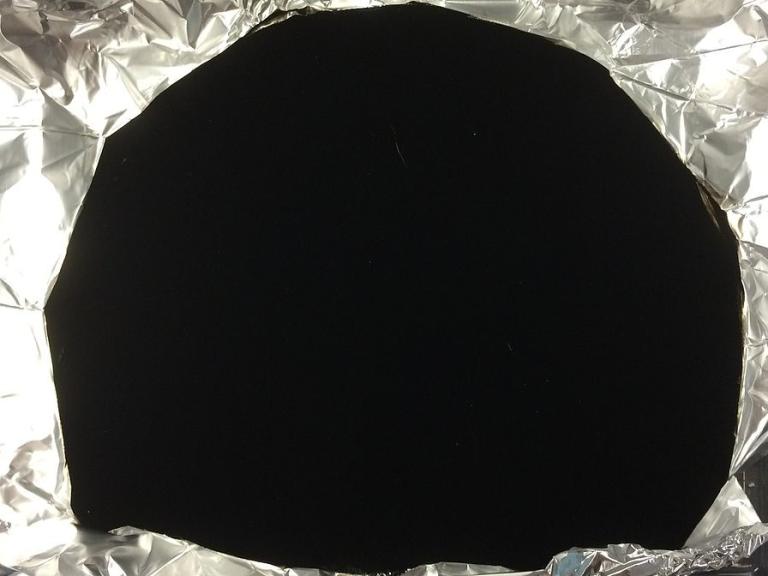
I call these fabulous Muslim women Vantablack Muslimaat because they embody some of the characteristics same of the unique and rare color:
- Not a color – Just like vantablack is not a color but a material, it takes more than skin tone to be a Vantablack Muslimaat. This particular breed of Muslim woman grows and develops into a force of strength that challenges the suppressive status quo and creates spaces to increase knowledge, awareness and empower those around them.
- Can’t be bought – One cannot purchase vantablack because “nanotubes that make up Vantablack must be grown using a complicated (and patented) process involving several machines, a few layers of different substances, and some extreme heat.” Similarly, a Muslimah becomes vantablack by remaining intrepid and fierce while acquiring knowledge and confronting pushback from those who seek to silence her. It involves more than simply knowing something is wrong or Instagram pics at the latest rally. Vantablack Muslimaat create and stabilize platforms that go beyond their individual assertions. Vantablackness is not available at stores or online via a tee shirt or bracelet.
- Super Robust – Although vantablack is, “sensitive to touch, it’s super sturdy against other forces, like shock and vibration,” which makes it good for when things get bumpy. The vantablack Muslimah is more than the latest Muslim woman to claim “woke” or “badass” status on social media “defying stereotypes.” She uses her knowledge and communication skills for more than mere performance. Instead, she is fully resolved to address hard-hitting issues within the Muslim ummah from an Islamic standpoint. She is not always popular, but she is totally okay with it.
I know I am going to get some heat from these phenomenal women about the problems of listicles like this one, but I am going to take the hit. Muslims across backgrounds and ideologies need to recognize!
Inshallah, this Vantablack Muslimaat list is the first I will feature during Women’s History Month, which barely even scratches the surface.
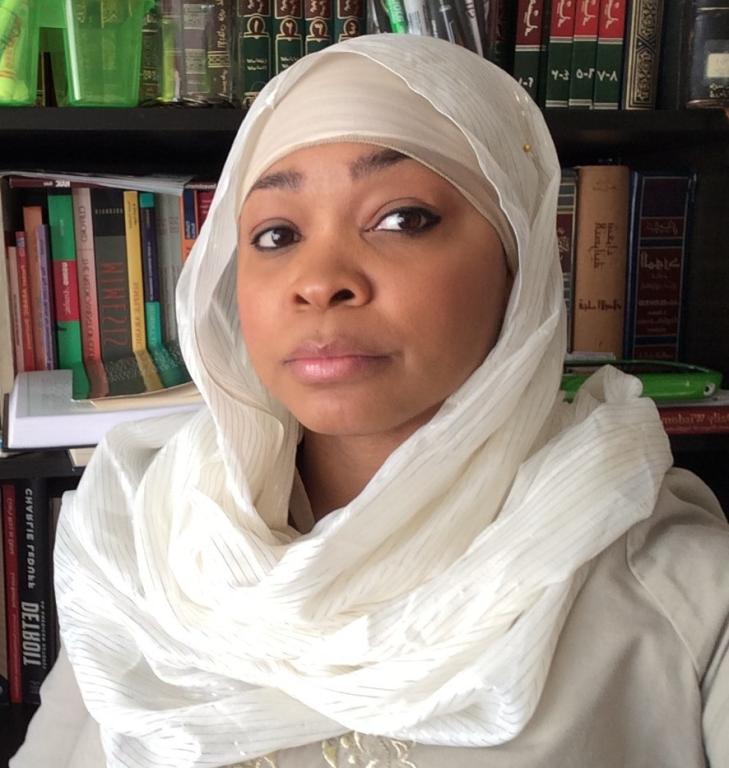 Margari Aziza
My vested interest is dismantling the systems that have us tearing each other apart.
Besides being a Muslim historian, adjunct professor, blogger, editor and freelance writer, Margari Aziza is the co-founder of the Muslim Anti-Racism Collaborative, a national organization that utilizes an educational platform to combat intra-cultural racism and anti-Blackness in Muslim communities and societal systems of oppression.
According to her organizational bio:
After converting to Islam in 1993, her life experiences as a Black American woman have informed her research and writing on Islam, education, race, and gender. She has nearly a decade of teaching experiences at all levels and has worked in education at various capacities. She earned her bachelor’s degree in History from Santa Clara University in 2003 and master’s in History of the Middle East and Islamic Africa from Stanford University in 2006. She has given talks and lectures in various universities and community centers throughout the country.
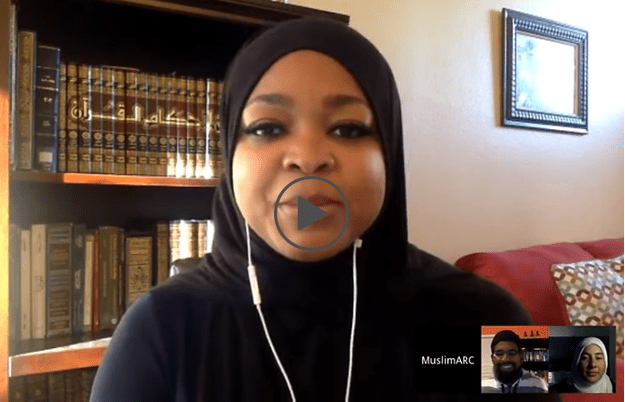
Aziza moderating a MuslimARC panel on Stand Rock water protectors
One of the many things that make Aziza so vantablack is her willingness to address issues of racism and antiblackness in Muslim spaces, where there tends to be the most resistance. Her presence at lectures across the country may incite anti-Blackness and misogynoir, but it doesn’t deter Aziz from using her expanse of knowledge and Islamic commitment to diminish oppression to chip away at social dysfunctions rooted in White supremacist capitalist patriarchy.
Visit Aziza’s:
- Blog – https://margariaziza.com/
- Twitter – @Margari_Aziza
- Facebook – https://www.facebook.com/Margari.Aziza/
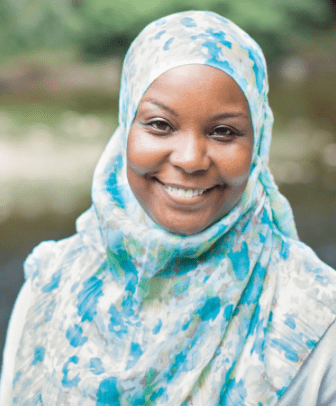 Kameelah Rashad
A victimized community is easily controlled, predictable. An empowered, educated community is powerful.
Kameelah Rashad founded the Muslim Wellness Foundation to promote health and well-being for American Muslims facing damaging psychological and physiological effects resulting from the trauma imposed on them through systems of oppression, addiction and mental illness.
Our core mission is to reduce stigma associated with mental health, addiction and trauma in the American Muslim community through dialogue, education and training. We envision a future in which faith communities are at the forefront of mental health advocacy and committed to developing an inclusive culture of compassion, understanding and support. In order to achieve this goal, we have adopted an interdisciplinary approach which addresses mental health challenges using a spiritually relevant community-based public health framework. MWF is leading the way by offering community based workshops and seminars, mental health first aid training and opportunities for professional development and networking. – Kameelah Rashad, Founder Message
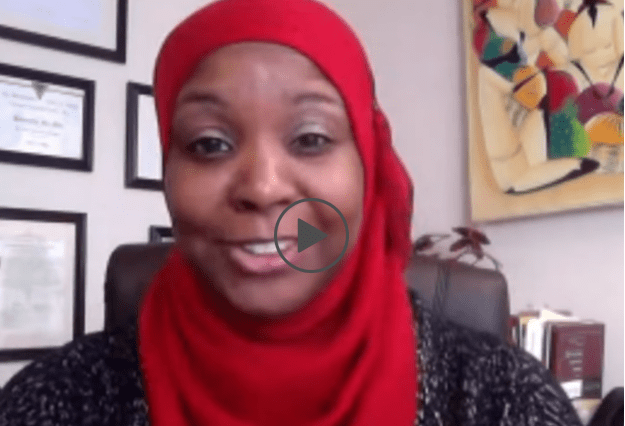
Rashad discussing Black Muslim Resistance with NbA Muslims
Rashad boldly centers the Black Muslim experience and issues of societal trauma stemming from systemic racism as well as anti-Blackness among Muslims. She is a strong proponent of self-care and sister care, encouraging Muslims active in social justice resistance to draw on Islamic teachings to heal.
Rashad is so fierce that they made a doll in her image!
Visit Rashad’s:
- Twitter – @KameelahRashad
- Facebook – https://www.facebook.com/kameelahrashad/
- Soundcloud – https://soundcloud.com/kamrashad
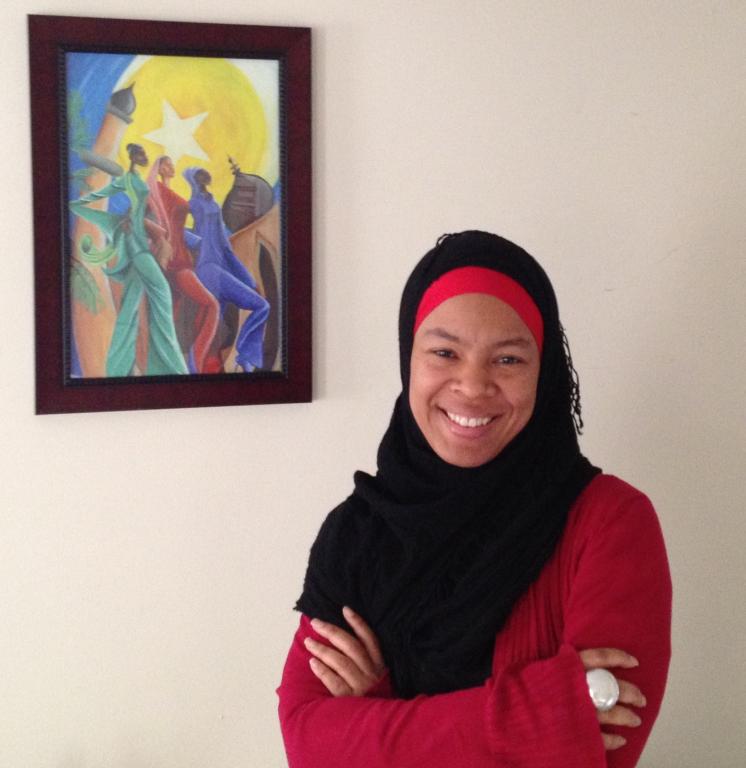 Donna Auston
We have a dirty secret. Muslims have a terrible and cancerous race problem.
Donna “Tiny Muslimah” Auston is a fount of knowledge with a commitment to speaking out against injustice. She is a doctoral candidate in the Department of Anthropology at Rutgers University, where her research focuses on examinations of race, ethnicity, gender, the body, phenomenology and embodiment, religion, language, media representation, and Islam in America.
Auston has written numerous scholarly articles highlighting social intersections of race, religion and gender in the Black American Muslim experience. She is part of a group of Black Muslim female scholarship that brings attention to the layers of racism, Islamophobia and misogynoir Black Muslims face.
In addition to her scholarly works, Auston is a keen activist who guests lectures about and appears in media to elaborate on Black Muslim activism, police brutality, and protest.
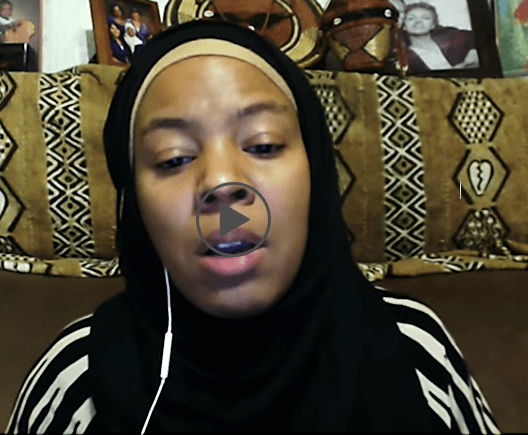
Auston discussing intra-cultural racism on the Black Muslims Matter panel
Weary of the constant erasure of Black Muslim voices, Auston launched #BlackMuslimRamadan in 2015, which went viral, garnered national attention and empowered Black Muslims with a space to share and celebrate their unique festivities during the holy month.
Visit Auston’s:
- Blog – http://donnaauston.com/
- Twitter – @TinyMuslimah
- Facebook – https://www.facebook.com/auston.donna/
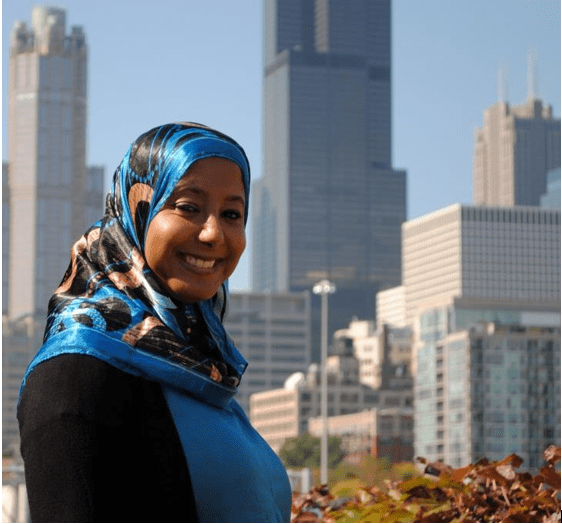 Hind Makki
US history is defined by centuries of rigid racial hierarchy, with enslaved Africans and their descendants at the bottom of the heap.
Sudanese American Muslimah Hind Makki is the founder and curator of Side Entrance, which highlights the social placement of Muslim women in sacred spaces. Makki is also the managing editor of Hindtrospectives, a platform that centers the voices of African diaspora Muslims.
Makki is an interfaith educator with a degree in International
Relations from Brown University. She explores how religious pluralism in secular democracies intersects with race, class and access to social and political capital for minority communities. She is the co‐chair of ISNA’s Women‐ Friendly Mosques Taskforce and was an adviser to ISPU’s project, “Reimagining Muslim Spaces.” She asserts, “I probably spend the most amount of time thinking about is the development of Western Muslim identity: how does it happen, what does it mean for the West|East, and how can we actively and positively contribute|engage|love our societies?”
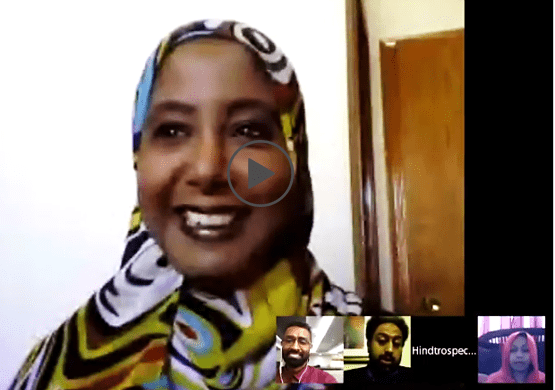
Hind Makki discussing Afro-Arab identity on the #ZoulSoul Roundtable
Makki asserts her African heritage and refuses to allow people to define her based on her physical appearance. She traverses the country discussing Black resistance and building ties of solidarity between Black Muslims of African American, Caribbean American, and Diaspora descent. Makki readily reminds Black Muslims about the interconnected nature of their oppressions and the need to combat all of it.
Visit Makki’s:
- Blog – http://www.patheos.com/blogs/hindtrospectives/
- Twitter – @HindMakki
- Facebook – https://www.facebook.com/Hindtrospectives/
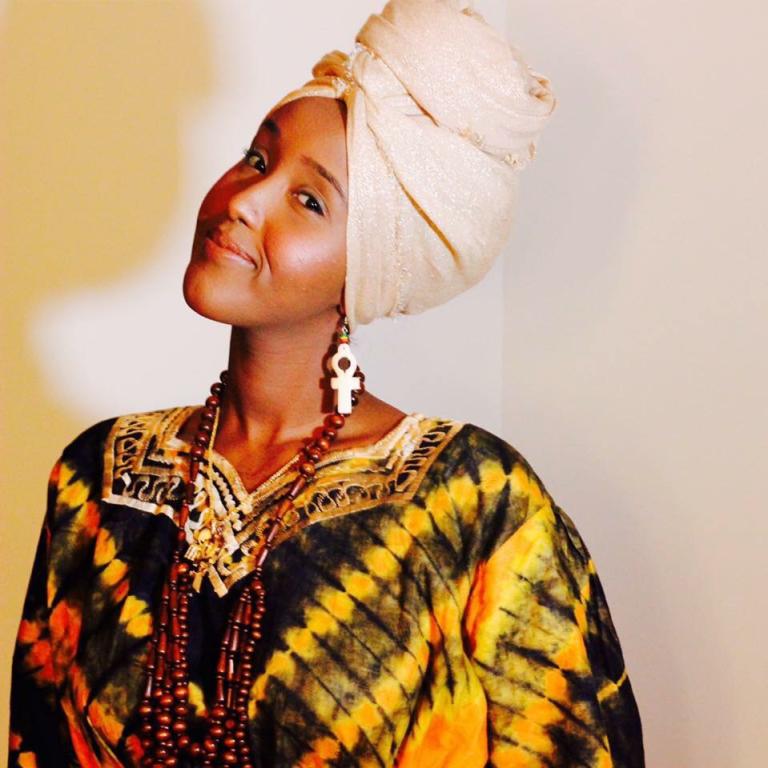 Asha Noor
Black Muslims fall in a dangerous intersection, facing anti-Black racism and Islamophobia from both individual actors and the state.
Somali-American Muslimah Asha Noor is the Advocacy and Engagement Specialist for the Campaign to TAKE ON HATE, led by the National Network for Arab American Communities (NNAAC). She is a writer and social justice activist. Noor received her Bachelor’s Degree from Michigan State University in Political Science and her graduate at the School for Conflict Analysis and Resolution at George Mason University focuses on Somalia and conflicts facing the Somali Diaspora.
Noor has worked on numerous campaigns, townhalls, convenings, policy changes seeking a shift from the stagnant racial issues in the society and destabilizing the country’s White supremacist underpinnings. Noor appeared on NPR’s Kojo Nmandi Show discussing issues that Somali, Muslim and Arab Diaspora face in America and podcasts for both the Islamic Society of North America and American Muslim Health Professionals addressing issues of Islamophobia and the Muslim-American identity.
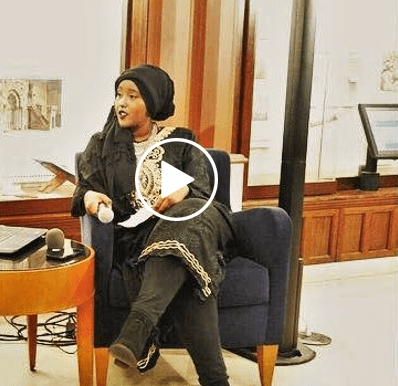
Asha Noor talks about the Muslim Ban on Islam Today
When Noor is not community organizing or speaking to thousands, she is on the ground protesting and encouraging her fellow Sudanese and American Muslims to gain a better understanding of the relationship between racism, xenophobia, and Islamophobia that feeds the layers of anti-Muslim bigotry and hate as well as the role of anti-Blackness in exacerbating those oppressions.
Visit Noor’s:
- Twitter – @RajooWeyn
- Facebook – https://www.facebook.com/asha.noor.9
african-american muslim writers
Previous Post

March 1, 2017
NbA Muslims' Post-BHM Reads
Next Post
March 12, 2017 WHM: Celebrating Vantablackness - Authors and Writers
Browse Our Archives
Select a Category #nbamuslims 500 #nbamuslims book review African-American Muslims Asian American Muslims Authors Speak Latinx Muslims Race/Ethnicity Sex and Gender Uncategorized
Select a Month February 2021 December 2020 November 2020 October 2020 September 2020 July 2020 June 2020 May 2020 April 2020 March 2020 October 2019 September 2019 July 2019 June 2019 May 2019 March 2019 February 2019 January 2019 December 2018 November 2018 October 2018 August 2018 July 2018 June 2018 May 2018 April 2018 March 2018 February 2018 January 2018 December 2017 November 2017 September 2017 August 2017 July 2017 June 2017 May 2017 April 2017 March 2017 February 2017 January 2017 December 2016 November 2016 October 2016 September 2016 August 2016 July 2016 May 2016 April 2016 March 2016 February 2016 January 2016 December 2015 November 2015 October 2015 September 2015 August 2015 July 2015 June 2015 May 2015 April 2015 October 2014 September 2014
Follow Us!
TAKE THE
Religious Wisdom Quiz
Who was Ruth's first husband?
Select your answer to see how you score.
Elimelech Mahlon Boaz Chilion
Related posts from NbA Muslims
Black Muslim Authors Celebrate Race and Faith
Giving Tuesday and Nonprofit Fundraising
Dr. Kameelah Rashad Advocates Black Muslim Mental Health...
Nutrionist YaQutullah Muhammad Tackles Diet Culture
TRENDING AT PATHEOS Muslim

25 Years Later: How Much Has Changed for...
As we approach the 25th anniversary of September 11th, I’ve found myself...

Podcast: Third Spaces & The Rise of Yemeni...
In the latest episode of The Artistic Foodies Podcast, hosts Abbas...

HalalFest Picks: Best 60 Halal Spots for Super...
Back in 2016, I came up with a list of 29...

Unity Is America’s Strength — Division Is Its...
by Hidayatullah Ahsan When Valentina Gomez, a Republican candidate for Congress in...

Zohran Mamdani and New York’s Fight Against Islamophobia
This past June, against all odds, Zohran Mamdani won the Democratic primary...

What the Fourth of July Means to a...
As we mark another Fourth of July, millions of Americans will celebrate...
view all Muslim blogs
Ad-Free & Subscriber Log-In Subscription Support
- About Us
- 2026 Calendar
- Videos
- Podcasts
- Library of World Religions
- Faith In Media Tracker
- Advertise With Us
- Write for Us
- Privacy Policy
- Terms of Service
- Do Not Sell My Data
- Contact Us
- Radiant Digital
- Manage Newsletter Subscriptions
- Unsubscribe From Notifications
- Sitemap
Copyright 2008-2026, Patheos. All rights reserved.
Subscription Support Ad-Free & Subscriber Log-In
Follow Patheos