
BuddhistCatholicContemplativeEvangelicalGeneral ChristianHinduJewishLatter-day SaintMuslimNew VisionsProgressive Christian
Beliefs
- Buddhist
- Catholic
- Contemplative
- Evangelical
- General Christian
- Hindu
- Jewish
- Latter-day Saint
- More Voices
- Muslim
- New Visions
- Pagan
- Progressive Christian
Topics
- Religion News
- Food and Religion
- Sports and Religion
- Religious Art
- Religious Music and Entertainment
- Religious Events
- History and Religion
- Style and Religion
- Politics and Religion
- Women in Religion
- Recreation Outdoors and Religion
- Business Finance and Religion
- Careers Workplace and Religion
- Education and Religion
- Family Parenting and Religion
- Health Fitness and Religion
- Home and Religion
- Relationships and Religion
- Technology and Religion
- Travel and Religion
Columnists
- Buddhist Columnists
- Business Finance and Religion Columnists
- Careers Workplace and Religion Columnists
- Catholic Columnists
- Contemplative Columnists
- Education and Religion Columnists
- Evangelists Columnists
- Family Parenting and Religion Columnists
- General Christian Columnists
- Health Fitness and Religion Columnists
- Hindu Columnists
- History and Religion Columnists
- Home and Religion Columnists
- Jewish Columnists
- More Voices Columnists
- Latter Day Columnists
- Muslim Columnists
- New Visions Columnists
- Nonreligious Columnists
- Pagan Columnists
- Politics and Religion Columnists
- Progressive Columnists
- Recreation Outdoors and Religion Columnists
- Relationships and Religion Columnists
- Religion News Columnists
- Religious Art Columnists
- Religious Events Columnists
- Religious Music and Entertainment Columnists
- Sports and Religion Columnists
- Style and Religion Columnists
- Technology and Religion Columnists
- Travel and Religion Columnists
- Women in Religion Columnists
Resource Library
- 2026 Calendar
- Library of World Religions
- The 100 Most Holy Places on Earth
- Patheos Answers
- Podcasts
- Videos
- Faith Leaders Database
- Anglican Episcopalian
- Bahai
- Baptist
- Buddhism
- Christianity
- Confucianism
- Eastern Orthodoxy
- Hinduism
- Holiness and Pentecostal
- ISKCON
- Islam
- Judaism
- Lutheran
- Methodist
- The Church of Jesus Christ of Latter-day Saints
- New Age
- Paganism
- Presbytarian and Reformed
- Protestantism
- Religion Behind the Scenes
- Roman Catholic
- Scientology
- Shia Islam
- Sikhism
- Sufism
- Sunni Islam
- Taoism
- Zen
- See all religions
Research Tools
 Ad-Free & Subscriber Log-In Subscription Support
Ad-Free & Subscriber Log-In Subscription Support
Follow Patheos 

- Trending:
- Forgiveness
- |
- Marriage
- |
- Consciousness
- |
- Death Penalty
- |
- Election
- |
- Halloween

- Home
- Pagan
- Gratitude for the Harvest
Gratitude for the Harvest
Last updated on: September 7, 2018 at 6:40 pm by Erica Baron
Gratitude for the Harvest 2018-09-07T18:40:39+00:00 Erica Baron
Patheos Explore the world's faith through different perspectives on religion and spirituality! Patheos has the views of the prevalent religions and spiritualities of the world.
In late August, I was grateful to be able to once again attend TempleFest, the annual gathering of the Temple of Witchcraft, of which I am a minister. I always love being in the Temple community, and this was no exception.
Every year, TempleFest includes our Lammas ritual, the celebration of the first harvest. In the mythos of the Wheel of the Year, Lammas is the time when the grain god is sacrificed – cut down as the grain is harvested, to rise again in bread and become food for the people. This year, I found the ritual reenactment of that harvest to be particularly powerful, and, actually it moved me to deep sadness. After the ritual, I found that what I needed most was to just lie in the field where the ritual had taken place and offer gratitude to the sacrificed god for the food that sustains us.
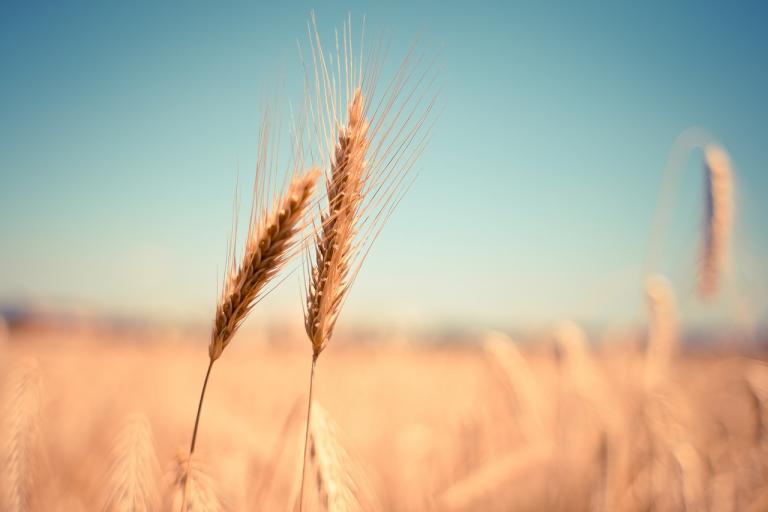
As human beings, that is to say, as animals, this is an inescapable part of our story. We cannot eat the free, unlimited resource of energy that comes pouring as a gift to earth every day – we cannot eat sunlight. We have to eat other living things, things that do eat sunlight (plants) or others, like us (animals) who have eaten the things that eat sunlight. We cannot sustain our own lives just by lifting leaves to catch the sun’s rays. We have to have others do that work for us.
Vegetarianism
One of the reasons I’m a vegetarian is that a vegetarian diet uses less life to sustain my life than a meat-eating diet. (It takes more plants to feed an animal and then feed the animal to a person than it would take to just feed the person on plants to begin with.) Now, I’m not a vegan, so this isn’t a principle I follow in any sort of absolute sense. And I know that not everyone can live on a vegetarian diet – it doesn’t work for my wife’s body, for example. And I know that in some kinds of ecosystems, the plants that humans can digest are impossible to grow, but animals can digest them and then sustain human communities. In other words, I know this is complicated. But still, there is something in me that wants to minimize the life that has to be given for my own to be sustained.
Even so, though, like most people, I imagine, I don’t think about the life that sustains my life all that often. And I am privileged to have the material context where I don’t need to worry about where my food is going to come from. So, in my day to day life, I take food for granted much of the time. Perhaps this is where the sadness comes from. Something had to die, or give a huge gift of itself for me to live, and I barely even notice.
Lessons we can learn from plants
This summer, I’ve been reading the book Braiding Sweetgrass, by Robin Wall Kimmerer, in which she talks about the lessons we can learn from plants as someone both grounded in Native American traditional wisdom, and a PhD in botany. I cannot recommend this book highly enough for its beautiful writing and depth of insight and compassion. If you haven’t read it, by all means, do! There is so much in this text, but one thing that she says in many different ways is that one of humanity’s jobs, according to native wisdom, is to offer gratitude. The awareness of the gifts we have been given, and our ability to offer thanks and praise for those gifts is part of our role in the family of life.
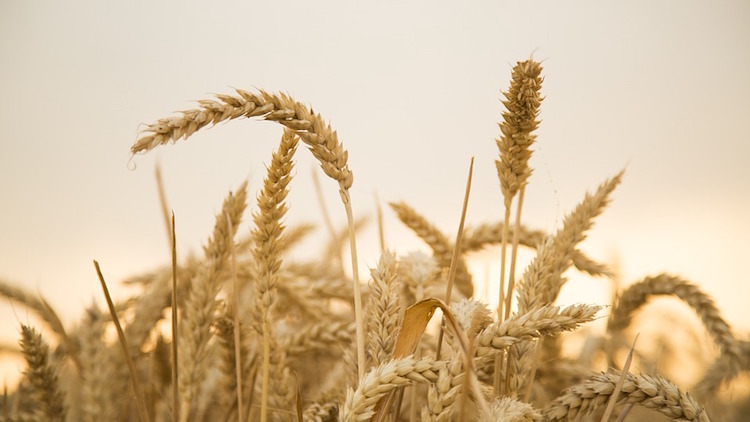
Image from Pixabay. Public Domain Image.
Does being life that feeds on other life come with certain responsibilities and obligations? Kimmerer says yes, that we have a responsibility to offer gratitude and awareness, and an obligation to the principles of the honorable, or sustainable harvest. I think she’s right.
If so, I think I am often falling down on the job. This ritual was a reminder to me about my place in the family of life. I am life that feeds on other life. And the least I can do is to acknowledge that fact and be grateful for the life that sustains my own. I hope to do better, and I invite you to join me.
Previous Post

September 3, 2018
Planting Seeds, Turning the Wheel
Next Post

September 16, 2018 CUUPS, Interfaith Lessons, and the Parliament of the Worlds Religions
Browse Our Archives
Select a Category Current Events CUUPS Press Release Interfaith liturgy Media Review podcast Religious Education Seasonal Reflection Spiritual Practice Summary Uncategorized
Select a Month July 2026 June 2026 April 2026 January 2026 December 2025 October 2025 August 2025 July 2025 June 2025 April 2025 March 2025 February 2025 December 2024 November 2024 October 2024 August 2024 July 2024 June 2024 May 2024 April 2024 February 2024 December 2023 November 2023 October 2023 September 2023 August 2023 June 2023 May 2023 April 2023 March 2023 February 2023 January 2023 December 2022 October 2022 September 2022 August 2022 July 2022 June 2022 May 2022 April 2022 March 2022 February 2022 January 2022 December 2021 November 2021 October 2021 September 2021 August 2021 July 2021 June 2021 May 2021 April 2021 March 2021 February 2021 January 2021 December 2020 November 2020 October 2020 September 2020 August 2020 July 2020 June 2020 May 2020 April 2020 March 2020 February 2020 January 2020 December 2019 November 2019 October 2019 September 2019 August 2019 July 2019 June 2019 May 2019 April 2019 March 2019 February 2019 January 2019 December 2018 November 2018 October 2018 September 2018 August 2018 July 2018 June 2018 May 2018 April 2018 March 2018 February 2018 January 2018 December 2017 November 2017 October 2017 September 2017 August 2017 July 2017 June 2017 May 2017 April 2017 March 2017 February 2017 January 2017 December 2016 November 2016 October 2016 September 2016 August 2016 July 2016 June 2016 May 2016 April 2016 March 2016 February 2016 January 2016 December 2015 November 2015 October 2015 September 2015 August 2015 July 2015 June 2015 May 2015 April 2015 March 2015 February 2015 January 2015
Follow Us!
TAKE THE
Religious Wisdom Quiz
What valley did David face Goliath in?
Select your answer to see how you score.
Kidron Valley Valley of Jezreel Valley of Elah Valley of Achor
Related posts from Nature's Sacred Journey

April 22 Earth Day, its Our Power and...

Fear, conquer it with affirmations and meditation

Samhain — three aspects; one holiday and...Halloween
TRENDING AT PATHEOS Pagan

I was recently chatting with someone on Instagram. She asked me what...

While there are many people who share their results, the end of...

On July 23, I saw Christopher Nolan's The Odyssey which is Homer’s...

As I write this two big events have just finished up. One...

Restoring the Watershed of Divine Love
Perhaps cooperation is not something we manufacture through legislation, ideology, or moral...

Many UUs don’t pray because of bad experiences in a previous religion,...
view all Pagan blogs
Ad-Free & Subscriber Log-In Subscription Support
- About Us
- 2026 Calendar
- Videos
- Podcasts
- Library of World Religions
- Faith In Media Tracker
- Advertise With Us
- Write for Us
- Privacy Policy
- Terms of Service
- Do Not Sell My Data
- Contact Us
- Radiant Digital
- Manage Newsletter Subscriptions
- Unsubscribe From Notifications
- Sitemap
Copyright 2008-2026, Patheos. All rights reserved.
Subscription Support Ad-Free & Subscriber Log-In
Follow Patheos