
BuddhistCatholicContemplativeEvangelicalGeneral ChristianHinduJewishLatter-day SaintMuslimNew VisionsProgressive Christian
Beliefs
- Buddhist
- Catholic
- Contemplative
- Evangelical
- General Christian
- Hindu
- Jewish
- Latter-day Saint
- More Voices
- Muslim
- New Visions
- Pagan
- Progressive Christian
Topics
- Religion News
- Food and Religion
- Sports and Religion
- Religious Art
- Religious Music and Entertainment
- Religious Events
- History and Religion
- Style and Religion
- Politics and Religion
- Women in Religion
- Recreation Outdoors and Religion
- Business Finance and Religion
- Careers Workplace and Religion
- Education and Religion
- Family Parenting and Religion
- Health Fitness and Religion
- Home and Religion
- Relationships and Religion
- Technology and Religion
- Travel and Religion
Columnists
- Buddhist Columnists
- Business Finance and Religion Columnists
- Careers Workplace and Religion Columnists
- Catholic Columnists
- Contemplative Columnists
- Education and Religion Columnists
- Evangelists Columnists
- Family Parenting and Religion Columnists
- General Christian Columnists
- Health Fitness and Religion Columnists
- Hindu Columnists
- History and Religion Columnists
- Home and Religion Columnists
- Jewish Columnists
- More Voices Columnists
- Latter Day Columnists
- Muslim Columnists
- New Visions Columnists
- Nonreligious Columnists
- Pagan Columnists
- Politics and Religion Columnists
- Progressive Columnists
- Recreation Outdoors and Religion Columnists
- Relationships and Religion Columnists
- Religion News Columnists
- Religious Art Columnists
- Religious Events Columnists
- Religious Music and Entertainment Columnists
- Sports and Religion Columnists
- Style and Religion Columnists
- Technology and Religion Columnists
- Travel and Religion Columnists
- Women in Religion Columnists
Resource Library
- 2026 Calendar
- Library of World Religions
- The 100 Most Holy Places on Earth
- Patheos Answers
- Podcasts
- Videos
- Faith Leaders Database
- Anglican Episcopalian
- Bahai
- Baptist
- Buddhism
- Christianity
- Confucianism
- Eastern Orthodoxy
- Hinduism
- Holiness and Pentecostal
- ISKCON
- Islam
- Judaism
- Lutheran
- Methodist
- The Church of Jesus Christ of Latter-day Saints
- New Age
- Paganism
- Presbytarian and Reformed
- Protestantism
- Religion Behind the Scenes
- Roman Catholic
- Scientology
- Shia Islam
- Sikhism
- Sufism
- Sunni Islam
- Taoism
- Zen
- See all religions
Research Tools
 Ad-Free & Subscriber Log-In Subscription Support
Ad-Free & Subscriber Log-In Subscription Support
Follow Patheos 

- Trending:
- Forgiveness
- |
- Marriage
- |
- Consciousness
- |
- Death Penalty
- |
- Election
- |
- Halloween

- Home
- Pagan
- Hospice Musings On Anxiety
Hospice Musings On Anxiety
Last updated on: May 25, 2018 at 12:30 pm by Maggie Beaumont
Hospice Musings On Anxiety 2018-05-25T12:30:11+00:00 Maggie Beaumont
Patheos Explore the world's faith through different perspectives on religion and spirituality! Patheos has the views of the prevalent religions and spiritualities of the world.
Hospice Chaplain here, bringing my UU-Pagan perspective to the support of human beings approaching their own deaths, or the deaths of their beloveds, in the context of their belief systems and practices no matter what they are. This month I’ve supported Muslims, Protestants, Evangelical Christians, Jews, Wiccans, and people who say that are ‘not religious’.
This month I’ve been noticing the many ways we humans try to protect ourselves from whatever terrifies us, even when what that is changes from moment to moment.
Are we afraid of dying? Are we afraid of living ‘like this’ (whatever ‘like this’ means to the particular patient)?
Are we afraid of our beloved relative living ‘too long’ ‘like this’ (whatever that means, exactly)? Are we afraid of our beloved dying? Leaving us by some other means on the way to death?
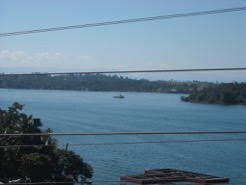
Denial is not a river in Egypt. Photo by author of a river in Guatamala
Denial
One way we protect ourselves is through Denial. The joke these days goes ‘Denial is not just a river in Egypt.’ We like to pretend that denial is something that happens to other people – we ourselves are, of course, too level-headed for that.
Earlier this month I sat with a patient and thought there would be weeks left, if not months. I was enjoying our ongoing conversation, even within the limitations of the patient’s declining ability to speak. As I left one afternoon, I thought to say something about how much I enjoyed visiting and getting to know this patient. I didn’t know it would be my last visit. I didn’t know I was in denial about that patient’s condition until that patient was no more. I thought there was more time.
Overwhelmingly this is the most frequent response of families and staff alike, when a patient dies. How is it that we can look at cachexia (“ka-KEX-ee-ya,” meaning ‘wasting away to skin and bones’) and not realize time is short? How is it that we can watch and listen to labored breathing and not understand that this can’t go on, and it won’t? Even the nurse who says ‘I don’t think this patient would survive the ambulance ride’ can be surprised when that patient dies before the ambulance arrives.
Why is denial so tempting?
Partly, we want to believe that what we want to be true, will actually be true. Some of us bounce back and forth between our dread of the worst outcome, and our fear that we’ll be found foolish for worrying, later, if it doesn’t happen. Some of us have so much anxiety that we can’t actually see what is right in front of our eyes.
 In the hospital, in the context of acute life-threatening illness, there’s a tendency to ‘try something else’ if the first few treatments don’t change the situation. We’ve put in so much time / effort / money / emotion already, what’s one more? What if the ‘one more’ would be the thing that would solve the problem? How would we feel if we didn’t try?
The family loves the patient (or anyhow feels they ought to), so how could we not try ‘everything we can’ to save them? The medical staff values the family’s good opinion … ditto. Maybe that next thing is a rickety bridge to an unknown future, but surely it’s worth the risk. ‘Don’t just stand there: DO something!’
That’s the kind of thinking that leads to the medical juggernaut of progressively more and more aggressive treatment. Sometimes this occurs in a series of unexpected events – surgery discloses more than could be found by imaging, say, or one complication leads to more treatment, which leads to another complication. Sometimes this occurs because a situation that might have been seen as End of Life is somehow diagnosed as ‘something treatable’. Often it’s both, by turns.
In the home care setting, in the context of terminal illness or longterm progressive illness, we want to avoid suffering – that is, we want to avoid having the patient suffer, and also (let’s be honest) we want to avoid the pain of watching the patient suffer. (This is often true of both families and staff). There are trade-offs here, for the patient: which is worse, having pain or feeling ‘loopy’? Which is worse, eating mushy food or risking choking?
What do we do – what should we do – when patient and family disagree? What if the patient can no longer say what the patient wants? What if the patient believes themself competent and able to make their needs known, but the family disagrees? There are trade-offs here, too, for the family: which is worse, letting the patient have their way (even if foolish or dangerous), or taking away their last shred of autonomy? Which is worse, taking the advice of family and friends (even if it disagrees with medical advice) or stubbornly sticking to a failed plan?
Everywhere in medicine today there are questions about ‘Who Decides?’
Who decides whether the patient ‘needs’ to be sedated or not? Who decides whether the patient ‘has to’ change their diet, or stop driving, or even stop smoking? Under what circumstances does the patient lose the right to make their own decisions? Under what circumstances should a medical person overrule a patient or family member (or do any such circumstances exist?).
Lots of us would like to imagine that we will know when it’s time to stop aggressive treatment. Even those of us who work in Hospice aren’t always good at making those decisions for ourselves.
What are we afraid of?
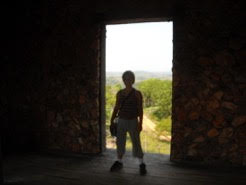
Doorway to Empty Space – photo by author
Pain, of course. Which is worse, physical pain or emotional pain? For most people the answer is: It depends. So how can we know in advance?
This is the point where I’d love to give you a cookbook answer: I’d like to say, You know in advance by doing this, and then doing that, and answering this questionand then that one. Here’s a decision tree to help you figure it out. Here are the people and Beings you should consult and then you’ll know. But …
Hospice Chaplain here. I wish I knew how to know in advance. All I can really tell you is, we all do the best we can with the information we have, the experiences that came before this, and our hopes and fears.
Each of us now on planet was born, sometime, in some place. Each of us now on planet will one day die, sometime, in some place. And a lot of us will be anxious about it as we get close to it, or as our loved ones do.
There is no way to do it perfectly. There is often less anxiety when we can accept that fact. The door is always open; one day, each of us will step through.
Blessed Be.
–Maggie Beaumont
American Memorial Day
Previous Post

May 9, 2018
Tarot Cards for Spiritual Discernment
Next Post

June 7, 2018 She Will Not Be Tamed
Browse Our Archives
Select a Category Current Events CUUPS Press Release Interfaith liturgy Media Review podcast Religious Education Seasonal Reflection Spiritual Practice Summary Uncategorized
Select a Month July 2026 June 2026 April 2026 January 2026 December 2025 October 2025 August 2025 July 2025 June 2025 April 2025 March 2025 February 2025 December 2024 November 2024 October 2024 August 2024 July 2024 June 2024 May 2024 April 2024 February 2024 December 2023 November 2023 October 2023 September 2023 August 2023 June 2023 May 2023 April 2023 March 2023 February 2023 January 2023 December 2022 October 2022 September 2022 August 2022 July 2022 June 2022 May 2022 April 2022 March 2022 February 2022 January 2022 December 2021 November 2021 October 2021 September 2021 August 2021 July 2021 June 2021 May 2021 April 2021 March 2021 February 2021 January 2021 December 2020 November 2020 October 2020 September 2020 August 2020 July 2020 June 2020 May 2020 April 2020 March 2020 February 2020 January 2020 December 2019 November 2019 October 2019 September 2019 August 2019 July 2019 June 2019 May 2019 April 2019 March 2019 February 2019 January 2019 December 2018 November 2018 October 2018 September 2018 August 2018 July 2018 June 2018 May 2018 April 2018 March 2018 February 2018 January 2018 December 2017 November 2017 October 2017 September 2017 August 2017 July 2017 June 2017 May 2017 April 2017 March 2017 February 2017 January 2017 December 2016 November 2016 October 2016 September 2016 August 2016 July 2016 June 2016 May 2016 April 2016 March 2016 February 2016 January 2016 December 2015 November 2015 October 2015 September 2015 August 2015 July 2015 June 2015 May 2015 April 2015 March 2015 February 2015 January 2015
Follow Us!
TAKE THE
Religious Wisdom Quiz
What was Jesus' first miracle?
Select your answer to see how you score.
Turning water into wine Walking on water Feeding the 5,000 Healing a blind man
Related posts from Nature's Sacred Journey

The dark is not scary, its mystical and...


Fallow Season ~ Burnout, Fatigue, and Sacred Rest
TRENDING AT PATHEOS Pagan

I was recently chatting with someone on Instagram. She asked me what...

While there are many people who share their results, the end of...

On July 23, I saw Christopher Nolan's The Odyssey which is Homer’s...

As I write this two big events have just finished up. One...

Restoring the Watershed of Divine Love
Perhaps cooperation is not something we manufacture through legislation, ideology, or moral...

Many UUs don’t pray because of bad experiences in a previous religion,...
view all Pagan blogs
Ad-Free & Subscriber Log-In Subscription Support
- About Us
- 2026 Calendar
- Videos
- Podcasts
- Library of World Religions
- Faith In Media Tracker
- Advertise With Us
- Write for Us
- Privacy Policy
- Terms of Service
- Do Not Sell My Data
- Contact Us
- Radiant Digital
- Manage Newsletter Subscriptions
- Unsubscribe From Notifications
- Sitemap
Copyright 2008-2026, Patheos. All rights reserved.
Subscription Support Ad-Free & Subscriber Log-In
Follow Patheos