
BuddhistCatholicContemplativeEvangelicalGeneral ChristianHinduJewishLatter-day SaintMuslimNew VisionsProgressive Christian
Beliefs
- Buddhist
- Catholic
- Contemplative
- Evangelical
- General Christian
- Hindu
- Jewish
- Latter-day Saint
- More Voices
- Muslim
- New Visions
- Pagan
- Progressive Christian
Topics
- Religion News
- Food and Religion
- Sports and Religion
- Religious Art
- Religious Music and Entertainment
- Religious Events
- History and Religion
- Style and Religion
- Politics and Religion
- Women in Religion
- Recreation Outdoors and Religion
- Business Finance and Religion
- Careers Workplace and Religion
- Education and Religion
- Family Parenting and Religion
- Health Fitness and Religion
- Home and Religion
- Relationships and Religion
- Technology and Religion
- Travel and Religion
Columnists
- Buddhist Columnists
- Business Finance and Religion Columnists
- Careers Workplace and Religion Columnists
- Catholic Columnists
- Contemplative Columnists
- Education and Religion Columnists
- Evangelists Columnists
- Family Parenting and Religion Columnists
- General Christian Columnists
- Health Fitness and Religion Columnists
- Hindu Columnists
- History and Religion Columnists
- Home and Religion Columnists
- Jewish Columnists
- More Voices Columnists
- Latter Day Columnists
- Muslim Columnists
- New Visions Columnists
- Nonreligious Columnists
- Pagan Columnists
- Politics and Religion Columnists
- Progressive Columnists
- Recreation Outdoors and Religion Columnists
- Relationships and Religion Columnists
- Religion News Columnists
- Religious Art Columnists
- Religious Events Columnists
- Religious Music and Entertainment Columnists
- Sports and Religion Columnists
- Style and Religion Columnists
- Technology and Religion Columnists
- Travel and Religion Columnists
- Women in Religion Columnists
Resource Library
- 2026 Calendar
- Library of World Religions
- The 100 Most Holy Places on Earth
- Patheos Answers
- Podcasts
- Videos
- Faith Leaders Database
- Anglican Episcopalian
- Bahai
- Baptist
- Buddhism
- Christianity
- Confucianism
- Eastern Orthodoxy
- Hinduism
- Holiness and Pentecostal
- ISKCON
- Islam
- Judaism
- Lutheran
- Methodist
- The Church of Jesus Christ of Latter-day Saints
- New Age
- Paganism
- Presbytarian and Reformed
- Protestantism
- Religion Behind the Scenes
- Roman Catholic
- Scientology
- Shia Islam
- Sikhism
- Sufism
- Sunni Islam
- Taoism
- Zen
- See all religions
Research Tools
 Ad-Free & Subscriber Log-In Subscription Support
Ad-Free & Subscriber Log-In Subscription Support
Follow Patheos 

- Trending:
- Forgiveness
- |
- Marriage
- |
- Consciousness
- |
- Death Penalty
- |
- Election
- |
- Halloween

- Home
- Pagan
- We Swim in the Depths
We Swim in the Depths
Last updated on: February 15, 2017 at 9:29 am by Rev. Catharine Clarenbach
We Swim in the Depths 2017-02-15T09:29:59+00:00 Rev. Catharine Clarenbach
Patheos Explore the world's faith through different perspectives on religion and spirituality! Patheos has the views of the prevalent religions and spiritualities of the world.
My topic of the week has been diving and scanning. On the surface—and some of the way I had looked at it before I started talking with folks from The Way of the River—it seems as though scanners have breadth and divers have depth.
And then people answered my questions about scanners and divers and I learned about what it means to be both. Not both in the “I can’t decide so I guess I’m both,” or the common Pagan response of, “I don’t want to be put in a box.”
I learned that “both” may be in the sense of going deep and then checking around oneself, learning the landscape/seascape/Earthscape. Being, as one said, a submersible.

Steve Bridenbaugh design
I think of the experiences of Pagan UU’s.
How Unitarian Universalism tends to be more broad than deep, though that’s not always true, certainly. Much depends on congregational desire and culture, ministers, and lay leaders. Choices like Soul Matters; Faith Forward; how congregations make liturgy; and new children’s, adult’s, and multigenerational religious exploration all affect folks’ experience of both depth and breadth.
Having Six Sources means that we risk poor liturgical/ceremonial design, cultural appropriation, and just plain confusion often. We run the risk of “ritual mash-up” How many services have you been to where the music, the readings, the sermon, and the prayers don’t seem to have anything to do with one another?
Breadth Avoiding Depth
In the attempt to please everyone, we offer transformational depth to no one.
And UU-Pagans/Pagan-UUs, like other UUs, run into even bigger concerns (I hope they are concerns!) of cultural appropriation. We have them often more than other UUs, I think, in that, for example, many white, non-indigenous-trained Pagans of many stripes and spots use sage to clear space. I’ve done it. I have sage upstairs by my altar, though I rarely use it (smoke alarm trauma).
But why?
Why do we, that is white Pagans like me, think that sage, appropriated from indigenous cultures, is the way to go?
Is this practice an attempt at breadth? Is it, as some I know would say, the Spirit blowing where It will? (Strange, or perhaps appropriate, as that’s a Christian reference.)
Or is it an attempt to somehow reach for the depth of others’ traditions?

altar at Four Quarters
A UU service with someone with no training who claimed to be a shaman “journeying” for the congregation, contemporary Pagan songs, a libation in the style of Heathenry, Quarters called each in a different style… what is our goal with a service like this?
Rev. Fred Muir, in his now-famous sermon about iChurch, pointed out that one of our great liabilities is our pathological attachment to individualism. The service I described above—one that actually happened, by the way—is rooted in this passionate and overdone individualism.
Unwilling to Say No
We have four people willing to calling Quarters, so each of them may do them as they see fit. We have someone willing to do a libation, so they can do it. The “shaman” is a well-respected congregant, so of course they may participate.
No.
That is terrible liturgical design. It aggressively mixes traditions that are different, at best, and in conflict at worst. By having radically different Quarter Calls, it also rattles the liturgical, deepening quality of powerful ceremony.
Pagan ceremony has the opportunity to reach head and heart. Through carefully constructed ritual with both repetition and innovation in Quarter Calls, call-and-response elements, songs that make sense with the theme of the observance/celebration, and closing Quarters with calls that mirror the opening…all this helps a ceremony make sense, and making sense on the conscious and subconscious level is what makes change in people’s lives.
And it’s what allows for both breadth and depth, which is also what is necessary for that transformative element.
And transformation into more of our great human beingness is, after all, what I think the goal of liturgy/ceremony/ritual is.
So just as we cannot have wildly deep, ecstatic, ritual of ordeal, complete with firedancers and a drum circle in the midst of a Sunday morning service, let us not try to be all things to all Pagans in one ritual on one Sunday.
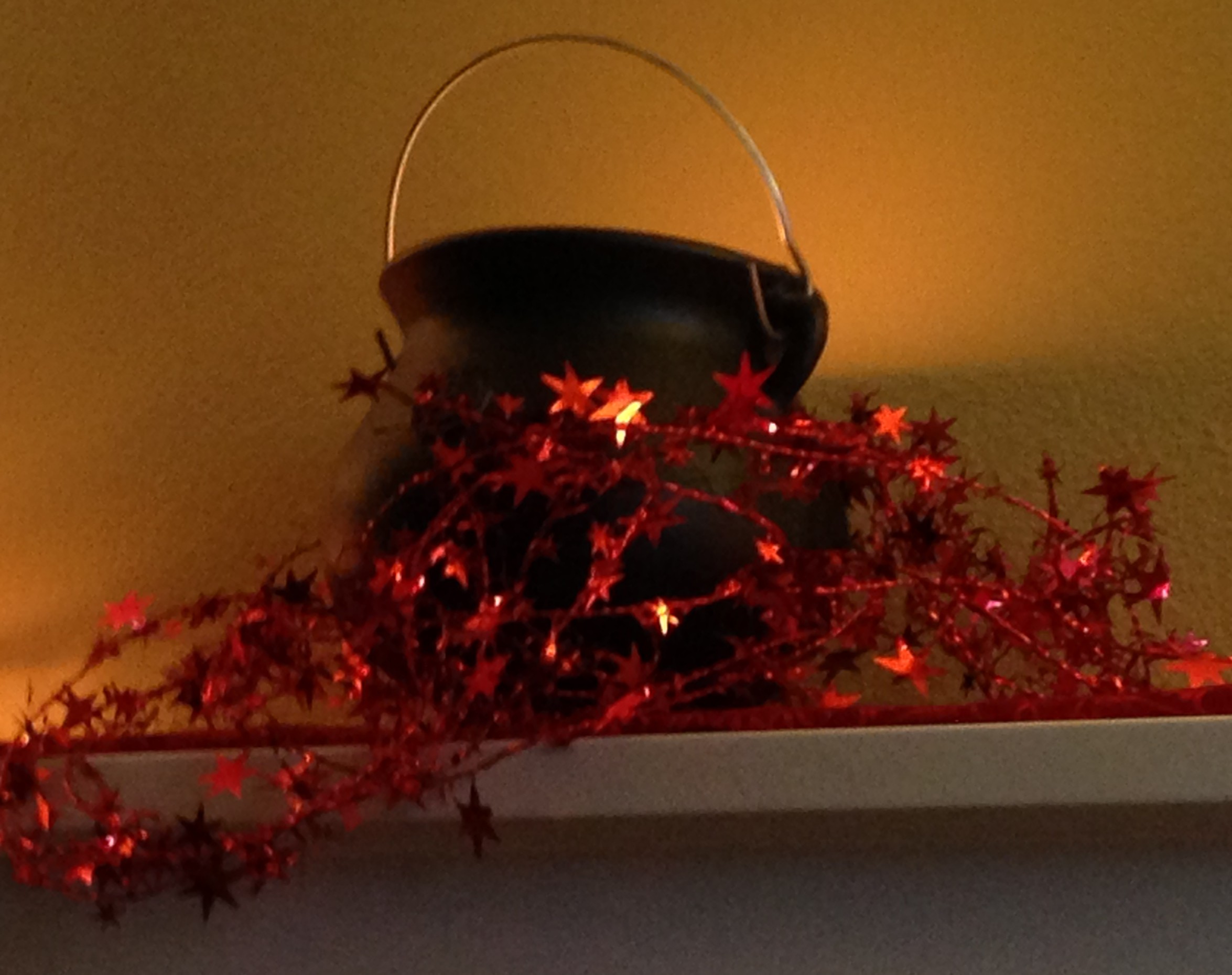
cauldron and flame
For example, I always close my rituals, no matter whether Pagan or not, with the lines, “As with all things in the household of Earth, / we embrace for a while, and then let go.” I don’t change up my whole benediction every time. The opening lines are always the same, though the ending message is specific to the ritual we’re in.
Closing Thoughts
I have written for Nature’s Path for two years, since Imbolc 2015, I believe, with a post called, “I’ll Be Home for the (February) Holidays,” in late January of that year. And now I relinquish this space and place on the ides of February 2017.
While I am saddened not to write in this widely interfaith space, I hope that many of you will look for me at my homepage, The Way of the River, and that we may continue to get to know one another better. As Pagans, as UUs, and as UU-Pagans…and for that matter, just as human beings living in interesting times.
I go then with this benediction:
As with all things in the household of Earth
We embrace for a while, and then let go.
So let us be parted in joy
And hope to be returned to one another
At the next crossroads
In hope, in peace, and in love.
Blessings on you and on your house.
Rev. Catharine Clarenbach

Previous Post

February 14, 2017
Marcus Aurelius: Is This Action Sane or Insane?
Next Post

February 20, 2017 Introducing Sacred Flexibility to the Hymn Sandwich
Browse Our Archives
Select a Category Current Events CUUPS Press Release Interfaith liturgy Media Review podcast Religious Education Seasonal Reflection Spiritual Practice Summary Uncategorized
Select a Month July 2026 June 2026 April 2026 January 2026 December 2025 October 2025 August 2025 July 2025 June 2025 April 2025 March 2025 February 2025 December 2024 November 2024 October 2024 August 2024 July 2024 June 2024 May 2024 April 2024 February 2024 December 2023 November 2023 October 2023 September 2023 August 2023 June 2023 May 2023 April 2023 March 2023 February 2023 January 2023 December 2022 October 2022 September 2022 August 2022 July 2022 June 2022 May 2022 April 2022 March 2022 February 2022 January 2022 December 2021 November 2021 October 2021 September 2021 August 2021 July 2021 June 2021 May 2021 April 2021 March 2021 February 2021 January 2021 December 2020 November 2020 October 2020 September 2020 August 2020 July 2020 June 2020 May 2020 April 2020 March 2020 February 2020 January 2020 December 2019 November 2019 October 2019 September 2019 August 2019 July 2019 June 2019 May 2019 April 2019 March 2019 February 2019 January 2019 December 2018 November 2018 October 2018 September 2018 August 2018 July 2018 June 2018 May 2018 April 2018 March 2018 February 2018 January 2018 December 2017 November 2017 October 2017 September 2017 August 2017 July 2017 June 2017 May 2017 April 2017 March 2017 February 2017 January 2017 December 2016 November 2016 October 2016 September 2016 August 2016 July 2016 June 2016 May 2016 April 2016 March 2016 February 2016 January 2016 December 2015 November 2015 October 2015 September 2015 August 2015 July 2015 June 2015 May 2015 April 2015 March 2015 February 2015 January 2015
Follow Us!
TAKE THE
Religious Wisdom Quiz
Who was the Roman governor at the trial of Jesus?
Select your answer to see how you score.
Caesar Alexander Herod Pilate
Related posts from Nature's Sacred Journey
Words…words…words — Pagan words misused; misunderstood

My Pagan path - a look back into...

Pagan Pet Peeves — things that make me...
Get up! Sing, dance, well just get loud...
TRENDING AT PATHEOS Pagan

I was recently chatting with someone on Instagram. She asked me what...

While there are many people who share their results, the end of...

On July 23, I saw Christopher Nolan's The Odyssey which is Homer’s...

As I write this two big events have just finished up. One...

Restoring the Watershed of Divine Love
Perhaps cooperation is not something we manufacture through legislation, ideology, or moral...

Many UUs don’t pray because of bad experiences in a previous religion,...
view all Pagan blogs
Ad-Free & Subscriber Log-In Subscription Support
- About Us
- 2026 Calendar
- Videos
- Podcasts
- Library of World Religions
- Faith In Media Tracker
- Advertise With Us
- Write for Us
- Privacy Policy
- Terms of Service
- Do Not Sell My Data
- Contact Us
- Radiant Digital
- Manage Newsletter Subscriptions
- Unsubscribe From Notifications
- Sitemap
Copyright 2008-2026, Patheos. All rights reserved.
Subscription Support Ad-Free & Subscriber Log-In
Follow Patheos