
BuddhistCatholicContemplativeEvangelicalGeneral ChristianHinduJewishLatter-day SaintMuslimNew VisionsProgressive Christian
Beliefs
- Buddhist
- Catholic
- Contemplative
- Evangelical
- General Christian
- Hindu
- Jewish
- Latter-day Saint
- More Voices
- Muslim
- New Visions
- Pagan
- Progressive Christian
Topics
- Religion News
- Food and Religion
- Sports and Religion
- Religious Art
- Religious Music and Entertainment
- Religious Events
- History and Religion
- Style and Religion
- Politics and Religion
- Women in Religion
- Recreation Outdoors and Religion
- Business Finance and Religion
- Careers Workplace and Religion
- Education and Religion
- Family Parenting and Religion
- Health Fitness and Religion
- Home and Religion
- Relationships and Religion
- Technology and Religion
- Travel and Religion
Columnists
- Buddhist Columnists
- Business Finance and Religion Columnists
- Careers Workplace and Religion Columnists
- Catholic Columnists
- Contemplative Columnists
- Education and Religion Columnists
- Evangelists Columnists
- Family Parenting and Religion Columnists
- General Christian Columnists
- Health Fitness and Religion Columnists
- Hindu Columnists
- History and Religion Columnists
- Home and Religion Columnists
- Jewish Columnists
- More Voices Columnists
- Latter Day Columnists
- Muslim Columnists
- New Visions Columnists
- Nonreligious Columnists
- Pagan Columnists
- Politics and Religion Columnists
- Progressive Columnists
- Recreation Outdoors and Religion Columnists
- Relationships and Religion Columnists
- Religion News Columnists
- Religious Art Columnists
- Religious Events Columnists
- Religious Music and Entertainment Columnists
- Sports and Religion Columnists
- Style and Religion Columnists
- Technology and Religion Columnists
- Travel and Religion Columnists
- Women in Religion Columnists
Resource Library
- 2026 Calendar
- Library of World Religions
- The 100 Most Holy Places on Earth
- Patheos Answers
- Podcasts
- Videos
- Faith Leaders Database
- Anglican Episcopalian
- Bahai
- Baptist
- Buddhism
- Christianity
- Confucianism
- Eastern Orthodoxy
- Hinduism
- Holiness and Pentecostal
- ISKCON
- Islam
- Judaism
- Lutheran
- Methodist
- The Church of Jesus Christ of Latter-day Saints
- New Age
- Paganism
- Presbytarian and Reformed
- Protestantism
- Religion Behind the Scenes
- Roman Catholic
- Scientology
- Shia Islam
- Sikhism
- Sufism
- Sunni Islam
- Taoism
- Zen
- See all religions
Research Tools
 Ad-Free & Subscriber Log-In Subscription Support
Ad-Free & Subscriber Log-In Subscription Support
Follow Patheos 

- Trending:
- Forgiveness
- |
- Marriage
- |
- Consciousness
- |
- Death Penalty
- |
- Election
- |
- Halloween

- Home
- Pagan
- Henotheism: Mine, Yours, and Ours
Henotheism: Mine, Yours, and Ours
Last updated on: January 18, 2017 at 5:00 am by Rev. Catharine Clarenbach
Henotheism: Mine, Yours, and Ours 2017-01-18T05:00:46+00:00 Rev. Catharine Clarenbach
Patheos Explore the world's faith through different perspectives on religion and spirituality! Patheos has the views of the prevalent religions and spiritualities of the world.
Discussing our Six Sources, Rev. Kathleen Rolenz said, “Throughout history, we [Unitarian Universalists] have moved to the rhythms of mystery and wonder, prophecy, wisdom, teachings from ancient and modern sources, and nature herself.”

Steve Bridenbaugh design
I find this quotation tremendously appealing. I didn’t really buy it until I came to understand a fundamental piece of it. I think the key to the quotation is, “moved to the rhythms.” At various points, our traditions, as well as our Living Tradition, have leant more in one direction than another, then swung back towards yet another, and then come to rest for a while with another.
Nowadays, though, according to the UU website, the Six Sources from which we draw our inspirations are those which “[o]ur congregations affirm and promote. [emphasic mine]”
I’m not sure that I buy this statement. That is, I’m not sure I buy it on the congregational level.
It has certainly been the case that I have been in congregations that do not affirm, and certainly do not promote all Six Sources of our faith.
Some Christians feels marginalized in their congregations. Some humanists and atheists feel marginalized in their congregations. Some Earth-centered practitioners and Pagans feel marginalized in their congregations.
I do think it is fair to say that as a living tradition, we have places, including some individual congregations, where folks of all these persuasions can feel safe, embraced, and part of a large, vital tradition. We have places, including congregations, where members and ministers do our best to truly practice henotheism.
 Henotheism, according to several sources, is the devotion to one deity (I would say, one belief system, in our case) while believing in or accepting the possibility of other deities (systems). In Paganism, we see this over and over in many different forms.
For example, I am a devotee of Aphrodite, as well as of the “One Who Is Many—Male, Female, Both, and Neither.” I don’t deny the right or propriety of devotion to other deities or systems.
Neither of these sets of beliefs negates my respect for or even participation in other systems: Science comes immediately to mind, as does my passionate appreciation for Abrahamic religious texts, ethics, and liturgical practice.
Rev. Rolenz’ quotation above suggests that UU’s can truly be henotheists. That what god/desss/es you worship pose no threat to those I worship, nor to my worship of them. That I can affirm your worship, your ethics, your focus on the prophetic or the scientific, the magical or the wonder-full, without abandoning the center of my own practice and belief.
Not only can we be henotheist, but in some ways we are uniquely suited to be so. We have a religious tradition that currently publicly proclaims its affirmation and promotion of various sets of ethics and beliefs. We claim that we affirm Mystery, or to quote, “direct experience [emphasis mine] of that transcending mystery and wonder, affirmed in all cultures…”
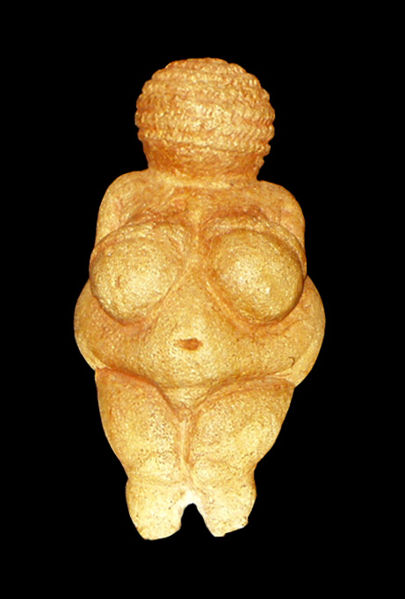
Venus of Wilendorf. photo by Lisby. (cc) 2009.
If we affirm direct experience, then we are affirming personal experience. We are affirming what cannot necessarily be explained by repetition and experimentation.
We are affirming the value of the intensely personal, life-changing and yet inexplicable experiences that so many of us have had, however we interpret them.
We are affirming that experience many of us call (and that many UU’s call in their congregational surveys) mysticism.
I say all this to say this: I urge Unitarian Universalists to learn more about one another. Given our Principles and Sources, I think we have an obligation to one another to do so.
Until we reach out across theological differences in our own congregations, how can we expect to hear and understand those whose religions look quite different from our own? How can we hear from those faiths which are more focused on a given path? How can we learn from those who are what we might call “hard” monotheists or Trinitarians, rather than those who allow for many expressions of deep meaning or divine communion?
Most of the readers of Nature’s Path are indeed UU-Pagan or practitioners of Earth-centered paths. Not all, however. Some read this blog to understand others. That is really to become more committed henotheists. I know those who read this blog in order to understand better the concerns and practices of their co-religionists, their sibling UUs.
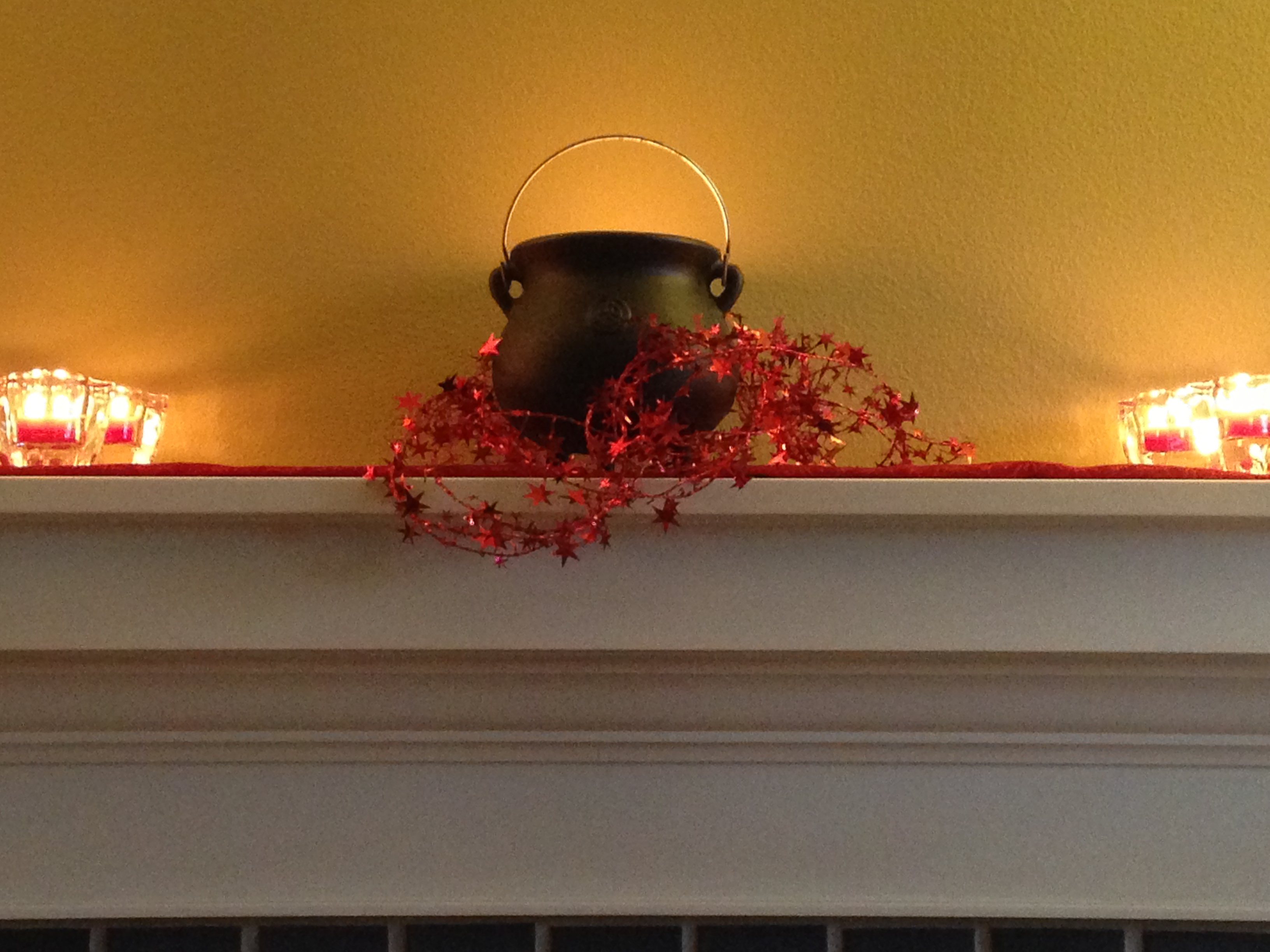 To both groups—the Pagans and those who would learn more about us—I am offering a free class series on The Wheel of the Year. Many Pagans and Earth-centered practitioners of many different, specific paths celebrate eight solar holidays: the solstices, equinoxes, and the days that fall between. It is these eight holidays that constitute The Wheel of the Year.
Might you like to learn some new ways to approach the Mystery?
If you are yourself Pagan/Earth-centered and would like a taste of community, a moment of contemplation, and a chance to ask and answer questions about the Wheel, you are welcome.
Might you like to join with others seeking to deep their experience of the holidays?
If you’d like more information and a deeper invitation to Turning the Wheel, the free series, beginning with a discussion of Imbolc, please see this page and consider joining us. Our classes will all be on Monday evenings, all a week or two in advance of the holiday to be observed. We begin on January 23rd, sharing our experiences of Imbolc, the Brigid’s Day, Candlemas, and Groundhog Day! (All celebrated February 1/2)
Come to Turning the Wheel and be welcome into a henotheist space, where we acknowledge and appreciate others’ paths, celebrate our own, and are welcome to learn more about one another.
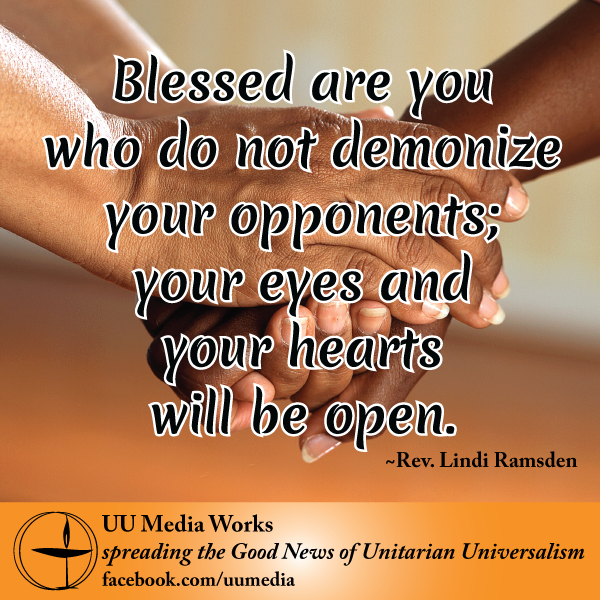
design by Jess Cullinan
Previous Post

January 17, 2017
What We Love Can Be Saved
Next Post
January 20, 2017 Pagan, Heal Thyself
Browse Our Archives
Select a Category Current Events CUUPS Press Release Interfaith liturgy Media Review podcast Religious Education Seasonal Reflection Spiritual Practice Summary Uncategorized
Select a Month July 2026 June 2026 April 2026 January 2026 December 2025 October 2025 August 2025 July 2025 June 2025 April 2025 March 2025 February 2025 December 2024 November 2024 October 2024 August 2024 July 2024 June 2024 May 2024 April 2024 February 2024 December 2023 November 2023 October 2023 September 2023 August 2023 June 2023 May 2023 April 2023 March 2023 February 2023 January 2023 December 2022 October 2022 September 2022 August 2022 July 2022 June 2022 May 2022 April 2022 March 2022 February 2022 January 2022 December 2021 November 2021 October 2021 September 2021 August 2021 July 2021 June 2021 May 2021 April 2021 March 2021 February 2021 January 2021 December 2020 November 2020 October 2020 September 2020 August 2020 July 2020 June 2020 May 2020 April 2020 March 2020 February 2020 January 2020 December 2019 November 2019 October 2019 September 2019 August 2019 July 2019 June 2019 May 2019 April 2019 March 2019 February 2019 January 2019 December 2018 November 2018 October 2018 September 2018 August 2018 July 2018 June 2018 May 2018 April 2018 March 2018 February 2018 January 2018 December 2017 November 2017 October 2017 September 2017 August 2017 July 2017 June 2017 May 2017 April 2017 March 2017 February 2017 January 2017 December 2016 November 2016 October 2016 September 2016 August 2016 July 2016 June 2016 May 2016 April 2016 March 2016 February 2016 January 2016 December 2015 November 2015 October 2015 September 2015 August 2015 July 2015 June 2015 May 2015 April 2015 March 2015 February 2015 January 2015
Follow Us!
TAKE THE
Religious Wisdom Quiz
What is the largest Christian denomination in the world?
Select your answer to see how you score.
Roman Catholic Anglican Pentecostal Eastern Orthodox
Related posts from Nature's Sacred Journey

My Pagan path - a look back into...

My story – discovering UU, starting a CUUPs...

Wheel of the Year: Beltane (May Day)
CUUPS at the Virtual UUA General Assembly 2021
TRENDING AT PATHEOS Pagan

I was recently chatting with someone on Instagram. She asked me what...

While there are many people who share their results, the end of...

On July 23, I saw Christopher Nolan's The Odyssey which is Homer’s...

As I write this two big events have just finished up. One...

Restoring the Watershed of Divine Love
Perhaps cooperation is not something we manufacture through legislation, ideology, or moral...

Many UUs don’t pray because of bad experiences in a previous religion,...
view all Pagan blogs
Ad-Free & Subscriber Log-In Subscription Support
- About Us
- 2026 Calendar
- Videos
- Podcasts
- Library of World Religions
- Faith In Media Tracker
- Advertise With Us
- Write for Us
- Privacy Policy
- Terms of Service
- Do Not Sell My Data
- Contact Us
- Radiant Digital
- Manage Newsletter Subscriptions
- Unsubscribe From Notifications
- Sitemap
Copyright 2008-2026, Patheos. All rights reserved.
Subscription Support Ad-Free & Subscriber Log-In
Follow Patheos