
BuddhistCatholicContemplativeEvangelicalGeneral ChristianHinduJewishLatter-day SaintMuslimNew VisionsProgressive Christian
Beliefs
- Buddhist
- Catholic
- Contemplative
- Evangelical
- General Christian
- Hindu
- Jewish
- Latter-day Saint
- More Voices
- Muslim
- New Visions
- Pagan
- Progressive Christian
Topics
- Religion News
- Food and Religion
- Sports and Religion
- Religious Art
- Religious Music and Entertainment
- Religious Events
- History and Religion
- Style and Religion
- Politics and Religion
- Women in Religion
- Recreation Outdoors and Religion
- Business Finance and Religion
- Careers Workplace and Religion
- Education and Religion
- Family Parenting and Religion
- Health Fitness and Religion
- Home and Religion
- Relationships and Religion
- Technology and Religion
- Travel and Religion
Columnists
- Buddhist Columnists
- Business Finance and Religion Columnists
- Careers Workplace and Religion Columnists
- Catholic Columnists
- Contemplative Columnists
- Education and Religion Columnists
- Evangelists Columnists
- Family Parenting and Religion Columnists
- General Christian Columnists
- Health Fitness and Religion Columnists
- Hindu Columnists
- History and Religion Columnists
- Home and Religion Columnists
- Jewish Columnists
- More Voices Columnists
- Latter Day Columnists
- Muslim Columnists
- New Visions Columnists
- Nonreligious Columnists
- Pagan Columnists
- Politics and Religion Columnists
- Progressive Columnists
- Recreation Outdoors and Religion Columnists
- Relationships and Religion Columnists
- Religion News Columnists
- Religious Art Columnists
- Religious Events Columnists
- Religious Music and Entertainment Columnists
- Sports and Religion Columnists
- Style and Religion Columnists
- Technology and Religion Columnists
- Travel and Religion Columnists
- Women in Religion Columnists
Resource Library
- 2026 Calendar
- Library of World Religions
- The 100 Most Holy Places on Earth
- Patheos Answers
- Podcasts
- Videos
- Faith Leaders Database
- Anglican Episcopalian
- Bahai
- Baptist
- Buddhism
- Christianity
- Confucianism
- Eastern Orthodoxy
- Hinduism
- Holiness and Pentecostal
- ISKCON
- Islam
- Judaism
- Lutheran
- Methodist
- The Church of Jesus Christ of Latter-day Saints
- New Age
- Paganism
- Presbytarian and Reformed
- Protestantism
- Religion Behind the Scenes
- Roman Catholic
- Scientology
- Shia Islam
- Sikhism
- Sufism
- Sunni Islam
- Taoism
- Zen
- See all religions
Research Tools
 Ad-Free & Subscriber Log-In Subscription Support
Ad-Free & Subscriber Log-In Subscription Support
Follow Patheos 

- Trending:
- Forgiveness
- |
- Marriage
- |
- Consciousness
- |
- Death Penalty
- |
- Election
- |
- Halloween

- Home
- Pagan
- The Safety Pin: A Reminder to Resist Bigotry
The Safety Pin: A Reminder to Resist Bigotry
Last updated on: February 24, 2018 at 5:08 am by Guest Contributor
The Safety Pin: A Reminder to Resist Bigotry 2018-02-24T05:08:48+00:00 Guest Contributor
Patheos Explore the world's faith through different perspectives on religion and spirituality! Patheos has the views of the prevalent religions and spiritualities of the world.
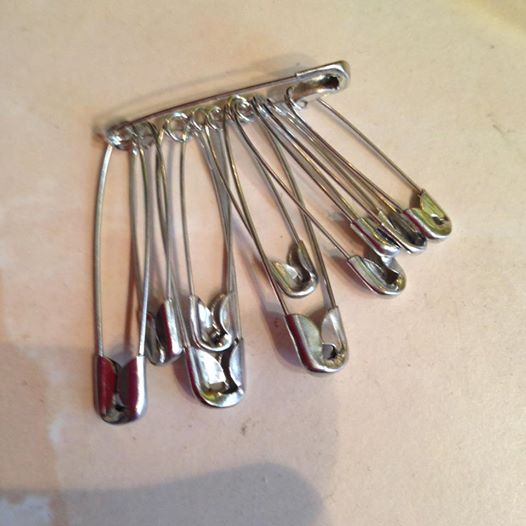 Just before the referendum on whether Britain should leave the European Union, Jo Cox, a Yorkshire Member of Parliament was murdered by a right-wing extremist with a gun that he had constructed himself. Shootings are rare here because we have strict gun laws.
That murder did not happen in a vacuum; the shooter was part of a wider discourse of rising racial hatred and bigotry. The campaign to Leave the EU was particularly virulent in its racism, with posters of refugees labelled as a “swarm”, and claims that Turkey would soon be joining the EU, together with maps showing that it is next door to Syria, Iraq, and Iran. Many people voted to leave the EU because they thought it meant that we would be ejecting all the immigrants – not just people from the rest of the EU, but people from India, Pakistan, Africa, and the Middle East. The Remain campaign also mentioned the ability to ‘control our borders’ but said that we would be better able to do that if we remained in the EU.
It is hardly surprising then, that in the immediate aftermath of the vote, there was a wave of racist hate crimes. Hate crime increased by 57% in the first month, and 42% over the next three months. People started collecting incidents in a Facebook group and Twitter feed called Worrying Signs, and on a Tumblr site called Brexit, this is what you have done. The people who voted to leave the EU didn’t all do so because they are out-and- out racists; the main reason given was the desire to ‘take back control’ (also deeply problematic) and the second biggest reason was wanting to decrease the number of immigrants.
In response to this rise in racist and xenophobic attacks, Allison, an American woman living in London, suggested people wear safety pins to show solidarity towards EU citizens and other communities who are targets of racist abuse.
The safety pin idea was inspired by the “I’ll Ride with You” campaign in Sydney in 2014, which was to protect Muslims from a wave of bigotry aimed at them on public transport.
Similarly, in World War II, Norwegians wore a paperclip as a sign of resistance to the Nazis.
The safety pin campaign in the UK was criticised by people who have been on the receiving end of racist abuse, because no-one would listen to them before, and they were accused of exaggerating the amount of racism that exists, and they were understandably sceptical that it would make any difference. They felt that it was just there to make the safety-pin wearers feel they had done something. It was also labelled ‘the visual symbol of #notallwhitepeople’.
My immediate response was to think that the safety pin is not there, as it was originally described, just to say ‘I am a safe space, you can sit next to me, you can talk to me, you can ask me for a help.’ That’s not enough.
What the safety pin should be for is a reminder to the wearer to do something if they hear or see racist, misogynist, homophobic, or transphobic attacks.
As Twitter user Hev (@SpareMeMary) wrote:
If you’re gonna wear a pin, make sure you’re ready to step in when you witness racism in public. Don’t you DARE wear it and stay silent.
If you don’t feel safe to challenge the perpetrator, at least move to be with the victim. Get them away from the perpetrator and to a place of safety.
The safety pin in the USA
In the wake of the election of Trump to the presidency, there was a huge wave of racist, transphobic, misogynist, and homophobic incidents. In response, people in the USA have started wearing safety pins too. The #safetypinUSA campaign comes with a pledge:
The Promise
If you wear a hijab, I’ll sit with you on the train.
If you’re trans, I’ll go to the bathroom with you.
If you’re a person of color, I’ll stand with you if the cops stop you and/or whenever you need me.
If you’re a person with disabilities, I’ll hand you my megaphone.
If you’re LGBTQ, I won’t let anybody tell you you’re broken.
If you’re a woman, I’ll fight by your side for all your rights.
If you’re an immigrant, I’ll help you find resources.
If you’re a survivor, I’ll believe you.
If you’re a Native American, I’ll stand with you to protect our water, your burial grounds, and your people.
If you’re a refugee, I’ll make sure you’re welcome.
If you’re a union member, fighting for one, or fighting for $15/hour, I’ll be there.
If you’re a veteran, a college student, a member of the working or middle class, I’ll fight against austerity measures and for more publically funded assistance for all.
If you’re sick or just human, I’ll take up the fight for universal healthcare.
If you’re tired, me too.
If you need a hug, I’ve got an infinite supply.
If you need me, I’ll be with you. All I ask is that you be with me too.
People who are already wearing safety pins as part of the U.S. campaign have said that people of colour have thanked them for their solidarity.
The safety pin is just the beginning
Things have already been terrible for Black people, indigenous people, and other minorities in the US. Racism is far from over. For the next four years at least, the USA is going to be an even worse place to live for women, LGBT people, Black people, Muslims, Native Americans, Latino/a/x people, and other minorities.
When members of these groups tell you that they are terrified by Trump’s election, don’t just say that they are exaggerating or over-reacting. Don’t tell them to ‘just get over it’. Ask them what you can do to help.
When one of your relatives makes a racist, homophobic, transphobic, anti-disabled, or misogynist comment over Thanksgiving dinner, don’t just roll your eyes and sigh inwardly. Challenge it, and make it clear that their attitude is not acceptable. Yes, I know that they will lapse back into their bigoted views the next day, once they start hanging out with their Trump-voting friends. But the failure to consistently challenge that kind of bigotry is one of the factors that got us where we are now.
If you hear a bigoted remark whilst out in public, challenge it. If you see someone being attacked (whether physically or verbally), don’t stay silent. If the perpetrator is too scary to tackle, try to get the victim away to safety, and make sure they know that you don’t agree with the perpetrator. In these situations, silence from bystanders is assumed by the perpetrator and the victim to be approval of the perpetrator’s actions.
Someone has already set up a website where post-election bigoted violence can be collated: it’s called “And Then They Came For Us”. Please submit any incidents to them.
ICAAD (International Center for Advocates Against Discrimination) reports that under the current Uniform Crime Reporting (UCR) Program led by the Federal Bureau of Investigation (FBI), only 3% percent of all hate crimes are documented. The FBI has a victim assistance program, but I cannot find a simple way to report a hate crime to any central body, as there is in the UK.
If things get even more unpleasant, as I suspect they will, more organised resistance will be needed. Safe houses for Muslims and LGBT people, for instance, and maybe for women who have had abortions, and the doctors who carried them out, as well. Civil disobedience campaigns will be needed. Solidarity networks are being created (see Rhyd Wildermuth’s article on forming solidarity networks at Gods and Radicals).
Civil courage can be learned
Some people have commented that they don’t know how to respond in cases of racial harassment and violence. Fortunately, there are resources for those who find this difficult.
There is an excellent cartoon guide to what to do if you witness an Islamophobic incident (which would work well for any form of bigotry).
There is also an excellent workshop outline for developing civil courage available from Unite Against Fascism (and I have made a copy of it on the inclusive Wicca website, and added a new section called Resisting fascism, where I will add more links as they become available). I would strongly suggest holding this workshop in UU churches, Pagan camps, and wherever there is space available.
First they came …
Just about everyone who knows their history is aware of the First they came… poem by Martin Niemöller:
First they came for the Socialists, and I did not speak out—
Because I was not a Socialist.
Then they came for the Trade Unionists, and I did not speak out—
Because I was not a Trade Unionist.
Then they came for the Jews, and I did not speak out—
Because I was not a Jew.
Then they came for me—and there was no one left to speak for me.

They (in the form of vicious thugs who believe that the vote for Trump has given them licence to attack minorities) are already coming for Muslims, LGBT people, Native Americans, women, Black people, and other visible minorities.
We know how this goes. Let’s speak out against hatred and bigotry and violence now.
Consider it a practice-run for if/when Trump sends in the highly militarised police and starts rounding up Muslims and undocumented immigrants; or if/when they begin to implement Pence’s horrible anti-LGBT ideas.
(This article was written by Yvonne Aburrow has been a Pagan since 1987 and a Wiccan since 1991. She has an MA in Contemporary Religions and Spiritualities from Bath Spa University and lives and works in Oxford, UK. She is also the author of Many Names which is a book of prayers, meditations and chalice lightings for use in Unitarian and Unitarian Universalist churches.)
Previous Post

November 11, 2016
Justice
Next Post

November 21, 2016 Transformation Blessings
Browse Our Archives
Select a Category Current Events CUUPS Press Release Interfaith liturgy Media Review podcast Religious Education Seasonal Reflection Spiritual Practice Summary Uncategorized
Select a Month July 2026 June 2026 April 2026 January 2026 December 2025 October 2025 August 2025 July 2025 June 2025 April 2025 March 2025 February 2025 December 2024 November 2024 October 2024 August 2024 July 2024 June 2024 May 2024 April 2024 February 2024 December 2023 November 2023 October 2023 September 2023 August 2023 June 2023 May 2023 April 2023 March 2023 February 2023 January 2023 December 2022 October 2022 September 2022 August 2022 July 2022 June 2022 May 2022 April 2022 March 2022 February 2022 January 2022 December 2021 November 2021 October 2021 September 2021 August 2021 July 2021 June 2021 May 2021 April 2021 March 2021 February 2021 January 2021 December 2020 November 2020 October 2020 September 2020 August 2020 July 2020 June 2020 May 2020 April 2020 March 2020 February 2020 January 2020 December 2019 November 2019 October 2019 September 2019 August 2019 July 2019 June 2019 May 2019 April 2019 March 2019 February 2019 January 2019 December 2018 November 2018 October 2018 September 2018 August 2018 July 2018 June 2018 May 2018 April 2018 March 2018 February 2018 January 2018 December 2017 November 2017 October 2017 September 2017 August 2017 July 2017 June 2017 May 2017 April 2017 March 2017 February 2017 January 2017 December 2016 November 2016 October 2016 September 2016 August 2016 July 2016 June 2016 May 2016 April 2016 March 2016 February 2016 January 2016 December 2015 November 2015 October 2015 September 2015 August 2015 July 2015 June 2015 May 2015 April 2015 March 2015 February 2015 January 2015
Follow Us!
TAKE THE
Religious Wisdom Quiz
I stood on a wooden platform and read the Law from daybreak till noon, and the people wept. Who am I?
Select your answer to see how you score.
Joshua Nehemiah Ezra Moses
Related posts from Nature's Sacred Journey


Fallow Season ~ Burnout, Fatigue, and Sacred Rest

The Autumn Awakening ~ Returning to Center

Five Things to do When the World Gets...
TRENDING AT PATHEOS Pagan

When we talk about Greek religion, we often begin with the dodekatheion—the...

I was recently chatting with someone on Instagram. She asked me what...

While there are many people who share their results, the end of...

On July 23, I saw Christopher Nolan's The Odyssey which is Homer’s...

As I write this two big events have just finished up. One...

Restoring the Watershed of Divine Love
Perhaps cooperation is not something we manufacture through legislation, ideology, or moral...
view all Pagan blogs
Ad-Free & Subscriber Log-In Subscription Support
- About Us
- 2026 Calendar
- Videos
- Podcasts
- Library of World Religions
- Faith In Media Tracker
- Advertise With Us
- Write for Us
- Privacy Policy
- Terms of Service
- Do Not Sell My Data
- Contact Us
- Radiant Digital
- Manage Newsletter Subscriptions
- Unsubscribe From Notifications
- Sitemap
Copyright 2008-2026, Patheos. All rights reserved.
Subscription Support Ad-Free & Subscriber Log-In
Follow Patheos