
BuddhistCatholicContemplativeEvangelicalGeneral ChristianHinduJewishLatter-day SaintMuslimNew VisionsProgressive Christian
Beliefs
- Buddhist
- Catholic
- Contemplative
- Evangelical
- General Christian
- Hindu
- Jewish
- Latter-day Saint
- More Voices
- Muslim
- New Visions
- Pagan
- Progressive Christian
Topics
- Religion News
- Food and Religion
- Sports and Religion
- Religious Art
- Religious Music and Entertainment
- Religious Events
- History and Religion
- Style and Religion
- Politics and Religion
- Women in Religion
- Recreation Outdoors and Religion
- Business Finance and Religion
- Careers Workplace and Religion
- Education and Religion
- Family Parenting and Religion
- Health Fitness and Religion
- Home and Religion
- Relationships and Religion
- Technology and Religion
- Travel and Religion
Columnists
- Buddhist Columnists
- Business Finance and Religion Columnists
- Careers Workplace and Religion Columnists
- Catholic Columnists
- Contemplative Columnists
- Education and Religion Columnists
- Evangelists Columnists
- Family Parenting and Religion Columnists
- General Christian Columnists
- Health Fitness and Religion Columnists
- Hindu Columnists
- History and Religion Columnists
- Home and Religion Columnists
- Jewish Columnists
- More Voices Columnists
- Latter Day Columnists
- Muslim Columnists
- New Visions Columnists
- Nonreligious Columnists
- Pagan Columnists
- Politics and Religion Columnists
- Progressive Columnists
- Recreation Outdoors and Religion Columnists
- Relationships and Religion Columnists
- Religion News Columnists
- Religious Art Columnists
- Religious Events Columnists
- Religious Music and Entertainment Columnists
- Sports and Religion Columnists
- Style and Religion Columnists
- Technology and Religion Columnists
- Travel and Religion Columnists
- Women in Religion Columnists
Resource Library
- 2026 Calendar
- Library of World Religions
- The 100 Most Holy Places on Earth
- Patheos Answers
- Podcasts
- Videos
- Faith Leaders Database
- Anglican Episcopalian
- Bahai
- Baptist
- Buddhism
- Christianity
- Confucianism
- Eastern Orthodoxy
- Hinduism
- Holiness and Pentecostal
- ISKCON
- Islam
- Judaism
- Lutheran
- Methodist
- The Church of Jesus Christ of Latter-day Saints
- New Age
- Paganism
- Presbytarian and Reformed
- Protestantism
- Religion Behind the Scenes
- Roman Catholic
- Scientology
- Shia Islam
- Sikhism
- Sufism
- Sunni Islam
- Taoism
- Zen
- See all religions
Research Tools
 Ad-Free & Subscriber Log-In Subscription Support
Ad-Free & Subscriber Log-In Subscription Support
Follow Patheos 

- Trending:
- Forgiveness
- |
- Marriage
- |
- Consciousness
- |
- Death Penalty
- |
- Election
- |
- Halloween

- Home
- Pagan
- What Lammas Is and Is Not
What Lammas Is and Is Not
Last updated on: July 28, 2016 at 5:00 am by Rev. Catharine Clarenbach
What Lammas Is and Is Not 2016-07-28T05:00:53+00:00 Rev. Catharine Clarenbach
Patheos Explore the world's faith through different perspectives on religion and spirituality! Patheos has the views of the prevalent religions and spiritualities of the world.
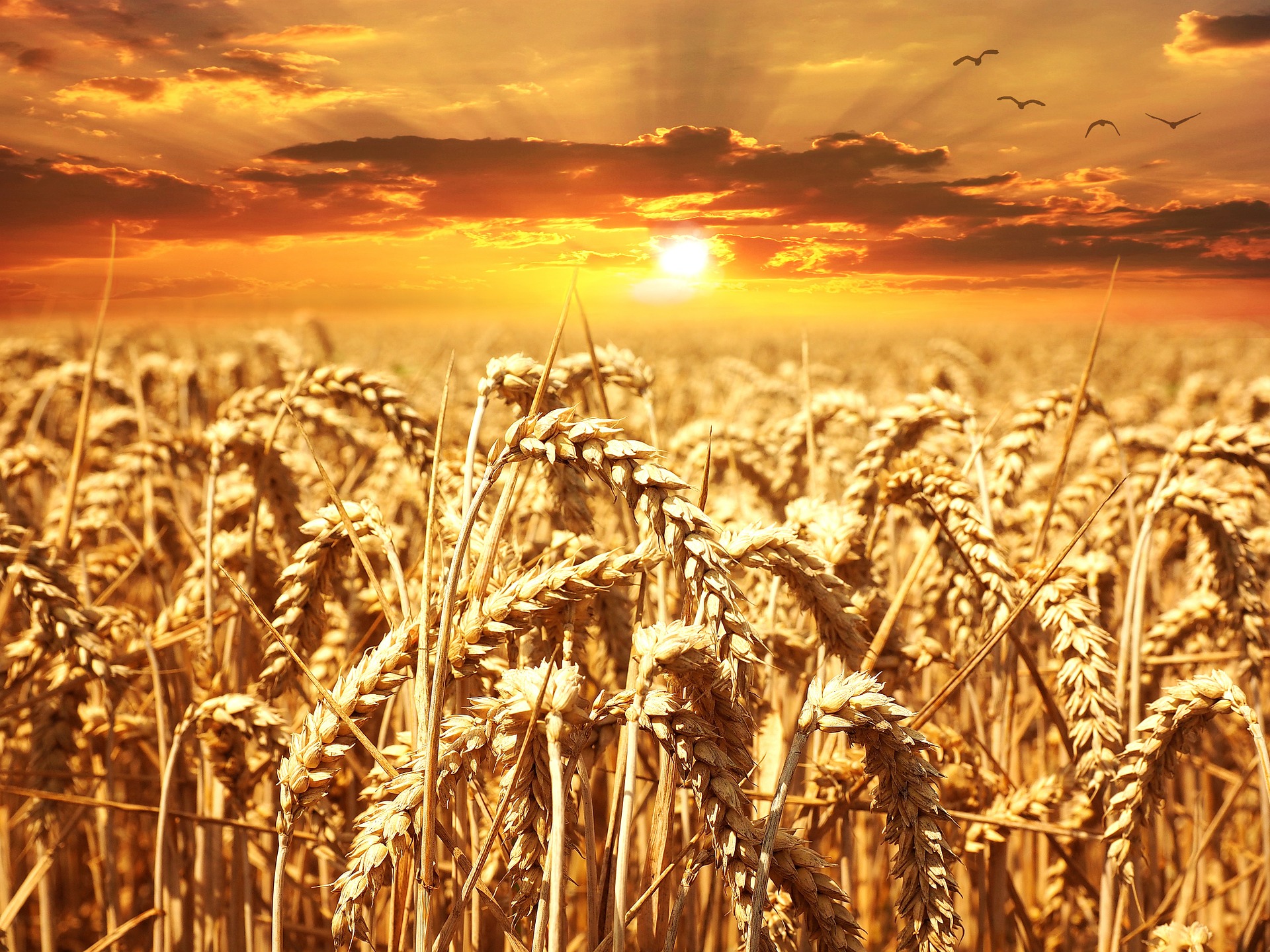 In my tradition, Lammas is about sacrifice. About willingly giving what you have for the greater good. And it is, too, about receiving that gift to benefit the great good. This post is about the beautiful metaphors of Lammas, and it is also about some of the realities of contemporary US culture. This missive is written primarily to my white siblings, though I welcome the commentary of my siblings of color.
While I know that we are all part of one human family, I also know that our experiences in the United States are very different and always have been. I hope these Lammas reflections can speak to that difference, and to how white people can help to move the culture toward justice, the prerequisite for peace.
Shut up, Show up, Speak up
Thanks to Randal Mason for the following concept of shut up, show up, and speak up. I don’t know whether it’s original to him, but I find it extremely helpful when thinking about privilege, supremacy, and sacrifice.
Nowadays, this concept makes me think of things like supremacy—the power-over that is wielded, mostly unknowingly, by those with unearned privilege. I am thinking about those of us with white skin and when we need to shut up and listen and believe people of color—and give over our tendency not to listen and not to believe.
Lammas makes me think of how whites and others with privilege need to show up and occupy places, in physical and online places where we can “boost the signal.” We need to be careful not to take up spaces where people of color could be. We need to know when to follow the lead of people of color as a consequence of listening and believing. We need to be where we can be, whether that’s rallies, community meetings, writing online, or sharing the work of people of color where our white friends, family, and colleagues will see it. And we need to work where people of color cannot be, cannot reach in this culture, do our anti-racist work there.
And Lammas makes me think of speaking up. Sometimes our—whites’—comfort is the sacrifice we make to talk with those like us who are inadvertently or overtly racist. Sometimes the sacrifices come in conversations with our comrades of color. What we give for the greater good are our relationships, our fears, our own comfort, the revelation of our own ignorance, and the commitment to do better.
There is a word, Holocaust, that most associate with the Second World War, and the atrocities thereof. There is another word, less well known outside of Jewish circles: Shoah. Holocaust means a burnt offering to God. Shoah means disaster, catastrophe. In my view, describing those years as the Shoah is much more accurate than calling them the Holocaust. God did not demand the sacrifice of all who died at the hands of the Nazi machine.
When I Think of Lammas
Similarly, something that is NOT a Lammas sacrifice sadly demanded by the Goddess are the murders of people of color of all genders, cisgender (both men and women) and trans* people in disproportionate numbers. Orlando, Ferguson, Baltimore, New York…so many places around the nation. These deaths are not Lammas sacrifices. They are part of catastrophe. They are part of a national disgrace. They are not a holocaust, a sacrificial offering to God.
So as I think of Lammas, I think of what sacrifice is and the symbol of the wheat stalks I have. I think of the way those stalks were cut down to be used in the making of bread. I think of the way “the fruit of the Earth and the work of human hands” (words from the Roman Catholic liturgy I grew up with) come together to bless us as the result of the harvest.
When I think of Lammas, I think of the threshing floor. Of separating what is needful from what is extraneous—perhaps separating ignorant wielding of privilege from conscious anti-racist courage?
Grain, Flowers, and the Need to Move toward Justice
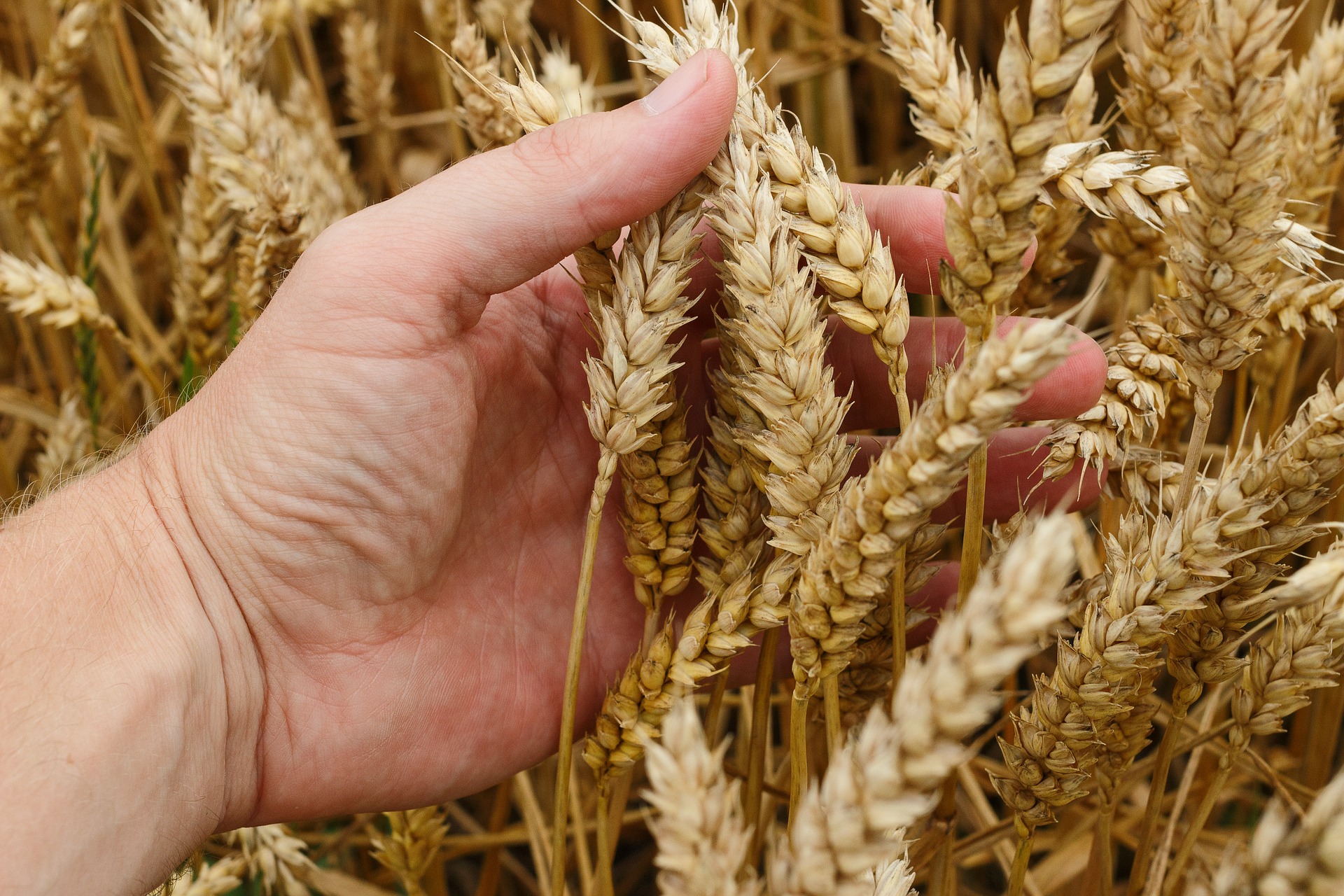 When I think of Lammas, I think of how that single stalk of grain was shown at the Mysteries of Eleusis, of Hades, Persephone and Demeter (and of the trickster figure, Baubo). I think of how the mystai, gone through purification, layers of Mystery, were brought to confront life and death, seeding and rebirth, winter and summer. Agriculture, that civilization-changing and -building that demands Earth and Her humanity to work together.
I think of the beauty of the flower that stands tall, then wilts, only to be born again anew in the spring. The flower, like the phallus of the God, both standing and resting. Neither one (except perhaps in the case of Priapus or the Herns) more necessary than the other. But each coming in their time.
In Unitarian Universalism, we have the many wonderful quotations pertaining to the arc of the moral universe turning toward justice. The original version was written by Rev. Theodore Parker and made famous by the Rev. Dr. Martin Luther King, Jr. It has been added to in the years following King’s death to say that it is we who must do the bending. It is we who must set our hands and feet to the threshing. What is given is given and if the people are to be blessed, we must put our shoulders to the Wheel.
How Might We Celebrate Lammas?
How are we confronted with our own desires to remain separate? To remain in the comfortable, rigged condition of privileged ignorance? How are we afraid to build bridges across race (and gender, sexual orientation, dis/ability, size, and many more qualities of identity)?
What sacrifices will we make for the greater good? What will we offer to the Goddess’ sickle? What metaphorical blood will we shed that the people can live together in justice and so eventually in harmony?
What can we do? What will we do?
How will we celebrate Lammas this year?
Previous Post

July 25, 2016
Lughnasa: Bad Harvest
Next Post
July 29, 2016 A Healthy Form of Tribalism
Browse Our Archives
Select a Category Current Events CUUPS Press Release Interfaith liturgy Media Review podcast Religious Education Seasonal Reflection Spiritual Practice Summary Uncategorized
Select a Month July 2026 June 2026 April 2026 January 2026 December 2025 October 2025 August 2025 July 2025 June 2025 April 2025 March 2025 February 2025 December 2024 November 2024 October 2024 August 2024 July 2024 June 2024 May 2024 April 2024 February 2024 December 2023 November 2023 October 2023 September 2023 August 2023 June 2023 May 2023 April 2023 March 2023 February 2023 January 2023 December 2022 October 2022 September 2022 August 2022 July 2022 June 2022 May 2022 April 2022 March 2022 February 2022 January 2022 December 2021 November 2021 October 2021 September 2021 August 2021 July 2021 June 2021 May 2021 April 2021 March 2021 February 2021 January 2021 December 2020 November 2020 October 2020 September 2020 August 2020 July 2020 June 2020 May 2020 April 2020 March 2020 February 2020 January 2020 December 2019 November 2019 October 2019 September 2019 August 2019 July 2019 June 2019 May 2019 April 2019 March 2019 February 2019 January 2019 December 2018 November 2018 October 2018 September 2018 August 2018 July 2018 June 2018 May 2018 April 2018 March 2018 February 2018 January 2018 December 2017 November 2017 October 2017 September 2017 August 2017 July 2017 June 2017 May 2017 April 2017 March 2017 February 2017 January 2017 December 2016 November 2016 October 2016 September 2016 August 2016 July 2016 June 2016 May 2016 April 2016 March 2016 February 2016 January 2016 December 2015 November 2015 October 2015 September 2015 August 2015 July 2015 June 2015 May 2015 April 2015 March 2015 February 2015 January 2015
Follow Us!
TAKE THE
Religious Wisdom Quiz
Who brought to Jesus the woman taken in adultery?
Select your answer to see how you score.
The Pharisees The Publicans The Apostles The Disciples
Related posts from Nature's Sacred Journey

April 22 Earth Day, its Our Power and...

Fear, conquer it with affirmations and meditation

Samhain — three aspects; one holiday and...Halloween
TRENDING AT PATHEOS Pagan

When we talk about Greek religion, we often begin with the dodekatheion—the...

I was recently chatting with someone on Instagram. She asked me what...

While there are many people who share their results, the end of...

On July 23, I saw Christopher Nolan's The Odyssey which is Homer’s...

As I write this two big events have just finished up. One...

Restoring the Watershed of Divine Love
Perhaps cooperation is not something we manufacture through legislation, ideology, or moral...
view all Pagan blogs
Ad-Free & Subscriber Log-In Subscription Support
- About Us
- 2026 Calendar
- Videos
- Podcasts
- Library of World Religions
- Faith In Media Tracker
- Advertise With Us
- Write for Us
- Privacy Policy
- Terms of Service
- Do Not Sell My Data
- Contact Us
- Radiant Digital
- Manage Newsletter Subscriptions
- Unsubscribe From Notifications
- Sitemap
Copyright 2008-2026, Patheos. All rights reserved.
Subscription Support Ad-Free & Subscriber Log-In
Follow Patheos