
BuddhistCatholicContemplativeEvangelicalGeneral ChristianHinduJewishLatter-day SaintMuslimNew VisionsProgressive Christian
Beliefs
- Buddhist
- Catholic
- Contemplative
- Evangelical
- General Christian
- Hindu
- Jewish
- Latter-day Saint
- More Voices
- Muslim
- New Visions
- Pagan
- Progressive Christian
Topics
- Religion News
- Food and Religion
- Sports and Religion
- Religious Art
- Religious Music and Entertainment
- Religious Events
- History and Religion
- Style and Religion
- Politics and Religion
- Women in Religion
- Recreation Outdoors and Religion
- Business Finance and Religion
- Careers Workplace and Religion
- Education and Religion
- Family Parenting and Religion
- Health Fitness and Religion
- Home and Religion
- Relationships and Religion
- Technology and Religion
- Travel and Religion
Columnists
- Buddhist Columnists
- Business Finance and Religion Columnists
- Careers Workplace and Religion Columnists
- Catholic Columnists
- Contemplative Columnists
- Education and Religion Columnists
- Evangelists Columnists
- Family Parenting and Religion Columnists
- General Christian Columnists
- Health Fitness and Religion Columnists
- Hindu Columnists
- History and Religion Columnists
- Home and Religion Columnists
- Jewish Columnists
- More Voices Columnists
- Latter Day Columnists
- Muslim Columnists
- New Visions Columnists
- Nonreligious Columnists
- Pagan Columnists
- Politics and Religion Columnists
- Progressive Columnists
- Recreation Outdoors and Religion Columnists
- Relationships and Religion Columnists
- Religion News Columnists
- Religious Art Columnists
- Religious Events Columnists
- Religious Music and Entertainment Columnists
- Sports and Religion Columnists
- Style and Religion Columnists
- Technology and Religion Columnists
- Travel and Religion Columnists
- Women in Religion Columnists
Resource Library
- 2026 Calendar
- Library of World Religions
- The 100 Most Holy Places on Earth
- Patheos Answers
- Podcasts
- Videos
- Faith Leaders Database
- Anglican Episcopalian
- Bahai
- Baptist
- Buddhism
- Christianity
- Confucianism
- Eastern Orthodoxy
- Hinduism
- Holiness and Pentecostal
- ISKCON
- Islam
- Judaism
- Lutheran
- Methodist
- The Church of Jesus Christ of Latter-day Saints
- New Age
- Paganism
- Presbytarian and Reformed
- Protestantism
- Religion Behind the Scenes
- Roman Catholic
- Scientology
- Shia Islam
- Sikhism
- Sufism
- Sunni Islam
- Taoism
- Zen
- See all religions
Research Tools
 Ad-Free & Subscriber Log-In Subscription Support
Ad-Free & Subscriber Log-In Subscription Support
Follow Patheos 

- Trending:
- Forgiveness
- |
- Marriage
- |
- Consciousness
- |
- Death Penalty
- |
- Election
- |
- Halloween

- Home
- Pagan
- To Cast or Not to Cast
To Cast or Not to Cast
Last updated on: March 18, 2016 at 6:23 am by Allison Ehrman
To Cast or Not to Cast 2016-03-18T06:23:18+00:00 Allison Ehrman
Patheos Explore the world's faith through different perspectives on religion and spirituality! Patheos has the views of the prevalent religions and spiritualities of the world.
This Sunday, the Women’s Ritual Circle at the Unitarian Universalist Fellowship of Harford County will lead the morning worship service in an observance of Ostara. I have been told that it’s been five or more years since the Circle has led a Sunday morning service and we are all very excited about the activities, readings, and songs we have selected to share. We have met both in person and virtually to discuss details and assign responsibilities. But the first stage of this planning process started with some serious conversation around the general purpose and tone of the service and how our group should handle the fact that most of our members are not pagans and many probably don’t know anything about our group or paganism itself.
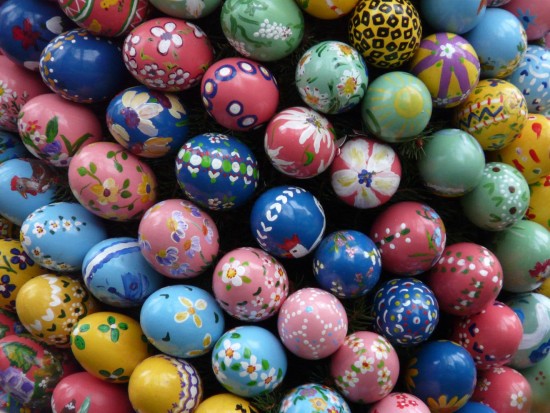
Open source image from Wikimedia Commons.
When I first agreed to be the coordinator for the Ostara service, I immediately envisioned a full-blown Ostara ritual, following the flexible standard that our group has developed over the years for our sabbath ceremonies. With all the chairs in the auditorium turned toward a central alter, we would offer a spirit cleansing for members as they entered, call the four quarters, and cast the largest circle I’ve ever been a part of. We would lead chants, we would explain the history of Ostara, and in the end we would ground our energy and open the circle, sending everyone back out into the world refreshed and, dare I say, perhaps a little more enlightened. Everyone would be moved and filled with joy. I was dreaming big.
But soon a thought occurred to me. What would our Christian members think? How would our Jewish members feel? How would our visitors react? The blurb about the ceremony in our weekly announcements would probably not provide enough information to prepare them for such an experience or to even enable them to make an informed decision about whether or not such a service was something they’d be comfortable participating in. Yet, on the other hand, we are UUs and we are welcoming of pagan and Wiccan beliefs. Judgement and scorn are not supposed to be the UU way. And we should be proud of our beliefs and practices, because they are good beliefs and practices.
I finally decided to reach out to the founder of the Circle for her advice. She confirmed that my concerns were valid by telling me that in the past she had led Sunday services that centered around the casting of a circle, but had decided years ago that she wasn’t going to do that again. Her reasoning was that the people who come to the service should be able to choose whether or not they want to be part of a formal ritual and not feel like they are being forced into any unfamiliar activity against their will. She also told me that there had been times when some of the attendees chose to stand outside the circle the entire time, as was their prerogative, observing the ceremony. When she said this, I immediately recalled the way I’ve felt when I’ve participated in sabbath rituals while others were watching from outside. I find it makes me uncomfortable as I wonder what that person or persons is thinking and it makes it almost impossible for me to focus on the activities that I love so much. Pagan rituals are participation events, not performance events.
I spent the next couple of days thinking about her words and considering my own thoughts on the matter. I really wanted to do a proper Ostara ritual with my Circle friends and to introduce the magic of our ceremonies to others who might enjoy it as much as we do. But what ultimately helped me make my decision was the thought of a first time visitor coming into our auditorium with no notion of what the morning’s service was about. Our fellowship has experienced exciting growth over the past couple of years, and there are almost always one or two first time visitors at our services. What if someone who was weighing the momentous decision of leaving the faith tradition of their upbringing was permanently scared away from Unitarian Universalism by a pagan ritual that they were not emotionally or spiritually prepared for? Would a first time visitor assume that all of our services were pagan? I finally determined that I would rather offer a newcomer-friendly service than a ritual that someone might find uncomfortable.
So, as UUs often do, our Women’s Ritual Circle came up with what I feel is a beautiful compromise. We are following the normal Sunday morning order of service with slight modifications. We will place the chairs in the auditorium into a circle facing in toward an alter which we will decorate with flowers, eggs, seeds, and such. Our regular UU chalice will be temporarily replaced with a terra cotta candle holder shaped like a group of people standing in a circle with their arms around each other. Our founder will tell a favorite story about Ostara for the children’s time.
I will deliver a brief explanation about who we are and what our group does, followed by an even briefer description of Ostara. I have had a lovely Wheel of the Year graphic printed on an insert in our order of service. One of our members has written a beautiful explanation about why and how we call the quarters, and then other members will read a sentence about qualities generally associated with each direction in order: East, South, West, North, Center, and we will offer a brief time in between for attendees to state out loud qualities they associate with that direction. This is something that we often do in our full rituals, and is an interactive activity I particularly enjoy.
Next, several members of our Women’s Ritual Circle have volunteered to make a short statement about what the Circle means to them and what Ostara or Spring Equinox means to them. We are a diverse group, and we felt this would be the best way to celebrate our differences and our similarities. We will culminate the main part of the service with a seed planting activity that will allow participation by everyone who is willing.
Interspersed with all of this, we will lead the singing of some of our favorite chants, the words of which have been printed in the order of service to make it easier for attendees to join in. Our invocation and benediction are pagan and earth-centered. In our regular sabbath rituals, we always open our circle with the song, “Merry Meet.” On Sunday we will close our service by singing this song as we extinguish our chalice. I know that during this time, in my heart, I will be opening the circle of love that I frequently feel at our Sunday services and sending the positive energy cultivated during our ceremony out into the world with all of the attendees.
Have we made the right decision in not casting a circle and having a full Ostara ritual this weekend? I think we probably have, but perhaps we haven’t. Sometimes I’m envious of other UU congregations that have paganism as their base or even as strong pillar of their foundation. I suppose that each fellowship has its own needs and traditions and that we must tailor all of our Sunday services, not just the pagan ones, to meet the needs of the members and visitors. My hope is that one or more people in our Ostara ceremony will be intrigued by our group and decide to visit or join us during our regular sabbath observances. Perhaps someone will say to her or himself, “I wish I had known this group existed! They are perfect for me!”
Ultimately, my dream is that someday we’ll be able to hold full Women’s Circle Rituals during Sunday morning services and cast our circle with the knowledge that others will already understand and appreciate what we are doing and happily join in, even if paganism is not part of their own spiritual path. Maybe our modified service this Sunday will bring us one step closer to that reality.
Previous Post

March 17, 2016
A Brief History of Ostara
Next Post
March 21, 2016 Of Camellias, Daffodils, Hyacinths and Elections
Browse Our Archives
Select a Category Current Events CUUPS Press Release Interfaith liturgy Media Review podcast Religious Education Seasonal Reflection Spiritual Practice Summary Uncategorized
Select a Month July 2026 June 2026 April 2026 January 2026 December 2025 October 2025 August 2025 July 2025 June 2025 April 2025 March 2025 February 2025 December 2024 November 2024 October 2024 August 2024 July 2024 June 2024 May 2024 April 2024 February 2024 December 2023 November 2023 October 2023 September 2023 August 2023 June 2023 May 2023 April 2023 March 2023 February 2023 January 2023 December 2022 October 2022 September 2022 August 2022 July 2022 June 2022 May 2022 April 2022 March 2022 February 2022 January 2022 December 2021 November 2021 October 2021 September 2021 August 2021 July 2021 June 2021 May 2021 April 2021 March 2021 February 2021 January 2021 December 2020 November 2020 October 2020 September 2020 August 2020 July 2020 June 2020 May 2020 April 2020 March 2020 February 2020 January 2020 December 2019 November 2019 October 2019 September 2019 August 2019 July 2019 June 2019 May 2019 April 2019 March 2019 February 2019 January 2019 December 2018 November 2018 October 2018 September 2018 August 2018 July 2018 June 2018 May 2018 April 2018 March 2018 February 2018 January 2018 December 2017 November 2017 October 2017 September 2017 August 2017 July 2017 June 2017 May 2017 April 2017 March 2017 February 2017 January 2017 December 2016 November 2016 October 2016 September 2016 August 2016 July 2016 June 2016 May 2016 April 2016 March 2016 February 2016 January 2016 December 2015 November 2015 October 2015 September 2015 August 2015 July 2015 June 2015 May 2015 April 2015 March 2015 February 2015 January 2015
Follow Us!
TAKE THE
Religious Wisdom Quiz
In Revelation, what is the correct order of the first four seals opened by the Lamb?
Select your answer to see how you score.
White horse, red horse, black horse, pale horse Pale horse, red horse, white horse, black horse Red horse, white horse, pale horse, black horse White horse, black horse, red horse, pale horse
Related posts from Nature's Sacred Journey
Words…words…words — Pagan words misused; misunderstood
Pagan Pet Peeves — things that make me...
Get up! Sing, dance, well just get loud...
There is beauty in ritual without the glitz...
TRENDING AT PATHEOS Pagan

I was recently chatting with someone on Instagram. She asked me what...

While there are many people who share their results, the end of...

On July 23, I saw Christopher Nolan's The Odyssey which is Homer’s...

As I write this two big events have just finished up. One...

Restoring the Watershed of Divine Love
Perhaps cooperation is not something we manufacture through legislation, ideology, or moral...

Many UUs don’t pray because of bad experiences in a previous religion,...
view all Pagan blogs
Ad-Free & Subscriber Log-In Subscription Support
- About Us
- 2026 Calendar
- Videos
- Podcasts
- Library of World Religions
- Faith In Media Tracker
- Advertise With Us
- Write for Us
- Privacy Policy
- Terms of Service
- Do Not Sell My Data
- Contact Us
- Radiant Digital
- Manage Newsletter Subscriptions
- Unsubscribe From Notifications
- Sitemap
Copyright 2008-2026, Patheos. All rights reserved.
Subscription Support Ad-Free & Subscriber Log-In
Follow Patheos