
BuddhistCatholicContemplativeEvangelicalGeneral ChristianHinduJewishLatter-day SaintMuslimNew VisionsProgressive Christian
Beliefs
- Buddhist
- Catholic
- Contemplative
- Evangelical
- General Christian
- Hindu
- Jewish
- Latter-day Saint
- More Voices
- Muslim
- New Visions
- Pagan
- Progressive Christian
Topics
- Religion News
- Food and Religion
- Sports and Religion
- Religious Art
- Religious Music and Entertainment
- Religious Events
- History and Religion
- Style and Religion
- Politics and Religion
- Women in Religion
- Recreation Outdoors and Religion
- Business Finance and Religion
- Careers Workplace and Religion
- Education and Religion
- Family Parenting and Religion
- Health Fitness and Religion
- Home and Religion
- Relationships and Religion
- Technology and Religion
- Travel and Religion
Columnists
- Buddhist Columnists
- Business Finance and Religion Columnists
- Careers Workplace and Religion Columnists
- Catholic Columnists
- Contemplative Columnists
- Education and Religion Columnists
- Evangelists Columnists
- Family Parenting and Religion Columnists
- General Christian Columnists
- Health Fitness and Religion Columnists
- Hindu Columnists
- History and Religion Columnists
- Home and Religion Columnists
- Jewish Columnists
- More Voices Columnists
- Latter Day Columnists
- Muslim Columnists
- New Visions Columnists
- Nonreligious Columnists
- Pagan Columnists
- Politics and Religion Columnists
- Progressive Columnists
- Recreation Outdoors and Religion Columnists
- Relationships and Religion Columnists
- Religion News Columnists
- Religious Art Columnists
- Religious Events Columnists
- Religious Music and Entertainment Columnists
- Sports and Religion Columnists
- Style and Religion Columnists
- Technology and Religion Columnists
- Travel and Religion Columnists
- Women in Religion Columnists
Resource Library
- 2026 Calendar
- Library of World Religions
- The 100 Most Holy Places on Earth
- Patheos Answers
- Podcasts
- Videos
- Faith Leaders Database
- Anglican Episcopalian
- Bahai
- Baptist
- Buddhism
- Christianity
- Confucianism
- Eastern Orthodoxy
- Hinduism
- Holiness and Pentecostal
- ISKCON
- Islam
- Judaism
- Lutheran
- Methodist
- The Church of Jesus Christ of Latter-day Saints
- New Age
- Paganism
- Presbytarian and Reformed
- Protestantism
- Religion Behind the Scenes
- Roman Catholic
- Scientology
- Shia Islam
- Sikhism
- Sufism
- Sunni Islam
- Taoism
- Zen
- See all religions
Research Tools
 Ad-Free & Subscriber Log-In Subscription Support
Ad-Free & Subscriber Log-In Subscription Support
Follow Patheos 

- Trending:
- Forgiveness
- |
- Marriage
- |
- Consciousness
- |
- Death Penalty
- |
- Election
- |
- Halloween

- Home
- Pagan
- The Pulse of Autumn
The Pulse of Autumn
Last updated on: October 9, 2015 at 6:24 am by Alison Leigh Lilly
The Pulse of Autumn 2015-10-09T06:24:33+00:00 Alison Leigh Lilly
Patheos Explore the world's faith through different perspectives on religion and spirituality! Patheos has the views of the prevalent religions and spiritualities of the world.
There must have been an autumn when I was a child… But those days I remember as being full of the smell of sharpened pencils and graphite shavings, the rustle of notebook pages, the glint of bent spiral bindings and — sometimes — at the bus stop, a glimpse of horizon between the houses and the whispering golden pear trees, a full moon setting pale opposite the rising sun.
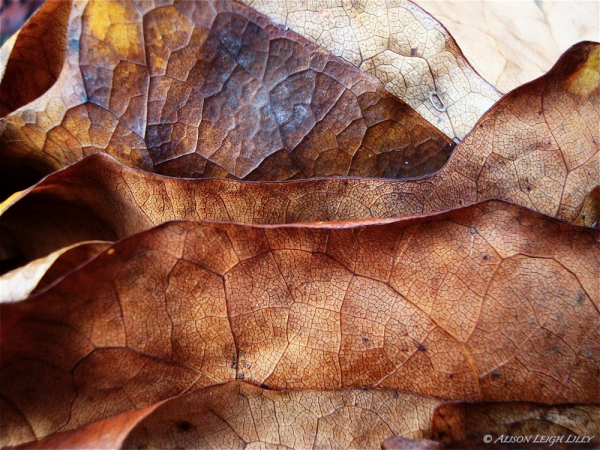
Photos by Alison Leigh Lilly.
This morning, I glance out the window between sips of mint tea. The vines cascading down the garage have flushed to copper and rust, fading back into the old red brick. The sky is overcast, but the sun is low and spills in shifting rays over the tall grasses of the backyard, coming and going, light and dim again as it sinks. A neighborhood cat prowls, its black body slipping through the weeds that bend and shift in soft browns almost like wheat. The silent overhanging trees are limp with mottled yellows and golds.
Somewhere, a cloud changes. Suddenly the scene is awash in early morning sunlight, illuminated, every leaf translucent like a moving, living fountain of stained glass against the low, dull sky. The cat pauses, a dark shimmering shape stilled in a shaft of light, its ears and tail twitching. I can almost see the tips of its whiskers shining. Then, it hunches down again, head low, its form one long line of shadow slinking off.
Death slips in. The dead among us rustle like dying leaves, or notebook pages.
I could write something here about harvest and blood sacrifice. I could write about the thinning veil and the shifting worlds that turn and loom up from the dark, that gape open like a wound, sewn up again with our firelight and our dancing and our spooked laughter. But all you need to do, really, to know the season is to listen, and wait. The days are growing darker. Although this morning blossoms into an afternoon as warm as a summer day, the light is long and the wind prowls restless through the thinned trees. Night will be here soon. Autumn beats like a thready pulse through the years.
When I was a child, this time was always so full of bustle and noise, schoolwork and excitement, and later the beat of the drums and the call of the horns blaring out above the gusting wind and the stadium full of high school football fans. Summer was the time of energy and freedom, and I reveled in it — fall was all discipline and direction, when enthusiasm for the school semester was still high and the stress of homework and midterms hadn’t yet set in. Yet as I grow older, and my time becomes more and more my own, I find that the tides of autumn sweep me up into their subtler beauty, more reflective, more solitary and still. Now, most afternoons I can hear the distant staccato thunder of the marching band drumline bouncing off the brick walls of the local high school and echoing out over the neighborhood. The starlings scream at one another like hecklers. The crows gather on the power lines. I have time to sit and listen, and watch the cats prowling.
A few years ago, my cousin wrote me an email asking what kinds of holy days Pagans celebrate around this time of year and what we mean by the “thinning of the veil” between the worlds:
Maybe this is when dreams involving the dead are more pervasive than any other time of the year? But, would communication between the living and dead need a certain time in the Earth’s rotation cycle, or couldn’t they do that at any point?
What is this connection between the realities of the Spirit and the spinning of this tiny blue gem of a planet through all that darkness?
I’ve been pondering this question. It was not many years ago that I lay on a hillside under a crabapple tree whose branches hung low with end-of-summer fruit, turning over Whitman’s poetry of death, regeneration and the thousand leaves of grass over and over in my mind. I had decided, then, that I was ready to die, and as I lay still in the warm, long sunlight of that afternoon, I imagined that I could feel the dissolution of my body back into the mud and worms of the earth — the veil between self and other, between spirit and soul, slipping off like a death shroud lifted and tossed by a turn of the wind. I had lost yet another friend to death, too young, and I was very much alone in the world… yet the world itself was with me, a landscape thick with presence. It was honor then that kept me alive, my sense of honoring the body I was in, of caring for it for its own sake as part of the sacred world, and having the patience to allow its story to unfold into whatever grief or joy might come.
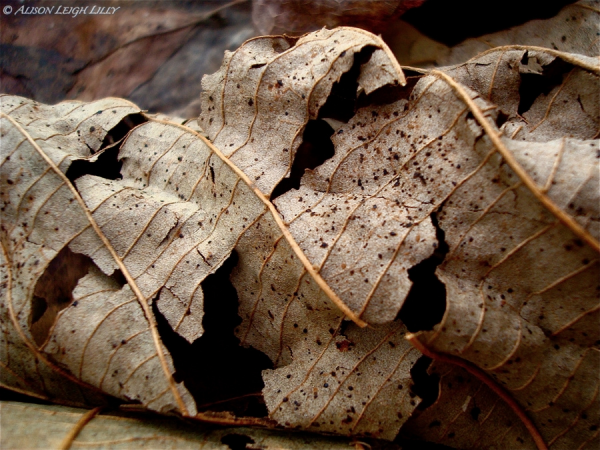
Photos by Alison Leigh Lilly.
Why should our communion with the beloved dead depend on the coincidental turning of the Earth on its axis? Why should we not always be in touch with those who have crossed the threshold, in touch with our own mortality and death? One might as well ask why the angle of the sun should sometimes grace the crocuses and wet new buds of spring and at other times drop down heavy and hot into the deepest reaches of summer lakes, why childhood should burst with curiosity and buzzing movement and adulthood settle into the long, gentle pull of days one after another beneath a bright, cool sky. The truth is, I suspect, that there is no Other-world. That we live in this one world, together with the dead and the long-departed, drinking in the same gulps of breath as they once drank. They are as close to us now as our own skin and bones and blood. This is true, just as it is true that the sky is always full of stars, whether we see them striking out towards us through the darkness of night or lose them awash in the brilliant blues of sun-filled days. Just as it is true that we live embodied, embedded deeply in the seasons and moods of the landscape which lays heavy around us, even as we spin through space on a speck of dust and sea held together by gravity and speed. It is all one world.
Autumn beats like a pulse through the years, but the blood is always moving and the heart always remains. We feel the contraction in the land around us, the breathing in, the tension of something drawing close. With every beat, the heart draws nearer to itself. We taste the fruits of harvest. We smell the blood of slaughter. We shiver at the setting sun, earlier each day. We draw nearer to ourselves and to one another, for warmth or comfort, or out of necessity. The dead draw near as well. We say the veil has thinned, but perhaps it is only distance that has grown lean and pale between us. We can see farther now, deeper into the woods now that the leaves have fallen. The sky draws closer with its low clouds and ever-briefer days, the sun slinking along the horizon like a prowling feline.
Past and future reach towards one another to brush fingertips in the here-and-now. There is the thrill of recognition and bated breath.
One day each of us in our turn, too, will brush the veil aside, the flimsy liminal sheen that demarcates the boundaries of our bodies. That veil will lift, like a death shroud pulled aside by a sudden gust of wind. And like the stars and the inconstant dead, we too will reach through darkness to tell our stories ceaselessly to the living land.
Alison Leigh Lilly dwells in the lovely, rain-drizzled cityscape of Seattle, where she shares her home with her brilliant and bearded husband, her black cat, two pet frogs, and innumerable cedar trees. Nurturing the earth-rooted, sea-soaked, mist-and-mystic spiritual heritage of her Celtic ancestors, she explores themes of peace, poesis and wilderness through essays, poetry and podcasting. You can learn more about her work on her website at: alisonleighlilly.com
Previous Post

October 8, 2015
The CUUPS Podcast #30 - October 2015
Next Post
October 12, 2015 CUUPS, Interfaith and the Sixth Principle
Browse Our Archives
Select a Category Current Events CUUPS Press Release Interfaith liturgy Media Review podcast Religious Education Seasonal Reflection Spiritual Practice Summary Uncategorized
Select a Month July 2026 June 2026 April 2026 January 2026 December 2025 October 2025 August 2025 July 2025 June 2025 April 2025 March 2025 February 2025 December 2024 November 2024 October 2024 August 2024 July 2024 June 2024 May 2024 April 2024 February 2024 December 2023 November 2023 October 2023 September 2023 August 2023 June 2023 May 2023 April 2023 March 2023 February 2023 January 2023 December 2022 October 2022 September 2022 August 2022 July 2022 June 2022 May 2022 April 2022 March 2022 February 2022 January 2022 December 2021 November 2021 October 2021 September 2021 August 2021 July 2021 June 2021 May 2021 April 2021 March 2021 February 2021 January 2021 December 2020 November 2020 October 2020 September 2020 August 2020 July 2020 June 2020 May 2020 April 2020 March 2020 February 2020 January 2020 December 2019 November 2019 October 2019 September 2019 August 2019 July 2019 June 2019 May 2019 April 2019 March 2019 February 2019 January 2019 December 2018 November 2018 October 2018 September 2018 August 2018 July 2018 June 2018 May 2018 April 2018 March 2018 February 2018 January 2018 December 2017 November 2017 October 2017 September 2017 August 2017 July 2017 June 2017 May 2017 April 2017 March 2017 February 2017 January 2017 December 2016 November 2016 October 2016 September 2016 August 2016 July 2016 June 2016 May 2016 April 2016 March 2016 February 2016 January 2016 December 2015 November 2015 October 2015 September 2015 August 2015 July 2015 June 2015 May 2015 April 2015 March 2015 February 2015 January 2015
Follow Us!
TAKE THE
Religious Wisdom Quiz
What year was the Bible first translated into English?
Select your answer to see how you score.
1382 1517 1604 1100
Related posts from Nature's Sacred Journey
April 22 Earth Day, its Our Power and...

Fear, conquer it with affirmations and meditation

Samhain — three aspects; one holiday and...Halloween
TRENDING AT PATHEOS Pagan

When we talk about Greek religion, we often begin with the dodekatheion—the...

I was recently chatting with someone on Instagram. She asked me what...

While there are many people who share their results, the end of...

On July 23, I saw Christopher Nolan's The Odyssey which is Homer’s...

As I write this two big events have just finished up. One...

Restoring the Watershed of Divine Love
Perhaps cooperation is not something we manufacture through legislation, ideology, or moral...
view all Pagan blogs
Ad-Free & Subscriber Log-In Subscription Support
- About Us
- 2026 Calendar
- Videos
- Podcasts
- Library of World Religions
- Faith In Media Tracker
- Advertise With Us
- Write for Us
- Privacy Policy
- Terms of Service
- Do Not Sell My Data
- Contact Us
- Radiant Digital
- Manage Newsletter Subscriptions
- Unsubscribe From Notifications
- Sitemap
Copyright 2008-2026, Patheos. All rights reserved.
Subscription Support Ad-Free & Subscriber Log-In
Follow Patheos