
BuddhistCatholicContemplativeEvangelicalGeneral ChristianHinduJewishLatter-day SaintMuslimNew VisionsProgressive Christian
Beliefs
- Buddhist
- Catholic
- Contemplative
- Evangelical
- General Christian
- Hindu
- Jewish
- Latter-day Saint
- More Voices
- Muslim
- New Visions
- Pagan
- Progressive Christian
Topics
- Religion News
- Food and Religion
- Sports and Religion
- Religious Art
- Religious Music and Entertainment
- Religious Events
- History and Religion
- Style and Religion
- Politics and Religion
- Women in Religion
- Recreation Outdoors and Religion
- Business Finance and Religion
- Careers Workplace and Religion
- Education and Religion
- Family Parenting and Religion
- Health Fitness and Religion
- Home and Religion
- Relationships and Religion
- Technology and Religion
- Travel and Religion
Columnists
- Buddhist Columnists
- Business Finance and Religion Columnists
- Careers Workplace and Religion Columnists
- Catholic Columnists
- Contemplative Columnists
- Education and Religion Columnists
- Evangelists Columnists
- Family Parenting and Religion Columnists
- General Christian Columnists
- Health Fitness and Religion Columnists
- Hindu Columnists
- History and Religion Columnists
- Home and Religion Columnists
- Jewish Columnists
- More Voices Columnists
- Latter Day Columnists
- Muslim Columnists
- New Visions Columnists
- Nonreligious Columnists
- Pagan Columnists
- Politics and Religion Columnists
- Progressive Columnists
- Recreation Outdoors and Religion Columnists
- Relationships and Religion Columnists
- Religion News Columnists
- Religious Art Columnists
- Religious Events Columnists
- Religious Music and Entertainment Columnists
- Sports and Religion Columnists
- Style and Religion Columnists
- Technology and Religion Columnists
- Travel and Religion Columnists
- Women in Religion Columnists
Resource Library
- 2026 Calendar
- Library of World Religions
- The 100 Most Holy Places on Earth
- Patheos Answers
- Podcasts
- Videos
- Faith Leaders Database
- Anglican Episcopalian
- Bahai
- Baptist
- Buddhism
- Christianity
- Confucianism
- Eastern Orthodoxy
- Hinduism
- Holiness and Pentecostal
- ISKCON
- Islam
- Judaism
- Lutheran
- Methodist
- The Church of Jesus Christ of Latter-day Saints
- New Age
- Paganism
- Presbytarian and Reformed
- Protestantism
- Religion Behind the Scenes
- Roman Catholic
- Scientology
- Shia Islam
- Sikhism
- Sufism
- Sunni Islam
- Taoism
- Zen
- See all religions
Research Tools
 Ad-Free & Subscriber Log-In Subscription Support
Ad-Free & Subscriber Log-In Subscription Support
Follow Patheos 

- Trending:
- Forgiveness
- |
- Marriage
- |
- Consciousness
- |
- Death Penalty
- |
- Election
- |
- Halloween

- Home
- Pagan
- The Blessings of Darkness
The Blessings of Darkness
Last updated on: May 27, 2019 at 9:19 pm by Maggie Beaumont
The Blessings of Darkness 2019-05-27T21:19:16+00:00 Maggie Beaumont
Patheos Explore the world's faith through different perspectives on religion and spirituality! Patheos has the views of the prevalent religions and spiritualities of the world.
Light is not the only thing that is Good —
Darkness has its Blessings, too
 Modern Western culture often privileges the Light as being better than the Dark. We have expressions like ‘black and white thinking.’ Mid-20th Century movies had the good guys in white hats and the bad guys wearing black. We speak of ‘seeing the light’ as meaning ‘getting the point,’ and ‘enlightened’ as better than being ‘in the dark.’
But darkness is not just the absence of Light; darkness is its own thing. Sometimes it’s essential – neither seeds nor babies can grow in the light, nor can wounds heal if held open — yet, for many of us in this hyper-visual culture, sometimes the dark can be pretty scary.
When people talk about religion, they often speak of “The Light” – of God’s love, for some, or just of ‘enlightenment’ for many. One thing that shows up occasionally as a critique of Paganism is that we’re not afraid of “the dark side” (with thanks to Star Wars).
The fact is, though, that at least in wild places far from the lights of people, walking in the dark can be freeing, if I wait until my eyes are fully adapted. Even starlight turns out to be enough to walk by, out in the open.
In between the streetlights of a small town, the dark is more difficult. The lights prevent my eyes from adapting, and the shadows are hard and dark, so I can’t see what I need to see.
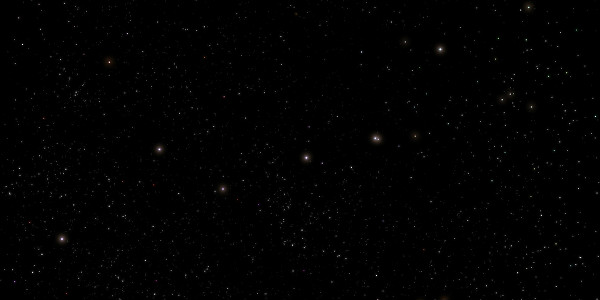
Photo courtesy of Shutterstock.
Emotional darkness is like that, too. When I can get fully adapted to it – when I can accept that the darkness I’m feeling is appropriate, necessary, and even useful — then I can see my way a bit. I can confidently step forward at a slow pace, feel my way into whatever work is being asked of me now. But when I try to ‘lighten’ the darkness, that has been a mistake, as if I were pretending, like TV sitcoms, that every human challenge should reach a happy ending in an hour or less.
I offer you two examples of experiences with emotional darkness: one when I resisted, and suffered as a result; the other when I went willingly into the dark, and the good that came from that.
Both my stories begin with grief, but obviously that’s not the only kind of emotional darkness.
My Brother
The first one was in 1968, when my brother Chuck was struck by a car and fatally injured.
I was 21 with a brand-new baby absorbing all my time. That this was the first death-in-the-family I could actually remember … completely escaped my notice. We drove to my parents’ house, did the things people do at a time like that. On the third day, we went to the funeral we had all helped to plan.
Somehow I had understood that the funeral would be a ceremony to “complete” the grieving process so everyone could get back to normal on the fourth day. So I was surprised, the morning after my brother’s funeral, to awaken with a raging fever and the flu.
In retrospect I think I made myself sick by refusing the emotions going on inside me. A newborn baby is not an unmixed blessing, especially at 2 in the morning, and my brother had been my closest friend since he was born. We had remained close even through our teen years, even after I married, even after he went off to college.
Now I was never going to see him again, but I wasn’t even acknowledging that fact, much less giving it the attention it deserved. I figured that since nothing I could do was going to bring him back, there wasn’t any point in thinking about it. “Loss” was just a four-letter word.
As you might expect, I had a tough time for the next several months. Made some unfortunate decisions, including a move across country that cut me off from the whole extended family. My mom phoned often, but my kids grew up with a grandmother they saw once every couple of years. They knew no uncles, no cousins. I missed the mini-reunions my friends had, getting together for drinks or lunches whenever they came home to their parents’ houses for the holidays.
Oh, I got the privacy I needed, some space from my mother’s clinginess – a symptom of her grief, and probably temporary, had I only understood it. But the whole experience of family gatherings was gone. That was a big loss in its own right; the cost of refusing to go into the dark.
My Mother
My other example was thirty years later. By the time my mother died, early in this century, I’d had a bunch of education in psychology and counseling. Elisabeth Kübler-Ross had become a household name, so I had a better theoretical understanding of grief. There had been other losses over the years, so I’d had some practice.
Also, my mother was nearly as old as people in our family ever get to be, and she was frail, tired of living in her uncomfortable body. She’d done lots of completion work, made space for us to make peace with her. She said she was ready to die, and I believe she was.
Silly me – I thought that since everyone was ‘prepared’, when it happened, it wouldn’t hurt. (I guess you know how well that worked).
At least this time, when I began to have some ‘symptoms’ of grief, I was smart enough to recognize what was happening. Within a couple of weeks I started making room in my busy life for unscheduled grieving time.
I took long walks and long drives. I listened to sad music and cried. I journaled about the things that came forward to say, now that she was gone, even though I’d had plenty of time and said everything I needed to say while she was still here.
A year after her death, I did something that surprised me.
At Retreat
On an annual retreat, I found myself putting aside the work I had planned, and processing, again, the loss of my mother. And one day I walked into the center of a labyrinth and howled.
I sat on the floor and sobbed. I cried until I hiccupped. I thought I was done. I caught my breath. And then after a few minutes the crying started again, great gulping sobs. Sometimes I was thinking about things I would never do with my mom again, but mostly there wasn’t any conscious content to the crying. I just sobbed and sobbed.
This went on for an hour or more, until finally I was on my hands and knees, lungs rasping, belly sore from the hiccups, spent. And when it was over, I was really done. For the first time since my teens, I had actually cried out all the tears I had inside me.
Almost at once my life seemed more free and easy, less anxious, less compulsive. It had been important to do that work, to step down into the pit of all that grieving, to acknowledge that even though I was a mature woman of 55 when my mother died, I still wanted my Mommy.
Today I find I can’t really predict when emotional darkness will show up. There’ve been a few times, mostly gentler, in the years since then. What I know is that whatever pain I have found there has always been less horrible, and less frightening, than what I was afraid I would find. That the disturbance caused by my resistance has always been worse than the disturbance caused by doing the work.
And that the journey, while painful in the moment, has always been worth it.
The Light has plenty of value too, of course. When I feel myself in the grip of some new awareness, or when something has suddenly become easy, those are beautiful moments. But I’m guessing you already know a lot about those.
The Witch asks me if I’ve made it clear enough that Love and Grief are not opposites. I tell her I trust you to understand what I wrote. She laughs.
—
Author’s Note: Some of this blogpost was presented as a reflection in a Sunday service at the Unitarian Universalist Congregation of Princeton (NJ) in 2008 – in case there are two or three readers who are finding it familiar.
Previous Post

May 27, 2015
CUUPS Mission and Vision Statement
Next Post

June 1, 2015 Natural Disasters and A Pagan Community Statement on the Environment
Browse Our Archives
Select a Category Current Events CUUPS Press Release Interfaith liturgy Media Review podcast Religious Education Seasonal Reflection Spiritual Practice Summary Uncategorized
Select a Month July 2026 June 2026 April 2026 January 2026 December 2025 October 2025 August 2025 July 2025 June 2025 April 2025 March 2025 February 2025 December 2024 November 2024 October 2024 August 2024 July 2024 June 2024 May 2024 April 2024 February 2024 December 2023 November 2023 October 2023 September 2023 August 2023 June 2023 May 2023 April 2023 March 2023 February 2023 January 2023 December 2022 October 2022 September 2022 August 2022 July 2022 June 2022 May 2022 April 2022 March 2022 February 2022 January 2022 December 2021 November 2021 October 2021 September 2021 August 2021 July 2021 June 2021 May 2021 April 2021 March 2021 February 2021 January 2021 December 2020 November 2020 October 2020 September 2020 August 2020 July 2020 June 2020 May 2020 April 2020 March 2020 February 2020 January 2020 December 2019 November 2019 October 2019 September 2019 August 2019 July 2019 June 2019 May 2019 April 2019 March 2019 February 2019 January 2019 December 2018 November 2018 October 2018 September 2018 August 2018 July 2018 June 2018 May 2018 April 2018 March 2018 February 2018 January 2018 December 2017 November 2017 October 2017 September 2017 August 2017 July 2017 June 2017 May 2017 April 2017 March 2017 February 2017 January 2017 December 2016 November 2016 October 2016 September 2016 August 2016 July 2016 June 2016 May 2016 April 2016 March 2016 February 2016 January 2016 December 2015 November 2015 October 2015 September 2015 August 2015 July 2015 June 2015 May 2015 April 2015 March 2015 February 2015 January 2015
Follow Us!
TAKE THE
Religious Wisdom Quiz
What animal tricked Eve in the garden?
Select your answer to see how you score.
A wolf A lion A serpent A fox
Related posts from Nature's Sacred Journey

My Pagan path - a look back into...

Celebrate our blessings and then take a stand

Spring is coming! Emerge from your shell and...
A clear concise intention is vital for spells...
TRENDING AT PATHEOS Pagan

When we talk about Greek religion, we often begin with the dodekatheion—the...

I was recently chatting with someone on Instagram. She asked me what...

While there are many people who share their results, the end of...

On July 23, I saw Christopher Nolan's The Odyssey which is Homer’s...

As I write this two big events have just finished up. One...

Restoring the Watershed of Divine Love
Perhaps cooperation is not something we manufacture through legislation, ideology, or moral...
view all Pagan blogs
Ad-Free & Subscriber Log-In Subscription Support
- About Us
- 2026 Calendar
- Videos
- Podcasts
- Library of World Religions
- Faith In Media Tracker
- Advertise With Us
- Write for Us
- Privacy Policy
- Terms of Service
- Do Not Sell My Data
- Contact Us
- Radiant Digital
- Manage Newsletter Subscriptions
- Unsubscribe From Notifications
- Sitemap
Copyright 2008-2026, Patheos. All rights reserved.
Subscription Support Ad-Free & Subscriber Log-In
Follow Patheos