
BuddhistCatholicContemplativeEvangelicalGeneral ChristianHinduJewishLatter-day SaintMuslimNew VisionsProgressive Christian
Beliefs
- Buddhist
- Catholic
- Contemplative
- Evangelical
- General Christian
- Hindu
- Jewish
- Latter-day Saint
- More Voices
- Muslim
- New Visions
- Pagan
- Progressive Christian
Topics
- Religion News
- Food and Religion
- Sports and Religion
- Religious Art
- Religious Music and Entertainment
- Religious Events
- History and Religion
- Style and Religion
- Politics and Religion
- Women in Religion
- Recreation Outdoors and Religion
- Business Finance and Religion
- Careers Workplace and Religion
- Education and Religion
- Family Parenting and Religion
- Health Fitness and Religion
- Home and Religion
- Relationships and Religion
- Technology and Religion
- Travel and Religion
Columnists
- Buddhist Columnists
- Business Finance and Religion Columnists
- Careers Workplace and Religion Columnists
- Catholic Columnists
- Contemplative Columnists
- Education and Religion Columnists
- Evangelists Columnists
- Family Parenting and Religion Columnists
- General Christian Columnists
- Health Fitness and Religion Columnists
- Hindu Columnists
- History and Religion Columnists
- Home and Religion Columnists
- Jewish Columnists
- More Voices Columnists
- Latter Day Columnists
- Muslim Columnists
- New Visions Columnists
- Nonreligious Columnists
- Pagan Columnists
- Politics and Religion Columnists
- Progressive Columnists
- Recreation Outdoors and Religion Columnists
- Relationships and Religion Columnists
- Religion News Columnists
- Religious Art Columnists
- Religious Events Columnists
- Religious Music and Entertainment Columnists
- Sports and Religion Columnists
- Style and Religion Columnists
- Technology and Religion Columnists
- Travel and Religion Columnists
- Women in Religion Columnists
Resource Library
- 2026 Calendar
- Library of World Religions
- The 100 Most Holy Places on Earth
- Patheos Answers
- Podcasts
- Videos
- Faith Leaders Database
- Anglican Episcopalian
- Bahai
- Baptist
- Buddhism
- Christianity
- Confucianism
- Eastern Orthodoxy
- Hinduism
- Holiness and Pentecostal
- ISKCON
- Islam
- Judaism
- Lutheran
- Methodist
- The Church of Jesus Christ of Latter-day Saints
- New Age
- Paganism
- Presbytarian and Reformed
- Protestantism
- Religion Behind the Scenes
- Roman Catholic
- Scientology
- Shia Islam
- Sikhism
- Sufism
- Sunni Islam
- Taoism
- Zen
- See all religions
Research Tools
 Ad-Free & Subscriber Log-In Subscription Support
Ad-Free & Subscriber Log-In Subscription Support
Follow Patheos 

- Trending:
- Forgiveness
- |
- Marriage
- |
- Consciousness
- |
- Death Penalty
- |
- Election
- |
- Halloween

- Home
- Pagan
- Building Beloved Community
Building Beloved Community
Last updated on: March 26, 2018 at 12:17 pm by Maggie Beaumont
Building Beloved Community 2018-03-26T12:17:07+00:00 Maggie Beaumont
Patheos Explore the world's faith through different perspectives on religion and spirituality! Patheos has the views of the prevalent religions and spiritualities of the world.
This month I’ve been trying to answer some important questions about how ‘community’ operates, and how we could learn to do it even better.
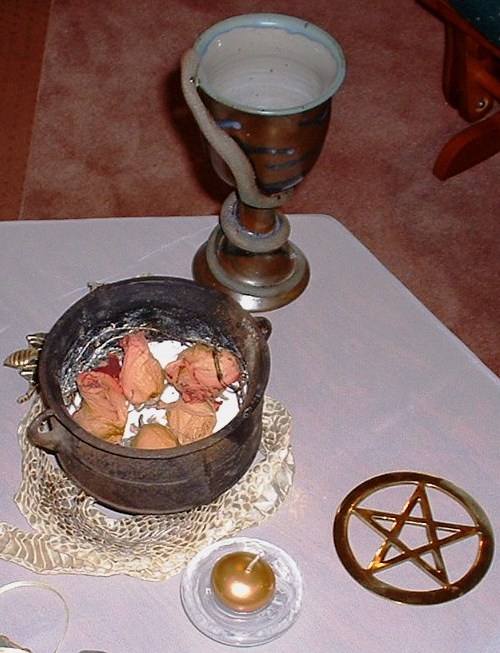
artwork from Maggie Beaumont
- How do we support one another when the going gets tough?
- How do we offer assistance to one another while respecting autonomy and boundaries?
- How do we manage our assumptions when we want to offer ‘help’ to someone we judge as ‘needing our help’ – and what if they don’t want it, or need it? What if they DO need and want our assistance, but our assumptions make them uncomfortable?
- How do we support boundaries and autonomy and still take care of one another?
The Gentle Reader will see at once that these questions can lead in many directions; feel free to create your own list.
I find UU-style religious community (in which each of us is free to ‘believe’ or ‘know’ different things from what other UUs may ‘know’ or ‘believe’) vitally important to my experience of living in the world. I deeply value communities in which the same congregation can equally love and support UU-Christians, UU-Jews, UU-Pagans, UU-Humanists, UU-Atheists, UU-Transcendentalists, and many others.
In which we can do, together, the work of anti-racism and of inclusiveness of all kinds, and hold each other in kindness when our efforts are clumsy. In which power can be negotiated and renegotiated, in which our Called Ministers are not our intermediaries but can sometimes be our Priests and Priestesses. In which compulsive grammarians (like me, often) can feel free to point out my sentence fragments. And I can still feel free to write them.
… but I digress.
Building the Beloved Community is something many UU congregations excel at. First, we explicitly welcome the worth and dignity of everyone. Second, most congregations are either small enough so that everyone knows everyone else and has a pretty good idea what’s happening when Life Happens and a Helping Hand Would Be Good — or else they’re big enough to have an explicit way of coordinating ‘needs’ and ‘assistance from the community.’
I’ve seen such things as
- a committee explicitly charged with gathering news from around the congregation and making sure the ministers know about it – births, injuries, illnesses, engagements, marriages, divorces, moves, lost leases … whatever.
- a committee that delegates one of its members to check in with a person or family when Something Happens, with a rough list of possible-help-needed questions
- a designated person who will phone to ask not only ‘what do you need?’ but also ‘who would you like to help with that?’
One thing these processes have in common is vitally important – they take the burdensome task of Asking for Help off of the person who needs that help, and give the task to someone who won’t find it a burden, and won’t feel rejected if requested help cannot be given.
Let me give a concrete example.
Some years back, a congregant of my acquaintance was injured in an accident. Suddenly a number of routine activities of daily living were impossible. The designated ‘Caring Committee’ person phoned while the patient was still hospitalized and began to get an idea what services and supports would be needed, and also who, among friends and congregants, the patient felt most comfortable receiving certain kinds of help from.
Over the next several weeks, the Caring Committee rep made occasional broadcast requests to the congregation as a whole:
“So-and-so needs rides to the doctor on the following days, please e-mail me if you can do that .” (or, nowadays, go to www.LotsaHelpingHands.comand schedule yourself in).
“So-and-so needs meals …” and so on.
In addition to the blanket requests, the Caring Committee rep made occasional personal phone calls or e-mails to specific congregants:
“So-and-so needs help washing their hair for the next X weeks, and you’re one of the people they’re willing to have come over to do that. Could you do it once or twice during those weeks?”
“So-and-so needs help getting dressed on a couple of days while Spouse is away – would you be able to do that on Monday?”
You get the idea.
Long after the injuries had healed, ‘So-and-so’ mentioned how safe, loved, and cared for they felt during their recovery, and what a relief it was to only have to ask once for assistance. Not to have to go down the phone list asking one after another, looking for the one person who would have time on Tuesday.
Take a breath, pause, and take that in.
Gentle Reader, I dunno ’bout you, but I had never realized that it might take ten or twenty calls to find the available, willing person … until I tried it. ‘Demoralizing’ wouldn’t half cover it, especially if I were already using all my energy just to get dressed and down the stairs in the morning.
UU congregations are great at this partly because there are enough people so that the workload can get spread around, and partly because somebody, sometime, has taken the time to think this stuff through and look for ways to make it work.
Pagan communities could learn a lot from this. Often Pagan groups – covens, tribes, groves, kindreds and so on – are too small, or too geographically spread out, to make this easy. But we could still try.
CUUPS chapters can be a bridge. UU-Pagans have much to learn from each side, and much to teach.
The Witch steps forward out of the shadows.
“You’re being so rational about this,” she says. “When were you going to say the rest of it?”
I stare at the keyboard. What haven’t I said?
“Beloved Community isn’t just giving each other rides and cooking for one another,” she says. “You haven’t spoken of Love.”
My Familiar Cat leaps to the top of my desk and walks over to look me in the eye.
“Everyone needs the experience of being seen,” I say, trying not to notice that I’ve forgotten this a dozen times.
“Everyone needs to feel that they matter.” The Cat settles next to my computer.
“By asking for help, we tell each other that our help matters.
“By giving help, we tell each other that our challenges are seen, held, known and supported. That it matters how we treat one another, that pain and celebration deserve honor.”
I look for The Witch, but my mirror is empty. I see I am waiting to find my way to the words and feelings I mean to share with you.
Our flames unite to set our fire alight
In love and trust, with power in our stance;
In darkest night, Community shines bright.
Our ties and trust reflected in each glance;
As caring friends we share our own delight.
The Witch presses ‘save’ on the computer, strokes the Cat, turns out the light.
Blessed Be.
Maggie Beaumont, MA, is a former Dean of Students of Cherry Hill Seminary and served on the Board of Trustees of the national Covenant of Unitarian Universalist Pagans from 2014-17. After an extensively varied career in mechanical engineering, journalism, real estate, and adult education, she is currently a Chaplain Intern at a level-one trauma center in Philadelphia and a first-degree member of Weavers of the Moonfire, a coven in the Assembly of the Sacred Wheel. She has been a member of the Unitarian Universalist Congregation of Princeton (NJ) and of its affiliated Evergreen CUUPS chapter for more than 15 years and is also a member of the Unitarian Society of Germantown (PA). After leaving a long marriage last year, she now shares an apartment with one cat, three looms, and eight bookshelves full of books. She is also a member of the Reclaiming tradition and has taught classes and facilitated ritual at summer intensives on the East coast of the US.
Previous Post

March 23, 2015
Bridging the Gap Between UUs and Pagans
Next Post

March 30, 2015 Mother's Nature
Browse Our Archives
Select a Category Current Events CUUPS Press Release Interfaith liturgy Media Review podcast Religious Education Seasonal Reflection Spiritual Practice Summary Uncategorized
Select a Month July 2026 June 2026 April 2026 January 2026 December 2025 October 2025 August 2025 July 2025 June 2025 April 2025 March 2025 February 2025 December 2024 November 2024 October 2024 August 2024 July 2024 June 2024 May 2024 April 2024 February 2024 December 2023 November 2023 October 2023 September 2023 August 2023 June 2023 May 2023 April 2023 March 2023 February 2023 January 2023 December 2022 October 2022 September 2022 August 2022 July 2022 June 2022 May 2022 April 2022 March 2022 February 2022 January 2022 December 2021 November 2021 October 2021 September 2021 August 2021 July 2021 June 2021 May 2021 April 2021 March 2021 February 2021 January 2021 December 2020 November 2020 October 2020 September 2020 August 2020 July 2020 June 2020 May 2020 April 2020 March 2020 February 2020 January 2020 December 2019 November 2019 October 2019 September 2019 August 2019 July 2019 June 2019 May 2019 April 2019 March 2019 February 2019 January 2019 December 2018 November 2018 October 2018 September 2018 August 2018 July 2018 June 2018 May 2018 April 2018 March 2018 February 2018 January 2018 December 2017 November 2017 October 2017 September 2017 August 2017 July 2017 June 2017 May 2017 April 2017 March 2017 February 2017 January 2017 December 2016 November 2016 October 2016 September 2016 August 2016 July 2016 June 2016 May 2016 April 2016 March 2016 February 2016 January 2016 December 2015 November 2015 October 2015 September 2015 August 2015 July 2015 June 2015 May 2015 April 2015 March 2015 February 2015 January 2015
Follow Us!
TAKE THE
Religious Wisdom Quiz
How many years between David's reign and the Babylonian exile?
Select your answer to see how you score.
400 years 500 years 300 years 450 years
Related posts from Nature's Sacred Journey


Fallow Season ~ Burnout, Fatigue, and Sacred Rest
The Autumn Awakening ~ Returning to Center

Five Things to do When the World Gets...
TRENDING AT PATHEOS Pagan

I was recently chatting with someone on Instagram. She asked me what...

While there are many people who share their results, the end of...

On July 23, I saw Christopher Nolan's The Odyssey which is Homer’s...

As I write this two big events have just finished up. One...

Restoring the Watershed of Divine Love
Perhaps cooperation is not something we manufacture through legislation, ideology, or moral...

Many UUs don’t pray because of bad experiences in a previous religion,...
view all Pagan blogs
Ad-Free & Subscriber Log-In Subscription Support
- About Us
- 2026 Calendar
- Videos
- Podcasts
- Library of World Religions
- Faith In Media Tracker
- Advertise With Us
- Write for Us
- Privacy Policy
- Terms of Service
- Do Not Sell My Data
- Contact Us
- Radiant Digital
- Manage Newsletter Subscriptions
- Unsubscribe From Notifications
- Sitemap
Copyright 2008-2026, Patheos. All rights reserved.
Subscription Support Ad-Free & Subscriber Log-In
Follow Patheos