
BuddhistCatholicContemplativeEvangelicalGeneral ChristianHinduJewishLatter-day SaintMuslimNew VisionsProgressive Christian
Beliefs
- Buddhist
- Catholic
- Contemplative
- Evangelical
- General Christian
- Hindu
- Jewish
- Latter-day Saint
- More Voices
- Muslim
- New Visions
- Pagan
- Progressive Christian
Topics
- Religion News
- Food and Religion
- Sports and Religion
- Religious Art
- Religious Music and Entertainment
- Religious Events
- History and Religion
- Style and Religion
- Politics and Religion
- Women in Religion
- Recreation Outdoors and Religion
- Business Finance and Religion
- Careers Workplace and Religion
- Education and Religion
- Family Parenting and Religion
- Health Fitness and Religion
- Home and Religion
- Relationships and Religion
- Technology and Religion
- Travel and Religion
Columnists
- Buddhist Columnists
- Business Finance and Religion Columnists
- Careers Workplace and Religion Columnists
- Catholic Columnists
- Contemplative Columnists
- Education and Religion Columnists
- Evangelists Columnists
- Family Parenting and Religion Columnists
- General Christian Columnists
- Health Fitness and Religion Columnists
- Hindu Columnists
- History and Religion Columnists
- Home and Religion Columnists
- Jewish Columnists
- More Voices Columnists
- Latter Day Columnists
- Muslim Columnists
- New Visions Columnists
- Nonreligious Columnists
- Pagan Columnists
- Politics and Religion Columnists
- Progressive Columnists
- Recreation Outdoors and Religion Columnists
- Relationships and Religion Columnists
- Religion News Columnists
- Religious Art Columnists
- Religious Events Columnists
- Religious Music and Entertainment Columnists
- Sports and Religion Columnists
- Style and Religion Columnists
- Technology and Religion Columnists
- Travel and Religion Columnists
- Women in Religion Columnists
Resource Library
- 2026 Calendar
- Library of World Religions
- The 100 Most Holy Places on Earth
- Patheos Answers
- Podcasts
- Videos
- Faith Leaders Database
- Anglican Episcopalian
- Bahai
- Baptist
- Buddhism
- Christianity
- Confucianism
- Eastern Orthodoxy
- Hinduism
- Holiness and Pentecostal
- ISKCON
- Islam
- Judaism
- Lutheran
- Methodist
- The Church of Jesus Christ of Latter-day Saints
- New Age
- Paganism
- Presbytarian and Reformed
- Protestantism
- Religion Behind the Scenes
- Roman Catholic
- Scientology
- Shia Islam
- Sikhism
- Sufism
- Sunni Islam
- Taoism
- Zen
- See all religions
Research Tools
 Ad-Free & Subscriber Log-In Subscription Support
Ad-Free & Subscriber Log-In Subscription Support
Follow Patheos 

- Trending:
- Forgiveness
- |
- Marriage
- |
- Consciousness
- |
- Death Penalty
- |
- Election
- |
- Halloween

- Home
- Catholic
- History and Religion
- An Evening with Alice von Hildebrand
An Evening with Alice von Hildebrand
Last updated on: December 24, 2023 at 1:22 pm by Andrew Likoudis
An Evening with Alice von Hildebrand 2023-12-24T13:22:08-05:00 Andrew Likoudis
Patheos Explore the world's faith through different perspectives on religion and spirituality! Patheos has the views of the prevalent religions and spiritualities of the world.
[N.B. The following is the last interview that Alice von Hildebrand granted. Shortly after, she passed away and presented herself to her Lord. She loved God and His Church, and never was ashamed of her Faith and the Doctrines of the Catholic Church. May she hear, from the mouth of the Lord, those sweet words “Well done, good and faithful servant; enter into the joy of your Lord.”]
An Evening With Alice von Hildebrand
“God is infinite beauty,” said Alice von Hildebrand. “He’s truth, but he’s also beauty.”
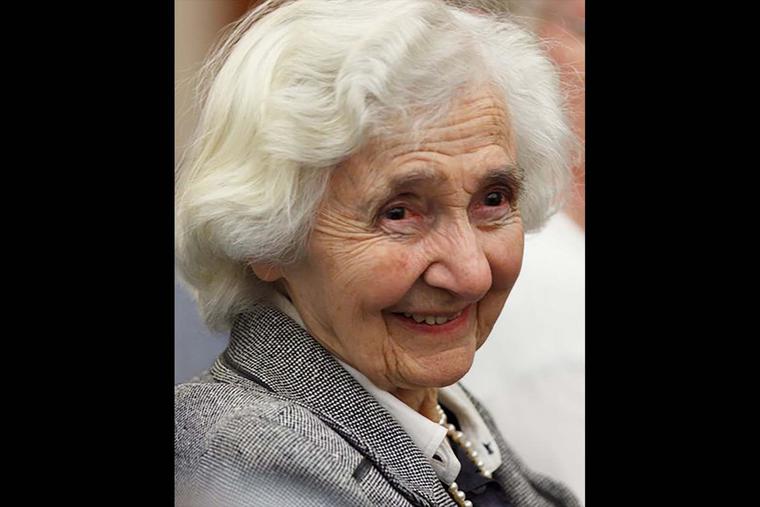
Alice von Hildebrand invited me to her home in New Rochelle, New York, this past August. In her well-furnished living room, Alice offered me a seat just a couple of inches from where she sat, our proximity ensuring she would hear my questions. Diminished hearing is understandable when you’ve lived almost 100 years. Alice then warmly greeted me and offered me a chocolate bar and something to drink.
Meanwhile, I was feeling somewhat overwhelmed by the moment. Here was one of the great Catholic luminaries of the 20th and 21st centuries, and here I was, sitting in her living room. For about 15 minutes I talked with her, soaking in the surrealism of the situation before beginning to ask the questions that I had prepared.
We launched into a few of the major themes of the books the Hildebrand Project — named for her husband Dietrich — produced, starting with beauty and aesthetics. Alice, despite her age, answered my questions deftly. Her brief description of beauty was exactly what I expected from someone who had studied under her famous philosopher-husband, and who herself was well-versed in promoting objective truth and value.
“Beauty, like truth, plays a crucial role in our spiritual lives,” she said, “because God is truth, but he’s also beauty. We live in a world that has been allowed to become vulgarized. It is more important than ever to revalue beauty. God is infinite beauty. He’s truth, but he’s also beauty.”
Pope Francis stresses that the via pulchritudinis (way of beauty) should be a guiding principle in how we live, and in our evangelization. I now understood a bit more why beauty is so important in countering this “vulgarization” and in leading people to God.
Alice met Dietrich at a talk he gave at his New York City apartment, where she also met and formed a lifelong friendship (75 years) with Madeleine Stebbins, the wife of Lyman Stebbins. In 1968, Madeleine and Lyman cofounded Catholics United for the Faith (CUF), a lay apostolate that countered the dissent that arose following Vatican II. The Stebbinses served as successive CUF presidents, shortly before my grandfather, James Likoudis, took the helm.
Around this time, Alice and Madeleine formed a small group of friends, which included the communist-turned-Catholic Bella Dodd, the philosopher Ronda Chervin and Madonna House founder Catherine Doherty. Dorothy Day was another woman who was related to this group of friends. Add to this mix Mother Angelica, who grew very close to Alice over the years, and one wonders about the way people and times providentially align, and how, in this case, these like-minded Catholic women with noble and ambitious hearts came together to strive for the glory of God, each through her own particular charism.
Alice also helped found the organization, Veil of Innocence, which aimed to counter some of the trends taking place in Catholic chastity education. Through this apostolate, Dietrich, Alice and my grandfather collaborated on a little-known book entitled Sex Education: The Basic Issues and Related Essays, which received a personally-penned recommendation from Mother Teresa of Calcutta. While the book is no longer in print, select essays from it will be republished soon, hopefully next year, in an anthology of my grandfather’s many essays on sex education.
Alice was overjoyed when I told her that Cardinal Raymond Burke had recovered from COVID-19. As the delegate of Pope Francis, Cardinal Burke had previously conferred on Alice the honor of Dame Grand Cross of the Pontifical Order of St. Gregory, marking her extraordinary achievements in the pursuit and affirmation of objective truth. This award is the highest a lay person can receive from the Holy Father.
Alice noted how much she appreciated my coming to meet her. She asked me if I was married. When I said “no, not yet,” she added, “It’s really wise — wait till you find the right person.” I thanked her for this advice. “You will” get married, she said, “but you’ve got to pray for it.” I told her I would be meeting a young lady for the first time that evening, over dinner. “Well, I’m praying that it goes well,” Alice said. “Marriage is so important. It can give your life a direction upward, or with the wrong person downward. Marriage is a great sacrament and should be treated as such.”
We proceeded to discuss a book she and her husband co-wrote — Marriage and the Mystery of Faithful Love (Sophia Institute Press) — and the challenge therein that Dietrich offered to Pope Pius XII. He proposed that while procreation is the rightly ordered end of marriage, love and intimacy are the meaning, a corrective to what Dietrich considered an overemphasis in the way the Church’s teaching had been presented historically.
“Procreation is a result of taking the meaning of marriage seriously,” Alice said. “Procreation is a result of love flowing over and blossoming. Marriage is loving this person, and not that person. It is loving this person exclusively as a husband or wife, and the rest as merely friends. Marriage is not to be taken lightly. In marriage you share everything.” When you give yourself to another person, she added, it is “I give you my life.”
“Marriage is a great sacrament,” she repeated emphatically. “It is a challenge every day to love but, in doing so, you come closer to God.”
Alice then asked me if I was enjoying the ever-so-rich chocolate she had given me. I assured her I was, not voicing that it was particularly because it was a token of her hospitality.
Then we discussed her teaching career. Alice served as a professor at Hunter College in New York City for 37 years, regularly refuting relativism and teaching her atheistic students instead about the objectivity of truth. No wonder such candid replies were always on the tip of her tongue! She took the job at Hunter because Catholic colleges, at the time, would not allow women to teach. Consequently, Alice acted as a bulwark in the secular university system against the pervasive drift toward relativism, and in spite of the persecution she faced from university administrators and other faculty.
I asked her which subject she enjoyed teaching most — ethics, aesthetics, epistemology, metaphysics or political philosophy. She replied with a recurrent principle: “Truth is one,” adding, “They all converge.”
I also asked her to touch on the differences between Thomism and Personalism as philosophies. Thomism being systematic, while personalism is an offshoot of phenomenology and tends toward a decidedly nonsystematic mode of philosophy. Personalism also places a unique emphasis and value on the human person, and the meaning motivated by responses to value, which is both objective and yet also distinct for each person.
Dietrich was a pivotal player, along with Pope St. John Paul II, in the development of personalist philosophy following World War II. When I suggested the philosophies were two seemingly opposing systems, Alice didn’t accept my proposed dichotomy. She replied simply and consistently, “Is it true, or is it false? This is what matters.”
We then discussed Dietrich’s widely acclaimed book, The Heart — previously, The Sacred Heart. “When you fall in love with another person, you don’t say to this person, ‘I give you my brain,’ ‘I give you my intelligence,’” she said. “You say, ‘I give you my heart,’ because the heart symbolizes the person. You know this is going to sound ridiculous. If you go to church and say to God, ‘I give you my intelligence,’ it simply doesn’t mean anything.”
“How does the heart symbolize the person?” I asked her. “What property of the heart makes this symbolism work?”
“Love,” said Alice. “I give you my heart — give you my total self.”
We discussed the “new media,” specifically the internet, which she said can be a medium whereby one can reach millions, and insisted that one should tremble from the responsibility one incurs when they step in front of the camera. I briefly mentioned my own interest in starting a YouTube channel, which she enthusiastically affirmed. “Truth” she exclaimed, while making an arc shape in the air with her hands, as if framing a headline. “How can one best be receptive to truth?” I asked. “You have to go on your knees,” she responded succinctly, referring to the need for prayer. “Unless you are on your knees, you may not receive it. Humility. Humility.”
The interview drew to a close. Alice said she was feeling weak but she invited me back again to continue our conversation. Sadly, this opportunity didn’t arise before her passing. I feel grateful and honored to have met this extraordinary and tenacious woman — one who courageously stood up to the malevolent powers that attempted to encroach upon the beauty being cultivated in her day, and who, by her example, can teach us all to do similarly, each in our own way.
May Alice von Hildebrand inspire all of us to always seek after the Cross and Resurrection, and to build our lives on the Rock, which is Christ’s Catholic Church.
Requiescat in pace, Lily.
[The preceding article appeared in the “National Catholic Register” on January 27, 2022.
Andrew Likoudis: © 2022 EWTN News, Inc. Reprinted with permission: National Catholic Register – www.ncregister.com.]
History and Religion
Education and Religion
Previous Post
December 20, 2023
The Liturgical Reform: Council, Consilium, and Papacy
Next Post
January 27, 2024 Silver Jubilee of the Cardinal O’Connor Conference on Life
Recent Comments
"Except trads make up 1 percent of the Catholic population, versus MAGA which comprises something ..."
City on a Hill – reflections ..."
"Trads are the religious version of MAGA."
City on a Hill – reflections ..."
"I wish I had seen this article sooner, but as it is I still have ..."
"Isn't atheism merely a religious issue in relationship to belief? They like to pretend they ..."
Browse Our Archives
Select a Category Uncategorized
Select a Month July 2026 September 2025 April 2025 February 2025 September 2024 July 2024 May 2024 January 2024 December 2023 June 2023 March 2023 February 2023 December 2022 August 2022
Follow Us!
TAKE THE
Religious Wisdom Quiz
Who saw the vision of the valley of dry bones?
Select your answer to see how you score.
Jeremiah Daniel Isaiah Ezekiel
Related posts from Nature and Grace
Collin Westerlund's Beautiful World
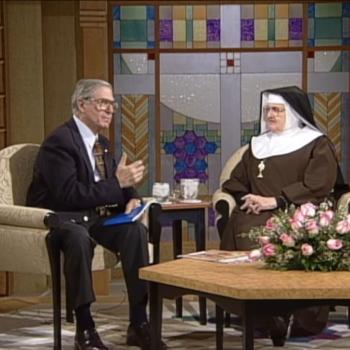
Theologian James Likoudis’ One-year Death Anniversary
The Real Ratzinger: Beyond Partisanship
Beyond Numbers: A Response to Bullivant & Cranney’s...
TRENDING AT PATHEOS Catholic

The Parable Of The Sower And The Word...
One of Christ’s most famous parables is that of the sower who...

Rejecting Doom: Christian Hope And Human Action
Christianity is a religion of hope. We are to have hope and...

Why I Choose the Eucharist Over the Sermon
Choose the Eucharist, Not the Sermon What are we supposed to get...

5 Design Elements Found in Spiritually Rooted Homes
Putting Spirituality Into Home Decor Our homes are more than our living...

Credo: A Story of God Told with the...
About 10 years ago, I began to imagine a personal "Credo" that...

The Anatomy of Divine Revelation in Catholic Thought
The claim that God has made Himself known to human beings is...
view all Catholic blogs
What Are Your Thoughts?leave a comment
Ad-Free & Subscriber Log-In Subscription Support
- About Us
- 2026 Calendar
- Videos
- Podcasts
- Library of World Religions
- Faith In Media Tracker
- Advertise With Us
- Write for Us
- Privacy Policy
- Terms of Service
- Do Not Sell My Data
- Contact Us
- Radiant Digital
- Manage Newsletter Subscriptions
- Unsubscribe From Notifications
- Sitemap
Copyright 2008-2026, Patheos. All rights reserved.
Subscription Support Ad-Free & Subscriber Log-In
Follow Patheos