
BuddhistCatholicContemplativeEvangelicalGeneral ChristianHinduJewishLatter-day SaintMuslimNew VisionsProgressive Christian
Beliefs
- Buddhist
- Catholic
- Contemplative
- Evangelical
- General Christian
- Hindu
- Jewish
- Latter-day Saint
- More Voices
- Muslim
- New Visions
- Pagan
- Progressive Christian
Topics
- Religion News
- Food and Religion
- Sports and Religion
- Religious Art
- Religious Music and Entertainment
- Religious Events
- History and Religion
- Style and Religion
- Politics and Religion
- Women in Religion
- Recreation Outdoors and Religion
- Business Finance and Religion
- Careers Workplace and Religion
- Education and Religion
- Family Parenting and Religion
- Health Fitness and Religion
- Home and Religion
- Relationships and Religion
- Technology and Religion
- Travel and Religion
Columnists
- Buddhist Columnists
- Business Finance and Religion Columnists
- Careers Workplace and Religion Columnists
- Catholic Columnists
- Contemplative Columnists
- Education and Religion Columnists
- Evangelists Columnists
- Family Parenting and Religion Columnists
- General Christian Columnists
- Health Fitness and Religion Columnists
- Hindu Columnists
- History and Religion Columnists
- Home and Religion Columnists
- Jewish Columnists
- More Voices Columnists
- Latter Day Columnists
- Muslim Columnists
- New Visions Columnists
- Nonreligious Columnists
- Pagan Columnists
- Politics and Religion Columnists
- Progressive Columnists
- Recreation Outdoors and Religion Columnists
- Relationships and Religion Columnists
- Religion News Columnists
- Religious Art Columnists
- Religious Events Columnists
- Religious Music and Entertainment Columnists
- Sports and Religion Columnists
- Style and Religion Columnists
- Technology and Religion Columnists
- Travel and Religion Columnists
- Women in Religion Columnists
Resource Library
- 2026 Calendar
- Library of World Religions
- The 100 Most Holy Places on Earth
- Patheos Answers
- Podcasts
- Videos
- Faith Leaders Database
- Anglican Episcopalian
- Bahai
- Baptist
- Buddhism
- Christianity
- Confucianism
- Eastern Orthodoxy
- Hinduism
- Holiness and Pentecostal
- ISKCON
- Islam
- Judaism
- Lutheran
- Methodist
- The Church of Jesus Christ of Latter-day Saints
- New Age
- Paganism
- Presbytarian and Reformed
- Protestantism
- Religion Behind the Scenes
- Roman Catholic
- Scientology
- Shia Islam
- Sikhism
- Sufism
- Sunni Islam
- Taoism
- Zen
- See all religions
Research Tools
 Ad-Free & Subscriber Log-In Subscription Support
Ad-Free & Subscriber Log-In Subscription Support
Follow Patheos 

- Trending:
- Forgiveness
- |
- Marriage
- |
- Consciousness
- |
- Death Penalty
- |
- Election
- |
- Halloween
 nakedpastor
- Home
- Progressive Christian
- 5 Steps of Recovery from Abuse
5 Steps of Recovery from Abuse
Last updated on: February 15, 2011 at 2:17 pm by David Hayward
5 Steps of Recovery from Abuse 2011-02-15T14:17:52-04:00 David Hayward
Patheos Explore the world's faith through different perspectives on religion and spirituality! Patheos has the views of the prevalent religions and spiritualities of the world.
Here are 5 steps to recovering from abuse. I am focusing on spiritual abuse in particular:
- Admit that it happened. What I find with many people who’ve experienced abuse is that they can’t believe that such a thing happened to them in the church. It is repugnant to them that an organization that boasts about grace and love can be so mean and hateful. They can’t comprehend or acknowledge that people who are in the people-helping business are actually in the people-hurting business. So, don’t minimize it by saying, “Oh, they didn’t mean to,” or, “They didn’t treat me very well,” or, “I was wounded”. You have to be able to say you were actually and really abused… that you were treated in such a way that it hurt you.
- Recognize the symptoms. There are many symptoms of abuse, such as depression, withdrawal and isolation, low self-esteem, guilt and shame, not trusting others, nervousness and fear, emotional instability and crying, etc. Another aspect of this that I noticed when it has happened to me or notice in others is that their sense of God or the spiritual is damaged. The heavens are as brass. This is partially due to the fact that we attribute divine power to those we trusted in the church. Also, the difficult question, “Where was God when this happened?” may arise. We might even acquire a strong distaste for anything spiritual, such as fast-forwarding spiritual music on our song lists.
- Talk with someone. It is important to talk with someone who understands abuse, especially spiritual abuse. When one is spiritually abused, an interior fracture can take place which will manifest itself in different responses. Some simply change churches. Some leave the church. Some leave Christianity. Some leave their God and their faith. Most consistently, many people experience their spirituality “freezing”, slipping into an extended dormancy or an eternal hibernation. Like broken bones, talking with someone can help your fractured spirit set in a healthy manner. You might become a Buddhist or an atheist, but your spirit, your inner self, has healed properly so that your new spiritual life is authentic and not reactionary. I’ve seen so many people who have no one to talk to that I am now providing pastoral counseling.
- Write in a journal. A couple of weeks ago I recommended to someone that they begin writing in a journal. A week later we spoke and this person was amazed at how revealing it was. What this person discovered through journal writing was that there was a lot of anger coming out through their pen. This person wouldn’t have realized this without journaling. I’ve kept a journal all through my spiritual journey. It is an amazing tool which helps me understand myself and for processing all that happens to me. It is a very revelatory act. Journaling may help you acknowledge and admit the abuse, recognize the symptoms, and find hope for a way through the trauma. It usually helps your spiritual self heal faster and better.
- Appreciate the process. Many people consider the process of recuperation and healing as a necessary but unpleasant passage to becoming whole again. In fact, this process is the wholeness. There are no useless experiences. They are all fertilizer for our integration and maturity. This isn’t to say that you should stall in an endless cycle of the therapeutic process though. Did you know that doctors have their own doctors? Did you know that some regions require psychotherapists to employ their own therapists? These times of healing are rich with forgiveness, wisdom, compassion, self-awareness and confidence that would not be gleaned without it being appreciated.
I hope these help.
As I said, I am available as one of those people you can talk with about this. Email me and we can arrange it: haywardart at gmail dot com (read more…)

Previous Post

February 15, 2011
cartoon: evil responsive reading
Next Post
February 16, 2011 cartoon: give your heart
Browse Our Archives
Select a Category art cartoons cartoons 2 freebie music one minute message podcast Sophia teaching technology thought
Select a Month February 2014 January 2014 December 2013 November 2013 October 2013 September 2013 August 2013 July 2013 June 2013 May 2013 April 2013 March 2013 February 2013 January 2013 December 2012 November 2012 October 2012 September 2012 August 2012 July 2012 June 2012 May 2012 April 2012 March 2012 February 2012 January 2012 December 2011 November 2011 October 2011 September 2011 August 2011 July 2011 June 2011 May 2011 April 2011 March 2011 February 2011 January 2011 December 2010 November 2010 October 2010 September 2010 August 2010 July 2010 June 2010 May 2010 April 2010 March 2010 February 2010 January 2010 December 2009 November 2009 October 2009 September 2009 August 2009 July 2009 June 2009 May 2009 April 2009 March 2009 February 2009 January 2009 December 2008 November 2008 October 2008 September 2008 August 2008 July 2008 June 2008 May 2008 April 2008 March 2008 February 2008 January 2008 December 2007 November 2007 October 2007 September 2007 August 2007 July 2007 June 2007 May 2007 April 2007 March 2007 February 2007 January 2007 December 2006 November 2006 October 2006 September 2006 August 2006 July 2006 June 2006 May 2006 March 2006 February 2006
Follow Us!
TAKE THE
Religious Wisdom Quiz
Who was the craftsman who made the Ark of the Covenant?
Select your answer to see how you score.
Oholiab Bezalel Miriam Hur
Related posts from nakedpastor

nakedpastor's goodbye video to patheos

Jesus hearts nakedpastor so much he is helping...
important announcement: nakedpastor is moving!
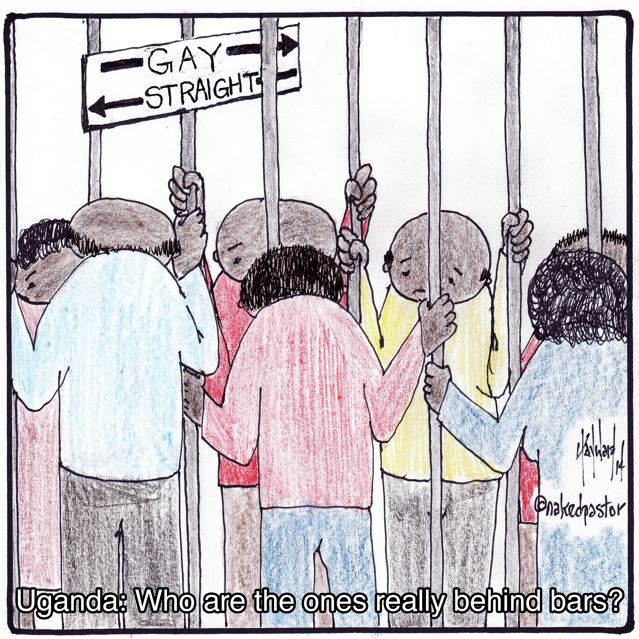
Uganda sending gays to jail: who are the...
TRENDING AT PATHEOS Progressive Christian

Why Christians Have a Sacred Duty to Vote:...
The Bible offers strong support for the sacred duty to vote. Here...

What Being a Modern-Day Apostle Means to Me
In my last column, I discussed the ins and outs of modern-day...

Did Ancient China Once Worship the God of...
Across human history, a common thread weaves through the origins of the...

Love Your Neighbor – Including Earth-Kin: Lev. 19,...
God’s command to love your neighbor means acting in an ethical and...

Lead a Church Study of “Jesus and Lao...
Guest writer Jack Thomas (The Irreverent Reverend) reflects on leading his church...

Principles for Understanding the Apostolic Ministry Today
Whenever people discover that my formal ministry title is "apostle," as in...
view all Progressive Christian blogs
Ad-Free & Subscriber Log-In Subscription Support
- About Us
- 2026 Calendar
- Videos
- Podcasts
- Library of World Religions
- Faith In Media Tracker
- Advertise With Us
- Write for Us
- Privacy Policy
- Terms of Service
- Do Not Sell My Data
- Contact Us
- Radiant Digital
- Manage Newsletter Subscriptions
- Unsubscribe From Notifications
- Sitemap
Copyright 2008-2026, Patheos. All rights reserved.
Subscription Support Ad-Free & Subscriber Log-In
Follow Patheos