
BuddhistCatholicContemplativeEvangelicalGeneral ChristianHinduJewishLatter-day SaintMuslimNew VisionsProgressive Christian
Beliefs
- Buddhist
- Catholic
- Contemplative
- Evangelical
- General Christian
- Hindu
- Jewish
- Latter-day Saint
- More Voices
- Muslim
- New Visions
- Pagan
- Progressive Christian
Topics
- Religion News
- Food and Religion
- Sports and Religion
- Religious Art
- Religious Music and Entertainment
- Religious Events
- History and Religion
- Style and Religion
- Politics and Religion
- Women in Religion
- Recreation Outdoors and Religion
- Business Finance and Religion
- Careers Workplace and Religion
- Education and Religion
- Family Parenting and Religion
- Health Fitness and Religion
- Home and Religion
- Relationships and Religion
- Technology and Religion
- Travel and Religion
Columnists
- Buddhist Columnists
- Business Finance and Religion Columnists
- Careers Workplace and Religion Columnists
- Catholic Columnists
- Contemplative Columnists
- Education and Religion Columnists
- Evangelists Columnists
- Family Parenting and Religion Columnists
- General Christian Columnists
- Health Fitness and Religion Columnists
- Hindu Columnists
- History and Religion Columnists
- Home and Religion Columnists
- Jewish Columnists
- More Voices Columnists
- Latter Day Columnists
- Muslim Columnists
- New Visions Columnists
- Nonreligious Columnists
- Pagan Columnists
- Politics and Religion Columnists
- Progressive Columnists
- Recreation Outdoors and Religion Columnists
- Relationships and Religion Columnists
- Religion News Columnists
- Religious Art Columnists
- Religious Events Columnists
- Religious Music and Entertainment Columnists
- Sports and Religion Columnists
- Style and Religion Columnists
- Technology and Religion Columnists
- Travel and Religion Columnists
- Women in Religion Columnists
Resource Library
- 2026 Calendar
- Library of World Religions
- The 100 Most Holy Places on Earth
- Patheos Answers
- Podcasts
- Videos
- Faith Leaders Database
- Anglican Episcopalian
- Bahai
- Baptist
- Buddhism
- Christianity
- Confucianism
- Eastern Orthodoxy
- Hinduism
- Holiness and Pentecostal
- ISKCON
- Islam
- Judaism
- Lutheran
- Methodist
- The Church of Jesus Christ of Latter-day Saints
- New Age
- Paganism
- Presbytarian and Reformed
- Protestantism
- Religion Behind the Scenes
- Roman Catholic
- Scientology
- Shia Islam
- Sikhism
- Sufism
- Sunni Islam
- Taoism
- Zen
- See all religions
Research Tools
 Ad-Free & Subscriber Log-In Subscription Support
Ad-Free & Subscriber Log-In Subscription Support
Follow Patheos 

- Trending:
- Forgiveness
- |
- Marriage
- |
- Consciousness
- |
- Death Penalty
- |
- Election
- |
- Halloween
 nakedpastor
- Home
- Progressive Christian
- Bloom’s Taxonomy and Spiritual Wisdom
Bloom’s Taxonomy and Spiritual Wisdom
Last updated on: September 27, 2010 at 5:02 pm by David Hayward
Bloom’s Taxonomy and Spiritual Wisdom 2010-09-27T17:02:39-04:00 David Hayward
Patheos Explore the world's faith through different perspectives on religion and spirituality! Patheos has the views of the prevalent religions and spiritualities of the world.
 On the weekends, Saturday and Sunday from 9-6, I take a TESL course (Teaching English as a Second Language) in another city. Along with a full-time job it is exhausting but useful and informative.
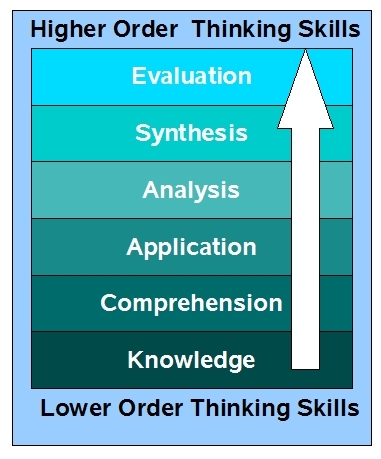
This week I learned about something you might already be familiar with: Bloom’s Taxonomy of thinking skills. I find it valuable when I apply to religious knowledge and spiritual wisdom. This is my own idea and only suggest this. I hope you find it helpful.
Knowledge is the lowest form of thinking. This is the accumulation of facts. At this lowest level you can recall data or information. For instance, you might know your scripture verses and be able to recite a creed or know the facts about doctrinal theology.
Comprehension is the next level. Here you begin to understand the meaning of verses and creeds and doctrines. You understand it at a level where you can actually state them in your own words and discuss them. This shows you have a deeper understanding of them than the simple rote knowledge of the first level.
Application is the third level. At this level you not only know your scriptures and some doctrinal theology, but you begin to understand how to apply it to your personal life and real life situations. In other words, scripture and theology is a kind of second nature to you because you apply what you know to novel situations in your life.
Analysis is the next highest level. The first 3 levels (knowledge, comprehension, application) are the most common levels achieved. Analysis is a more advanced kind of thinking because you can separate the concepts into parts. You begin to see the framework, the under-girding, the skeleton, and the connections in the texts and doctrines. You are beginning to be able to critique the texts and doctrines and their relationship to one another.
Synthesis is the fifth level where you begin to build your own structure and pattern of thinking out of the diverse elements from the texts and doctrines. You unite different parts together to form a new kind of whole. You create a new meaning or structure of thought that is uniquely your own. You find a way to assimilate and integrate various elements of thought, even from outside your own tradition or system, into your own way of thinking (or some might say “believing”).
Evaluation is the final level. At this level you not only are able to critique the texts and doctrines and their relationship to one another, but you are able to make judgments about the whole thought system and belief system altogether. You can even make judgments about the value of the religious ideas you were taught or that you possess. At this level you evaluate not only the entire system, but its value and relation to other systems. This is the most mature level.
I find it interesting that the highest level is evaluation. One might assume that synthesis should be because that would be our goal. Would it not? Like Jung taught, synthesis would resemble integration, which is the highest level of psychological development. But evaluation as the highest level implies that we never truly arrive. Whenever we think we’ve arrived and no longer need to change, then evaluation, not only of our system of thought but of our selves, is needed to break down our intellectual, religious and spiritual strongholds, challenge our resistance to change, and inspire us to be transformed. Continually.
Nothing is permanent. We must be changed!
Previous Post

September 27, 2010
cartoon: color outside the lines
Next Post
September 28, 2010 cartoon: religious eggs
Browse Our Archives
Select a Category art cartoons cartoons 2 freebie music one minute message podcast Sophia teaching technology thought
Select a Month February 2014 January 2014 December 2013 November 2013 October 2013 September 2013 August 2013 July 2013 June 2013 May 2013 April 2013 March 2013 February 2013 January 2013 December 2012 November 2012 October 2012 September 2012 August 2012 July 2012 June 2012 May 2012 April 2012 March 2012 February 2012 January 2012 December 2011 November 2011 October 2011 September 2011 August 2011 July 2011 June 2011 May 2011 April 2011 March 2011 February 2011 January 2011 December 2010 November 2010 October 2010 September 2010 August 2010 July 2010 June 2010 May 2010 April 2010 March 2010 February 2010 January 2010 December 2009 November 2009 October 2009 September 2009 August 2009 July 2009 June 2009 May 2009 April 2009 March 2009 February 2009 January 2009 December 2008 November 2008 October 2008 September 2008 August 2008 July 2008 June 2008 May 2008 April 2008 March 2008 February 2008 January 2008 December 2007 November 2007 October 2007 September 2007 August 2007 July 2007 June 2007 May 2007 April 2007 March 2007 February 2007 January 2007 December 2006 November 2006 October 2006 September 2006 August 2006 July 2006 June 2006 May 2006 March 2006 February 2006
Follow Us!
TAKE THE
Religious Wisdom Quiz
What happened when Jesus broke five loaves and two fish for a crowd?
Select your answer to see how you score.
There were leftovers People went hungry A rainstorm started Only five were fed
Related posts from nakedpastor

nakedpastor's goodbye video to patheos

Jesus hearts nakedpastor so much he is helping...

important announcement: nakedpastor is moving!

Uganda sending gays to jail: who are the...
TRENDING AT PATHEOS Progressive Christian

Why Christians Have a Sacred Duty to Vote:...
The Bible offers strong support for the sacred duty to vote. Here...

What Being a Modern-Day Apostle Means to Me
In my last column, I discussed the ins and outs of modern-day...

Did Ancient China Once Worship the God of...
Across human history, a common thread weaves through the origins of the...

Love Your Neighbor – Including Earth-Kin: Lev. 19,...
God’s command to love your neighbor means acting in an ethical and...

Lead a Church Study of “Jesus and Lao...
Guest writer Jack Thomas (The Irreverent Reverend) reflects on leading his church...

Principles for Understanding the Apostolic Ministry Today
Whenever people discover that my formal ministry title is "apostle," as in...
view all Progressive Christian blogs
Ad-Free & Subscriber Log-In Subscription Support
- About Us
- 2026 Calendar
- Videos
- Podcasts
- Library of World Religions
- Faith In Media Tracker
- Advertise With Us
- Write for Us
- Privacy Policy
- Terms of Service
- Do Not Sell My Data
- Contact Us
- Radiant Digital
- Manage Newsletter Subscriptions
- Unsubscribe From Notifications
- Sitemap
Copyright 2008-2026, Patheos. All rights reserved.
Subscription Support Ad-Free & Subscriber Log-In
Follow Patheos