
BuddhistCatholicContemplativeEvangelicalGeneral ChristianHinduJewishLatter-day SaintMuslimNew VisionsProgressive Christian
Beliefs
- Buddhist
- Catholic
- Contemplative
- Evangelical
- General Christian
- Hindu
- Jewish
- Latter-day Saint
- More Voices
- Muslim
- New Visions
- Pagan
- Progressive Christian
Topics
- Religion News
- Food and Religion
- Sports and Religion
- Religious Art
- Religious Music and Entertainment
- Religious Events
- History and Religion
- Style and Religion
- Politics and Religion
- Women in Religion
- Recreation Outdoors and Religion
- Business Finance and Religion
- Careers Workplace and Religion
- Education and Religion
- Family Parenting and Religion
- Health Fitness and Religion
- Home and Religion
- Relationships and Religion
- Technology and Religion
- Travel and Religion
Columnists
- Buddhist Columnists
- Business Finance and Religion Columnists
- Careers Workplace and Religion Columnists
- Catholic Columnists
- Contemplative Columnists
- Education and Religion Columnists
- Evangelists Columnists
- Family Parenting and Religion Columnists
- General Christian Columnists
- Health Fitness and Religion Columnists
- Hindu Columnists
- History and Religion Columnists
- Home and Religion Columnists
- Jewish Columnists
- More Voices Columnists
- Latter Day Columnists
- Muslim Columnists
- New Visions Columnists
- Nonreligious Columnists
- Pagan Columnists
- Politics and Religion Columnists
- Progressive Columnists
- Recreation Outdoors and Religion Columnists
- Relationships and Religion Columnists
- Religion News Columnists
- Religious Art Columnists
- Religious Events Columnists
- Religious Music and Entertainment Columnists
- Sports and Religion Columnists
- Style and Religion Columnists
- Technology and Religion Columnists
- Travel and Religion Columnists
- Women in Religion Columnists
Resource Library
- 2026 Calendar
- Library of World Religions
- The 100 Most Holy Places on Earth
- Patheos Answers
- Podcasts
- Videos
- Faith Leaders Database
- Anglican Episcopalian
- Bahai
- Baptist
- Buddhism
- Christianity
- Confucianism
- Eastern Orthodoxy
- Hinduism
- Holiness and Pentecostal
- ISKCON
- Islam
- Judaism
- Lutheran
- Methodist
- The Church of Jesus Christ of Latter-day Saints
- New Age
- Paganism
- Presbytarian and Reformed
- Protestantism
- Religion Behind the Scenes
- Roman Catholic
- Scientology
- Shia Islam
- Sikhism
- Sufism
- Sunni Islam
- Taoism
- Zen
- See all religions
Research Tools
 Ad-Free & Subscriber Log-In Subscription Support
Follow Patheos 

- Trending:
- Advent
- |
- Forgiveness
- |
- Thanksgiving
- |
- Election
- |
- Seasonal Holidays
- |
- Marriage
 Nadia Bolz-Weber
- Home
- Progressive Christian
- Sermon on the Parameters We Prefer For Jesus to Work Under
Sermon on the Parameters We Prefer For Jesus to Work Under
Last updated on: January 28, 2015 at 4:32 am by Nadia Bolz Weber
Sermon on the Parameters We Prefer For Jesus to Work Under 2015-01-28T04:32:29+00:00 Nadia Bolz Weber
Patheos Explore the world's faith through different perspectives on religion and spirituality! Patheos has the views of the prevalent religions and spiritualities of the world.

Image Credit: Dan Erlander
2013-08-25 NBW HFASS Sermon<—–Click here to listen along (and delight yourself with how much I botched one of the paragraphs) 🙂
I have to say, one of my very favorite things about Jesus is how he does whatever he wants to and could really give a hell about how other people feel about it. Yeah. I just find that endearing. Especially when he irritates the nice religious people. That’s secretly my favorite.
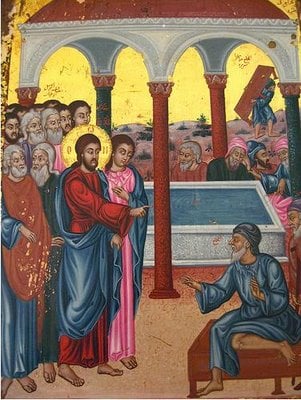
In our Gospel text for today Jesus is teaching in the synagogue on a Sabbath when he sees a woman with a crippled back. He saw her, called her over and said “Woman you are set free from your ailment” He reached out and touched her and she stood upright for the first time in 18 years and praised God. Which seems like a win. Except for that then the leader of the synagogue throws a little tizzy about how that kind of thing should not be happening on the Sabbath. Further proof that super religious people can just be so helpful, can’t they?
Especially when they seem to value parameters over people – which should sound like a familiar story…
Stories of churches denying your call to ministry because you fall outside the parameters of which gender is allowed to be ordained and stories of churches denying you the Eucharist because you fall outside the parameters of what kind of sexual orientation is allowed to receive the means of grace and stories of churches denying you a place in community because you just weren’t sure if you believed in God and that falls outside the parameters of doctrinal purity – well, these kind of stories are sadly bordering on cliché around here. We hear them all the time.
So I’m really grateful that Jesus has always tended to disregard people’s preferred parameters for how he should do things, and that he always just seems to keep seeing people, touching them, healing them and then thumbing his nose at anyone who says he really should be more discerning about his cliental and his tactics.
Because I, like many of you, relate to the woman with the crippled back. We who have, at times in our lives, felt crippled by spirits that weaken us, that keep us from standing upright as children of God. And I, like many of you, are happy to have a space like this where we have pretty loosy goosey parameters for who gets access to what…where we, despite the parameters so much of the church wants to place around Jesus, can still experience divine love and healing and grace.
Which is why this week when I was invited to a dinner at the house of a church leader I just felt so uncomfortable.
The invitation came from a group of Evangelical pastors here in Denver who have invited me to be part of various conversations on several occasions. I believe in that kind of cross-pollination even though it’s not easy for me. And it’s mainly not easy for me because of the extreme effort it takes for me to get over my indignation at being the only female clergy person in a room full of hip young evangelical pastors and their pretty wives. This discomfort only grew Monday night as I thought about my fancy seminary education and ordination and the fact that my denomination had, the week before, elected a woman to be our presiding bishop and yet not a single one of the churches represented had a female pastor. Add to this the fact that, the dinner with the Evangelicals was in Highlands Ranch of all places so of course I couldn’t help but mention what a Loooong drive it had been from the city.
I finally started talking to one of the wives and immediately liked her because she said something snarky and I’m a sucker for that. And I eventually told her how hard these kind of events are for me and why – and she very kindly asked “but don’t you still think we are all on the same team?”
Before I knew what I was saying I said “Oh my gosh, of course not”
And then when I came to my senses, I answered that personally it doesn’t always feel that way but that in terms of the Body of Christ maybe she’s right.
Which is why this week:
when I had such a hard time having an open heart with my Evangelical colleagues
and when I struggled I with how divine love or healing or redemption could possibly happen in Christian communities where there is so little concern for equality and inclusion and the celebration of all God’s children,
as I studied this story of Jesus and the woman and the religious leader
that struggle I was having felt less like a criticism of them and more like a confession about me.
Because that’s when I stopped relating to the woman who was healed and started relating more to the hypocritical Sabbath-keeping religious leader calling foul.
Because I noticed that in the text, Jesus rebuked the religious leader for valuing parameters more than people – not for defending the practice of Sabbath-keeping. Sabbath was still a valid way in which divine love, and healing and grace happened. The leader of the synagogue was not wrong in his love for keeping Sabbath. He was wrong in assuming that if God works within the parameters of Sabbath keeping that God cannot also work outside the parameters of Sabbath keeping.
I think what we are so prone to do is to think that if there is an experience of the Gospel within a particular set of circumstances, that means that only under that particular set of circumstances can the Gospel be experienced. As though God’s agency is limited to the ways in which we happen to experience God.
And I wonder about the ways I might do the same thing. I wondered if for me this week, I wasn’t guilty of valuing parameters more than people when my heart was not open to the Evangelicals who invited me to dinner. To be clear: This is not to say that gender equality and inclusion of all God’s children is not important, or that many of you don’t legitimately have a right to be upset with how you have been treated by those who say they follow Jesus, it’s just that we have to allow that God might actually be powerful enough to work outside of the parameters of how we attempt to live out the Gospel in this community.
Because in the end, faith is so much more about this kind of freedom – this kind of resting in the power of God’s love than it is about defending positions and monitoring parameters.
Because I suspect that God does God’s redeeming work in ways and through means with which I disagree. And yes, I find this endlessly irritating, but I think more is to be had by relaxing and seeing that this might very well be true than there is to be had through pretending it’s not.
A couple weeks ago I got to hear Catholic theologian James Allison talk about how we think faith is about striving – keeping parameters, calling people out for not having it right, spiritual practices, doctrinal purity… whatever – but that really faith is about relaxing. Specifically, relaxing in the way we do when we are with a friend who we know for certain is fond of us. We don’t have to strive around them and we somehow still become our best self – funny, spontaneous, free. Allison suggests that faith is trusting so much that God is fond of us that we just fricken relax.
I think that is what Jesus was saying to the religious leader, not that there is anything wrong with Sabbath keeping, but that Oh my gosh, just relax.
And if that’s true…if faith is akin to relaxing and if relaxing about stuff is hard for us, I wonder if on some level that’s because It’s hard to relax when we think that grace is limited, or there is only so much divine love to go around. Which is when we should remind each other that divine love, healing, grace….. these are not economic categories.
Divine love is simply not a limited resource and it is most certainly not something that happens only here or only in this way or only among us or and… I can’t wait to see the blog comments on this one…only among Christians.
And if the divine love of Christ is powerful enough to heal outside our parameters for how we believe that happens then the divine love of Christ is also powerful enough to heal outside the parameters of how others think that should happen. Which also is perhaps grounds to relax.
Because if Sabbath is about rest and relaxing it means that there is Grace enough for all of us. Grace enough for the homophobes and the queers. Grace enough for the Sabbath keepers and the Sabbath breakers. Grace enough for me and for the people who don’t think I deserve grace. Grace enough for the Evangelicals and the Lutherans. There’s enough. Thanks be to God. There is enough.
Amen.
Previous Post

August 21, 2013
Pastrix (limited) Book Tour!
Next Post
September 2, 2013 Sermon About How Totally Uncool We Are
Browse Our Archives
Select a Category Advent baptism Uncategorized
Select a Month January 2018 August 2017 March 2017 January 2017 December 2016 November 2016 October 2016 September 2016 August 2016 July 2016 June 2016 May 2016 April 2016 March 2016 February 2016 January 2016 December 2015 November 2015 September 2015 August 2015 July 2015 June 2015 May 2015 April 2015 March 2015 February 2015 January 2015 December 2014 November 2014 October 2014 September 2014 August 2014 July 2014 May 2014 April 2014 March 2014 February 2014 January 2014 December 2013 November 2013 October 2013 September 2013 August 2013 July 2013 June 2013 May 2013 April 2013 March 2013 February 2013 January 2013 December 2012 November 2012 October 2012 September 2012 August 2012 July 2012 June 2012 May 2012 April 2012 March 2012 February 2012 January 2012 December 2011 August 2011 July 2011
Follow Us!
TAKE THE
Religious Wisdom Quiz
What is the main theme of the Ten Commandments?
Select your answer to see how you score.
How to earn your way to Heaven How to live and treat others How to live in Jewish society How to be successful
Related posts from Nadia Bolz-Weber
"Do you WANT to be made well?" Man,...

Sometimes It Hurts; a Sermon on Healing
My 2018 Speaking Schedule (minus Fall book events)
TRENDING AT PATHEOS Progressive Christian

Religion and Politics: How Should We Then Live?
Two cultural axioms get repeated in polite company. Don't mix religion and...

7 Things We Get Wrong About Giving Thanks
It's a time of year when many of us turn to the...

Uncaging Truth: Spirituality Beyond Institutions
The Lost Connection: Why True Spirituality, Not Religion, Is the Key to...

Christ the King? Maybe We've Misunderstood the Crown
What do we mean when we say that Jesus is King? What...

Counter “Christ Is King” Nationalism with Christ THE...
Christ the King Sunday is an ideal time to address the heresy...

Advent: Making Room for Earth’s Renewal: Isaiah 61,...
Advent provides a vision of Jubilee-restoration urging us to repair and restore...
view all Progressive Christian blogs
Ad-Free & Subscriber Log-In Subscription Support
- About Us
- 2026 Calendar
- Videos
- Podcasts
- Library of World Religions
- Faith In Media Tracker
- Advertise With Us
- Write for Us
- Privacy Policy
- Terms of Service
- Do Not Sell My Data
- Contact Us
- Radiant Digital
- Manage Newsletter Subscriptions
- Unsubscribe From Notifications
- Sitemap
Copyright 2008-2026, Patheos. All rights reserved.
Subscription Support Ad-Free & Subscriber Log-In
Follow Patheos