
BuddhistCatholicContemplativeEvangelicalGeneral ChristianHinduJewishLatter-day SaintMuslimNew VisionsProgressive Christian
Beliefs
- Buddhist
- Catholic
- Contemplative
- Evangelical
- General Christian
- Hindu
- Jewish
- Latter-day Saint
- More Voices
- Muslim
- New Visions
- Pagan
- Progressive Christian
Topics
- Religion News
- Food and Religion
- Sports and Religion
- Religious Art
- Religious Music and Entertainment
- Religious Events
- History and Religion
- Style and Religion
- Politics and Religion
- Women in Religion
- Recreation Outdoors and Religion
- Business Finance and Religion
- Careers Workplace and Religion
- Education and Religion
- Family Parenting and Religion
- Health Fitness and Religion
- Home and Religion
- Relationships and Religion
- Technology and Religion
- Travel and Religion
Columnists
- Buddhist Columnists
- Business Finance and Religion Columnists
- Careers Workplace and Religion Columnists
- Catholic Columnists
- Contemplative Columnists
- Education and Religion Columnists
- Evangelists Columnists
- Family Parenting and Religion Columnists
- General Christian Columnists
- Health Fitness and Religion Columnists
- Hindu Columnists
- History and Religion Columnists
- Home and Religion Columnists
- Jewish Columnists
- More Voices Columnists
- Latter Day Columnists
- Muslim Columnists
- New Visions Columnists
- Nonreligious Columnists
- Pagan Columnists
- Politics and Religion Columnists
- Progressive Columnists
- Recreation Outdoors and Religion Columnists
- Relationships and Religion Columnists
- Religion News Columnists
- Religious Art Columnists
- Religious Events Columnists
- Religious Music and Entertainment Columnists
- Sports and Religion Columnists
- Style and Religion Columnists
- Technology and Religion Columnists
- Travel and Religion Columnists
- Women in Religion Columnists
Resource Library
- 2026 Calendar
- Library of World Religions
- The 100 Most Holy Places on Earth
- Patheos Answers
- Podcasts
- Videos
- Faith Leaders Database
- Anglican Episcopalian
- Bahai
- Baptist
- Buddhism
- Christianity
- Confucianism
- Eastern Orthodoxy
- Hinduism
- Holiness and Pentecostal
- ISKCON
- Islam
- Judaism
- Lutheran
- Methodist
- The Church of Jesus Christ of Latter-day Saints
- New Age
- Paganism
- Presbytarian and Reformed
- Protestantism
- Religion Behind the Scenes
- Roman Catholic
- Scientology
- Shia Islam
- Sikhism
- Sufism
- Sunni Islam
- Taoism
- Zen
- See all religions
Research Tools
 Ad-Free & Subscriber Log-In Subscription Support
Ad-Free & Subscriber Log-In Subscription Support
Follow Patheos 

- Trending:
- Forgiveness
- |
- Marriage
- |
- Consciousness
- |
- Death Penalty
- |
- Election
- |
- Halloween
 Myths and Folklore
- Home
- Pagan
- Education and Religion
- Kekri Finnish Day of the Dead
Kekri Finnish Day of the Dead
Last updated on: October 20, 2022 at 3:27 pm by Niina Niskanen
Kekri Finnish Day of the Dead 2022-10-18T01:29:25+02:00 Niina Niskanen
Patheos Explore the world's faith through different perspectives on religion and spirituality! Patheos has the views of the prevalent religions and spiritualities of the world.

Kekri (also known as Köyri) was one of the biggest pagan holidays celebrated in ancient Finland. It was usually celebrated on the first or the second week of November. Kekri was not a communal celebration. It was celebrated within the family and each family decided when to celebrate Kekri. The celebration usually took place after all the harvest work was finished. Festivities lasted three days (Kekri Eve, Kekri Day and All Souls Day). In the modern Finnish calendar, Kekri takes place on the first of November and All Saints day on the second of November. As a festival Kekri is similar to Samhain in Ireland, Calan Gaeaf in Wales, Day of the dead in Mexico and Vélines in Lithuania.
It is believed that the word ”kekri” is derived from the Finno-Ugrian word kekraj which means a circle or a wheel. Kekri was the end-of-the-year celebration so it literally meant the turning of the wheel. As a word, it is similar to the Finnish word kekkerit which means a party. The Finnish word for November marraskuu refers to the dying month, marras, meaning death. Kekri was part of a time period called jako-Aika which means dividing time. It was the darkest time of the year lasting from the beginning of October to December. It was believed that during this time spirits were walking among the living and the dead were able to visit their homes and families.
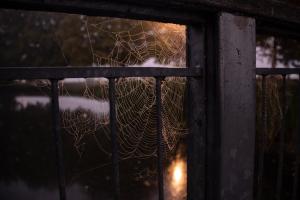
Customs
Many customs that belonged to the Finnish Kekri celebration are nowadays part of the modern Finnish Christmas celebration. One of the most common customs was to eat a lot. It was recommended that one should eat at least seven or nine times a day. Kekri was a massive celebration in ancient Finland. Preparing for the darkest time of the year, people needed to keep their hopes up and one way to do that was to have a celebration where there was food served that was not available on any other day.
Kekri was the time for fortune-telling and spells. Young people performed love spells and tried to find out who their future spouse would be. Melting tin was a popular custom. In modern-day Finland melting tin is part of new year´s traditions. Many of the spells and Kekri divinations were connected to the well-being of the land and the growing of the crop. One way to find out how the future crop would grow was to serve lots of vodka to the master of the house if he would not pass out the crop would be good and if he would pass outcrop would not be successful.
Finnish written language was created in the 16th century. The biggest credit for this goes to Finnish archbishop Mikael Agricola who translated several religious texts into Finnish. Agricola also wrote the first list of Finnish pagan deities. In this list of deities, he mentions a harvest god called Kekri.
Whether Kekri was a harvest god is in debate. There is a possibility that Kekri was a harvest god possibly borrowed from Baltic or Slavic folklore.
There was a character who was an essential part of the celebration and that was Kekripukki Kekripukki was usually a young man who was dressed up in fur that was turned upside down, wearing a mask and goat´s horns. Kekripukki and a group of similar-looking characters went from house to house singing, dancing and performing dirty plays and jokes for free drinks. It is possible that Kekripukki was a fertility symbol. Perhaps a representation of an early fertility god. In several countries and cultures, goats and gods connected to goat or ox-like animals are connected to fertility. Interestingly enough in Finland Kekripukki was the character that eventually inspired the character of Santa Claus/Father Christmas.
Along with young men walked a group of young women called kekrittäret. They were women dressed up in white sheets and their faces were covered with white paint.
Kekrimöröt were a group of little children dressed up as ghosts/spirits/demons. Children smudged their faces and wore old sheets. They visited from house to house dancing and performing little plays during Kekri. This custom doesn´t exist anymore in modern-day Finland. In the Estonian countryside, you can come across similar customs during Mardipäev on the 10th of November. In Estonia, these children are called Martis (dead spirits).

Welcoming ancestors
Kekri was the time to honour the ancestors and passed away relatives. The Master of the house invited the ancestors by going outside and pouring some ale onto the road. It was believed that the scent of the beer would wake up the ancestors and they would follow him inside the house. Dinner was prepared and places were served for the ancestors. It was believed that spirits would enjoy their dinner while the family members would go into the sauna. The sauna was prepared for the ancestors as well. The sauna was warmed up for the whole night and it was believed that the ancestors would stay in the sauna till morning. Kekri was time to remind people that those who have passed away are never completely gone. They just live in another realm invisible to us.
Modern-Day Kekri Celebration
In modern-day Finland, Kerki is mostly celebrated by neo-pagans. There are some pagan traditions that have been re-introduced to the wider public in recent years. One of them is burning the Kekri goat in the cities and villages. Kekri goat is a goat made from willow and it is lit on fire during Kekri evening. Families and friends gather together to watch the burning. The goat is usually 2-3 meters high and wide. It can be even bigger than that. This custom originates from the old pagan custom to burn fires during Kekri to keep evil spirits away. It was believed that during Kekri, evil spirits martaat would fly around doing bad deeds.
Many of the Kekri customs can now be found in Finnish Christmas and new year celebrations. Straws were a big part of Kekri. In the agricultural society straws were powerful symbols that represented the fertility of the land. All kinds of decorations were made from straw. Tiny straw goats were symbols of Kekri but nowadays they are symbols of Christmas in Finland and in Sweden. There was also an announcement made for Kekri peace kekrirauha. For all people and animals to have a peaceful Kekri celebration. In modern-day Finland, each Christmas Eve in Turku the old capital of Finland Christmas peace is announced.
Kekri was celebrated in Finland for a long time. Christianity arrived in Finland around the 12th century but it was not until the 18th and 19th centuries that almost all Finns were converted to Lutheranism. Kekri was a very popular holiday among the people. From the end of the 19th century, there are markings that people were still celebrating Kekri. In the 18th century and in the 19th century when Lutheranism was the only approved religion Kekri was banned and some of the punishments for people who celebrated Kekri were fines or they might even end up in prison for a while. Celebration slowly vanished at the beginning of the 20th century. This was partly because of Christianity but an even bigger factor was the industrial revolution which forced many people to move away from the countryside to the cities to look for work. Kekri the great harvest festival slowly disappeared. Kekri has been brought back within the recent twenty years or so thanks to more research that has been made about the past customs and interest towards the traditions and beliefs of pre-Christian Finland.
Previous Post

October 15, 2022
Ancient Finnish Gods & Goddesses, Nature Manifested
Next Post
October 27, 2022 Autumn Time Festivals (In Latvia and Finland)
Browse Our Archives
Select a Category ancient holidays Animals Estonian Mythology Fairies Finnish Mythology goddess goddesses Inuit Myths Latvian Mythology Lithuanian Mythology mermaids moon Mythical Creatures Native American pagan temples Polynesian Myths Roman Mythology Sami Mythology Scottish Myths Slavic sun symbolism Uncategorized Valentine's Day
Select a Month March 2023 February 2023 January 2023 December 2022 November 2022 October 2022 January 2022
Follow Us!
TAKE THE
Religious Wisdom Quiz
What does "Genesis" mean?
Select your answer to see how you score.
Wisdom Poetry Law Origin or Beginning
Related posts from Myths and Folklore

Finnish Easter Witches Holiday
Return Of The Sun And Symbols Of Christmas

Christmas Tree, the Evergreen Symbol of the Holiday...

TRENDING AT PATHEOS Pagan

When we talk about Greek religion, we often begin with the dodekatheion—the...

I was recently chatting with someone on Instagram. She asked me what...

While there are many people who share their results, the end of...

On July 23, I saw Christopher Nolan's The Odyssey which is Homer’s...

As I write this two big events have just finished up. One...

Restoring the Watershed of Divine Love
Perhaps cooperation is not something we manufacture through legislation, ideology, or moral...
view all Pagan blogs
Ad-Free & Subscriber Log-In Subscription Support
- About Us
- 2026 Calendar
- Videos
- Podcasts
- Library of World Religions
- Faith In Media Tracker
- Advertise With Us
- Write for Us
- Privacy Policy
- Terms of Service
- Do Not Sell My Data
- Contact Us
- Radiant Digital
- Manage Newsletter Subscriptions
- Unsubscribe From Notifications
- Sitemap
Copyright 2008-2026, Patheos. All rights reserved.
Subscription Support Ad-Free & Subscriber Log-In
Follow Patheos