
BuddhistCatholicContemplativeEvangelicalGeneral ChristianHinduJewishLatter-day SaintMuslimNew VisionsProgressive Christian
Beliefs
- Buddhist
- Catholic
- Contemplative
- Evangelical
- General Christian
- Hindu
- Jewish
- Latter-day Saint
- More Voices
- Muslim
- New Visions
- Pagan
- Progressive Christian
Topics
- Religion News
- Food and Religion
- Sports and Religion
- Religious Art
- Religious Music and Entertainment
- Religious Events
- History and Religion
- Style and Religion
- Politics and Religion
- Women in Religion
- Recreation Outdoors and Religion
- Business Finance and Religion
- Careers Workplace and Religion
- Education and Religion
- Family Parenting and Religion
- Health Fitness and Religion
- Home and Religion
- Relationships and Religion
- Technology and Religion
- Travel and Religion
Columnists
- Buddhist Columnists
- Business Finance and Religion Columnists
- Careers Workplace and Religion Columnists
- Catholic Columnists
- Contemplative Columnists
- Education and Religion Columnists
- Evangelists Columnists
- Family Parenting and Religion Columnists
- General Christian Columnists
- Health Fitness and Religion Columnists
- Hindu Columnists
- History and Religion Columnists
- Home and Religion Columnists
- Jewish Columnists
- More Voices Columnists
- Latter Day Columnists
- Muslim Columnists
- New Visions Columnists
- Nonreligious Columnists
- Pagan Columnists
- Politics and Religion Columnists
- Progressive Columnists
- Recreation Outdoors and Religion Columnists
- Relationships and Religion Columnists
- Religion News Columnists
- Religious Art Columnists
- Religious Events Columnists
- Religious Music and Entertainment Columnists
- Sports and Religion Columnists
- Style and Religion Columnists
- Technology and Religion Columnists
- Travel and Religion Columnists
- Women in Religion Columnists
Resource Library
- 2026 Calendar
- Library of World Religions
- The 100 Most Holy Places on Earth
- Patheos Answers
- Podcasts
- Videos
- Faith Leaders Database
- Anglican Episcopalian
- Bahai
- Baptist
- Buddhism
- Christianity
- Confucianism
- Eastern Orthodoxy
- Hinduism
- Holiness and Pentecostal
- ISKCON
- Islam
- Judaism
- Lutheran
- Methodist
- The Church of Jesus Christ of Latter-day Saints
- New Age
- Paganism
- Presbytarian and Reformed
- Protestantism
- Religion Behind the Scenes
- Roman Catholic
- Scientology
- Shia Islam
- Sikhism
- Sufism
- Sunni Islam
- Taoism
- Zen
- See all religions
Research Tools
 Ad-Free & Subscriber Log-In Subscription Support
Ad-Free & Subscriber Log-In Subscription Support
Follow Patheos 

- Trending:
- Forgiveness
- |
- Marriage
- |
- Consciousness
- |
- Death Penalty
- |
- Election
- |
- Halloween

- Home
- General Christian
- Relationships and Religion
- 5 Ways People Misunderstand the Old Testament
5 Ways People Misunderstand the Old Testament
Last updated on: August 20, 2026 at 12:34 pm by Rick Rice
5 Ways People Misunderstand the Old Testament 2026-08-20T12:34:48-04:00 Rick Rice
Patheos Explore the world's faith through different perspectives on religion and spirituality! Patheos has the views of the prevalent religions and spiritualities of the world.
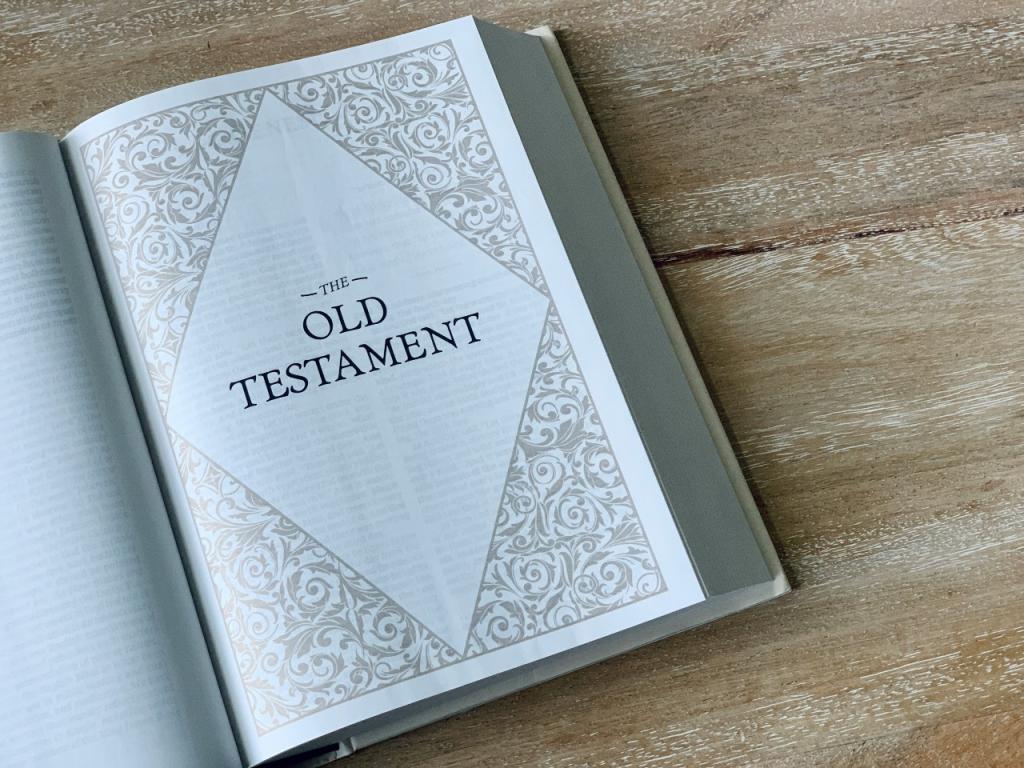
Photo by Tim Wildsmith on Unsplash
5 Ways People Misunderstand the Old Testament
And 1 Step to Start Getting It Right
Many Christians functionally ignore the Old Testament. They think about it primarily in regard to the prophecies about Jesus’ birth and His death and resurrection. But doing so causes people to misunderstand the Old Testament, and miss much of what it tells us about God. Here are five ways that people misunderstand the Old Testament – and one way to start understanding it better.
One Bible, Two Parts
Most Christians understand that the Bible is divided into two parts – the Old Testament and the New Testament. Broadly speaking, the Old Testament tells the story of God’s interaction with mankind – and particularly the Jewish people – up until the coming of Jesus. The New Testament then presents Jesus’ life and ministry, and the teaching of His earliest followers about what God’s Kingdom is all about. As such, we need both parts to fully grasp what God reveals about Himself in Scripture.
So what are some common ways that people misunderstand the Old Testament?
Ignore the Old Testament
Surprisingly, some Christians completely ignore it. I remember speaking to someone a number of years ago about the Old Testament. This person told me that they didn’t read it, because “we are a New Testament church.” It’s easy to see why someone might take that approach. After all, Jesus Himself described His ministry as a “new covenant” (Luke 22:20). The writer of Hebrews also refers to Jesus as “the mediator of a new covenant” (Hebrews 12:24). If there’s a “new” covenant, why do we need the old one?
Such a view overlooks at least two important facts. First, Jesus also said that He did not come to abolish “the Law and the Prophets” (the old covenant; see Matthew 5:17), but to fulfill them. Therefore, understanding what the old covenant entailed helps us to better comprehend what Jesus came to do. Second, the first Christians – Jesus’ disciples and those who came to faith through them – regarded the Old Testament as Scripture. They could not simply use the New Testament; it hadn’t even been written yet! So if the “New Testament Church” read the Old Testament, so should we!
View the Old Testament As Just “A Book of Rules”
One reason that modern Christians may shy away from the Old Testament is that they see it as a “book of rules.” That includes the Ten Commandments, of course, but more frequently people focus on the other commands (see the book of Leviticus, for example). I can’t tell you how many people I’ve seen over the years who start out to read through the Bible, only to give up somewhere in Leviticus or Numbers.
But to see the Old Testament only as a “book of rules” is to miss its overall message! The reason for all those commands is to teach us, and remind us, that God is holy. When God calls us to walk in relationship with Him, He calls us to be holy. Those commands do more than just show us all of the ways that holiness impacts our lives. They also demonstrate in a powerful way that we can’t “be holy” on our own.
Read Only to Find Symbolism Relating to Jesus
At the opposite end of the spectrum from the “book of rules” approach is the idea that everything in the Old Testament is simply a symbol relating to Jesus. (For example, every tree or piece of wood symbolizes the Cross.) While there is certainly symbolism in the Old Testament, not everything in it is only a symbol.
This is the same principle that we use in reading prophecy. Every prophecy in Scripture has what I call a “near-term” and a “long-term” interpretation. One prominent example of this principle is Isaiah’s prophecy of the virgin birth. When Isaiah prophesied that “the virgin will conceive and bear a son,” he was talking first about events that would take place in the coming few years. Now, all of us are aware of the long-term fulfillment of that prophecy. But Isaiah spoke those words to the king of Judah as a sign to him that God would fulfill His promise to deliver Judah from its enemies. If the only application of that sign came 700 years later, it would mean nothing to Ahaz, Isaiah, or anyone else alive in their day.
In short, when we read the Old Testament only looking for symbolism, we miss much of what it reveals to us about God’s character, purposes, and nature.
Assume that Everything Described in the Old Testament Is Acceptable to God
Let’s face it: there are a lot of stories in the Old Testament that are uncomfortable to read. Abraham tries to pass Sarah off as his sister to save his own skin. Twice! Jacob marries Rachel and her sister Leah. He then has children with both of them – and with their maids! Lot’s daughters get him drunk and sleep with him after the destruction of Sodom and Gomorrah. What in the world is going on here?
The point is that when we read the Old Testament, we should not assume that God approves of everything that happened simply because it’s “in the Bible.” Scripture reveals truth – and the truth is that we make a lot of sinful choices. God shows us those choices, along with their consequences, to help us avoid making the same mistakes. God doesn’t cause us to make bad choices, and He certainly doesn’t approve of them. The Old Testament shows what happens when we ignore God’s way.
Pick and Choose Which Parts to Accept
One of the worst things that Christians can do in reading the Old Testament is to decide on their own which parts apply to them. For example, there are a number of regulations on the kinds of food that Jews were allowed to eat. Most Christians today do not follow those regulations. That’s not because we “don’t like them”; rather, it’s because the New Testament teaches that God has removed them. But there isn’t clear New Testament direction on every command in the Old Testament, so how do we decide whether a particular command is binding on Christians today?
The first key is what not to do: we don’t pick and choose on our own based on whether we “like” a particular command. Such an approach leads us to “accept” certain commands because we “agree” with them and reject others because we don’t. The particular danger in this approach is that we want to impose our understanding – our convictions – on everyone else. When God tells everyone to do something, or to not do something, that’s a commandment. When God tells me to do something beyond His commandments, that’s a conviction.
A Framework for Understanding
I think the best way to avoid “picking and choosing” is to have a framework to guide us in our understanding of the Old Testament commands. Such a framework helps us to keep our personal “feelings” separate from our understanding. Broadly speaking, I think there are two frameworks from which to choose. Either every command of the Old Testament is binding unless the New Testament specifically directs otherwise, or every command is nullified unless specifically retained. For example, the dietary regulations are nullified under either approach, because the New Testament expressly abrogates them. The prohibitions on same-sex relations are still binding under either approach, because the New Testament specifically continues them.
One Step to Start “Getting It Right”
We cannot simply ignore the Old Testament. Jesus declared that He did not come to abolish “the Law and the Prophets,” but to fulfill them. The early Church continued to view the Old Testament as Scripture – Scripture illuminated and fulfilled by the ministry of Jesus. Modern believers cannot simply ignore it because parts of it are uncomfortable; we need to seek to understand it in the broader context of God’s Kingdom as proclaimed by Jesus.
I think the best way to approach the Old Testament is to remember that it is the beginning of God’s revelation of Himself and His purposes. From the beginning, God has chosen to reveal Himself to humanity. Also from the beginning, God’s plan has been to dwell among His people. The commandments and covenants of the Old Testament were intended to call people into relationship with God and to prepare them to live in His presence.
But God’s revelation did not stop with the Old Testament. That’s why it’s important to understand it in light of the New Testament. As the writer of Hebrews reminds us, “In the past God spoke to our ancestors through the prophets at many times and in various ways, but in these last days He has spoken to us by His Son, whom He appointed heir of all things, and through whom He also made the universe” (Hebrews 1:1-2). Because the life and ministry of Jesus fulfills the Old Testament, the Old Testament helps us to better understand God’s purposes and plans for us.
Evangelical
History and Religion
Understanding the Old Testament
Previous Post

July 13, 2026
What Is A "Better" Christian?
Next Post

September 1, 2026 What Does It Mean to Say "Home Is Where the Heart Is"?
Recent Comments
"Well constructed thoughts and article, Rick. Unfortunately, it's hard to get found and read without ..."
Is Religious Freedom Necessary for World ..."
"Constantine's conquering in the sign of the Cross is ill-placed on this list as that ..."
Is Religious Freedom Necessary for World ..."
"Excellent thought, read more. The multi-faceted infinite divine includes infinite perspectives. I appreciated the book, ..."
Books Every Christian Should Read
"There are also some good fiction books that I have read that I would recommend. ..."
Books Every Christian Should Read
Browse Our Archives
Select a Category Prayer Spiritual Formation Uncategorized
Select a Month September 2026 August 2026 July 2026 January 2026 December 2025 October 2025 September 2025 August 2025 July 2025 June 2025 May 2025 February 2025 January 2025 December 2024 November 2024 October 2024 September 2024 August 2024 July 2024 June 2024 May 2024 April 2024 February 2024 January 2024 December 2023 November 2023 October 2023 September 2023 August 2023 July 2023 June 2023 May 2023 April 2023 March 2023 February 2023 January 2023 December 2022 November 2022 October 2022 September 2022 August 2022
Follow Us!
TAKE THE
Religious Wisdom Quiz
What does the Hebrew word 'Shekinah' mean?
Select your answer to see how you score.
Everlasting Light God’s Glory Holy Fire Divine Presence
Related posts from My Journey

God Makes His Home With Us. We Follow...

God Makes His Home Among His People

What Does It Mean to Say "Home Is...

TRENDING AT PATHEOS General Christian

The Sermon on the Mount, Part I: Matthew...
The Sermon on the Mount, Part I (Matthew 4:12-5:12) St. Matthew moves...

What's up from Crossway: Reviewing some of their latest A few weeks...

Janie Learns the Way of the Cross: A...
Teaching children about Jesus' Passion can be challenging. Many parents and educators...

Looking For Good Catholic Writing - October 2026
He alone extends the heavens, and he walks upon the waves of...

In "Irreplaceable," our book on vocation and technology, Trevor Sutton and I...

I was strolling through the top floor of the brand new Parthenon...
view all General Christian blogs
What Are Your Thoughts?leave a comment
Ad-Free & Subscriber Log-In Subscription Support
- About Us
- 2026 Calendar
- Videos
- Podcasts
- Library of World Religions
- Faith In Media Tracker
- Advertise With Us
- Write for Us
- Privacy Policy
- Terms of Service
- Do Not Sell My Data
- Contact Us
- Radiant Digital
- Manage Newsletter Subscriptions
- Unsubscribe From Notifications
- Sitemap
Copyright 2008-2026, Patheos. All rights reserved.
Subscription Support Ad-Free & Subscriber Log-In
Follow Patheos