
BuddhistCatholicContemplativeEvangelicalGeneral ChristianHinduJewishLatter-day SaintMuslimNew VisionsProgressive Christian
Beliefs
- Buddhist
- Catholic
- Contemplative
- Evangelical
- General Christian
- Hindu
- Jewish
- Latter-day Saint
- More Voices
- Muslim
- New Visions
- Pagan
- Progressive Christian
Topics
- Religion News
- Food and Religion
- Sports and Religion
- Religious Art
- Religious Music and Entertainment
- Religious Events
- History and Religion
- Style and Religion
- Politics and Religion
- Women in Religion
- Recreation Outdoors and Religion
- Business Finance and Religion
- Careers Workplace and Religion
- Education and Religion
- Family Parenting and Religion
- Health Fitness and Religion
- Home and Religion
- Relationships and Religion
- Technology and Religion
- Travel and Religion
Columnists
- Buddhist Columnists
- Business Finance and Religion Columnists
- Careers Workplace and Religion Columnists
- Catholic Columnists
- Contemplative Columnists
- Education and Religion Columnists
- Evangelists Columnists
- Family Parenting and Religion Columnists
- General Christian Columnists
- Health Fitness and Religion Columnists
- Hindu Columnists
- History and Religion Columnists
- Home and Religion Columnists
- Jewish Columnists
- More Voices Columnists
- Latter Day Columnists
- Muslim Columnists
- New Visions Columnists
- Nonreligious Columnists
- Pagan Columnists
- Politics and Religion Columnists
- Progressive Columnists
- Recreation Outdoors and Religion Columnists
- Relationships and Religion Columnists
- Religion News Columnists
- Religious Art Columnists
- Religious Events Columnists
- Religious Music and Entertainment Columnists
- Sports and Religion Columnists
- Style and Religion Columnists
- Technology and Religion Columnists
- Travel and Religion Columnists
- Women in Religion Columnists
Resource Library
- 2026 Calendar
- Library of World Religions
- The 100 Most Holy Places on Earth
- Patheos Answers
- Podcasts
- Videos
- Faith Leaders Database
- Anglican Episcopalian
- Bahai
- Baptist
- Buddhism
- Christianity
- Confucianism
- Eastern Orthodoxy
- Hinduism
- Holiness and Pentecostal
- ISKCON
- Islam
- Judaism
- Lutheran
- Methodist
- The Church of Jesus Christ of Latter-day Saints
- New Age
- Paganism
- Presbytarian and Reformed
- Protestantism
- Religion Behind the Scenes
- Roman Catholic
- Scientology
- Shia Islam
- Sikhism
- Sufism
- Sunni Islam
- Taoism
- Zen
- See all religions
Research Tools
 Ad-Free & Subscriber Log-In Subscription Support
Ad-Free & Subscriber Log-In Subscription Support
Follow Patheos 

- Trending:
- Forgiveness
- |
- Marriage
- |
- Consciousness
- |
- Death Penalty
- |
- Election
- |
- Halloween

- Home
- General Christian
- Relationships and Religion
- From the Beginning
From the Beginning
Last updated on: January 1, 2026 at 12:22 pm by Rick Rice
From the Beginning 2026-01-01T12:22:45-05:00 Rick Rice
Patheos Explore the world's faith through different perspectives on religion and spirituality! Patheos has the views of the prevalent religions and spiritualities of the world.

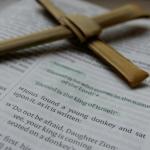
Photo by Jonathan Fox on Unsplash
January 1 – a new year. In Luke chapter 1, Luke talks about the story of Jesus “from the beginning.” What might this year bring us “from the beginning”?
Scripture:
Genesis, chapters 1-2; Luke, chapter 1
Luke 1:1-4 (NASB):
Since many have undertaken to compile an account of the things accomplished among us, just as they were handed down to us by those who from the beginning were eyewitnesses and servants of the word, it seemed fitting to me as well, having investigated everything carefully from the beginning, to write it out for you in an orderly sequence, most excellent Theophilus; so that you may know the exact truth about the things you have been taught,
Observations: The Story of Jesus from the Beginning
Both of our readings for today – Genesis 1-2 and Luke 1 – talk about “beginnings.” In Genesis, of course, it is thebeginning – the point at which the eternally existent God began to create the universe. “In the beginning God created the heavens and the earth” (Genesis 1:1). Before this “beginning,” God existed; He is the eternal force behind everything that we see. In the prologue to John’s Gospel, we read that the Word – the eternally existent Son of God – was with God in that beginning. The Word was the creative power by which God created. Genesis 1 tells us that God created by saying “Let there be…” John 1 tells us that the Son of God is the Word by which God creates.
But the beginning that Luke talks about in chapter 1 of his gospel is a different beginning. Luke is talking about the beginning of “the things accomplished among us” (verse 1). Those “things” are the life and ministry of Jesus. Although Luke doesn’t use the “Word” terminology that John does, their focus is the same. John tells us that “the Word became flesh and dwelt among us” (John 1:14); the eternal Son of God became man and came to reveal God’s nature to us.
Luke approaches the story from the human side. He tells us how “the Word became flesh.” Just as the prophet Isaiah had foretold, the virgin conceived and bore a Son who would be called “the Son of God” (Luke 1:35). The God who has first created humans would now cause His eternal Son to become flesh by causing a virgin to conceive outside the “normal” human method of reproduction. It had to be that way; the Son would be both fully human and fully divine. Luke tells the story “from the beginning” so Theophilus would know the exact truth about the things you have been taught.
Application: Luke Traces the Story from the Beginning
Luke uses the phrase “from the beginning” twice in these verses. He first says that the information was “handed down to us by those who from the beginning were eyewitnesses and servants of the word” (verse 2). Nobody invented the story later to try to explain what had happened; the eyewitnesses facts were there from the beginning. That’s why he starts before the birth of Jesus, back to Zechariah and Elizabeth and Mary.
We also need to recognize that Zechariah, Elizabeth, and Mary got their information from the angel Gabriel – God’s messenger. Gabriel appeared to Zechariah and told him what was going to happen: his wife, Elizabeth, would become pregnant, and their son would be the “forerunner” who would prepare the way for the Messiah. And at the end of chapter 1, when that son is born, Zechariah proclaims what it all means: this son would be the forerunner, and the Messiah was coming! This son’s birth was miraculous, because his mother had been barren and was beyond normal child-bearing age. The God who miraculously gave Abraham and Sarah a son in their old age was doing it again!
But the birth of that son – John the Baptist – wasn’t the end of the story; it was the beginning. Because Gabriel also appeared to Mary during the sixth month of Elizabeth’s pregnancy to tell Mary that she too would bear a child. Mary recognized the “issue”: “How will this be, since I am a virgin?” (Luke 1:34). Gabriel told her about an even more miraculous birth: “The Holy Spirit will come upon you, and the power of the Most High will overshadow you; for that reason also the holy Child will be called the Son of God” (Luke 1:35).
From the Beginning, God Fulfills His Promises
The last part of Luke chapter 1 contains two incredible passages of prophetic poetry – Mary’s song (Luke 1:46-55) and Zechariah’s song (Luke 1:68-79). Mary’s song burst forth once she arrived at Elizabeth’s home. Elizabeth immediately recognized what this meant: “Blessed are you among women, and blessed is the fruit of your womb! And how has it happened to me that the mother of my Lord would come to me?” (Luke 1:42-43). “The mother of my Lord” – Elizabeth understood Who Mary’s child was. That could only happen through the inspiration of the Holy Spirit.
Mary then burst into song: “My soul exalts the Lord, and my spirit has rejoiced in God my Savior” (Luke 1:46-47). She acknowledges that God has indeed blessed her, but at the end of the song she expresses the real importance of all this: “He has given help to His servant Israel, in remembrance of His mercy, just as He spoke to our fathers, to Abraham and his descendants forever” (Luke 1:54-55).
From the Beginning, God’s Plan Was Redemption
When John was born, Zechariah also burst into song. Remember, he had been unable to speak from the day that Gabriel appeared to him in the Temple. When he asked Gabriel how he would know that what Gabriel said was true, Gabriel told him that he would be unable to speak until the day the child was born – and that’s exactly what happened.
So imagine it: after being unable to speak for more than nine months, thinking about what Gabriel had said and what it all meant, Zechariah’s “mouth was opened and his tongue freed” (Luke 1:64). “And his father Zechariah was filled with the Holy Spirit and prophesied, saying: ‘Blessed be the Lord God of Israel, for He has visited us and accomplished redemption for His people, and has raised up a horn of salvation for us in the house of His servant David – just as He spoke by the mouth of His holy prophets from ancient times…” (Luke 1:67-70).
Don’t miss what Zechariah says here. God has accomplished redemption for His people. Not by the birth of John; he was just the forerunner. The redemption was coming through the One who would be born in the house of His servant David. That wasn’t John; Zechariah and Elizabeth were both descendants of Aaron. Jesus is the One who was born in the house of David. And even though Jesus’ birth was still several months in the future, Zechariah recognized that God had already accomplished the redemption of His people. When God promises, God acts. God’s plan was to redeem His people. As Gabriel told Joseph (Matthew 1:21), “He will save His people from their sins.” That was God’s plan from the beginning – and God is still at work fulfilling that plan today!
Prayer:
Father, thank You for reminding us that when You promise, You fulfill. From the beginning, Your plan has been to dwell with Your people. In the birth of Jesus, You did exactly that: the Word became flesh and dwelt among us. He came to reveal You to us, and to reconcile us to You.
Thank You for reminding us that no matter what our story has been to this point, it’s never to late to start again – from the beginning. As we begin this new year, help each of us to begin it with You. Amen.
Evangelical
History and Religion
Previous Post
December 30, 2025
6 Ways to Enhance Your Faith Journey in 2026
Next Post

January 2, 2026 "Sin Is Lurking at the Door, But You Must Master It"
Recent Comments
"Well constructed thoughts and article, Rick. Unfortunately, it's hard to get found and read without ..."
Is Religious Freedom Necessary for World ..."
"Constantine's conquering in the sign of the Cross is ill-placed on this list as that ..."
Is Religious Freedom Necessary for World ..."
"Excellent thought, read more. The multi-faceted infinite divine includes infinite perspectives. I appreciated the book, ..."
Books Every Christian Should Read
"There are also some good fiction books that I have read that I would recommend. ..."
Books Every Christian Should Read
Browse Our Archives
Select a Category Prayer Spiritual Formation Uncategorized
Select a Month September 2026 August 2026 July 2026 January 2026 December 2025 October 2025 September 2025 August 2025 July 2025 June 2025 May 2025 February 2025 January 2025 December 2024 November 2024 October 2024 September 2024 August 2024 July 2024 June 2024 May 2024 April 2024 February 2024 January 2024 December 2023 November 2023 October 2023 September 2023 August 2023 July 2023 June 2023 May 2023 April 2023 March 2023 February 2023 January 2023 December 2022 November 2022 October 2022 September 2022 August 2022
Follow Us!
TAKE THE
Religious Wisdom Quiz
What does "Lo-debar" mean in Hebrew?
Select your answer to see how you score.
The Lord’s land Valley of rest No pasture The chosen city
Related posts from My Journey

God Makes His Home With Us. We Follow...

God Makes His Home Among His People

What Does It Mean to Say "Home Is...

5 Ways People Misunderstand the Old Testament
TRENDING AT PATHEOS General Christian

Nearly every morning, I make the drive to Detroit with my high-school-age...

The Real AI Story Is Adoption Without Trust
Artificial intelligence has crossed a political threshold. It is no longer a...

A new article, written by Jeff Lindsay and Gale L. Pooley,...

Swimfan: Forgotten Aughts Pleasures
This is a recovery effort. In 2002, My Big Fat Greek Wedding...

Top Three Anti-Catholic Lies About Catholicism
This is my initial transcript for the video, "THE 3 WORST...

Pope Leo Celebrates Mass for Nurses & Docs...
I don't have any idea how he did it, but Pope Leo...
view all General Christian blogs
What Are Your Thoughts?leave a comment
Ad-Free & Subscriber Log-In Subscription Support
- About Us
- 2026 Calendar
- Videos
- Podcasts
- Library of World Religions
- Faith In Media Tracker
- Advertise With Us
- Write for Us
- Privacy Policy
- Terms of Service
- Do Not Sell My Data
- Contact Us
- Radiant Digital
- Manage Newsletter Subscriptions
- Unsubscribe From Notifications
- Sitemap
Copyright 2008-2026, Patheos. All rights reserved.
Subscription Support Ad-Free & Subscriber Log-In
Follow Patheos