
BuddhistCatholicContemplativeEvangelicalGeneral ChristianHinduJewishLatter-day SaintMuslimNew VisionsProgressive Christian
Beliefs
- Buddhist
- Catholic
- Contemplative
- Evangelical
- General Christian
- Hindu
- Jewish
- Latter-day Saint
- More Voices
- Muslim
- New Visions
- Pagan
- Progressive Christian
Topics
- Religion News
- Food and Religion
- Sports and Religion
- Religious Art
- Religious Music and Entertainment
- Religious Events
- History and Religion
- Style and Religion
- Politics and Religion
- Women in Religion
- Recreation Outdoors and Religion
- Business Finance and Religion
- Careers Workplace and Religion
- Education and Religion
- Family Parenting and Religion
- Health Fitness and Religion
- Home and Religion
- Relationships and Religion
- Technology and Religion
- Travel and Religion
Columnists
- Buddhist Columnists
- Business Finance and Religion Columnists
- Careers Workplace and Religion Columnists
- Catholic Columnists
- Contemplative Columnists
- Education and Religion Columnists
- Evangelists Columnists
- Family Parenting and Religion Columnists
- General Christian Columnists
- Health Fitness and Religion Columnists
- Hindu Columnists
- History and Religion Columnists
- Home and Religion Columnists
- Jewish Columnists
- More Voices Columnists
- Latter Day Columnists
- Muslim Columnists
- New Visions Columnists
- Nonreligious Columnists
- Pagan Columnists
- Politics and Religion Columnists
- Progressive Columnists
- Recreation Outdoors and Religion Columnists
- Relationships and Religion Columnists
- Religion News Columnists
- Religious Art Columnists
- Religious Events Columnists
- Religious Music and Entertainment Columnists
- Sports and Religion Columnists
- Style and Religion Columnists
- Technology and Religion Columnists
- Travel and Religion Columnists
- Women in Religion Columnists
Resource Library
- 2026 Calendar
- Library of World Religions
- The 100 Most Holy Places on Earth
- Patheos Answers
- Podcasts
- Videos
- Faith Leaders Database
- Anglican Episcopalian
- Bahai
- Baptist
- Buddhism
- Christianity
- Confucianism
- Eastern Orthodoxy
- Hinduism
- Holiness and Pentecostal
- ISKCON
- Islam
- Judaism
- Lutheran
- Methodist
- The Church of Jesus Christ of Latter-day Saints
- New Age
- Paganism
- Presbytarian and Reformed
- Protestantism
- Religion Behind the Scenes
- Roman Catholic
- Scientology
- Shia Islam
- Sikhism
- Sufism
- Sunni Islam
- Taoism
- Zen
- See all religions
Research Tools
 Ad-Free & Subscriber Log-In Subscription Support
Ad-Free & Subscriber Log-In Subscription Support
Follow Patheos 

- Trending:
- Forgiveness
- |
- Marriage
- |
- Consciousness
- |
- Death Penalty
- |
- Election
- |
- Halloween

- Home
- General Christian
- Relationships and Religion
- What Is God’s Will? For Us to Be Holy
What Is God’s Will? For Us to Be Holy
Last updated on: May 15, 2024 at 9:38 am by Rick Rice
What Is God’s Will? For Us to Be Holy 2024-05-15T09:38:45-04:00 Rick Rice
Patheos Explore the world's faith through different perspectives on religion and spirituality! Patheos has the views of the prevalent religions and spiritualities of the world.
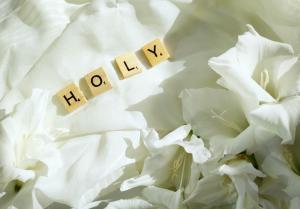
Photo by chris liu on Unsplash
“What is God’s will for me?” People often ask this question. Scripture gives us a direct answer: God’s will is for us to be holy. But what does that mean?
Scripture:
1 Chronicles, chapters 25-27; 1 Thessalonians, chapter 4
1 Thessalonians 4:1-8 (CEB):
So then, brothers and sisters, we ask and encourage you in the Lord Jesus to keep living the way you already are and even do better in how you live and please God – just as you learned from us. You know the instructions we gave you through the Lord Jesus. God’s will is that your lives are dedicated to him. This means that you stay away from sexual immorality, and learn how to control your own body in a pure and respectable way. Don’t be controlled by your sexual urges like the Gentiles who don’t know God.
No one should mistreat or take advantage of their brother or sister in this issue. The Lord punishes people for all these things, as we told you before and sternly warned you. God didn’t call us to be immoral but to be dedicated to him. Therefore, whoever rejects these instructions isn’t rejecting a human authority. They are rejecting God, who gives his Holy Spirit to you.
Observations – God’s Will Is For Us to Be Holy
In yesterday’s reflection, I discussed the connection between holiness and spiritual development (“Filling in the Gaps: Holiness and Spiritual Development”). In our tribe, we view sanctification as God’s work in us to make us more like Jesus. “We believe that sanctification is that work of God which transforms believers into the likeness of Christ.” (Manual of the Church of the Nazarene, Article X). “Sanctification” is one of those biblical words that the various tribes of Christianity understand differently. Instead of focusing on the “how” of sanctification, though, Paul turns our attention toward what God intends for us.
First, we need to remember that what we know as “chapter 4” is just the continuation of the thought that Paul began in yesterday’s passage (1 Thessalonians 3:6-13). That indicates that the concept of sanctification which Paul addresses in today’s passage goes along with his call “to be blameless in holiness” in 3:13.
The CEB translation of 4:3 sets forth the concept of sanctification: God’s will is that your lives are dedicated to him. Here are some other translations of this verse:
- “For this is the will of God, your sanctification” (NASB, NKJV, NRSV)
- “It is God’s will that you should be sanctified” (NIV)
- “God’s will is for you to be holy” (NLT)
Two threads run through the different translations of this verse, and through the larger passage. First, however we define “sanctification,” the fact is that it is God’s will for us. Second, sanctification involves holiness and being dedicated to God. These two aspects – being set apart for God’s use and being cleansed and empowered for God’s work – are common to all of the Biblical expressions of holiness.
Holiness Requires Both God’s Work and Our Participation
After saying that it is God’s will for our lives to be holy/dedicated to him, Paul explains some of what that means. “This means that you stay away from sexual immorality and learn how to control your own body in a pure and respectable way.” Biblical holiness includes far more than our sexuality, but it clearly includes that. Paul puts the issue plainly in verse 5: “Don’t be controlled by your sexual urges like the Gentiles who do not know God.”
Paul’s point is something that our modern culture has either forgotten or willfully ignored: we are not defined in terms of sexuality. All of us have sexual urges or desires. The issue is whether we allow those urges to control us, or whether we surrender them to God. Biblical holiness calls us to something higher than sexuality; it calls us to spirituality. Specifically, it calls us to be like Jesus.
So how do we do that? Through the indwelling presence of the Holy Spirit. “Therefore, whoever rejects these instructions isn’t rejecting a human authority. They are rejecting God, who gives his Holy Spirit to you” (verse 8, emphasis added). God calls us to be holy (1 Peter 1:15-16). God has given us his Holy Spirit to lead us into the truth (John 16:13). God’s will is that your lives are dedicated to him!
Application – God’s Will Is For Us to Be Holy
Jesus often used the image of bearing fruit to describe our character and God’s work in us. Good trees bring forth good fruit; bad trees produce bad fruit. We are known by the fruit we produce. Likewise, in Galatians 5, Paul compares the fruit of the Holy Spirit with the acts of the sinful nature:
So I say, walk by the Spirit, and you will not gratify the desires of the flesh. For the flesh desires what is contrary to the Spirit, and the Spirit what is contrary to the flesh. They are in conflict with each other, so that you are not to do whatever you want. But if you are led by the Spirit, you are not under the law.
The acts of the flesh are obvious: sexual immorality, impurity and debauchery; idolatry and witchcraft; hatred, discord, jealousy, fits of rage, selfish ambition, dissensions, factions, and envy; drunkenness, orgies, and the like. I warn you, as I did before, that those who live like this will not inherit the kingdom of God. But the fruit of the Spirit is love, joy, peace, forbearance, kindness, goodness, faithfulness, gentleness, and self-control. Against such things there is no law. Those who belong to Christ Jesus have crucified the flesh with its passions and desires. Since we live by the Spirit, let us keep in step with the Spirit (Galatians 5:16-25, NIV).
However we explain God’s work of sanctification, it should be clear that it results in changed behavior and changed priorities. Since we live by the Spirit, let us keep in step with the Spirit!
Prayer:
Father, we live in a world that is controlled by desires. As Paul says in Galatians 5, the acts of the sinful nature are obvious. In our world, they are not only obvious; they are everywhere. You call us to something different, something better – to be dedicated to you.
Thank you for the gift of your Holy Spirit, who leads us in your way each day. Help us to learn more and more to recognize the Spirit’s voice, and to walk in obedience. It is your will for us to be holy, but we can’t make ourselves holy. Only you can do that! Thank you that you have given us your Spirit to make us holy. Help us today to walk in ways that demonstrate that our lives are dedicated to you. Amen.
Evangelical
History and Religion
Previous Post

May 14, 2024
Filling in the Gaps: Holiness and Spiritual Development
Next Post

May 16, 2024 15 Guidelines for Holy Living
Recent Comments
"Well constructed thoughts and article, Rick. Unfortunately, it's hard to get found and read without ..."
Is Religious Freedom Necessary for World ..."
"Constantine's conquering in the sign of the Cross is ill-placed on this list as that ..."
Is Religious Freedom Necessary for World ..."
"Excellent thought, read more. The multi-faceted infinite divine includes infinite perspectives. I appreciated the book, ..."
Books Every Christian Should Read
"There are also some good fiction books that I have read that I would recommend. ..."
Books Every Christian Should Read
Browse Our Archives
Select a Category Prayer Spiritual Formation Uncategorized
Select a Month September 2026 August 2026 July 2026 January 2026 December 2025 October 2025 September 2025 August 2025 July 2025 June 2025 May 2025 February 2025 January 2025 December 2024 November 2024 October 2024 September 2024 August 2024 July 2024 June 2024 May 2024 April 2024 February 2024 January 2024 December 2023 November 2023 October 2023 September 2023 August 2023 July 2023 June 2023 May 2023 April 2023 March 2023 February 2023 January 2023 December 2022 November 2022 October 2022 September 2022 August 2022
Follow Us!
TAKE THE
Religious Wisdom Quiz
Who was the first king of Israel?
Select your answer to see how you score.
Saul Solomon Josiah David
Related posts from My Journey

God Makes His Home With Us. We Follow...

God Makes His Home Among His People

What Does It Mean to Say "Home Is...

5 Ways People Misunderstand the Old Testament
TRENDING AT PATHEOS General Christian

'Super Scam Me' Exposes AI Jon Bon Jovi...
Leslie Pickett believed she was in a relationship with Jon Bon Jovi....

The Brazilian Remake of Kendricks' 'Flywheel' Opens in...
“Flywheel,” the story that launched the Kendrick Brothers’ filmmaking career is getting...

The Dangers of Gradual Accommodation (Winking at Sin)
Recently, the “law of gradualness” resurfaced during the opening of a weeklong,...

The Iron Gates and the Lion of the...
Yesterday, I didn't finish my report about, well, yesterday. So I'll...

The Image: On the Horror of Capitalism and...
The Image Then went the Pharisees, and took counsel how they might...

We are approaching the date of our new American national holiday: October...
view all General Christian blogs
What Are Your Thoughts?leave a comment
Ad-Free & Subscriber Log-In Subscription Support
- About Us
- 2026 Calendar
- Videos
- Podcasts
- Library of World Religions
- Faith In Media Tracker
- Advertise With Us
- Write for Us
- Privacy Policy
- Terms of Service
- Do Not Sell My Data
- Contact Us
- Radiant Digital
- Manage Newsletter Subscriptions
- Unsubscribe From Notifications
- Sitemap
Copyright 2008-2026, Patheos. All rights reserved.
Subscription Support Ad-Free & Subscriber Log-In
Follow Patheos