
BuddhistCatholicContemplativeEvangelicalGeneral ChristianHinduJewishLatter-day SaintMuslimNew VisionsProgressive Christian
Beliefs
- Buddhist
- Catholic
- Contemplative
- Evangelical
- General Christian
- Hindu
- Jewish
- Latter-day Saint
- More Voices
- Muslim
- New Visions
- Pagan
- Progressive Christian
Topics
- Religion News
- Food and Religion
- Sports and Religion
- Religious Art
- Religious Music and Entertainment
- Religious Events
- History and Religion
- Style and Religion
- Politics and Religion
- Women in Religion
- Recreation Outdoors and Religion
- Business Finance and Religion
- Careers Workplace and Religion
- Education and Religion
- Family Parenting and Religion
- Health Fitness and Religion
- Home and Religion
- Relationships and Religion
- Technology and Religion
- Travel and Religion
Columnists
- Buddhist Columnists
- Business Finance and Religion Columnists
- Careers Workplace and Religion Columnists
- Catholic Columnists
- Contemplative Columnists
- Education and Religion Columnists
- Evangelists Columnists
- Family Parenting and Religion Columnists
- General Christian Columnists
- Health Fitness and Religion Columnists
- Hindu Columnists
- History and Religion Columnists
- Home and Religion Columnists
- Jewish Columnists
- More Voices Columnists
- Latter Day Columnists
- Muslim Columnists
- New Visions Columnists
- Nonreligious Columnists
- Pagan Columnists
- Politics and Religion Columnists
- Progressive Columnists
- Recreation Outdoors and Religion Columnists
- Relationships and Religion Columnists
- Religion News Columnists
- Religious Art Columnists
- Religious Events Columnists
- Religious Music and Entertainment Columnists
- Sports and Religion Columnists
- Style and Religion Columnists
- Technology and Religion Columnists
- Travel and Religion Columnists
- Women in Religion Columnists
Resource Library
- 2026 Calendar
- Library of World Religions
- The 100 Most Holy Places on Earth
- Patheos Answers
- Podcasts
- Videos
- Faith Leaders Database
- Anglican Episcopalian
- Bahai
- Baptist
- Buddhism
- Christianity
- Confucianism
- Eastern Orthodoxy
- Hinduism
- Holiness and Pentecostal
- ISKCON
- Islam
- Judaism
- Lutheran
- Methodist
- The Church of Jesus Christ of Latter-day Saints
- New Age
- Paganism
- Presbytarian and Reformed
- Protestantism
- Religion Behind the Scenes
- Roman Catholic
- Scientology
- Shia Islam
- Sikhism
- Sufism
- Sunni Islam
- Taoism
- Zen
- See all religions
Research Tools
 Ad-Free & Subscriber Log-In Subscription Support
Ad-Free & Subscriber Log-In Subscription Support
Follow Patheos 

- Trending:
- Forgiveness
- |
- Marriage
- |
- Consciousness
- |
- Death Penalty
- |
- Election
- |
- Halloween
 Muslimah Next Door
- Home
- Muslim
- ISNA Disability Narratives: A Purpose to Why God Created You As You Are
ISNA Disability Narratives: A Purpose to Why God Created You As You Are
Last updated on: August 31, 2015 at 3:43 pm by Dilshad Ali
ISNA Disability Narratives: A Purpose to Why God Created You As You Are 2015-08-31T15:43:36-04:00 Dilshad Ali
Patheos Explore the world's faith through different perspectives on religion and spirituality! Patheos has the views of the prevalent religions and spiritualities of the world.
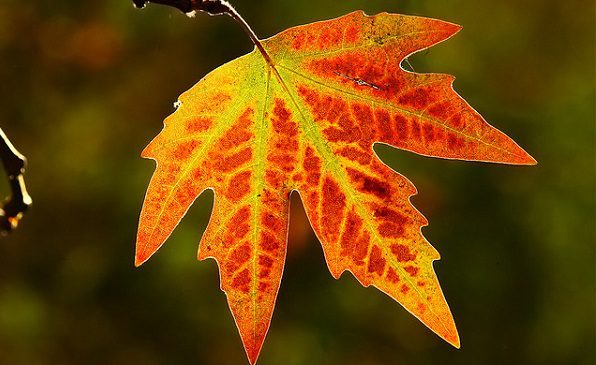
Photo courtesy of Flickr Creative Commons, Photo User HORIZON
This post is part of a short series of disability narratives shared by the speakers and moderator (me!), who will be part of a panel discussion on “Finding Our Voice: Sharing our Disability Experiences to Seek Empowerment and Affect Change” this Saturday at the Islamic Society of North America convention. We’re hoping to show how sharing our stories is a way to build community and change perceptions.
By Sara Minkara
Red. Yellow. Green. Orange—all the colors of fall that many of us look forward to every year. Some might even argue that fall is the most beautiful of the four seasons. Recently, there was an article posted on Buzzfeed, “The 14 Best Places to See Fall Foliage in the U.S.” where they took their cue from The Farmers’ Almanac’s list of top foliage destinations in the U.S.
According to the Almanac, “Experts say this season’s fall foliage show will quite possibly be one of the most colorful on record. Whether you are looking to take great photos or just take in great vistas, from coast to coast, and everywhere in between, there are so many great places to see Mother Nature’s color show.”
This leads me to wonder – seeing the fall colors is something many people love doing. Diversity is seen as beautiful in nature. So why do we find it difficult to appreciate that same type of diversity and miracle in people?
Diversity is a miracle from God. The Quran states, “Had God willed, he would have made you all as one nation. (Quran 16:93).” He could have created us all the same, but he did not — there is a purpose for those differences. We should reflect on that fact in order to appreciate why he created us all different.
However, at the same time, He does not focus on those differences in the ways in which He treats us. In His eyes, we are all equal — He does not look down on us. So why do we as a people look down upon each other and focus all too often on the differences in God’s creations?
As with many issues, the lack of appreciation in diversity is a societal construct. There is a definite disconnect between what is taught in theory and what is actually carried out in practice. We often preach ideas of recognizing and seeing the good in others and not judging the book by its cover. However, we do just the opposite by focusing on the outward – by this standard, beauty and ability are based on the cover, the outside.
There is also the contradiction of political correctness. The political correctness construct is one that stays intact until the topic of marriage, jobs, and situations that truly require appreciation of diversity arise and preconceived notions are revealed. Especially with disabilities, society has a negative perception of the blind and disabled in that it focuses on what they cannot do negatively rather than recognizing how those differences and various skill sets can contribute to the community. The disabled population is immediately categorized by their disabilities and what that means for their inabilities, not their abilities.
For me, I have no idea neither how people perceive me on first glance, nor do I base a person’s beauty based on what I see. To some degree, I am both thankful for and comforted by this ability to not focus on the physical beauty of people based on the superficiality of their outward appearance.
That is not to say that I do not judge others because, as humans, we do judge others based on a variety of characteristics from outward appearance to behaviors. Everyone should be proud of who they are and their particular form of diversity without dwelling on how society might interpret their differences.
It is really all about the attitude and the approach. People’s perceptions fade away, and our actions are not dependent on what they think about us. There’s a purpose to why God created you as you are, and you should be confident in and aware of what you have to offer.
Sara Minkara, founder and chief executive officer of Empowerment through Integration (ETI), has focused her life’s work on disability rights and integration of the disabled. In 2015, Sara was a Visiting Fellow at the Carr Center for Human Rights at Harvard University and the Operations Manager at the Disability Rights Fund. At age seven, she lost her vision; however, despite that deeply frightening experience, Sara knew that all of life’s opportunities could still be afforded to her. The U.S. public education system paired with the love and tenacity of her family enabled her to attend Wellesley College and Harvard University. Sara has also received the Clinton Foundation, Outstanding Commitment Award, Davis Peace Project Award, Emily Bultch Peace and Justice Award, MIT IDEAS Award, and a finalist for the Harvard President’s Challenge Award.
Sara is one of the panelists speaking at the Islamic Society of North America’s 52nd annual conference on Saturday, September 5. She will be speaking on a panel titled “Finding Our Voice: Sharing our Disability Experiences to Seek Empowerment and Affect Change” at 4:45 p.m. in Room 9-1 at the Donald E. Stephens Convention Center in Rosemont, Il.
Next Post

September 1, 2015 ISNA Disability Narratives - Being a Voice for Advocacy and Change
Browse Our Archives
Select a Category A Global Voice for Autism Autism Awareness Month 2016 Autism Awareness Month 2017 Autism Interlude Hajj and Eid ul Adha Jenin Autism Project Ramadan Three Questions Uncategorized WISE Global Conference
Select a Month November 2018 October 2018 August 2018 June 2018 May 2018 April 2018 March 2018 February 2018 January 2018 December 2017 November 2017 October 2017 September 2017 August 2017 July 2017 June 2017 May 2017 April 2017 March 2017 February 2017 January 2017 December 2016 November 2016 October 2016 September 2016 August 2016 July 2016 June 2016 May 2016 April 2016 March 2016 February 2016 January 2016 December 2015 November 2015 October 2015 September 2015 August 2015 July 2015 June 2015 May 2015 April 2015 March 2015 February 2015 January 2015 December 2014 November 2014 October 2014 September 2014 August 2014 July 2014 June 2014 May 2014 April 2014 March 2014 February 2014 January 2014 December 2013 November 2013 October 2013 September 2013 August 2013 July 2013 June 2013 May 2013 April 2013 March 2013 February 2013 January 2013 December 2012 November 2012 October 2012 September 2012 August 2012 July 2012 June 2012 May 2012 April 2012 March 2012 February 2012 January 2012 December 2011 November 2011 October 2011 September 2011
Follow Us!
TAKE THE
Religious Wisdom Quiz
What does Paul tell Timothy to flee from in 2 Timothy?
Select your answer to see how you score.
Evil desires of youth The love of money Persecution False teaching
Related posts from Muslimah Next Door
An Autistic Ramadan - Dhikr in the Dark,...

Compassion for (Disabled) Patients: The Unquantifiable Metric in...

Guardianship and the Rights of Adulthood

Muslim, Brown and Disabled - A Potential for...
TRENDING AT PATHEOS Muslim

25 Years Later: How Much Has Changed for...
As we approach the 25th anniversary of September 11th, I’ve found myself...

Podcast: Third Spaces & The Rise of Yemeni...
In the latest episode of The Artistic Foodies Podcast, hosts Abbas...

HalalFest Picks: Best 60 Halal Spots for Super...
Back in 2016, I came up with a list of 29...

Unity Is America’s Strength — Division Is Its...
by Hidayatullah Ahsan When Valentina Gomez, a Republican candidate for Congress in...

Zohran Mamdani and New York’s Fight Against Islamophobia
This past June, against all odds, Zohran Mamdani won the Democratic primary...

What the Fourth of July Means to a...
As we mark another Fourth of July, millions of Americans will celebrate...
view all Muslim blogs
Ad-Free & Subscriber Log-In Subscription Support
- About Us
- 2026 Calendar
- Videos
- Podcasts
- Library of World Religions
- Faith In Media Tracker
- Advertise With Us
- Write for Us
- Privacy Policy
- Terms of Service
- Do Not Sell My Data
- Contact Us
- Radiant Digital
- Manage Newsletter Subscriptions
- Unsubscribe From Notifications
- Sitemap
Copyright 2008-2026, Patheos. All rights reserved.
Subscription Support Ad-Free & Subscriber Log-In
Follow Patheos