
BuddhistCatholicContemplativeEvangelicalGeneral ChristianHinduJewishLatter-day SaintMuslimNew VisionsProgressive Christian
Beliefs
- Buddhist
- Catholic
- Contemplative
- Evangelical
- General Christian
- Hindu
- Jewish
- Latter-day Saint
- More Voices
- Muslim
- New Visions
- Pagan
- Progressive Christian
Topics
- Religion News
- Food and Religion
- Sports and Religion
- Religious Art
- Religious Music and Entertainment
- Religious Events
- History and Religion
- Style and Religion
- Politics and Religion
- Women in Religion
- Recreation Outdoors and Religion
- Business Finance and Religion
- Careers Workplace and Religion
- Education and Religion
- Family Parenting and Religion
- Health Fitness and Religion
- Home and Religion
- Relationships and Religion
- Technology and Religion
- Travel and Religion
Columnists
- Buddhist Columnists
- Business Finance and Religion Columnists
- Careers Workplace and Religion Columnists
- Catholic Columnists
- Contemplative Columnists
- Education and Religion Columnists
- Evangelists Columnists
- Family Parenting and Religion Columnists
- General Christian Columnists
- Health Fitness and Religion Columnists
- Hindu Columnists
- History and Religion Columnists
- Home and Religion Columnists
- Jewish Columnists
- More Voices Columnists
- Latter Day Columnists
- Muslim Columnists
- New Visions Columnists
- Nonreligious Columnists
- Pagan Columnists
- Politics and Religion Columnists
- Progressive Columnists
- Recreation Outdoors and Religion Columnists
- Relationships and Religion Columnists
- Religion News Columnists
- Religious Art Columnists
- Religious Events Columnists
- Religious Music and Entertainment Columnists
- Sports and Religion Columnists
- Style and Religion Columnists
- Technology and Religion Columnists
- Travel and Religion Columnists
- Women in Religion Columnists
Resource Library
- 2026 Calendar
- Library of World Religions
- The 100 Most Holy Places on Earth
- Patheos Answers
- Podcasts
- Videos
- Faith Leaders Database
- Anglican Episcopalian
- Bahai
- Baptist
- Buddhism
- Christianity
- Confucianism
- Eastern Orthodoxy
- Hinduism
- Holiness and Pentecostal
- ISKCON
- Islam
- Judaism
- Lutheran
- Methodist
- The Church of Jesus Christ of Latter-day Saints
- New Age
- Paganism
- Presbytarian and Reformed
- Protestantism
- Religion Behind the Scenes
- Roman Catholic
- Scientology
- Shia Islam
- Sikhism
- Sufism
- Sunni Islam
- Taoism
- Zen
- See all religions
Research Tools
 Ad-Free & Subscriber Log-In Subscription Support
Ad-Free & Subscriber Log-In Subscription Support
Follow Patheos 

- Trending:
- Forgiveness
- |
- Marriage
- |
- Consciousness
- |
- Death Penalty
- |
- Election
- |
- Halloween
 Muslimah Next Door
- Home
- Muslim
- How Young is Too Young to Fast?
How Young is Too Young to Fast?
Last updated on: June 16, 2015 at 3:16 pm by Dilshad Ali
How Young is Too Young to Fast? 2015-06-16T15:16:13-04:00 Dilshad Ali
Patheos Explore the world's faith through different perspectives on religion and spirituality! Patheos has the views of the prevalent religions and spiritualities of the world.
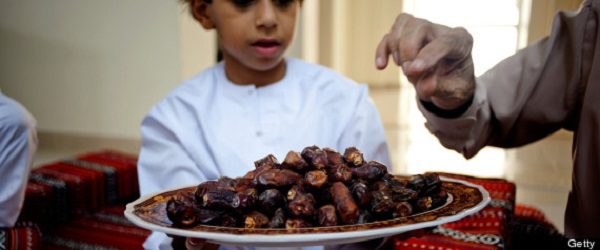 She sat on the sofa and refused. I tried everything I could to convince her, but she kept refusing and refusing and refusing.
You’re not ready, I told her. You’re too young. It’s too long a day. I love that you want to, but not today. Next year!
And that’s when she started to cry. Why are you making me stop when I really want to? And then she said the words that I have said to her so many times. This is between me and Allah. I want to fast. I know I can. So don’t stop me.
And so I wiped her tears, turned to my mother-in-law and said, looks like she is keeping her first fast. The planned half-day fast turned into a unplanned full fast. Then I called her Baba and told him, asking him to stop at Barnes and Noble and bring home a book she had been wanting to give her as a present. And that was the first time my daughter fasted in Ramadan – no fuss, no big ceremony, no party. Just one young girl who wanted to do it.
She was seven years old, just days shy of her eighth birthday.
The late-summer fasts were still pretty long, and I was concerned for her. I had allowed her to do a few half-fasts, as she was excited and clamoring to be part of the fasting crowd in our family. But I wasn’t ready for her stubborn declaration that day that she was going to fast the whole day. Still, after witnessing the determination in her eyes, knowing she was at home on summer break and doing nothing that day and making her to chill on the sofa for the last few hours before breaking fast, I figured it was ok.
This year, where we live in the eastern part of the U.S., it’s supposed to be the longest fasting season of Ramadan. (Click here to get all your Ramadan FAQs answered.) Daughter A is now 11, nearly 12 years old, and she has declared that she wants to do maximum fasting this year – as many as possible. And, with this being the last Ramadan that falls in her summer break, I’m on board to help make this happen (her Baba is not so enthused, thinking she is still too young and the fasts too long) — which means letting her stay up late, sleep in, resting, not planning a lot of daytime activities, good nutrition and sensible parental judgment should she seem weak or overtired at some point.
When a child starts fasting and how he/she approaches fasting (doing one, a few, or all 30 at one go, as some kids do) is an intensely personal decision between parents and children. Islamic guidelines teach us that puberty is the marker for when fasting becomes incumbent upon a person. But I also believe, and again, let me reiterate that this is my belief based on what I’ve read and what I’ve mulled over (so don’t quote me as some scholar or fatwa-giver on these things), that fasting is something to be eased into depending on when Ramadan occurs, how old and healthy the child is, what sort of willpower/determination that child has and parental judgment. It’s not to be a burden.
Much of the Muslim blogosphere lit up last week when an article in The Independent wrote about how a primary school in the U.K. banned its students from fasting. Barclay Primary School in East London sent home a very thoughtful letter to its parents explaining why fasting in Ramadan would be banned this year. Please, read the letter in full, because it shows how much the school thought about its decision, weighing in Islamic law, the long fasting hours, the pre-pubescent state of most of its students and health factors. The letter stated that in previous years, they had witnessed a few students grow ill or faint, thereby being unable to access school curriculum while fasting.
The school advised older students to fast on the weekend.
Some British Muslims objected to the ban (while until now, I’ve not seen any reports surface yet of parents in that school objecting):
The decision has sparked criticism from some members of the Muslim community. A spokesperson from the Muslim Association of Britain told Mail Online that parents had the right over the final choice on fasting.
“We believe that there are sufficient and stringent rules within Islam which allow those who are unable to fast, to break fast,” said the spokesman, who added that the rules included those who were medically ill, too young or too old.
I appreciate what the school is trying to do — lookout for the health and welfare of its students. And I respectfully and delicately suggest — without knowing personally any of the parents or students in that particular school or any of the students who reportedly fell ill or fainted from fasting in the past — that maybe Muslim parents should think longer and harder about when their child should fast. Most likely parents already are. I hate to judge people – that is not my place. But we should be able to exercise our rights of religion while accepting all the things our faith offer us to make things easier. We should be making these decisions, not schools.
I didn’t start fasting until the age of 12 in sixth grade (when Ramadan occurred in May, and the fasts were long and during the school year), and eased into doing a full month over the course of two or so years. I did a lot of fasting on weekends and not on weekdays when I had track practice. These were decisions made by my parents and me. My daughter, fiercely determined to do so, fasted for the first time at the age of seven — a decision I supported after looking at all the parameters. Others in my extended family — their children fasted the entire month from the get-go.
My youngest son is now that same age his sister was when she surprised us with her first full fast. He is a different kid, and the fasts are even longer this year. He is not ready nor even interested to try a full fast. And, we’re not pushing it either. I may ask him if he wants to try a half-day fast, though.
Says Patheos Muslim blogger Hind Makki (who blogs at Hindtrospectives) in a Facebook status update:
Full disclosure: my parents forbade me to even half-fast until I was 13 years old because I ate poorly and was underweight [since birth until I was well into my 20s]. Health took priority over fasting in my very religious and observant household.
I think parents, not the school, should the final word on whether their children should fast. But I understand where the school is coming from because 18+ hours is way too long for full fasts for children aged 11 and younger. Maybe these kids can half-fast when their school day ends – there will still be plenty of daylight left before Maghrib!
I agree. Parents, not the school, should be the final word on whether their children fast. I understand where the school is coming from and respect all the thought they put into the letter they sent school families. The approximately 18+ hour fasts occurring in the UK are challenging for many people, including youth. So let us as parents make the right decisions. Let us guide our children well and teach them the beauty, gratitude and God-consciousness that should hopefully come from fasting. Let us be good examples to them. Let us be aware and take advantage of the ease our faith offers us. Let us remember the mercy and love of Allah. Let us push ourselves and our children, but not hard enough to cause harm.
And forgive me if I’ve made any mistakes in writing this.
Previous Post

June 10, 2015
His Theatrical Debut - On Inclusion and Plays in Autism Land
Next Post
July 11, 2015 The Srebrenica Genocide and the Bosnian War - Never Forget
Browse Our Archives
Select a Category A Global Voice for Autism Autism Awareness Month 2016 Autism Awareness Month 2017 Autism Interlude Hajj and Eid ul Adha Jenin Autism Project Ramadan Three Questions Uncategorized WISE Global Conference
Select a Month November 2018 October 2018 August 2018 June 2018 May 2018 April 2018 March 2018 February 2018 January 2018 December 2017 November 2017 October 2017 September 2017 August 2017 July 2017 June 2017 May 2017 April 2017 March 2017 February 2017 January 2017 December 2016 November 2016 October 2016 September 2016 August 2016 July 2016 June 2016 May 2016 April 2016 March 2016 February 2016 January 2016 December 2015 November 2015 October 2015 September 2015 August 2015 July 2015 June 2015 May 2015 April 2015 March 2015 February 2015 January 2015 December 2014 November 2014 October 2014 September 2014 August 2014 July 2014 June 2014 May 2014 April 2014 March 2014 February 2014 January 2014 December 2013 November 2013 October 2013 September 2013 August 2013 July 2013 June 2013 May 2013 April 2013 March 2013 February 2013 January 2013 December 2012 November 2012 October 2012 September 2012 August 2012 July 2012 June 2012 May 2012 April 2012 March 2012 February 2012 January 2012 December 2011 November 2011 October 2011 September 2011
Follow Us!
TAKE THE
Religious Wisdom Quiz
What were the first man and woman’s names in the Bible?
Select your answer to see how you score.
Jacob and Rachel Samson and Delilah Joseph and Mary Adam and Eve
Related posts from Muslimah Next Door
#MeToo, Muslim Youth & Masajid - Protecting Children...

An Autistic Ramadan - Dhikr in the Dark,...

What Does Being "Unapologetically Muslim" Mean?
6 Ways to Connect With the Hajj
TRENDING AT PATHEOS Muslim

25 Years Later: How Much Has Changed for...
As we approach the 25th anniversary of September 11th, I’ve found myself...

Podcast: Third Spaces & The Rise of Yemeni...
In the latest episode of The Artistic Foodies Podcast, hosts Abbas...

HalalFest Picks: Best 60 Halal Spots for Super...
Back in 2016, I came up with a list of 29...

Unity Is America’s Strength — Division Is Its...
by Hidayatullah Ahsan When Valentina Gomez, a Republican candidate for Congress in...

Zohran Mamdani and New York’s Fight Against Islamophobia
This past June, against all odds, Zohran Mamdani won the Democratic primary...

What the Fourth of July Means to a...
As we mark another Fourth of July, millions of Americans will celebrate...
view all Muslim blogs
Ad-Free & Subscriber Log-In Subscription Support
- About Us
- 2026 Calendar
- Videos
- Podcasts
- Library of World Religions
- Faith In Media Tracker
- Advertise With Us
- Write for Us
- Privacy Policy
- Terms of Service
- Do Not Sell My Data
- Contact Us
- Radiant Digital
- Manage Newsletter Subscriptions
- Unsubscribe From Notifications
- Sitemap
Copyright 2008-2026, Patheos. All rights reserved.
Subscription Support Ad-Free & Subscriber Log-In
Follow Patheos