
BuddhistCatholicContemplativeEvangelicalGeneral ChristianHinduJewishLatter-day SaintMuslimNew VisionsProgressive Christian
Beliefs
- Buddhist
- Catholic
- Contemplative
- Evangelical
- General Christian
- Hindu
- Jewish
- Latter-day Saint
- More Voices
- Muslim
- New Visions
- Pagan
- Progressive Christian
Topics
- Religion News
- Food and Religion
- Sports and Religion
- Religious Art
- Religious Music and Entertainment
- Religious Events
- History and Religion
- Style and Religion
- Politics and Religion
- Women in Religion
- Recreation Outdoors and Religion
- Business Finance and Religion
- Careers Workplace and Religion
- Education and Religion
- Family Parenting and Religion
- Health Fitness and Religion
- Home and Religion
- Relationships and Religion
- Technology and Religion
- Travel and Religion
Columnists
- Buddhist Columnists
- Business Finance and Religion Columnists
- Careers Workplace and Religion Columnists
- Catholic Columnists
- Contemplative Columnists
- Education and Religion Columnists
- Evangelists Columnists
- Family Parenting and Religion Columnists
- General Christian Columnists
- Health Fitness and Religion Columnists
- Hindu Columnists
- History and Religion Columnists
- Home and Religion Columnists
- Jewish Columnists
- More Voices Columnists
- Latter Day Columnists
- Muslim Columnists
- New Visions Columnists
- Nonreligious Columnists
- Pagan Columnists
- Politics and Religion Columnists
- Progressive Columnists
- Recreation Outdoors and Religion Columnists
- Relationships and Religion Columnists
- Religion News Columnists
- Religious Art Columnists
- Religious Events Columnists
- Religious Music and Entertainment Columnists
- Sports and Religion Columnists
- Style and Religion Columnists
- Technology and Religion Columnists
- Travel and Religion Columnists
- Women in Religion Columnists
Resource Library
- 2026 Calendar
- Library of World Religions
- The 100 Most Holy Places on Earth
- Patheos Answers
- Podcasts
- Videos
- Faith Leaders Database
- Anglican Episcopalian
- Bahai
- Baptist
- Buddhism
- Christianity
- Confucianism
- Eastern Orthodoxy
- Hinduism
- Holiness and Pentecostal
- ISKCON
- Islam
- Judaism
- Lutheran
- Methodist
- The Church of Jesus Christ of Latter-day Saints
- New Age
- Paganism
- Presbytarian and Reformed
- Protestantism
- Religion Behind the Scenes
- Roman Catholic
- Scientology
- Shia Islam
- Sikhism
- Sufism
- Sunni Islam
- Taoism
- Zen
- See all religions
Research Tools
 Ad-Free & Subscriber Log-In Subscription Support
Ad-Free & Subscriber Log-In Subscription Support
Follow Patheos 

- Trending:
- Forgiveness
- |
- Marriage
- |
- Consciousness
- |
- Death Penalty
- |
- Election
- |
- Halloween
 Muslimah Next Door
- Home
- Muslim
- The National Defense Authorization Act Passes Again in 2013 – Are You Watching Your Back?
The National Defense Authorization Act Passes Again in 2013 – Are You Watching Your Back?
Last updated on: January 9, 2013 at 5:39 pm by Dilshad Ali
The National Defense Authorization Act Passes Again in 2013 – Are You Watching Your Back? 2013-01-09T17:39:37-04:00 Dilshad Ali
Patheos Explore the world's faith through different perspectives on religion and spirituality! Patheos has the views of the prevalent religions and spiritualities of the world.
 I was cleaning out some kitchen cabinets and came across two business cards from an FBI agent, from when he came a-knocking twice last year on our front door. The first time none of us were home and his card was slid under our door. I’m a fairly unflappable person – pretty much autism-related difficulties are the only things that rattles me.
But the fact that an FBI agent visited our home, well that made me pause. Twelve years ago when I took on the job that launched my career as a journalist covering Muslims in America (as a correspondent covering the Muslim scene in New York for Islam Online, one month before 9/11 happened), I spoke with my father on the phone, excitedly telling him about my new job.
I had become a mom to Lil D about a year prior to 9/11, and autism wasn’t part of my vernacular yet. And, as much as I loved being mother, I was excited to be working again. My dad wasn’t so enthused. Be careful, he warned me. I don’t want you getting singled out. Be careful of your phone calls, your emails, the articles you write, the interviews you do. You’re a good person, he told me. You are born and raised in this country, you have a husband a child, and you are a good journalist. But your work can be twisted against you.
When you’re young and your career is starting again, fatherly advice like that seems a little far-fetched. Come on. Me? Who’d ever come after me? But here we are, twelve years later — mother to three, married nearly 14 years, husband with a good career, a series of good jobs for myself, still covering Muslims in America, connected to many professional and activist Muslim Americans passionate about elevating the position of Muslims in this country.
And, I’m pretty sure I’m on some TSA lists, due to the number of times I’ve been detained and searched at airports. I’m not as out there as my fellow savvy Muslim American colleagues (gathering the ire of Islamophobes), but we are a family who travels internationally and lives fairly publicly, all of which felt quite normal and fine to me – until the FBI came knocking at our door.
The second time the agent came, I was home alone and had a brief conversation of the agent and learned why he was visiting us. It was a minor thing and quickly explained away (I hope). And, it hasn’t stopped me. Worse has happened to others I know, and it hasn’t stopped them, either, from living their lives and fighting for the causes they hold dear.
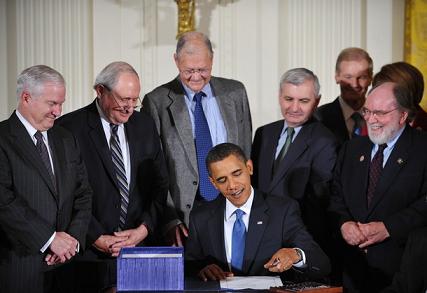
But times are different, and laws are different, and there’s no going back from that. The National Defense Authorization Act of 2013, which I wrote about last year, was again signed by President Obama into law last week for 2013. Zainab Chaudry, vice president of CAIR-MD (Council for American-Islamic Relations chapter in Maryland), wrote about this sobering law, and what it means for all of our civil liberties.
**********
 By Zainab Chaudry
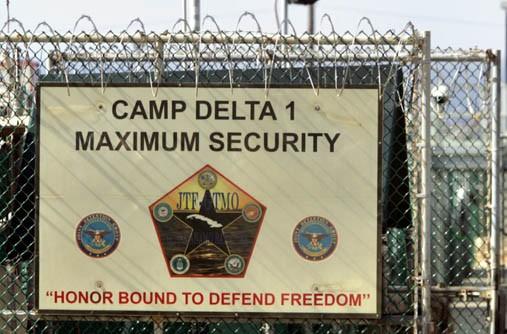
Last Wednesday, President Barack Obama signed the National Defense Authorization Act of 2013 into law despite admitting that he “signed this bill despite having serious reservations with certain provisions that regulate the detention, interrogation and prosecution of suspected terrorists.” [See CAIR’s statement]. It is deeply disappointing that the President has once again allowed Congress to restrict his authority to transfer or prosecute detainees at Guantanamo. ACLU Executive Director Anthony Romero said, “[The President’s] signature means indefinite detention without charge or trial, as well as the illegal military commission, will be extended. He has also jeopardized his ability to close Guantanamo during his presidency.” Although many of the dozens of prisoners have been cleared for transfer, they too will continue to be held without being charged with a crime.
More than eleven years after the tragic attacks of 9/11, Americans are still experiencing its residual effects, as our rights and liberties continue to be unjustly compromised in the interests of national security. Not only were planes hijacked that day, our freedoms, an entire religion, and American’s sense of security were also annexed and expropriated. Our nation has recovered remarkably; but while the spirit of the American people is resilient, we are reminded constantly that our country – though one Nation, under God – is now in fact divided on multiple fronts, does not equally uphold liberty and justice for all of its constituents, and all that for which it stood is no longer defined the same way.
One such reminder manifests in the form of legislation like the National Defense Authorization Act, or NDAA – an act passed by Congress every year to monitor the budget for the U.S. Department of Defense. More than a year ago, on December 31, 2011, President Obama signed into law the NDAA for fiscal year 2012, or H.R. 1540, amidst a fury of controversy over unprecedented power granted to the military to seize suspected terrorists anywhere in the world, including U.S. soil, and imprison them for an unspecified time without due process.
This behemoth, 1,600 page charter, allotting $662 billion of taxpayers’ money towards defense funding, contained controversial, vaguely-worded provisions that allow for detention of persons – including Americans here at home – indefinitely by the military without trial or military tribunals, and contains implications for abuse of presidential powers by significantly broadening the scope of executive authority with a simple pen stroke.
Specifically, sections 1021 and 1022, reminiscent of Draconian laws, authorized indefinite detention by the armed forces without trial – this, despite the Constitution’s sixth amendment which guarantees right to fair trial for all, and the Posse Comitatus Act which limits governments’ use of military intervention to enforce laws.
Implications of the NDAA, its’ potential consequences, and the subsequent erosion of the diligently-drafted laws meant to preserve and uphold the principles and values our country was founded upon, have all elicited vehement protests in communities across America. Unfortunately, the protests appear to be falling on deaf ears.
On December 4, 2012, the U.S. Senate unanimously voted to approve the $631 billion NDAA for fiscal year 2013, except this time with a measure that appeared to attempt to address concerns regarding the indefinite detention specifically of U.S. Citizens and green card holders. The Feinstein Amendment, proposed by Sen. Dianne Feinstein (D-Calif.), in part read: “An authorization to use military force, a declaration of war, or any similar authority shall not authorize the detention without charge or trial of a citizen or lawful permanent resident of the United States apprehended in the United States, unless an Act of Congress expressly authorizes such detention.”
Although it postulated a fair trial only for prisoners who are U.S. citizens or green card holders, the amendment was nonetheless an effort to remedy the Act and make it more Constitutional. However, a Congressional committee eliminated even that provision, thereby making the Act as unconstitutional as last year’s NDAA. When the government can arrest suspects without a warrant, hold them indefinitely without trial or due process, and deny access to legal counseling or admission of bail, we have in effect disqualified the sanctity of the Bill of Rights.
James Madison, credited as the Father of our Constitution, once famously said, “I believe there are more instances of the abridgment of freedom of the people by gradual and silent encroachments by those in power, than by violent and sudden usurpations.” If he were alive today, he would have born witness to the grim, sobering reality his words foreshadowed.
Zainab Chaudry blogs at Zainab Chaudry and is the vice president of CAIR-MD.
National Defense Authorizatio Act
Previous Post

January 7, 2013
Absence Makes the Heart Grow Fonder
Next Post

January 14, 2013 Sometimes All You Can Do is Live in the Moment
Browse Our Archives
Select a Category A Global Voice for Autism Autism Awareness Month 2016 Autism Awareness Month 2017 Autism Interlude Hajj and Eid ul Adha Jenin Autism Project Ramadan Three Questions Uncategorized WISE Global Conference
Select a Month November 2018 October 2018 August 2018 June 2018 May 2018 April 2018 March 2018 February 2018 January 2018 December 2017 November 2017 October 2017 September 2017 August 2017 July 2017 June 2017 May 2017 April 2017 March 2017 February 2017 January 2017 December 2016 November 2016 October 2016 September 2016 August 2016 July 2016 June 2016 May 2016 April 2016 March 2016 February 2016 January 2016 December 2015 November 2015 October 2015 September 2015 August 2015 July 2015 June 2015 May 2015 April 2015 March 2015 February 2015 January 2015 December 2014 November 2014 October 2014 September 2014 August 2014 July 2014 June 2014 May 2014 April 2014 March 2014 February 2014 January 2014 December 2013 November 2013 October 2013 September 2013 August 2013 July 2013 June 2013 May 2013 April 2013 March 2013 February 2013 January 2013 December 2012 November 2012 October 2012 September 2012 August 2012 July 2012 June 2012 May 2012 April 2012 March 2012 February 2012 January 2012 December 2011 November 2011 October 2011 September 2011
Follow Us!
TAKE THE
Religious Wisdom Quiz
Why was crossing the Jordan River particularly difficult for the Israelites at that time?
Select your answer to see how you score.
The river was filled with crocodiles The river was frozen There were no bridges It was at flood stage
Related posts from Muslimah Next Door

Are We Making "Punish a Muslim" Day Bigger...
On Fighting for #DACA, Migrants, Immigrants, Refugees &...

6 Ways to Connect With the Hajj

Enough With the Melania-Headscarf Headlines
TRENDING AT PATHEOS Muslim

25 Years Later: How Much Has Changed for...
As we approach the 25th anniversary of September 11th, I’ve found myself...

Podcast: Third Spaces & The Rise of Yemeni...
In the latest episode of The Artistic Foodies Podcast, hosts Abbas...

HalalFest Picks: Best 60 Halal Spots for Super...
Back in 2016, I came up with a list of 29...

Unity Is America’s Strength — Division Is Its...
by Hidayatullah Ahsan When Valentina Gomez, a Republican candidate for Congress in...

Zohran Mamdani and New York’s Fight Against Islamophobia
This past June, against all odds, Zohran Mamdani won the Democratic primary...

What the Fourth of July Means to a...
As we mark another Fourth of July, millions of Americans will celebrate...
view all Muslim blogs
Ad-Free & Subscriber Log-In Subscription Support
- About Us
- 2026 Calendar
- Videos
- Podcasts
- Library of World Religions
- Faith In Media Tracker
- Advertise With Us
- Write for Us
- Privacy Policy
- Terms of Service
- Do Not Sell My Data
- Contact Us
- Radiant Digital
- Manage Newsletter Subscriptions
- Unsubscribe From Notifications
- Sitemap
Copyright 2008-2026, Patheos. All rights reserved.
Subscription Support Ad-Free & Subscriber Log-In
Follow Patheos