
BuddhistCatholicContemplativeEvangelicalGeneral ChristianHinduJewishLatter-day SaintMuslimNew VisionsProgressive Christian
Beliefs
- Buddhist
- Catholic
- Contemplative
- Evangelical
- General Christian
- Hindu
- Jewish
- Latter-day Saint
- More Voices
- Muslim
- New Visions
- Pagan
- Progressive Christian
Topics
- Religion News
- Food and Religion
- Sports and Religion
- Religious Art
- Religious Music and Entertainment
- Religious Events
- History and Religion
- Style and Religion
- Politics and Religion
- Women in Religion
- Recreation Outdoors and Religion
- Business Finance and Religion
- Careers Workplace and Religion
- Education and Religion
- Family Parenting and Religion
- Health Fitness and Religion
- Home and Religion
- Relationships and Religion
- Technology and Religion
- Travel and Religion
Columnists
- Buddhist Columnists
- Business Finance and Religion Columnists
- Careers Workplace and Religion Columnists
- Catholic Columnists
- Contemplative Columnists
- Education and Religion Columnists
- Evangelists Columnists
- Family Parenting and Religion Columnists
- General Christian Columnists
- Health Fitness and Religion Columnists
- Hindu Columnists
- History and Religion Columnists
- Home and Religion Columnists
- Jewish Columnists
- More Voices Columnists
- Latter Day Columnists
- Muslim Columnists
- New Visions Columnists
- Nonreligious Columnists
- Pagan Columnists
- Politics and Religion Columnists
- Progressive Columnists
- Recreation Outdoors and Religion Columnists
- Relationships and Religion Columnists
- Religion News Columnists
- Religious Art Columnists
- Religious Events Columnists
- Religious Music and Entertainment Columnists
- Sports and Religion Columnists
- Style and Religion Columnists
- Technology and Religion Columnists
- Travel and Religion Columnists
- Women in Religion Columnists
Resource Library
- 2026 Calendar
- Library of World Religions
- The 100 Most Holy Places on Earth
- Patheos Answers
- Podcasts
- Videos
- Faith Leaders Database
- Anglican Episcopalian
- Bahai
- Baptist
- Buddhism
- Christianity
- Confucianism
- Eastern Orthodoxy
- Hinduism
- Holiness and Pentecostal
- ISKCON
- Islam
- Judaism
- Lutheran
- Methodist
- The Church of Jesus Christ of Latter-day Saints
- New Age
- Paganism
- Presbytarian and Reformed
- Protestantism
- Religion Behind the Scenes
- Roman Catholic
- Scientology
- Shia Islam
- Sikhism
- Sufism
- Sunni Islam
- Taoism
- Zen
- See all religions
Research Tools
 Ad-Free & Subscriber Log-In Subscription Support
Ad-Free & Subscriber Log-In Subscription Support
Follow Patheos 

- Trending:
- Forgiveness
- |
- Marriage
- |
- Consciousness
- |
- Death Penalty
- |
- Election
- |
- Halloween
 Muslimah Next Door
- Home
- Muslim
- The Trouble with Anwar al-Awlaki’s Death
The Trouble with Anwar al-Awlaki’s Death
Last updated on: September 30, 2011 at 4:47 pm by Dilshad Ali
The Trouble with Anwar al-Awlaki’s Death 2011-09-30T16:47:11-04:00 Dilshad Ali
Patheos Explore the world's faith through different perspectives on religion and spirituality! Patheos has the views of the prevalent religions and spiritualities of the world.
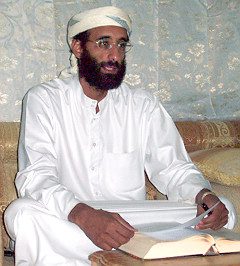 I start with this: Innal illahi wa innal illayhi raji’un – to Allah we belong, and to Him is our eventual Return. I say this because Shaykh Anwar al-Awlaki, who was reportedly killed today in Yemen, was a self-described Muslim.
The reported death of al-Awlaki has put American Muslims in some unchartered territory – whereas when Al Qaeda leader Osama bin Laden was finally killed last spring, there was almost universal relief at his death, but with al-Awlaki, the feelings of American Muslims seem to be varied, which is natural given the legacy of al-Awlaki and how it has changed over the years.
These feelings run the gamut of those who believe his death should not be mourned to those who are alarmed that a fellow American Muslim, however radical he was, was targeted and killed without a trial, to those who are having trouble reconciling their experiences with a pre-9/11 al-Awlaki who gave inspiring internet lectures and lessons on Islamic history and the prophets with the “radical Al Qaeda celebrity” who since 9/11 has called for violence against Americans.
As always, it is dangerous to try and speak for an entire population, or be the voice of the “moderate majority” of American Muslims. I don’t profess to do that here. As evidenced in Patheos’ “Three Questions for American Muslims” project this month, the opinions of American Muslims are at times similar, and often varied, as many who took part in the project said that American Muslims are not a monolith, but rather a diverse population with dynamic and varying viewpoints.
The sobering situation we found ourselves in now stems from the trajectory al-Awlaki traveled in his belief system as well as the nature of how al Awlaki was killed. As CNN.com reported, “The transformation from an imam who originally condemned the 9/11 attacks to a key al Qaeda operative took place over a number of years, as the war on terror expanded and as he found himself caught up in it.”
Al-Awlaki, who was born in New Mexico, lived in the U.S. until he was 7, when his family returned to Yemen. He came back to the U.S. in 1991 and completed two degrees. He was an imam in California and Virginia, and according to the 9/11 Commission Report, he “preached to and interacted with three of the 9/11 hijackers.” Following 9/11, he condemned the attacks, but as the war on terror became more complicated and expanded, his role in it grew. His father, Nasser al-Awlaki, told CNN last year that after his son spent 18 months in prison in Yemen on kidnapping charges, “I detected a change … he began to get away from the mainstream.”
During the past five years, al-Awlaki has been connected to several terrorist plots and acts, including:
- Sharing emails with Maj. Nidal Malik Hasan right before the Army psychiatrist went on a rampage and killed 13 soldiers and wounded numerous others at Fort Hood, Texas
- The stabbing of a member of the British Parliament by a 21-year-old British student, who told police she had watched hundreds of hours of al-Awlaki video
- The attempt by Nigerian Umar Farouk Abdulmutallab, awaiting trial in the U.S., to detonate explosives sewn into his underwear on Northwest Airlines Flight 253 as it landed in Detroit on Christmas day in 2009.
- Calling for the killing of Americans in a 2010 internet video, saying they were the “party of the devil”
It’s a damning list, and so one might think that there would be a general agreement that the death of Al-Awlaki, seen as an Al Qaeda recruiting and fundraising threat, is a good thing. But there are two things that making this an uneasy situation for many American Muslims – that before al-Awlaki turned towards extremist thinking, his lectures and lessons were indeed beautiful, educational, and explained various aspects of the Islamic faith and about the prophets in a truly (positive) inspiring way; and the nature in which he was killed – without due process.
On al-Maghrib Institute Director Yasir Qadri’s Facebook fan page (which is maintained by his fans and students, not by him), a status update about the killing has begat a litany of comments. One commenter said, “I was surprised to find this on the news this morning. The first EVER lecture I heard was given to me by my son and it was Awlaki’s about the creation of Adam, and I would play it EVERY morning driving the kids to school. We all learned so much from that beautiful CD.”
Another commenter on the thread wrote, “Only Allah knows if the allegations against him are true or not … but his killing is unjust. It’s a great loss. His lectures, especially the life of Muhammad and other sahabas, were phenomenal!”
Still another commenter on the thread had this to say: “Many people have something in common with Imam Awlaki and myself – we have all learned from his CD’s, the very first audio I listened to was Lives of the Prophets (AS), by IMAM ANWAR AWLAKI, and since then I have listened to all his CD’s. We have all learned a lot from this man, Insha’Allah, he continues to reap rewards for the good deeds that many of us perform because of his knowledge which he bestowed upon us. … His lectures are available all over the internet, beautiful and well spoken. … He influenced me in many ways, I have his listened to all his lectures, and I have no desire to ‘kill every American i come across.’”
Aziz Poonawalla wrote on his blog, City of Brass, that “American muslims should at least not mourn his passing. The man was a clear and present danger to our muslim community in America, our “public enemy #1″ who labeled all of us “traitors to the Ummah” for our condemnation of violence and terrorism. The burden we have borne because of the actions of those like Hasan who acted on Awlaki’s urging has been a terrible one, and would have continued had Awlaki remained alive.”
I hear what he is saying, but I think many are having trouble with that. And before there is a rush to judgment by those who feel that nothing less than satisfaction over al-Awlaki’s death is un-American (or somehow implicitly supports terrorism), I want to appeal to humanity – when good and bad are mixed up a person, it’s hard not to have mixed feelings when that person passes.
Perhaps if al-Awlaki had faced a trial instead of being hunted down and killed, then there would be more solid closure on this. But as Glenn Greenwald wrote in his Salon.com column,
“What’s most striking about this is not that the U.S. Government has seized and exercised exactly the power the Fifth Amendment was designed to bar (“No person shall be deprived of life without due process of law”), and did so in a way that almost certainly violates core First Amendment protections (questions that will now never be decided in a court of law). What’s most amazing is that its citizens will not merely refrain from objecting, but will stand and cheer the U.S. Government’s new power to assassinate their fellow citizens, far from any battlefield, literally without a shred of due process from the U.S. Government. Many will celebrate the strong, decisive, Tough President’s ability to eradicate the life of Anwar al-Awlaki — including many who just so righteously condemned those Republican audience members as so terribly barbaric and crass for cheering Governor Perry’s execution of scores of serial murderers and rapists — criminals who were at least given a trial and appeals and the other trappings of due process before being killed.”
Going forward, as American Muslims sort out their feelings, I am reminded of how many this month after the 10th anniversary of the attacks of 9/11 said that a new Muslim narrative must be written, and that we are done condemning every attack committed by so-called “Muslims,” that such Muslims don’t speak for the majority, and we should not have to defend ourselves or our faith all the time. I give big thumbs up to that sentiment.
But the killing of American-born Anwar al-Awlaki, an imam who had a lot of good things to say before he started saying bad things, is a tough one.
Poonawalla writes, “The inevitable debate will rage over his citizenship and whether the Obama Administration was justified in an “extrajudicial killing” without due process. I’m not comfortable with the State having the power to kill, but the argument here is far stronger than that for capital punishment, especially since Awlaki removed himself from the reach of the law by hightailing to Yemen’s backwaters, something no one on Death Row can do. As Awlaki renounced his citizenship, and called on other American muslims to wage war against America, there really should be no debate – the man was a literal traitor to his country, and on this point at least the Constitution is quite clear: Article 3, Section 3 and the landmark Supreme Court ruling of Haupt vs. the United States (1947). “
Poonawalla makes sense, Greenwald makes sense, and the feelings of all those commenters on Qadhi’s Facebook page make sense too. Like I said, it’s a tough one.
Previous Post

September 28, 2011
Three Questions for American Muslims: Asma T. Uddin
Next Post
October 4, 2011 A Prayer for Nose Blowing
Browse Our Archives
Select a Category A Global Voice for Autism Autism Awareness Month 2016 Autism Awareness Month 2017 Autism Interlude Hajj and Eid ul Adha Jenin Autism Project Ramadan Three Questions Uncategorized WISE Global Conference
Select a Month November 2018 October 2018 August 2018 June 2018 May 2018 April 2018 March 2018 February 2018 January 2018 December 2017 November 2017 October 2017 September 2017 August 2017 July 2017 June 2017 May 2017 April 2017 March 2017 February 2017 January 2017 December 2016 November 2016 October 2016 September 2016 August 2016 July 2016 June 2016 May 2016 April 2016 March 2016 February 2016 January 2016 December 2015 November 2015 October 2015 September 2015 August 2015 July 2015 June 2015 May 2015 April 2015 March 2015 February 2015 January 2015 December 2014 November 2014 October 2014 September 2014 August 2014 July 2014 June 2014 May 2014 April 2014 March 2014 February 2014 January 2014 December 2013 November 2013 October 2013 September 2013 August 2013 July 2013 June 2013 May 2013 April 2013 March 2013 February 2013 January 2013 December 2012 November 2012 October 2012 September 2012 August 2012 July 2012 June 2012 May 2012 April 2012 March 2012 February 2012 January 2012 December 2011 November 2011 October 2011 September 2011
Follow Us!
TAKE THE
Religious Wisdom Quiz
I was beautiful and cunning, leading a rebellion against my father by stealing the hearts of Israel. Who am I?
Select your answer to see how you score.
Amnon Adonijah Absalom Solomon
Related posts from Muslimah Next Door
Derailed by My Memories in Autism Land
#MeToo, Muslim Youth & Masajid - Protecting Children...


The Year of 25 (Give or Take) Steps...
TRENDING AT PATHEOS Muslim

25 Years Later: How Much Has Changed for...
As we approach the 25th anniversary of September 11th, I’ve found myself...

Podcast: Third Spaces & The Rise of Yemeni...
In the latest episode of The Artistic Foodies Podcast, hosts Abbas...

HalalFest Picks: Best 60 Halal Spots for Super...
Back in 2016, I came up with a list of 29...

Unity Is America’s Strength — Division Is Its...
by Hidayatullah Ahsan When Valentina Gomez, a Republican candidate for Congress in...

Zohran Mamdani and New York’s Fight Against Islamophobia
This past June, against all odds, Zohran Mamdani won the Democratic primary...

What the Fourth of July Means to a...
As we mark another Fourth of July, millions of Americans will celebrate...
view all Muslim blogs
Ad-Free & Subscriber Log-In Subscription Support
- About Us
- 2026 Calendar
- Videos
- Podcasts
- Library of World Religions
- Faith In Media Tracker
- Advertise With Us
- Write for Us
- Privacy Policy
- Terms of Service
- Do Not Sell My Data
- Contact Us
- Radiant Digital
- Manage Newsletter Subscriptions
- Unsubscribe From Notifications
- Sitemap
Copyright 2008-2026, Patheos. All rights reserved.
Subscription Support Ad-Free & Subscriber Log-In
Follow Patheos