
BuddhistCatholicContemplativeEvangelicalGeneral ChristianHinduJewishLatter-day SaintMuslimNew VisionsProgressive Christian
Beliefs
- Buddhist
- Catholic
- Contemplative
- Evangelical
- General Christian
- Hindu
- Jewish
- Latter-day Saint
- More Voices
- Muslim
- New Visions
- Pagan
- Progressive Christian
Topics
- Religion News
- Food and Religion
- Sports and Religion
- Religious Art
- Religious Music and Entertainment
- Religious Events
- History and Religion
- Style and Religion
- Politics and Religion
- Women in Religion
- Recreation Outdoors and Religion
- Business Finance and Religion
- Careers Workplace and Religion
- Education and Religion
- Family Parenting and Religion
- Health Fitness and Religion
- Home and Religion
- Relationships and Religion
- Technology and Religion
- Travel and Religion
Columnists
- Buddhist Columnists
- Business Finance and Religion Columnists
- Careers Workplace and Religion Columnists
- Catholic Columnists
- Contemplative Columnists
- Education and Religion Columnists
- Evangelists Columnists
- Family Parenting and Religion Columnists
- General Christian Columnists
- Health Fitness and Religion Columnists
- Hindu Columnists
- History and Religion Columnists
- Home and Religion Columnists
- Jewish Columnists
- More Voices Columnists
- Latter Day Columnists
- Muslim Columnists
- New Visions Columnists
- Nonreligious Columnists
- Pagan Columnists
- Politics and Religion Columnists
- Progressive Columnists
- Recreation Outdoors and Religion Columnists
- Relationships and Religion Columnists
- Religion News Columnists
- Religious Art Columnists
- Religious Events Columnists
- Religious Music and Entertainment Columnists
- Sports and Religion Columnists
- Style and Religion Columnists
- Technology and Religion Columnists
- Travel and Religion Columnists
- Women in Religion Columnists
Resource Library
- 2026 Calendar
- Library of World Religions
- The 100 Most Holy Places on Earth
- Patheos Answers
- Podcasts
- Videos
- Faith Leaders Database
- Anglican Episcopalian
- Bahai
- Baptist
- Buddhism
- Christianity
- Confucianism
- Eastern Orthodoxy
- Hinduism
- Holiness and Pentecostal
- ISKCON
- Islam
- Judaism
- Lutheran
- Methodist
- The Church of Jesus Christ of Latter-day Saints
- New Age
- Paganism
- Presbytarian and Reformed
- Protestantism
- Religion Behind the Scenes
- Roman Catholic
- Scientology
- Shia Islam
- Sikhism
- Sufism
- Sunni Islam
- Taoism
- Zen
- See all religions
Research Tools
 Ad-Free & Subscriber Log-In Subscription Support
Ad-Free & Subscriber Log-In Subscription Support
Follow Patheos 

- Trending:
- Forgiveness
- |
- Marriage
- |
- Consciousness
- |
- Death Penalty
- |
- Election
- |
- Halloween

- Home
- Catholic
- Women in Religion
- Abortion in the Didache: forbidden by the Apostles
Abortion in the Didache: forbidden by the Apostles
Last updated on: July 6, 2026 at 12:21 pm by Lois Kerschen
Abortion in the Didache: forbidden by the Apostles 2026-07-06T12:21:04-07:00 Lois Kerschen
Patheos Explore the world's faith through different perspectives on religion and spirituality! Patheos has the views of the prevalent religions and spiritualities of the world.
An oft-used argument of those desperate to justify abortion is that there is no mention of abortion in the Bible (which is not totally true). A good rebuttal to this flawed argument is that, while there is no actual use of the word “abortion” in the Bible, there is a specific ruling on abortion in the Didache, the first recorded early Church “catechism.”
The Didache was known as the “Teaching of the Twelve Apostles.”
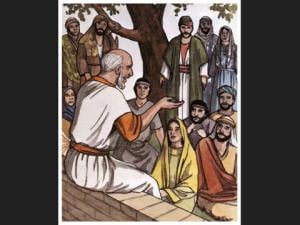
The documents in it were written at the same time as the books in the Bible, so about 70 A.D. on into the 2nd century, when some of the people who knew Jesus, or at least His apostles and the disciples, were still alive. Originally, these documents were circulated among early Christian communities with the rest of the apostolic letters and gospels.
This collection of sacred instruction was, however, divided when the New Testament was compiled by the Council of Rome in AD 382 under Pope Damasus I. It was decided that the Bible would consist solely of theology and history; that is, canonical and liturgical matters. The documents that went into the Didache were recognized as “extra-canonical” as an early guide to church practices and organization. This choice was later affirmed by regional synods at the Councils of Hippo (AD 393) and Carthage (AD 397).
Good News Productions International and College Press Publishing
The Didache is more specific than the Bible on practical matters. According to one translation, it states, “…thou shalt not procure abortion, nor commit infanticide.” Another translation of the same text reads, “…you shall not murder a child by abortion nor kill that which is begotten.” So, while not technically Biblical, the Church’s condemnation of abortion nonetheless comes directly from the teachings of the Apostles and early Church.
What the Bible Says
Even without the word “abortion” in the Bible, there are multiple references to life in the womb and its sanctity. Logically then, abortion is killing and a violation of human rights.
The most commonly cited Bible verse for this defense is Jeremiah 1:5: “Before I formed you in the womb I knew you, before you were born. I set you apart.”
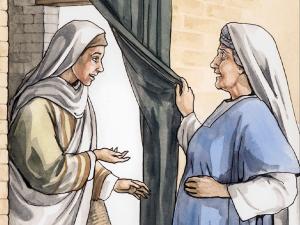
Also indicative of the importance and personhood of life in the womb is Luke 1:41-44: “When Elizabeth heard Mary’s greeting, the baby leaped in her womb, and Elizabeth was filled with the Holy Spirit. In a loud voice she exclaimed: ‘Blessed are you among women, and blessed is the child you will bear! But why am I so favored, that the mother of my Lord should come to me? As soon as the sound of your greeting reached my ears, the baby in my womb [John the Baptist] leaped for joy.’”
Good News Productions International and College Press Publishing
In this passage, it is clear that Mary is not pregnant with just a fetus that will become human at birth, not just a pregnant woman who does or does not want to become a mother, but someone who is already a mother and carrying a living child who can be sensed and recognized as the unique person of Jesus.
See also Exodus 21:22-25, Numbers 5:11-31, Psalm 139: 13-16, Galatians 1:15, Isaiah 49:1, Judges 49:1, and Luke 1:15 for further Biblical affirmations about prenatal life.
A Seminarian Should Study the Didache
Currently, there is a Democratic candidate for the US Senate in Texas named James Talarico. He is a State Representative and a Presbyterian seminarian. He touts his Christian faith, but he is pro-abortion. He is one of those who twists logic and justifies his stance with the excuse that there is no mention of abortion in the Bible, as if that meant that anything not specifically named in the Bible is in the “anything goes” category. He needs to be reminded of the Didache.
While much has changed over the centuries such that our liturgy and customs are not exactly the same as those from 18 or 19 centuries ago, the Didache remains a window into the teachings of the apostles. Further, it is known that later church documents heavily copied the Didache. So, its instructions on foundational matters remain valid.
Trust the steadfastness of the Church
There is much discussion lately about the influx of new converts to Catholicism. Among the reasons for these conversions is the appeal of the Church’s ancient stability. Christ established His church on the principles He taught His disciples and with the command to do as He did. For that reason, the Church has not wavered, and cannot waver, from the teachings of Christ.
Vatican City. Photo by Victor Malyushev on Unsplash
This is the beauty of Catholicism. Christ said do this and don’t do that, and we have stuck to his rules. For 2,000 years. We haven’t changed the foundational teachings. We know what is true, and that is very appealing in a world of fake news and false advertising.
That does not mean that we cannot grow in our understanding of Christ’s teachings. As I discussed in a previous blog, the development of doctrine doesn’t mean changing doctrine or creating new interpretations of God’s Word. See: The Development of Doctrine: Incremental Understanding
Our critics say that “stubbornness” is what’s wrong with the Catholic Church. They say we don’t know how to change with the times, as if politics or technology made a difference in morality. But it doesn’t. Morality does not change. God has never come back to say that the rules have been altered. There has never been a new Moses who was given an edited version of the Ten Commandments. Humans have not become smarter than God (though they often think they have), so they cannot, or should not, write their own rules.
Instead, we should rely on and trust the Catholic Church, the true, continuous, consistent faith for 2000 years. Steady as the rock upon which Christ built His Church. If the apostles said that abortion was wrong then, it is still wrong now.
History and Religion
Previous Post

May 26, 2026
Introducing the Consistent Life Ethic at Your Church
Next Post

September 12, 2026 Changing the Culture's View of Motherhood
Browse Our Archives
Select a Category Patheos Catholic Uncategorized
Select a Month October 2026 September 2026 July 2026 May 2026 December 2025 November 2025 September 2025 August 2025 July 2025 June 2025 May 2025 April 2025 March 2025 February 2025 August 2024 July 2024 June 2024 May 2024 April 2024 March 2024 February 2024 January 2024 November 2023 September 2023 July 2023 June 2023 February 2023 September 2022 August 2022 July 2022 June 2022 May 2022 April 2022 March 2022 February 2022 January 2022 December 2021 November 2021 October 2021 September 2021 August 2021
Follow Us!
TAKE THE
Religious Wisdom Quiz
What does the Bible say about "bearing each other's burdens"?
Select your answer to see how you score.
Help each other Complain Ignore troubles Only help yourself
Related posts from Musings From the Pew
Why I Choose the Eucharist Over the Sermon

Changing the Culture's View of Motherhood

Introducing the Consistent Life Ethic at Your Church

The Shy Pro-lifer: Little Effort, Big Impact
TRENDING AT PATHEOS Catholic

Creation, Preservation, and Teleology in Catholic Theology
As I write this, it is very early Monday morning. Like millions...

The Parable Of The Sower And The Word...
One of Christ’s most famous parables is that of the sower who...

Rejecting Doom: Christian Hope And Human Action
Christianity is a religion of hope. We are to have hope and...

Why I Choose the Eucharist Over the Sermon
Choose the Eucharist, Not the Sermon What are we supposed to get...

5 Design Elements Found in Spiritually Rooted Homes
Putting Spirituality Into Home Decor Our homes are more than our living...

Credo: A Story of God Told with the...
About 10 years ago, I began to imagine a personal "Credo" that...
view all Catholic blogs
Ad-Free & Subscriber Log-In Subscription Support
- About Us
- 2026 Calendar
- Videos
- Podcasts
- Library of World Religions
- Faith In Media Tracker
- Advertise With Us
- Write for Us
- Privacy Policy
- Terms of Service
- Do Not Sell My Data
- Contact Us
- Radiant Digital
- Manage Newsletter Subscriptions
- Unsubscribe From Notifications
- Sitemap
Copyright 2008-2026, Patheos. All rights reserved.
Subscription Support Ad-Free & Subscriber Log-In
Follow Patheos