
BuddhistCatholicContemplativeEvangelicalGeneral ChristianHinduJewishLatter-day SaintMuslimNew VisionsProgressive Christian
Beliefs
- Buddhist
- Catholic
- Contemplative
- Evangelical
- General Christian
- Hindu
- Jewish
- Latter-day Saint
- More Voices
- Muslim
- New Visions
- Pagan
- Progressive Christian
Topics
- Religion News
- Food and Religion
- Sports and Religion
- Religious Art
- Religious Music and Entertainment
- Religious Events
- History and Religion
- Style and Religion
- Politics and Religion
- Women in Religion
- Recreation Outdoors and Religion
- Business Finance and Religion
- Careers Workplace and Religion
- Education and Religion
- Family Parenting and Religion
- Health Fitness and Religion
- Home and Religion
- Relationships and Religion
- Technology and Religion
- Travel and Religion
Columnists
- Buddhist Columnists
- Business Finance and Religion Columnists
- Careers Workplace and Religion Columnists
- Catholic Columnists
- Contemplative Columnists
- Education and Religion Columnists
- Evangelists Columnists
- Family Parenting and Religion Columnists
- General Christian Columnists
- Health Fitness and Religion Columnists
- Hindu Columnists
- History and Religion Columnists
- Home and Religion Columnists
- Jewish Columnists
- More Voices Columnists
- Latter Day Columnists
- Muslim Columnists
- New Visions Columnists
- Nonreligious Columnists
- Pagan Columnists
- Politics and Religion Columnists
- Progressive Columnists
- Recreation Outdoors and Religion Columnists
- Relationships and Religion Columnists
- Religion News Columnists
- Religious Art Columnists
- Religious Events Columnists
- Religious Music and Entertainment Columnists
- Sports and Religion Columnists
- Style and Religion Columnists
- Technology and Religion Columnists
- Travel and Religion Columnists
- Women in Religion Columnists
Resource Library
- 2026 Calendar
- Library of World Religions
- The 100 Most Holy Places on Earth
- Patheos Answers
- Podcasts
- Videos
- Faith Leaders Database
- Anglican Episcopalian
- Bahai
- Baptist
- Buddhism
- Christianity
- Confucianism
- Eastern Orthodoxy
- Hinduism
- Holiness and Pentecostal
- ISKCON
- Islam
- Judaism
- Lutheran
- Methodist
- The Church of Jesus Christ of Latter-day Saints
- New Age
- Paganism
- Presbytarian and Reformed
- Protestantism
- Religion Behind the Scenes
- Roman Catholic
- Scientology
- Shia Islam
- Sikhism
- Sufism
- Sunni Islam
- Taoism
- Zen
- See all religions
Research Tools
 Ad-Free & Subscriber Log-In Subscription Support
Ad-Free & Subscriber Log-In Subscription Support
Follow Patheos 

- Trending:
- Forgiveness
- |
- Marriage
- |
- Consciousness
- |
- Death Penalty
- |
- Election
- |
- Halloween

- Home
- Catholic
- Women in Religion
- The Crucifixion and the Resurrection: One Requires the Other
The Crucifixion and the Resurrection: One Requires the Other
Last updated on: April 19, 2025 at 8:24 pm by Lois Kerschen
The Crucifixion and the Resurrection: One Requires the Other 2025-04-19T20:24:43-07:00 Lois Kerschen
Patheos Explore the world's faith through different perspectives on religion and spirituality! Patheos has the views of the prevalent religions and spiritualities of the world.
The Crucifixion and the Resurrection are often thought about separately as very different subjects, except during Holy Week when we are reminded that Christ’s promise to rise on the third day was fulfilled.
Wait, though: aren’t Good Friday and Easter Sunday just two days apart? Yes, but they and Holy Saturday are Days One, Two, and Three of Christ’s suffering, death, and resurrection. That’s an important point because the connection of the three days indicates that the Crucifixion and the Resurrection are inextricably tied together.
[Note: The Easter Tridium actually begins on Holy Thursday evening with the Last Supper and continues until the evening of Easter Sunday.]
Focus on Sin or Salvation?
When I was in graduate school, our Newman Club invited a Baptist minister to speak to us. He carried on, and carried on, about the Crucifixion. His talk was in the vein of Jonathan Edward’s “Sinners in the Hands of an Angry God” in that he emphasized how much Jesus had suffered for us and how unworthy we are for such effort.
At the end of this presentation, one of the students asked: “But what about the Resurrection?” Others then chimed in saying that the Crucifixion was, indeed, a sacrifice that we must appreciate and reflect upon, but there was no point to the Crucifixion if the Resurrection didn’t follow. Christ’s divinity was not verified, and our salvation was not guaranteed, without the Resurrection.
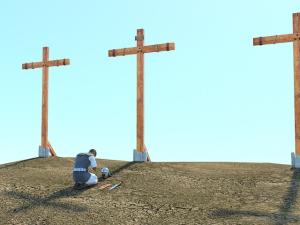
Image by Kingrise from Pixabay
The minister countered that we should concentrate on contemplating our sins and being remorseful. The students, though, were focused on the hope of the Resurrection. They said that Christ came to bring us joy, not a life of penance and gloom.
I agree with the students. Heaven is a place of happiness and beauty, so shouldn’t we have our eyes on that prize and not drag ourselves into despair over our sins? After all, Christ atoned for original sin and initiated a means of forgiveness for further errant behavior through the sacrament of reconciliation. We can deal with sin without wallowing in remorse.
Of course, we should be aware that sin hurts God and try to avoid it, but we know we can seek forgiveness when we transgress. Our unworthiness became a non-issue when Christ took on human form. With God as our Father and Christ as our brother, we have value as members of the same family.
The Resurrection Made the Difference
Yes, the crucifixion of Jesus was the result of sin and evil, but the resurrection was the result of God’s love. To focus on the suffering and death of Christ is to forget the all-important next step: Christ died, but then He rose again, and that made all the difference.
Christ was not just another prophet. He was not a false Messiah. He was truly the long-awaited Messiah, the human son of God who proved His dual nature by rising from the dead to live again in divine glory with the Father and Holy Spirit.
The agony of the Crucifixion was replaced by the joy of Resurrection, just like the law of Moses was fulfilled by Christ such that the new law of Christian love guides us now.
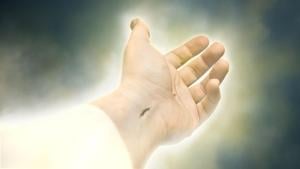
Image by Treharris from Pixabay
The Resurrection and its testament to hope promises that life can turn around from your worst days to your best days, just as Christ turned his worst day on Good Friday into the glorious day of Easter Sunday. Good can triumph over evil just as the Resurrection triumphed over the horrors of Good Friday.
The Resurrection transformed the Crucifixion in so many ways, even changing the image of the cross from what was once a tool of hate, humiliation, suffering, and death into a symbol of love, life, redemption, and hope. The cross is a reminder of the Crucifixion, but it also carries the Resurrection’s promise of eternal life.
The Resurrection Validates Hope
Another message of the Crucifixion to Resurrection journey is that one shouldn’t despair over one’s difficulties but see them as preparation for a positive change, as the darkest hour just before dawn.
Just as the torments of the crucifixion preceded the resurrection, God can use the suffering or challenges in our lives to bring about good. When we fast and do penance in Lent it is with the knowledge of the good things to come. When we face difficulties, the Resurrection assures us that there is hope for a better tomorrow, one built on the strength and knowledge we have acquired during the tough times.
The lesson of the Easter Tridium is perhaps most applicable to people who contemplate suicide. They have lost all hope that life can be made bearable, and they feel very alone in their suffering. Jesus can certainly understand their feelings since He also felt abandoned on Good Friday, crying out from the cross: “My God, my God, why have you forsaken me?”
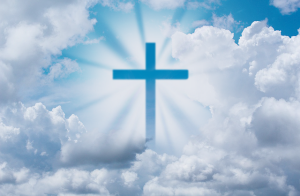
Image by Jeff Jacobs from Pixabay
Nobody has had a worse day than Jesus did on Good Friday. However, then came the joy and glory of Easter Sunday just two days later! Jesus may have momentarily questioned God’s presence, but he maintained faith and surrendered to God: “Father, into Your hands, I commend my spirit.”
Those in despair should follow Christ’s example. Believe that better days will come if you place yourself in God’s hands, if you surrender your life to God. Your faith will be rewarded just as the Good Thief’s faith was rewarded. He asked Jesus: “Lord, remember me when you come into your kingdom,” and Jesus told the thief that he would, that very day, be with Christ in Paradise.
Three Highly Meaningful Days
During the Easter Tridium, we spend a great deal of time in prayer at all the services with good reason: there is so much to contemplate about the connections and the meanings of these important days. Most importantly, I think, is understanding that the purpose of the Crucifixion was to get to the Resurrection. Everything — our salvation, Christ’s divinity, our relationship with God’s love and hope — depended on the one leading to the other.
General Christian
Religious Events
Previous Post
March 26, 2025
God’s Existence Is the Source of Our Well-Being
Next Post
May 16, 2025 Papal Movies: Fictional and Nonfictional Popes in Film
Browse Our Archives
Select a Category Patheos Catholic Uncategorized
Select a Month October 2026 September 2026 July 2026 May 2026 December 2025 November 2025 September 2025 August 2025 July 2025 June 2025 May 2025 April 2025 March 2025 February 2025 August 2024 July 2024 June 2024 May 2024 April 2024 March 2024 February 2024 January 2024 November 2023 September 2023 July 2023 June 2023 February 2023 September 2022 August 2022 July 2022 June 2022 May 2022 April 2022 March 2022 February 2022 January 2022 December 2021 November 2021 October 2021 September 2021 August 2021
Follow Us!
TAKE THE
Religious Wisdom Quiz
According to 2 Peter, what are believers partakers of?
Select your answer to see how you score.
Christ's sufferings Eternal glory The divine nature God's kingdom
Related posts from Musings From the Pew
Why I Choose the Eucharist Over the Sermon

Changing the Culture's View of Motherhood
Abortion in the Didache: forbidden by the Apostles

Introducing the Consistent Life Ethic at Your Church
TRENDING AT PATHEOS Catholic

Rejecting Doom: Christian Hope And Human Action
Christianity is a religion of hope. We are to have hope and...

It’s What Comes From Within Which Matters
One of the most difficult things for us to understand is why...

Why I Choose the Eucharist Over the Sermon
Choose the Eucharist, Not the Sermon What are we supposed to get...

5 Design Elements Found in Spiritually Rooted Homes
Putting Spirituality Into Home Decor Our homes are more than our living...

Credo: A Story of God Told with the...
About 10 years ago, I began to imagine a personal "Credo" that...

The Anatomy of Divine Revelation in Catholic Thought
The claim that God has made Himself known to human beings is...
view all Catholic blogs
Ad-Free & Subscriber Log-In Subscription Support
- About Us
- 2026 Calendar
- Videos
- Podcasts
- Library of World Religions
- Faith In Media Tracker
- Advertise With Us
- Write for Us
- Privacy Policy
- Terms of Service
- Do Not Sell My Data
- Contact Us
- Radiant Digital
- Manage Newsletter Subscriptions
- Unsubscribe From Notifications
- Sitemap
Copyright 2008-2026, Patheos. All rights reserved.
Subscription Support Ad-Free & Subscriber Log-In
Follow Patheos