
BuddhistCatholicContemplativeEvangelicalGeneral ChristianHinduJewishLatter-day SaintMuslimNew VisionsProgressive Christian
Beliefs
- Buddhist
- Catholic
- Contemplative
- Evangelical
- General Christian
- Hindu
- Jewish
- Latter-day Saint
- More Voices
- Muslim
- New Visions
- Pagan
- Progressive Christian
Topics
- Religion News
- Food and Religion
- Sports and Religion
- Religious Art
- Religious Music and Entertainment
- Religious Events
- History and Religion
- Style and Religion
- Politics and Religion
- Women in Religion
- Recreation Outdoors and Religion
- Business Finance and Religion
- Careers Workplace and Religion
- Education and Religion
- Family Parenting and Religion
- Health Fitness and Religion
- Home and Religion
- Relationships and Religion
- Technology and Religion
- Travel and Religion
Columnists
- Buddhist Columnists
- Business Finance and Religion Columnists
- Careers Workplace and Religion Columnists
- Catholic Columnists
- Contemplative Columnists
- Education and Religion Columnists
- Evangelists Columnists
- Family Parenting and Religion Columnists
- General Christian Columnists
- Health Fitness and Religion Columnists
- Hindu Columnists
- History and Religion Columnists
- Home and Religion Columnists
- Jewish Columnists
- More Voices Columnists
- Latter Day Columnists
- Muslim Columnists
- New Visions Columnists
- Nonreligious Columnists
- Pagan Columnists
- Politics and Religion Columnists
- Progressive Columnists
- Recreation Outdoors and Religion Columnists
- Relationships and Religion Columnists
- Religion News Columnists
- Religious Art Columnists
- Religious Events Columnists
- Religious Music and Entertainment Columnists
- Sports and Religion Columnists
- Style and Religion Columnists
- Technology and Religion Columnists
- Travel and Religion Columnists
- Women in Religion Columnists
Resource Library
- 2026 Calendar
- Library of World Religions
- The 100 Most Holy Places on Earth
- Patheos Answers
- Podcasts
- Videos
- Faith Leaders Database
- Anglican Episcopalian
- Bahai
- Baptist
- Buddhism
- Christianity
- Confucianism
- Eastern Orthodoxy
- Hinduism
- Holiness and Pentecostal
- ISKCON
- Islam
- Judaism
- Lutheran
- Methodist
- The Church of Jesus Christ of Latter-day Saints
- New Age
- Paganism
- Presbytarian and Reformed
- Protestantism
- Religion Behind the Scenes
- Roman Catholic
- Scientology
- Shia Islam
- Sikhism
- Sufism
- Sunni Islam
- Taoism
- Zen
- See all religions
Research Tools
 Ad-Free & Subscriber Log-In Subscription Support
Ad-Free & Subscriber Log-In Subscription Support
Follow Patheos 

- Trending:
- Forgiveness
- |
- Marriage
- |
- Consciousness
- |
- Death Penalty
- |
- Election
- |
- Halloween

- Home
- Catholic
- Women in Religion
- The Development of Doctrine: Incremental Understanding
The Development of Doctrine: Incremental Understanding
Last updated on: February 22, 2022 at 10:40 pm by Lois Kerschen
The Development of Doctrine: Incremental Understanding 2022-02-22T22:40:30-08:00 Lois Kerschen
Patheos Explore the world's faith through different perspectives on religion and spirituality! Patheos has the views of the prevalent religions and spiritualities of the world.
Why do people join a Bible study? Obviously, to learn more about the teachings of the Bible! Why do theologians continuously study the Bible? Same answer: to learn more about the teachings of the Bible!
Gee, after nearly 2000 years of New Testament study, and several hundred years of Old Testament study before that (which continues today), haven’t we just about exhausted all there is to learn?
In a word: No! That’s not only because we can never fully understand God, but also because, with each generation, we evolve in our ability to understand God’s Word, building our knowledge on the scholarship of those before us.
St. John Henry Newman
The concept of an evolution of theological understanding was explained by St. John Henry Newman, an Anglican priest who converted to Catholicism, when he published An Essay on the Development of Christian Doctrine in 1845.
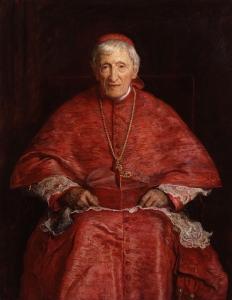
Image by WikiImages from Pixabay
Considered one of the most important theological works ever written, Cardinal Newman’s essay originated the term “development of doctrine” and inspired a branch of theology that influenced Vatican II.
By “development” Newman meant “growth.” That is, the Church’s understanding of Christ’s many profound teachings has grown in stages. It takes time, maybe millennia, to drill into their depths.
Protestants believe that their Reformation was a doctrinal development that returned the Church to its roots, eliminating corrupted or invented practices. However, Newman believed that Catholic practices have always evolved in accordance with the Scriptures.
Newman proved that by tracing them to their origins. He also argued that Catholic doctrines were developed from the application of reason to the study of Scriptural truths, which resulted in additional revelations and understanding.
Dei Verbum [Word of God], the Second Vatican Council’s Dogmatic Constitution on Divine Revelation, is one of the principal documents of the Second Vatican Council. Newman’s influence is seen in these lines:
″[T]he understanding of the things and words handed down grows, through the contemplation and study of believers, … (which) tends continually towards the fullness of divine truth.”
Keep Studying
With something as complex as the Bible, you can’t expect to grasp it all in one reading. Maybe not even in a thousand readings. You have to keep studying, keep learning new facets of God’s nature.
Think about it—the writings of ancient Greeks and Shakespeare are still worth plumbing hundreds of years later because each new generation applies its own worldview to them. If the scholarship on these authors continues to grow, then doesn’t it make sense that our study of Scripture would likewise continue to grow?

Image by StockSnap from Pixabay
My Bible study teacher explained Newman’s principle to us in brilliantly simple terms. He said that the history and process of divine revelation should be viewed as evolutionary; that is, just as a child learns in steps, so we must learn about God in increments.
Our teacher added that, as salvation history shows, God’s revelation has a system and method. So, when it was time to prepare ignorant humans for the coming of Christ, God started with the basics.
God taught Abraham, born into a world of idols, that there was only one God. The history of Judaism/Christianity proceeded from there. God talked to prophets and gave the commandments to Moses, rules and traditions developed and then Jesus came.
It took nearly two thousand years for God to give us the instruction book. We don’t know how long it will take the Holy Spirit to inspire our understanding of the book.
Increased Understanding, Not Change
Let’s be clear: by the development of doctrine, we don’t mean changing doctrine. We are talking about increasing our understanding of the ancient roots of God’s Word. Yet some people want to apply their own ideas as a new “interpretation” of the meaning.
This is an error known as the “evolution of dogmas.” We hear it a lot as people try to justify abortion, relaxed sexual mores, etc. as modern replacements for what they consider outdated religious constrictions. But morality doesn’t change with time.
Orthodox religions reject doctrinal development. They believe that all we need to know was given to us at the founding of the Church, so nothing should change. Well, true, nothing in the Bible should change or be eliminated or rejected.
However, our understanding of what the Bible is trying to tell us changes over time as we Christians mature in our faith. Sometimes it’s a long wait for the light bulb to turn on in our heads, and we say, “Oh, now I get it!”
God’s children keep taking those baby steps toward understanding all that God wants of us. Sometimes we fall and refuse to get up again, sometimes we seem to take steps backward, but over time, God’s Church is learning and growing.
Previous Post

February 19, 2022
Palliative Care: The Way to Die
Next Post
February 25, 2022 Men at Mass: A Disturbing Absence
Browse Our Archives
Select a Category Patheos Catholic Uncategorized
Select a Month October 2026 September 2026 July 2026 May 2026 December 2025 November 2025 September 2025 August 2025 July 2025 June 2025 May 2025 April 2025 March 2025 February 2025 August 2024 July 2024 June 2024 May 2024 April 2024 March 2024 February 2024 January 2024 November 2023 September 2023 July 2023 June 2023 February 2023 September 2022 August 2022 July 2022 June 2022 May 2022 April 2022 March 2022 February 2022 January 2022 December 2021 November 2021 October 2021 September 2021 August 2021
Follow Us!
TAKE THE
Religious Wisdom Quiz
According to 2 Peter, what are believers partakers of?
Select your answer to see how you score.
Christ's sufferings Eternal glory The divine nature God's kingdom
Related posts from Musings From the Pew
Why I Choose the Eucharist Over the Sermon

Changing the Culture's View of Motherhood

Abortion in the Didache: forbidden by the Apostles

Introducing the Consistent Life Ethic at Your Church
TRENDING AT PATHEOS Catholic

Rejecting Doom: Christian Hope And Human Action
Christianity is a religion of hope. We are to have hope and...

It’s What Comes From Within Which Matters
One of the most difficult things for us to understand is why...

Why I Choose the Eucharist Over the Sermon
Choose the Eucharist, Not the Sermon What are we supposed to get...

5 Design Elements Found in Spiritually Rooted Homes
Putting Spirituality Into Home Decor Our homes are more than our living...

Credo: A Story of God Told with the...
About 10 years ago, I began to imagine a personal "Credo" that...

The Anatomy of Divine Revelation in Catholic Thought
The claim that God has made Himself known to human beings is...
view all Catholic blogs
Ad-Free & Subscriber Log-In Subscription Support
- About Us
- 2026 Calendar
- Videos
- Podcasts
- Library of World Religions
- Faith In Media Tracker
- Advertise With Us
- Write for Us
- Privacy Policy
- Terms of Service
- Do Not Sell My Data
- Contact Us
- Radiant Digital
- Manage Newsletter Subscriptions
- Unsubscribe From Notifications
- Sitemap
Copyright 2008-2026, Patheos. All rights reserved.
Subscription Support Ad-Free & Subscriber Log-In
Follow Patheos