
BuddhistCatholicContemplativeEvangelicalGeneral ChristianHinduJewishLatter-day SaintMuslimNew VisionsProgressive Christian
Beliefs
- Buddhist
- Catholic
- Contemplative
- Evangelical
- General Christian
- Hindu
- Jewish
- Latter-day Saint
- More Voices
- Muslim
- New Visions
- Pagan
- Progressive Christian
Topics
- Religion News
- Food and Religion
- Sports and Religion
- Religious Art
- Religious Music and Entertainment
- Religious Events
- History and Religion
- Style and Religion
- Politics and Religion
- Women in Religion
- Recreation Outdoors and Religion
- Business Finance and Religion
- Careers Workplace and Religion
- Education and Religion
- Family Parenting and Religion
- Health Fitness and Religion
- Home and Religion
- Relationships and Religion
- Technology and Religion
- Travel and Religion
Columnists
- Buddhist Columnists
- Business Finance and Religion Columnists
- Careers Workplace and Religion Columnists
- Catholic Columnists
- Contemplative Columnists
- Education and Religion Columnists
- Evangelists Columnists
- Family Parenting and Religion Columnists
- General Christian Columnists
- Health Fitness and Religion Columnists
- Hindu Columnists
- History and Religion Columnists
- Home and Religion Columnists
- Jewish Columnists
- More Voices Columnists
- Latter Day Columnists
- Muslim Columnists
- New Visions Columnists
- Nonreligious Columnists
- Pagan Columnists
- Politics and Religion Columnists
- Progressive Columnists
- Recreation Outdoors and Religion Columnists
- Relationships and Religion Columnists
- Religion News Columnists
- Religious Art Columnists
- Religious Events Columnists
- Religious Music and Entertainment Columnists
- Sports and Religion Columnists
- Style and Religion Columnists
- Technology and Religion Columnists
- Travel and Religion Columnists
- Women in Religion Columnists
Resource Library
- 2026 Calendar
- Library of World Religions
- The 100 Most Holy Places on Earth
- Patheos Answers
- Podcasts
- Videos
- Faith Leaders Database
- Anglican Episcopalian
- Bahai
- Baptist
- Buddhism
- Christianity
- Confucianism
- Eastern Orthodoxy
- Hinduism
- Holiness and Pentecostal
- ISKCON
- Islam
- Judaism
- Lutheran
- Methodist
- The Church of Jesus Christ of Latter-day Saints
- New Age
- Paganism
- Presbytarian and Reformed
- Protestantism
- Religion Behind the Scenes
- Roman Catholic
- Scientology
- Shia Islam
- Sikhism
- Sufism
- Sunni Islam
- Taoism
- Zen
- See all religions
Research Tools
 Ad-Free & Subscriber Log-In Subscription Support
Ad-Free & Subscriber Log-In Subscription Support
Follow Patheos 

- Trending:
- Forgiveness
- |
- Marriage
- |
- Consciousness
- |
- Death Penalty
- |
- Election
- |
- Halloween

- Home
- Catholic
- Women in Religion
- Meaningful Music at Mass
Meaningful Music at Mass
Last updated on: February 4, 2022 at 7:36 pm by Lois Kerschen
Meaningful Music at Mass 2022-02-04T19:36:05-08:00 Lois Kerschen
Patheos Explore the world's faith through different perspectives on religion and spirituality! Patheos has the views of the prevalent religions and spiritualities of the world.
Do you sing at Mass? You should! The music is not just background accompaniment to the experience of Mass. Rather, Catholic hymns are an integral enhancement of the liturgical message.
The music carries a meaningful link to the message of the readings. These follow a different theme at each celebration. For example, on the Feast of the Epiphany, the first reading comes from Isaiah (60:1-6)—he predicts the coming of the nations to the light of Christ “bringing gold and incense.”
Psalm 71 is used for the Epiphany: “All nations shall fall prostrate before you, O Lord.” The second reading is from Second Ephesians (3:2-3, 5-6) telling us that the “pagans [gentiles] now are part of the same body in Christ.”
The gospel is, of course, the story from Matthew (2:1-12) about the coming of the Magi. So, all the readings tie together not only for the unity of the message, but also to show the fulfillment of the prophecies and the consistency of God’s plan through the ages.
The music for the Epiphany follows the same theme. Therefore, we expect to hear “We Three Kings” or other songs about the Magi or perhaps selected verses from familiar carols.
For example: the third verse of “Angels, from the Realms of Glory” is relevant: “Sages, leave your contemplations, Brighter visions beam afar, Seek the great Desire of Nations, Ye have seen his natal star.”
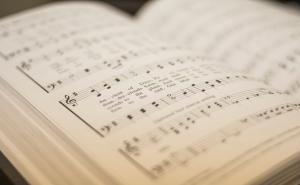
Photo by Michael Maasen on Unsplash
Choosing the Music
It’s the job of the music director or provider to choose appropriate hymns to match the theme. If the reading includes: “Seek and ye shall find, knock and it shall be opened,” the song “Seek Ye First” is a natural because it contains those exact words.
If the Psalm is #96 saying: “Sing to the Lord a new song,” then the obvious choice for one of the songs at that Mass is “Sing a New Song.” It’s not always that close a match but think of the impact if the reading contains those words and then the song does too. Makes an impression. Makes you think about the message.
Some parishes sing basically the same songs every Sunday because they are favorites and, since people know them, they will be more willing to join in. It’s my opinion that the purpose of the readings is not then absorbed as thoroughly as they might be if the congregants reiterated the message in song.
Other parishes rely on a choir to learn the songs and lead the congregation in singing them. The hope is that congregants will listen and learn rather than just listen to the choir as if the music is entertainment.
As a music minister at my church, my selection is aided by the grouping of hymns in categories such as praise, peace, faith and unity. I also have a liturgical guide that matches Bible verses to specific songs and an online resource for suggested songs. https://www.liturgytools.net/p/roman-catholic-lectionary-based-hymn.html
Learning and Connecting with Music
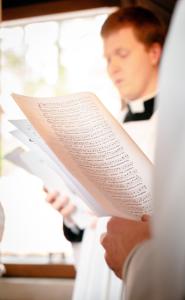
Photo by Michel Grolet on Unsplash
The reason all of this is so important is not only so that the music can re-iterate the message of the readings, but also so that the music can make an emotional connection with the people at Mass.
Since Mass proceeds in a step-by-step predictable manner, some Catholics get bored with what they think is the same old, same old, and they just go through the motions. The music, though, can get their attention.
Music stirs the soul. It reaches the heart. If the people at Mass really get involved in the music, the Mass will be so much more enriching. I know this through testimony.
Some of my friends have requested songs that are meaningful to them. Others have said certain songs have such beautiful lyrics that they don’t sing but just listen to the music while they contemplate the words.
Songs in the comfort or trust categories tend to cause that reaction. Who isn’t affected by lines like “Yahweh, I know you are near, standing always at my side;” or “Be not afraid, I go before you always” accompanied by beautiful, poignant music?
Then there are the uplifting songs or those with stirring music “Sing to the Mountains” or “How Great Thou Art” or “On Eagle’s Wings.” Sadly, many people don’t realize the significance of the lyrics or the power of the melody until they pick out songs for a wedding or funeral.
While we want everyone to sing—remember, those who sing pray twice—the aim is for people at Mass to absorb the faith, hope and love in the lyrics and appreciate the lessons they convey in concert with the readings. What a rich experience it makes for Mass!
Previous Post

February 1, 2022
Kneeling: An Act of Humility and Adoration
Next Post
February 7, 2022 The Critical Necessity of Catholic Education
Browse Our Archives
Select a Category Patheos Catholic Uncategorized
Select a Month October 2026 September 2026 July 2026 May 2026 December 2025 November 2025 September 2025 August 2025 July 2025 June 2025 May 2025 April 2025 March 2025 February 2025 August 2024 July 2024 June 2024 May 2024 April 2024 March 2024 February 2024 January 2024 November 2023 September 2023 July 2023 June 2023 February 2023 September 2022 August 2022 July 2022 June 2022 May 2022 April 2022 March 2022 February 2022 January 2022 December 2021 November 2021 October 2021 September 2021 August 2021
Follow Us!
TAKE THE
Religious Wisdom Quiz
What did God tell Isaiah to do for three years as a sign against Egypt and Cush?
Select your answer to see how you score.
Walk barefoot and naked Drink only water Sleep outside Eat bread only
Related posts from Musings From the Pew
Why I Choose the Eucharist Over the Sermon

Changing the Culture's View of Motherhood
Abortion in the Didache: forbidden by the Apostles

Introducing the Consistent Life Ethic at Your Church
TRENDING AT PATHEOS Catholic

Rejecting Doom: Christian Hope And Human Action
Christianity is a religion of hope. We are to have hope and...

It’s What Comes From Within Which Matters
One of the most difficult things for us to understand is why...

Why I Choose the Eucharist Over the Sermon
Choose the Eucharist, Not the Sermon What are we supposed to get...

5 Design Elements Found in Spiritually Rooted Homes
Putting Spirituality Into Home Decor Our homes are more than our living...

Credo: A Story of God Told with the...
About 10 years ago, I began to imagine a personal "Credo" that...

The Anatomy of Divine Revelation in Catholic Thought
The claim that God has made Himself known to human beings is...
view all Catholic blogs
Ad-Free & Subscriber Log-In Subscription Support
- About Us
- 2026 Calendar
- Videos
- Podcasts
- Library of World Religions
- Faith In Media Tracker
- Advertise With Us
- Write for Us
- Privacy Policy
- Terms of Service
- Do Not Sell My Data
- Contact Us
- Radiant Digital
- Manage Newsletter Subscriptions
- Unsubscribe From Notifications
- Sitemap
Copyright 2008-2026, Patheos. All rights reserved.
Subscription Support Ad-Free & Subscriber Log-In
Follow Patheos