
BuddhistCatholicContemplativeEvangelicalGeneral ChristianHinduJewishLatter-day SaintMuslimNew VisionsProgressive Christian
Beliefs
- Buddhist
- Catholic
- Contemplative
- Evangelical
- General Christian
- Hindu
- Jewish
- Latter-day Saint
- More Voices
- Muslim
- New Visions
- Pagan
- Progressive Christian
Topics
- Religion News
- Food and Religion
- Sports and Religion
- Religious Art
- Religious Music and Entertainment
- Religious Events
- History and Religion
- Style and Religion
- Politics and Religion
- Women in Religion
- Recreation Outdoors and Religion
- Business Finance and Religion
- Careers Workplace and Religion
- Education and Religion
- Family Parenting and Religion
- Health Fitness and Religion
- Home and Religion
- Relationships and Religion
- Technology and Religion
- Travel and Religion
Columnists
- Buddhist Columnists
- Business Finance and Religion Columnists
- Careers Workplace and Religion Columnists
- Catholic Columnists
- Contemplative Columnists
- Education and Religion Columnists
- Evangelists Columnists
- Family Parenting and Religion Columnists
- General Christian Columnists
- Health Fitness and Religion Columnists
- Hindu Columnists
- History and Religion Columnists
- Home and Religion Columnists
- Jewish Columnists
- More Voices Columnists
- Latter Day Columnists
- Muslim Columnists
- New Visions Columnists
- Nonreligious Columnists
- Pagan Columnists
- Politics and Religion Columnists
- Progressive Columnists
- Recreation Outdoors and Religion Columnists
- Relationships and Religion Columnists
- Religion News Columnists
- Religious Art Columnists
- Religious Events Columnists
- Religious Music and Entertainment Columnists
- Sports and Religion Columnists
- Style and Religion Columnists
- Technology and Religion Columnists
- Travel and Religion Columnists
- Women in Religion Columnists
Resource Library
- 2026 Calendar
- Library of World Religions
- The 100 Most Holy Places on Earth
- Patheos Answers
- Podcasts
- Videos
- Faith Leaders Database
- Anglican Episcopalian
- Bahai
- Baptist
- Buddhism
- Christianity
- Confucianism
- Eastern Orthodoxy
- Hinduism
- Holiness and Pentecostal
- ISKCON
- Islam
- Judaism
- Lutheran
- Methodist
- The Church of Jesus Christ of Latter-day Saints
- New Age
- Paganism
- Presbytarian and Reformed
- Protestantism
- Religion Behind the Scenes
- Roman Catholic
- Scientology
- Shia Islam
- Sikhism
- Sufism
- Sunni Islam
- Taoism
- Zen
- See all religions
Research Tools
 Ad-Free & Subscriber Log-In Subscription Support
Ad-Free & Subscriber Log-In Subscription Support
Follow Patheos 

- Trending:
- Forgiveness
- |
- Marriage
- |
- Consciousness
- |
- Death Penalty
- |
- Election
- |
- Halloween

- Home
- Catholic
- Women in Religion
- Catholics and the Bible
Catholics and the Bible
Last updated on: February 16, 2022 at 6:44 pm by Lois Kerschen
Catholics and the Bible 2022-02-16T18:44:16-08:00 Lois Kerschen
Patheos Explore the world's faith through different perspectives on religion and spirituality! Patheos has the views of the prevalent religions and spiritualities of the world.
There are some people who think Catholics are not Christians. I don’t know how they come to that conclusion, but an equally outrageous notion is that Catholics don’t read the Bible.
When we lived in Bible-belt country, on occasion I would hear Christian people emphasize that they went to a Bible-based church. I thought, “What other kind of base could there be?”
I suppose they could have been comparing their churches to those offbeat religions that blend Western and Eastern practices, or cults that follow some new Messiah. However, I suspect they were referring not only to those but to the Catholic Church.
Catholics don’t carry our Bibles to church. We don’t need to. We’ll be reading from the Bible at Mass in our missals. Since the missal is not the Bible, perhaps some non-Catholics misunderstand and think we have junked the Bible.
The Lectionary
Instead, what is happening is that we read the whole Bible in themed selections from a lectionary, that is, a schedule of passages. For a brief and easy-to-understand article explaining the history of the lectionary, go to https://uscatholic.org/articles/201805/how-are-the-sunday-readings-chosen/
In short, the evolution of the readings at Mass began with early Christians reading whatever scriptures were available at hand. By the fifth or sixth century, the priests were using Bibles annotated to recommend readings for a particular Sunday.
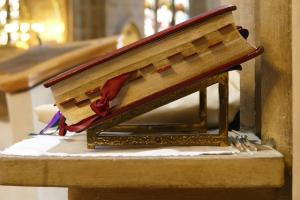
Image by Lumiks16 from Pixabay
The next century saw the Mass readings being put into separate books apart from the whole Bible. Nine hundred years later, the Council of Trent collected all the readings and prayers for Mass into what we know as the Roman Missal.
According to the US Catholic article: “The current Roman Catholic lectionary was created in 1970 by a commission set up after Vatican II to implement the council’s liturgical reforms and has since been slightly revised twice.”
The Readings
The readings are “organized on a three-year cycle: Year A is the year of Matthew, Year B is Mark, and Year C is Luke. The Gospel of John is used each year at Christmas, Lent, and Easter, as well as to round out Year B, since Mark is short.
“An appropriate gospel passage is assigned for each Sunday of Advent, Christmas, Lent, and Easter. In Ordinary Time, the remainder of the gospel is read more or less in order, skipping over the parts read in the special seasons.”
The other readings are chosen to match the theme of the gospel. I discuss this thematic relationship in a recent blog about how the music at Mass is selected to reflect the theme of the readings: https://www.patheos.com/blogs/musingsfromthepew/2022/02/meaningful-music-at-mass/
The first reading is from the Old Testament (at Easter, from the Acts of the Apostles). The second reading, for balance, is from a New Testament letter (at Easter, from the Book of Revelation).
The Responsorial Psalms are, of course, from the Psalms, as are the Antiphons usually, but they can also come from one of the other gospel or letter writers. Wherever their origin, the passages will be theme-related—mercy, sacrifice, love, justice, etc.
Thus, all the readings tie together not only for the unity of the message, but also to show from Old Testament to New Testament the fulfillment of the prophecies and the consistency of God’s plan through the ages.
The Bible: Catholic Origins and Continuance
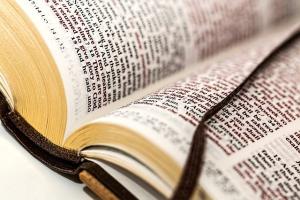
Image by Steve Buissinne from Pixabay
The end result of the lectionary design is that Catholics read most of the Bible in the three-year cycle. In its wisdom, the Church makes sure we can’t neglect the Bible or skip around to just favorite passages—we get the whole thing repeatedly!
So, whoever says Catholics don’t read the Bible is totally wrong. Anyone who says we are not a Bible-based church doesn’t know our history or the history of the Bible. After all, who assembled the Bible, in the first place? Why, Catholics, of course!
A list of the proposed books of the Bible appears in Athanasius’ Easter letter in 367 AD. The biblical canon was approved by the Council of Rome in 382 and confirmed at the Councils of Hippo in 393 and Carthage in 397.
Consequently, long before the Protestants came into being and removed seven books from the Bible, the early Christians (Catholics) united Jewish Scriptures and the inspired writings of the first church leaders into one book.
This collection was called the Bible because the Greek word for book was “biblia” and the city where papyrus was made was named Biblos.
Thus, the Bible is definitely Catholic, and Catholics are definitely Bible-based in their worship. The Catholic liturgy was formed from the Bible, feeds from the Bible, and remains true to God’s Word.
Previous Post

February 13, 2022
What About the Miracles?
Next Post
February 19, 2022 Palliative Care: The Way to Die
Browse Our Archives
Select a Category Patheos Catholic Uncategorized
Select a Month October 2026 September 2026 July 2026 May 2026 December 2025 November 2025 September 2025 August 2025 July 2025 June 2025 May 2025 April 2025 March 2025 February 2025 August 2024 July 2024 June 2024 May 2024 April 2024 March 2024 February 2024 January 2024 November 2023 September 2023 July 2023 June 2023 February 2023 September 2022 August 2022 July 2022 June 2022 May 2022 April 2022 March 2022 February 2022 January 2022 December 2021 November 2021 October 2021 September 2021 August 2021
Follow Us!
TAKE THE
Religious Wisdom Quiz
According to 2 Peter, what are believers partakers of?
Select your answer to see how you score.
Christ's sufferings Eternal glory The divine nature God's kingdom
Related posts from Musings From the Pew
Why I Choose the Eucharist Over the Sermon

Changing the Culture's View of Motherhood
Abortion in the Didache: forbidden by the Apostles

Introducing the Consistent Life Ethic at Your Church
TRENDING AT PATHEOS Catholic

Rejecting Doom: Christian Hope And Human Action
Christianity is a religion of hope. We are to have hope and...

It’s What Comes From Within Which Matters
One of the most difficult things for us to understand is why...

Why I Choose the Eucharist Over the Sermon
Choose the Eucharist, Not the Sermon What are we supposed to get...

5 Design Elements Found in Spiritually Rooted Homes
Putting Spirituality Into Home Decor Our homes are more than our living...

Credo: A Story of God Told with the...
About 10 years ago, I began to imagine a personal "Credo" that...

The Anatomy of Divine Revelation in Catholic Thought
The claim that God has made Himself known to human beings is...
view all Catholic blogs
Ad-Free & Subscriber Log-In Subscription Support
- About Us
- 2026 Calendar
- Videos
- Podcasts
- Library of World Religions
- Faith In Media Tracker
- Advertise With Us
- Write for Us
- Privacy Policy
- Terms of Service
- Do Not Sell My Data
- Contact Us
- Radiant Digital
- Manage Newsletter Subscriptions
- Unsubscribe From Notifications
- Sitemap
Copyright 2008-2026, Patheos. All rights reserved.
Subscription Support Ad-Free & Subscriber Log-In
Follow Patheos