
BuddhistCatholicContemplativeEvangelicalGeneral ChristianHinduJewishLatter-day SaintMuslimNew VisionsProgressive Christian
Beliefs
- Buddhist
- Catholic
- Contemplative
- Evangelical
- General Christian
- Hindu
- Jewish
- Latter-day Saint
- More Voices
- Muslim
- New Visions
- Pagan
- Progressive Christian
Topics
- Religion News
- Food and Religion
- Sports and Religion
- Religious Art
- Religious Music and Entertainment
- Religious Events
- History and Religion
- Style and Religion
- Politics and Religion
- Women in Religion
- Recreation Outdoors and Religion
- Business Finance and Religion
- Careers Workplace and Religion
- Education and Religion
- Family Parenting and Religion
- Health Fitness and Religion
- Home and Religion
- Relationships and Religion
- Technology and Religion
- Travel and Religion
Columnists
- Buddhist Columnists
- Business Finance and Religion Columnists
- Careers Workplace and Religion Columnists
- Catholic Columnists
- Contemplative Columnists
- Education and Religion Columnists
- Evangelists Columnists
- Family Parenting and Religion Columnists
- General Christian Columnists
- Health Fitness and Religion Columnists
- Hindu Columnists
- History and Religion Columnists
- Home and Religion Columnists
- Jewish Columnists
- More Voices Columnists
- Latter Day Columnists
- Muslim Columnists
- New Visions Columnists
- Nonreligious Columnists
- Pagan Columnists
- Politics and Religion Columnists
- Progressive Columnists
- Recreation Outdoors and Religion Columnists
- Relationships and Religion Columnists
- Religion News Columnists
- Religious Art Columnists
- Religious Events Columnists
- Religious Music and Entertainment Columnists
- Sports and Religion Columnists
- Style and Religion Columnists
- Technology and Religion Columnists
- Travel and Religion Columnists
- Women in Religion Columnists
Resource Library
- 2026 Calendar
- Library of World Religions
- The 100 Most Holy Places on Earth
- Patheos Answers
- Podcasts
- Videos
- Faith Leaders Database
- Anglican Episcopalian
- Bahai
- Baptist
- Buddhism
- Christianity
- Confucianism
- Eastern Orthodoxy
- Hinduism
- Holiness and Pentecostal
- ISKCON
- Islam
- Judaism
- Lutheran
- Methodist
- The Church of Jesus Christ of Latter-day Saints
- New Age
- Paganism
- Presbytarian and Reformed
- Protestantism
- Religion Behind the Scenes
- Roman Catholic
- Scientology
- Shia Islam
- Sikhism
- Sufism
- Sunni Islam
- Taoism
- Zen
- See all religions
Research Tools
 Ad-Free & Subscriber Log-In Subscription Support
Ad-Free & Subscriber Log-In Subscription Support
Follow Patheos 

- Trending:
- Forgiveness
- |
- Marriage
- |
- Consciousness
- |
- Death Penalty
- |
- Election
- |
- Halloween

- Home
- Catholic
- Women in Religion
- Saintly Leaders: The Example of Emperor Charles I
Saintly Leaders: The Example of Emperor Charles I
Last updated on: November 25, 2021 at 8:15 pm by Lois Kerschen
Saintly Leaders: The Example of Emperor Charles I 2021-11-25T20:15:18-08:00 Lois Kerschen
Patheos Explore the world's faith through different perspectives on religion and spirituality! Patheos has the views of the prevalent religions and spiritualities of the world.
Politicians have a bad reputation. Few, if any, seem to be saintly. However, it is possible to be a world leader and holy. An example in modern times is that of Blessed Charles, last ruler of the Austro-Hungarian Empire.
Remarkably, Wikipedia lists 83 canonized kings and queens. In addition, there is a myriad of other royal saints and a long list of those who are being considered for sainthood. https://en.wikipedia.org/wiki/List_of_royal_saints_and_martyrs
Most people probably think that these royal saints lived in medieval or earlier times, but there are still a few European royals who adhere to their Catholic faith. For example, Grand Duke Henri of Luxembourg refused to approve legislation on euthanasia in 2008 and suffered the removal of some of his authority as a result.
The history of World War I always starts with the assassination of Austrian Archduke Franz Ferdinand in 1914 but then largely neglects the 27-year-old who became Austria’s Emperor Charles (or Karl) I in 1916.
The Faith of Charles and Zita
Charles, aka Charles IV, King of Hungary, found war abhorrent. Taking seriously his duty as the Apostolic King of Hungary, Charles advocated for the peace plan devised by Pope Benedict XV. He made secret attempts to negotiate Austria and Hungary’s exit from the war but was unsuccessful.
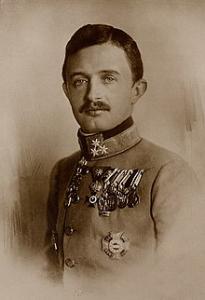
Emperor Charles I of Austria
Historians are not kind to Charles because of his political failures. They question his sanctity in light of war-time complications. They forget that good people are not necessarily good leaders.
Honorable intentions can be overrun by evil forces. What God is looking for is what people do to love Him and seek salvation, not their mastery of political maneuvering.
Take for example former President Jimmy Carter. Historians don’t rate his presidency as successful, but public opinion is that he is the best past president of all time. Carter’s humble nature and good works are far more valuable than his political achievements or lack thereof.
Charles was not an autocratic king but one who saw his position as that of service and social assistance. He involved his faith in his political decisions and in his marriage. When he wed Princess Zita von Bourbon-Parma of Italy in 1911, he told her that they must help each other into heaven.
Zita was similarly devout. Her family regularly undertook distributing clothes, food and medicines to the poor, a practice she continued with Charles. Three of Zita’s sisters became nuns, and in her later life, Zita spent several months each year at their monastery.
Exile After WWI
At the end of the war in 1918, his empire dissolved, Charles and his family were exiled to Switzerland. He spent two years trying to restore the monarchy in Hungary, but he was rebuffed and sent into a second exile on the Portuguese island of Madeira.
There, in reduced circumstances, his poor health deteriorated, and he died of bronchial pneumonia at the age of 34 in 1922. He offered his final suffering for his people, and his last words were, “As you will it, Jesus.”

Church of Our Lady of the Mount in Funchal, Madeira island and shrine to Blessed Charles
Zita, who was pregnant with their eighth child at the time of his death, went into mourning and wore black for the rest of her life. She died at age 96 in Switzerland.
The cause for Charles’ canonization began in 1949, and he was declared a Servant of God in 1954. In 1972, when his tomb was opened, his body was discovered to be incorrupt. (How can the historians doubt his sanctity after that?)
In 2003, a miracle attributed to Charles was certified. He was then beatified in 2004 by St. John Paul II who commended Charles’ efforts for peace.
In 2008, a second miracle was attributed to Charles, and the next year the beatification process began for Zita.
Leadership and Faith
In a previous blog, I discussed politicians who understand abiding by a moral code. I referenced former U.S. Representative Daniel Lipinski who wrote an essay about being Catholic first in your life and the effect of faith on political decisions. https://www.patheos.com/blogs/musingsfromthepew/2021/10/p425/
It is this idealism and devotion that is needed most in our leaders. We have far too many elected officials in this country who claim to be devout Catholics but who publicly defy the Church’s teachings. They are not abiding by the faith in their decisions but by their own ambitions. They are seeking popularity rather than seeking God.
Political figures like Emperor Charles and Grand Duke Henri exist, but they are not in the majority and are always in danger. We need to pray to Blessed Charles and Servant of God Zita that these leaders will be supported and given the courage to endure.
Previous Post

November 22, 2021
Post-Abortion Healing: The Need and the Response
Next Post
November 29, 2021 Baptism: An Awesome Occasion
Browse Our Archives
Select a Category Patheos Catholic Uncategorized
Select a Month October 2026 September 2026 July 2026 May 2026 December 2025 November 2025 September 2025 August 2025 July 2025 June 2025 May 2025 April 2025 March 2025 February 2025 August 2024 July 2024 June 2024 May 2024 April 2024 March 2024 February 2024 January 2024 November 2023 September 2023 July 2023 June 2023 February 2023 September 2022 August 2022 July 2022 June 2022 May 2022 April 2022 March 2022 February 2022 January 2022 December 2021 November 2021 October 2021 September 2021 August 2021
Follow Us!
TAKE THE
Religious Wisdom Quiz
What city is the headquarters of the Roman Catholic Church?
Select your answer to see how you score.
Florence Rome Jerusalem Vatican City
Related posts from Musings From the Pew
Why I Choose the Eucharist Over the Sermon

Changing the Culture's View of Motherhood
Abortion in the Didache: forbidden by the Apostles

Introducing the Consistent Life Ethic at Your Church
TRENDING AT PATHEOS Catholic

Creation, Preservation, and Teleology in Catholic Theology
As I write this, it is very early Monday morning. Like millions...

The Parable Of The Sower And The Word...
One of Christ’s most famous parables is that of the sower who...

Rejecting Doom: Christian Hope And Human Action
Christianity is a religion of hope. We are to have hope and...

Why I Choose the Eucharist Over the Sermon
Choose the Eucharist, Not the Sermon What are we supposed to get...

5 Design Elements Found in Spiritually Rooted Homes
Putting Spirituality Into Home Decor Our homes are more than our living...

Credo: A Story of God Told with the...
About 10 years ago, I began to imagine a personal "Credo" that...
view all Catholic blogs
Ad-Free & Subscriber Log-In Subscription Support
- About Us
- 2026 Calendar
- Videos
- Podcasts
- Library of World Religions
- Faith In Media Tracker
- Advertise With Us
- Write for Us
- Privacy Policy
- Terms of Service
- Do Not Sell My Data
- Contact Us
- Radiant Digital
- Manage Newsletter Subscriptions
- Unsubscribe From Notifications
- Sitemap
Copyright 2008-2026, Patheos. All rights reserved.
Subscription Support Ad-Free & Subscriber Log-In
Follow Patheos