
BuddhistCatholicContemplativeEvangelicalGeneral ChristianHinduJewishLatter-day SaintMuslimNew VisionsProgressive Christian
Beliefs
- Buddhist
- Catholic
- Contemplative
- Evangelical
- General Christian
- Hindu
- Jewish
- Latter-day Saint
- More Voices
- Muslim
- New Visions
- Pagan
- Progressive Christian
Topics
- Religion News
- Food and Religion
- Sports and Religion
- Religious Art
- Religious Music and Entertainment
- Religious Events
- History and Religion
- Style and Religion
- Politics and Religion
- Women in Religion
- Recreation Outdoors and Religion
- Business Finance and Religion
- Careers Workplace and Religion
- Education and Religion
- Family Parenting and Religion
- Health Fitness and Religion
- Home and Religion
- Relationships and Religion
- Technology and Religion
- Travel and Religion
Columnists
- Buddhist Columnists
- Business Finance and Religion Columnists
- Careers Workplace and Religion Columnists
- Catholic Columnists
- Contemplative Columnists
- Education and Religion Columnists
- Evangelists Columnists
- Family Parenting and Religion Columnists
- General Christian Columnists
- Health Fitness and Religion Columnists
- Hindu Columnists
- History and Religion Columnists
- Home and Religion Columnists
- Jewish Columnists
- More Voices Columnists
- Latter Day Columnists
- Muslim Columnists
- New Visions Columnists
- Nonreligious Columnists
- Pagan Columnists
- Politics and Religion Columnists
- Progressive Columnists
- Recreation Outdoors and Religion Columnists
- Relationships and Religion Columnists
- Religion News Columnists
- Religious Art Columnists
- Religious Events Columnists
- Religious Music and Entertainment Columnists
- Sports and Religion Columnists
- Style and Religion Columnists
- Technology and Religion Columnists
- Travel and Religion Columnists
- Women in Religion Columnists
Resource Library
- 2026 Calendar
- Library of World Religions
- The 100 Most Holy Places on Earth
- Patheos Answers
- Podcasts
- Videos
- Faith Leaders Database
- Anglican Episcopalian
- Bahai
- Baptist
- Buddhism
- Christianity
- Confucianism
- Eastern Orthodoxy
- Hinduism
- Holiness and Pentecostal
- ISKCON
- Islam
- Judaism
- Lutheran
- Methodist
- The Church of Jesus Christ of Latter-day Saints
- New Age
- Paganism
- Presbytarian and Reformed
- Protestantism
- Religion Behind the Scenes
- Roman Catholic
- Scientology
- Shia Islam
- Sikhism
- Sufism
- Sunni Islam
- Taoism
- Zen
- See all religions
Research Tools
 Ad-Free & Subscriber Log-In Subscription Support
Ad-Free & Subscriber Log-In Subscription Support
Follow Patheos 

- Trending:
- Forgiveness
- |
- Marriage
- |
- Consciousness
- |
- Death Penalty
- |
- Election
- |
- Halloween

- Home
- Catholic
- Women in Religion
- Redemptive Suffering and the Little Cajun Saint
Redemptive Suffering and the Little Cajun Saint
Last updated on: November 20, 2021 at 1:59 pm by Lois Kerschen
Redemptive Suffering and the Little Cajun Saint 2021-11-20T13:59:35-08:00 Lois Kerschen
Patheos Explore the world's faith through different perspectives on religion and spirituality! Patheos has the views of the prevalent religions and spiritualities of the world.
Redemptive suffering is the practice of offering up our suffering as a sacrifice to God. It is a way to connect our suffering with Christ’s so that God can use it to grant further blessings just as God used Christ’s sacrifice to redeem the world.
Suffering, when accepted and offered up in union with Christ’s Passion, can reduce the punishment for sin and alleviate our physical or spiritual needs or that of others. If redemptive suffering is a way to imitate Christ, then it is also a way to obey His command to love others as ourselves.
As St. John Paul II explained: “In bringing about the Redemption through suffering, Christ raised human suffering to the level of the Redemption.” Thus each of us, in our suffering, “can also become a sharer in the redemptive suffering of Christ.”
In an article for Bishop Barron’s Word on Fire website, Brandon Vogt wrote: “Just as [Christ] accepted beatings, torture, and ultimately death on our behalf, offering His sacrifices for the sake of the world, so we must channel our much smaller pains and sufferings for the sake of those who could use some extra grace.”
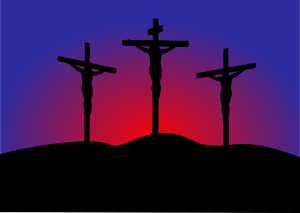
Image by Ambroz from Pixabay
Vogt added: “Suffering is not pointless if offered up to God as a sacrifice for the sake of others. Even if suffering is not inherently good, it can produce good if we endure it, allow it to purify us, and make it into a sacrifice.” https://www.wordonfire.org/resources/blog/how-to-offer-up-your-suffering-like-st-john-vianney/21497/
In fact, Our Lord told Saint Faustina, that we could “save more souls through prayer and suffering than will a missionary through his teachings and sermons alone.”
Charlene Richard, the Little Cajun Saint
On November 17, 2021, at the fall general meeting of the U.S. bishops, it was agreed that the sainthood causes of three lay people should be moved forward. Among the three is Charlene Richard, whose short life is an inspirational example of redemptive suffering.
Servant of God Charlene Richard died of acute lymphatic leukemia in 1959 at the age of twelve. According to her family and friends, Charlene grew up in Louisiana like any ordinary kid.
Then four months before her death, she read a book about St. Therese of Lisieux. This led to Charlene asking her grandmother if she could become a saint by praying like Therese. (St. Therese died from a very painful illness but had offered up her suffering in prayer.)
Charlene did not know until just two weeks before her death that she was terminally ill. She accepted the news from the hospital chaplain by saying, “Father, when the Blessed Mother comes, I’ll tell her you said hello.”
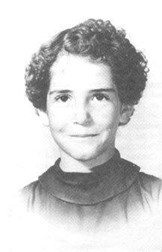
A childhood image of Charlene Richard, a sainthood candidate who has the title “Servant of God,” is seen in this undated photo. Photo courtesy Diocese of Lafayette
From then on, the chaplain reported, she would offer up her sufferings each day for someone in need. She especially prayed for others to be healed or to be converted to Catholicism.
According to the chaplain and the nun who was the Pediatrics Director, all those for whom Charlene prayed were indeed healed or converted.
After Charlene’s death, devotion to the “Little Cajun Saint” spread quickly. The chaplain, a priest friend of his, and the nun gave witness to her story. Soon prayer cards and a booklet spread the devotion as more and more people claimed to have received her aid.
There were 4,000 people and wide media coverage at the 30th anniversary Mass of Charlene’s death. Thousands more come each year to visit her grave, some on chartered buses from New Orleans, and leave prayer requests.
Charlene is an example of the value of redemptive suffering and how to die well. Her story is also a lesson in how to live with the joy of faith and with love for others.
Offer It Up!
In a previous blog on “The Benefits of Suffering” (https://www.patheos.com/blogs/musingsfromthepew/2021/10/p340/) I talked about how suffering can lead to positive change and help us to appreciate our blessings. Redemptive suffering is a bonus to all that because we can also use our suffering to earn grace and to help others.
Those of us who grew up in the Church can remember being told, “Don’t whine. Offer it up!” We were taught to pray: “Lord, I offer this sacrifice to you for . . . .“ It was good advice we need to share anew. Offer it up!
Next Post

November 22, 2021 Post-Abortion Healing: The Need and the Response
Browse Our Archives
Select a Category Patheos Catholic Uncategorized
Select a Month October 2026 September 2026 July 2026 May 2026 December 2025 November 2025 September 2025 August 2025 July 2025 June 2025 May 2025 April 2025 March 2025 February 2025 August 2024 July 2024 June 2024 May 2024 April 2024 March 2024 February 2024 January 2024 November 2023 September 2023 July 2023 June 2023 February 2023 September 2022 August 2022 July 2022 June 2022 May 2022 April 2022 March 2022 February 2022 January 2022 December 2021 November 2021 October 2021 September 2021 August 2021
Follow Us!
TAKE THE
Religious Wisdom Quiz
What does James say is the implanted word able to do?
Select your answer to see how you score.
Judge the nations Heal your body Defeat your enemies Save your souls
Related posts from Musings From the Pew
Why I Choose the Eucharist Over the Sermon

Changing the Culture's View of Motherhood
Abortion in the Didache: forbidden by the Apostles

Introducing the Consistent Life Ethic at Your Church
TRENDING AT PATHEOS Catholic

Rejecting Doom: Christian Hope And Human Action
Christianity is a religion of hope. We are to have hope and...

It’s What Comes From Within Which Matters
One of the most difficult things for us to understand is why...

Why I Choose the Eucharist Over the Sermon
Choose the Eucharist, Not the Sermon What are we supposed to get...

5 Design Elements Found in Spiritually Rooted Homes
Putting Spirituality Into Home Decor Our homes are more than our living...

Credo: A Story of God Told with the...
About 10 years ago, I began to imagine a personal "Credo" that...

The Anatomy of Divine Revelation in Catholic Thought
The claim that God has made Himself known to human beings is...
view all Catholic blogs
Ad-Free & Subscriber Log-In Subscription Support
- About Us
- 2026 Calendar
- Videos
- Podcasts
- Library of World Religions
- Faith In Media Tracker
- Advertise With Us
- Write for Us
- Privacy Policy
- Terms of Service
- Do Not Sell My Data
- Contact Us
- Radiant Digital
- Manage Newsletter Subscriptions
- Unsubscribe From Notifications
- Sitemap
Copyright 2008-2026, Patheos. All rights reserved.
Subscription Support Ad-Free & Subscriber Log-In
Follow Patheos