
BuddhistCatholicContemplativeEvangelicalGeneral ChristianHinduJewishLatter-day SaintMuslimNew VisionsProgressive Christian
Beliefs
- Buddhist
- Catholic
- Contemplative
- Evangelical
- General Christian
- Hindu
- Jewish
- Latter-day Saint
- More Voices
- Muslim
- New Visions
- Pagan
- Progressive Christian
Topics
- Religion News
- Food and Religion
- Sports and Religion
- Religious Art
- Religious Music and Entertainment
- Religious Events
- History and Religion
- Style and Religion
- Politics and Religion
- Women in Religion
- Recreation Outdoors and Religion
- Business Finance and Religion
- Careers Workplace and Religion
- Education and Religion
- Family Parenting and Religion
- Health Fitness and Religion
- Home and Religion
- Relationships and Religion
- Technology and Religion
- Travel and Religion
Columnists
- Buddhist Columnists
- Business Finance and Religion Columnists
- Careers Workplace and Religion Columnists
- Catholic Columnists
- Contemplative Columnists
- Education and Religion Columnists
- Evangelists Columnists
- Family Parenting and Religion Columnists
- General Christian Columnists
- Health Fitness and Religion Columnists
- Hindu Columnists
- History and Religion Columnists
- Home and Religion Columnists
- Jewish Columnists
- More Voices Columnists
- Latter Day Columnists
- Muslim Columnists
- New Visions Columnists
- Nonreligious Columnists
- Pagan Columnists
- Politics and Religion Columnists
- Progressive Columnists
- Recreation Outdoors and Religion Columnists
- Relationships and Religion Columnists
- Religion News Columnists
- Religious Art Columnists
- Religious Events Columnists
- Religious Music and Entertainment Columnists
- Sports and Religion Columnists
- Style and Religion Columnists
- Technology and Religion Columnists
- Travel and Religion Columnists
- Women in Religion Columnists
Resource Library
- 2026 Calendar
- Library of World Religions
- The 100 Most Holy Places on Earth
- Patheos Answers
- Podcasts
- Videos
- Faith Leaders Database
- Anglican Episcopalian
- Bahai
- Baptist
- Buddhism
- Christianity
- Confucianism
- Eastern Orthodoxy
- Hinduism
- Holiness and Pentecostal
- ISKCON
- Islam
- Judaism
- Lutheran
- Methodist
- The Church of Jesus Christ of Latter-day Saints
- New Age
- Paganism
- Presbytarian and Reformed
- Protestantism
- Religion Behind the Scenes
- Roman Catholic
- Scientology
- Shia Islam
- Sikhism
- Sufism
- Sunni Islam
- Taoism
- Zen
- See all religions
Research Tools
 Ad-Free & Subscriber Log-In Subscription Support
Ad-Free & Subscriber Log-In Subscription Support
Follow Patheos 

- Trending:
- Forgiveness
- |
- Marriage
- |
- Consciousness
- |
- Death Penalty
- |
- Election
- |
- Halloween

- Home
- Catholic
- A Crisis of Faith, Chapter I: The Creed
A Crisis of Faith, Chapter I: The Creed
Last updated on: August 30, 2022 at 10:54 pm by Gabriel Blanchard
A Crisis of Faith, Chapter I: The Creed 2022-08-30T22:54:54-04:00 Gabriel Blanchard
Patheos Explore the world's faith through different perspectives on religion and spirituality! Patheos has the views of the prevalent religions and spiritualities of the world.
The Symbol of the Faith
Catholic Christianity claims to be a lot of things: a family, a mystery, a school, a dynasty, a way of life. One of the things it claims to be is a coherent system of belief. This system is defined by certain philosophical and historical claims about God, the universe, and humanity. Those claims are summarized in an old confession of faith, derived from the baptismal liturgy used in Rome in the early centuries of the Church; we know this confession as the Apostles’ Creed.
I believe in God, the Father almighty,
Maker of heaven and earth.
And in his only Son, Jesus Christ our Lord,
Who was conceived by the Holy Ghost, born of the Virgin Mary,
Suffered under Pontius Pilate, was crucified, died, and was buried;
He descended into hell; on the third day, he rose again from the dead;
He ascended into heaven, and sitteth on the right hand of God the Father almighty;
From thence he shall come to judge the quick and the dead.
I believe in the Holy Ghost;
The holy Catholic Church, the communion of saints;
The forgiveness of sins;
The resurrection of the body, and the life everlasting.
Amen.
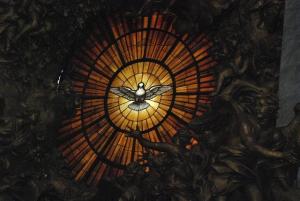
This used to be called “the symbol of the faith,” although not really in the modern sense of “symbol.” The Greek σύμβολον (symbolon), from a verb meaning “to put together,” meant a specific method used in the ancient world to confirm that a message was genuine. A person would break a piece of pottery or the like, resulting in two halves that fit perfectly together, and give one half to a person they would later be sending a message to; when the message was actually sent, the messenger would receive the other half, so that they could prove they were truly acting on the original sender’s behalf. Primitive Christians referred to the creed as their symbol, because it proved they really were baptized members of the Church and not state snitches or religious dilettantes.
The Blueprint
This creed is still a convenient symbol and summary of the faith today. The Church has filled out some of its terms and phrases in later councils and definitions, especially the Seven Great Councils of late antiquity, but the Apostles’ Creed is as good a place to start as any in going through the Catholic faith step by step.
Its structure is obviously Trinitarian. We start with God the Father and with creation, as the Bible itself does. We then proceed to the person and work of Christ, which, naturally, involves the most distinctively Christian content; it’s here that we get the historical claims the faith relies upon. Thirdly, we profess the Holy Ghost and his works, which he chiefly effects through the Church. In order to articulate all of this stuff, I’m going to need to spend some time on “detours” that were not necessary when this brief creed was composed. Accordingly, my material probably won’t correspond perfectly to its clauses, but they still form a serviceable framework.
Postulates
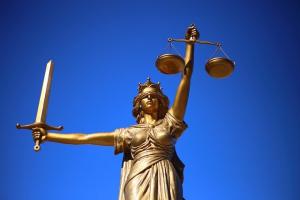
However. To embark on a philosophical journey like this at all—at least if you’re coming at it like I do—there are a couple of postulates you have to accept at the outset. The reason for this is not so much that otherwise you might not draw Catholic conclusions, but that without these postulates, you can’t realistically draw any conclusions.
First, we have to consider the human mind capable of discovering some amount of truth. Some general (if imperfect!) validity must be allowed to the senses, and some basic (if limited!) reliability must be allowed to rational analysis—logic, the scientific method, etc. If someone thinks the human mind is so unreliable that philosophy as such is just a lot of mental wanking, I won’t argue with them; what would be the point? It doesn’t sound like they’d find this sort of thing interesting. And even if they did, we’d certainly be approaching the discussion at cross-purposes: to them, I suppose it would be a form of entertainment or something, while I am trying to use it as a tool, and those aims don’t usually mix well.
There are a few “footnotes” to this postulate; for instance, in saying that the human mind is basically reliable, we’re not binding ourselves to the conclusion that we never get things wrong at first glance, or that we have access to all the relevant facts in every case, or that the truth can never be paradoxical. However, we are binding ourselves to the idea that any chain of reasoning which ends in self-contradiction—including “proofs” that the human mind is incapable of discovering any truth—must be false. That may sound painfully obvious, and therefore not that important; but I’ve been surprised (and unsettled) by the number of people who are quite happy to accept systems that they know very well involve these unsustainable ideas.
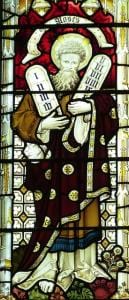
My second postulate is that a broad, basic moral consensus has to be allowed to the human race. I’m not talking about its origins, nor about its details (e.g., whether the ancient Roman or primitive Islamic norms of marriage were closer to the ideal). I’m saying only that certain rules of conduct—things like avoiding injury to others, respect for elders, telling the truth, showing gratitude for acts of kindness, and so forth—are recognized by humanity at large as desirable and important. Without this postulate, it’s not really clearly what if anything we mean by “good” in a moral sense, and calling God or atheism or anything else “good” becomes meaningless.
Okay? Okay. Let’s begin.
Previous Post

August 19, 2022
A Crisis of Faith: Prologue
Next Post
September 30, 2022 Five Quick Takes
Browse Our Archives
Select a Category abuse antifascism art bad Catholic celibacy chastity Church crucifixion culture war eros forgiveness gay gender homophobia ikons language liturgy peace poems politics Pope Francis prayer pro-life race recommendations reform repentance review sacraments saints satire scandal schism scripture sex suffering theology Uncategorized violence
Select a Month October 2026 September 2026 August 2026 July 2026 June 2026 May 2026 April 2026 March 2026 February 2026 January 2026 December 2025 November 2025 October 2025 September 2025 August 2025 July 2025 June 2025 May 2025 April 2025 March 2025 February 2025 January 2025 December 2024 November 2024 October 2024 September 2024 August 2024 July 2024 June 2024 May 2024 April 2024 March 2024 February 2024 January 2024 December 2023 November 2023 October 2023 September 2023 August 2023 July 2023 June 2023 May 2023 April 2023 March 2023 February 2023 January 2023 December 2022 November 2022 October 2022 September 2022 August 2022 July 2022 June 2022 May 2022 April 2022 March 2022 February 2022 January 2022 December 2021 November 2021 October 2021 September 2021 August 2021 July 2021 June 2021 May 2021 April 2021 March 2021 February 2021 January 2021 December 2020 November 2020 October 2020 September 2020 August 2020 July 2020 June 2020 May 2020 April 2020 March 2020 February 2020 January 2020 December 2019 November 2019 October 2019 September 2019 August 2019 July 2019
Follow Us!
TAKE THE
Religious Wisdom Quiz
In 1 Thessalonians, what does Paul say believers who are alive will be caught up together with to meet the Lord?
Select your answer to see how you score.
Those who have fallen asleep (the dead in Christ) The angels The prophets The martyrs
Related posts from Mudblood Catholic

The Sermon on the Mount, Part I: Matthew...

The Gospel of Matthew: Christ and Antichrist

John the Baptist and the Winnowing Fork: Matthew...

The Gospel of Matthew: The Coventry Carol
TRENDING AT PATHEOS Catholic

Emotion in Early Christianity by Andrew Crislip
Andrew Crislip’s Emotion in Early Christianity examines an often overlooked dimension of...

16 Spiritual Touchstones for a More Grounded Life
After decades of spiritual study, here are 16 principles I try...

Catholic Evangelization: Sharing Your Faith Every Day
Welcome back to the Graceful Awakening mini-series called, “From Faith to Mission.” ...

The Pillar of the Boatmen: the Ancient Monument...
The Pillar of the Boatmen is a Romano-Gaulish sculpture that dates from...

In one sense walking into Westminster Abbey is like walking down the...

'Super Scam Me' Exposes AI Jon Bon Jovi...
Leslie Pickett believed she was in a relationship with Jon Bon Jovi....
view all Catholic blogs
Ad-Free & Subscriber Log-In Subscription Support
- About Us
- 2026 Calendar
- Videos
- Podcasts
- Library of World Religions
- Faith In Media Tracker
- Advertise With Us
- Write for Us
- Privacy Policy
- Terms of Service
- Do Not Sell My Data
- Contact Us
- Radiant Digital
- Manage Newsletter Subscriptions
- Unsubscribe From Notifications
- Sitemap
Copyright 2008-2026, Patheos. All rights reserved.
Subscription Support Ad-Free & Subscriber Log-In
Follow Patheos