
BuddhistCatholicContemplativeEvangelicalGeneral ChristianHinduJewishLatter-day SaintMuslimNew VisionsProgressive Christian
Beliefs
- Buddhist
- Catholic
- Contemplative
- Evangelical
- General Christian
- Hindu
- Jewish
- Latter-day Saint
- More Voices
- Muslim
- New Visions
- Pagan
- Progressive Christian
Topics
- Religion News
- Food and Religion
- Sports and Religion
- Religious Art
- Religious Music and Entertainment
- Religious Events
- History and Religion
- Style and Religion
- Politics and Religion
- Women in Religion
- Recreation Outdoors and Religion
- Business Finance and Religion
- Careers Workplace and Religion
- Education and Religion
- Family Parenting and Religion
- Health Fitness and Religion
- Home and Religion
- Relationships and Religion
- Technology and Religion
- Travel and Religion
Columnists
- Buddhist Columnists
- Business Finance and Religion Columnists
- Careers Workplace and Religion Columnists
- Catholic Columnists
- Contemplative Columnists
- Education and Religion Columnists
- Evangelists Columnists
- Family Parenting and Religion Columnists
- General Christian Columnists
- Health Fitness and Religion Columnists
- Hindu Columnists
- History and Religion Columnists
- Home and Religion Columnists
- Jewish Columnists
- More Voices Columnists
- Latter Day Columnists
- Muslim Columnists
- New Visions Columnists
- Nonreligious Columnists
- Pagan Columnists
- Politics and Religion Columnists
- Progressive Columnists
- Recreation Outdoors and Religion Columnists
- Relationships and Religion Columnists
- Religion News Columnists
- Religious Art Columnists
- Religious Events Columnists
- Religious Music and Entertainment Columnists
- Sports and Religion Columnists
- Style and Religion Columnists
- Technology and Religion Columnists
- Travel and Religion Columnists
- Women in Religion Columnists
Resource Library
- 2026 Calendar
- Library of World Religions
- The 100 Most Holy Places on Earth
- Patheos Answers
- Podcasts
- Videos
- Faith Leaders Database
- Anglican Episcopalian
- Bahai
- Baptist
- Buddhism
- Christianity
- Confucianism
- Eastern Orthodoxy
- Hinduism
- Holiness and Pentecostal
- ISKCON
- Islam
- Judaism
- Lutheran
- Methodist
- The Church of Jesus Christ of Latter-day Saints
- New Age
- Paganism
- Presbytarian and Reformed
- Protestantism
- Religion Behind the Scenes
- Roman Catholic
- Scientology
- Shia Islam
- Sikhism
- Sufism
- Sunni Islam
- Taoism
- Zen
- See all religions
Research Tools
 Ad-Free & Subscriber Log-In Subscription Support
Ad-Free & Subscriber Log-In Subscription Support
Follow Patheos 

- Trending:
- Forgiveness
- |
- Marriage
- |
- Consciousness
- |
- Death Penalty
- |
- Election
- |
- Halloween

- Home
- Catholic
- Gnosticism Is Like a Religion,,, Part II
Gnosticism Is Like a Religion,,, Part II
Last updated on: July 12, 2022 at 9:09 pm by Gabriel Blanchard
Gnosticism Is Like a Religion,,, Part II 2022-07-12T21:09:30-04:00 Gabriel Blanchard
Patheos Explore the world's faith through different perspectives on religion and spirituality! Patheos has the views of the prevalent religions and spiritualities of the world.
Gnosticism: A Hinge Profile
So, to recap, Gnosticism:
- involved a good-evil dualism that was frequently also a spirit-matter dualism
- tended to believe in complicated hierarchies of deities or angels, one of which was typically the fallen creator of matter
- offered liberation from evil primarily in terms of secret knowledge and post-mortem escape from the world, not forgiveness of sins or final resurrection
- did not accept Christian doctrines like the Incarnation, the Passion, or the efficacy of sacraments
- tended to distinguish between a predestined spiritual elite, who were capable of enlightenment, and a greater mass of humanity who were not
- tended to encourage an ascetic moral code (e.g., mostly avoiding sex, violence, and alcohol)1
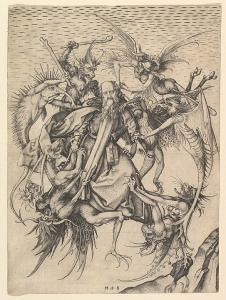
As mentioned before, Gnosticism was more a set of themes than a coherent school of thought. There were lots of specific incarnations of it, and their beliefs often contradicted each other. And again, this was for the most part a second-century movement. There were religions like Manichæism that were obviously akin in both beliefs and sources; there were later sects that hit upon similar themes, notably the Cathars2; but Gnosticism, properly so called, was a phenomenon of the pre-Constantine Roman Empire.
So where do modern people get off calling this and that and the other thing “Gnosticism”?
The Terms of the Problem
The short answer is: a lot of people are imaginative, ignorant, vain, and lazy, all at the same time and in varying proportions. These qualities become relevant to this conversation when you:
- hand somebody a fancy term that sounds smart—e.g., “Gnosticism”;
- tell them it’s important and give them a very basic sketch of its meaning; and
- turn them loose with no further restraint or information.
This isn’t new, of course. Technical terms are always abused this way—Catholic apologists have much to answer for on this front.3 And in this way, calling things “Gnosticism” when they’re not is unremarkable; if the buzzword weren’t “Gnosticism” it’d be something else, and it often has been. The internet is also partly to blame: it’s always been easy to tear facts out of their context, or to present theories as if they were facts, but with modern tech, these irresponsible tactics can be shared with millions of people literally instantaneously. (These tools make verification easier than it used to be too, but cf. “most of us are lazy” above.)
What is a little bit strange, and a lot bit annoying, is that something we may loosely call “Gnostic spirituality” is real, and is a bad thing. It just has nothing to do with any of the stuff being labeled Gnostic. The modern crew of intellectuals who feel entitled to join the Inquisition before receiving instruction for baptism are, surprise surprise, often wrong.4 But what is this amorphous thing, about which I keep just saying “Not like that!” while waving my hands in a general right-ward direction?
Gnostic Spiritualities
Starting from some common doctrines of the extinct Gnostic sects, we can identify a few theological and spiritual themes that may genuinely edify us. I see five as specially relevant to modern culture:
- Dualism: there are, and can be, no shades of moral grey.
- Apocalypticism: what I do is good because I’m on the side of good; my enemies are evil because what they do serves the side of evil.
- Pseduo-Docetism: sexuality is trivial.
- Gnosis: orthodoxy constitutes holiness/salvation.
- Election: personal enlightenment/autonomy trumps the authority of the Church.

All of these have superficial expressions, typically on both “sides” of the culture war. But looking at these things through the lens of Gnosticism doesn’t actually teach us much. Unduly black-and-white moral views aren’t unique to Gnosticism, or even to religious people generally. And a lot of folks have pointed at the more bizarre aspects of Scientology as a modern parallel to Gnosticism5: fine; so what?
But I do think there are certain elements in American culture—both inside and outside Christian circles—which do stand out and make more sense if we set them beside Gnosticism. Let’s take the five points above, one by one, and dig a little deeper.
Footnotes
1This often included vegetarianism. Today, we tend to associate vegetarianism and veganism with opposition to animal cruelty. This aligns, vaguely, with the Indic principle of ahimsā or complete nonviolence (shared by Hindus, Jains, and Buddhists); this may have developed from or been influenced by the doctrine of reincarnation.
Vegetarianism in ancient and medieval Europe was rather different. Some ancient schools adopted it simply as a specific type of fasting—this was common among early monastics. However, the Gnostics (and later groups with similar beliefs) abstained from meat because it came from sexual reproduction.
As for alcohol, besides the ascetic motive of “giving up this fun thing” and the prudential motive of “giving up this thing that can make you act stupid,” I can’t say why some religions go in for teetotalism. Maybe those two motives are all there really is to it.
2The Cathars (from the Greek katharoi or “the pure”) were a heresy common in the High Medieval period, principally in southern France, whose city of Albi gave them their other name of Albigenses. The Albigensian Crusade was a holy war proclaimed against precisely these heretics, and, predictably, involved some of the ugliest moments and maxims in Catholic history.
3As do Protestant apologists. However, given that the raison d’être of so many Protestants is an explicit distrust of, or at least wariness about, clerical expertise and authority, there is far more excuse for them than for the Catholics.
4It might be rude to cite examples like James Lindsay and Jordan Peterson here. Possibly very rude. Exceedingly, perhaps, rude.
5In my opinion, the most exact modern heir of Gnosticism is the infamous Heaven’s Gate cult, whose members almost all committed mass suicide in 1997. The hostile archons of some Gnostic sects—devil-like beings which rule the planets and try to prevent humans from ascending to the Godhead by trapping us in the material realm—show an eerie affinity with the malicious aliens some cults believe in. To a superstitious person like me, the traditional belief that human ideas are partly guided by the Powers, some of which are fallen, inevitably springs to mind …
Previous Post

June 23, 2022
Gnosticism Is Like a Religion,,, Part I
Next Post
July 15, 2022 A Fisking of Fr. McDermott's "Please Don't Call Me Father"
Browse Our Archives
Select a Category abuse antifascism art bad Catholic celibacy chastity Church crucifixion culture war eros forgiveness gay gender homophobia ikons language liturgy peace poems politics Pope Francis prayer pro-life race recommendations reform repentance review sacraments saints satire scandal schism scripture sex suffering theology Uncategorized violence
Select a Month October 2026 September 2026 August 2026 July 2026 June 2026 May 2026 April 2026 March 2026 February 2026 January 2026 December 2025 November 2025 October 2025 September 2025 August 2025 July 2025 June 2025 May 2025 April 2025 March 2025 February 2025 January 2025 December 2024 November 2024 October 2024 September 2024 August 2024 July 2024 June 2024 May 2024 April 2024 March 2024 February 2024 January 2024 December 2023 November 2023 October 2023 September 2023 August 2023 July 2023 June 2023 May 2023 April 2023 March 2023 February 2023 January 2023 December 2022 November 2022 October 2022 September 2022 August 2022 July 2022 June 2022 May 2022 April 2022 March 2022 February 2022 January 2022 December 2021 November 2021 October 2021 September 2021 August 2021 July 2021 June 2021 May 2021 April 2021 March 2021 February 2021 January 2021 December 2020 November 2020 October 2020 September 2020 August 2020 July 2020 June 2020 May 2020 April 2020 March 2020 February 2020 January 2020 December 2019 November 2019 October 2019 September 2019 August 2019 July 2019
Follow Us!
TAKE THE
Religious Wisdom Quiz
According to Ecclesiastes 12, what happens to the human spirit when a person dies?
Select your answer to see how you score.
It ceases to exist It is reincarnated It returns to God It remains on earth
Related posts from Mudblood Catholic

The Sermon on the Mount, Part I: Matthew...

The Gospel of Matthew: Christ and Antichrist

John the Baptist and the Winnowing Fork: Matthew...

The Gospel of Matthew: The Coventry Carol
TRENDING AT PATHEOS Catholic

The Iron Gates and the Lion of the...
Yesterday, I didn't finish my report about, well, yesterday. So I'll...

Dolly Parton’s Last Song Wins Dove Award with...
Bluegrass band The Grascals, speaking on the red carpet at the 57th...

The Image: On the Horror of Capitalism and...
The Image Then went the Pharisees, and took counsel how they might...

We are approaching the date of our new American national holiday: October...

Letters on Living the Faith by C.S. Lewis
Most of us met C.S. Lewis as a public intellectual. Mere Christianity....

When Halloween Unmasks Married Hearts
Written by Dr. David K. Ewen from Eternal Truth Bible College Behind...
view all Catholic blogs
Ad-Free & Subscriber Log-In Subscription Support
- About Us
- 2026 Calendar
- Videos
- Podcasts
- Library of World Religions
- Faith In Media Tracker
- Advertise With Us
- Write for Us
- Privacy Policy
- Terms of Service
- Do Not Sell My Data
- Contact Us
- Radiant Digital
- Manage Newsletter Subscriptions
- Unsubscribe From Notifications
- Sitemap
Copyright 2008-2026, Patheos. All rights reserved.
Subscription Support Ad-Free & Subscriber Log-In
Follow Patheos