
BuddhistCatholicContemplativeEvangelicalGeneral ChristianHinduJewishLatter-day SaintMuslimNew VisionsProgressive Christian
Beliefs
- Buddhist
- Catholic
- Contemplative
- Evangelical
- General Christian
- Hindu
- Jewish
- Latter-day Saint
- More Voices
- Muslim
- New Visions
- Pagan
- Progressive Christian
Topics
- Religion News
- Food and Religion
- Sports and Religion
- Religious Art
- Religious Music and Entertainment
- Religious Events
- History and Religion
- Style and Religion
- Politics and Religion
- Women in Religion
- Recreation Outdoors and Religion
- Business Finance and Religion
- Careers Workplace and Religion
- Education and Religion
- Family Parenting and Religion
- Health Fitness and Religion
- Home and Religion
- Relationships and Religion
- Technology and Religion
- Travel and Religion
Columnists
- Buddhist Columnists
- Business Finance and Religion Columnists
- Careers Workplace and Religion Columnists
- Catholic Columnists
- Contemplative Columnists
- Education and Religion Columnists
- Evangelists Columnists
- Family Parenting and Religion Columnists
- General Christian Columnists
- Health Fitness and Religion Columnists
- Hindu Columnists
- History and Religion Columnists
- Home and Religion Columnists
- Jewish Columnists
- More Voices Columnists
- Latter Day Columnists
- Muslim Columnists
- New Visions Columnists
- Nonreligious Columnists
- Pagan Columnists
- Politics and Religion Columnists
- Progressive Columnists
- Recreation Outdoors and Religion Columnists
- Relationships and Religion Columnists
- Religion News Columnists
- Religious Art Columnists
- Religious Events Columnists
- Religious Music and Entertainment Columnists
- Sports and Religion Columnists
- Style and Religion Columnists
- Technology and Religion Columnists
- Travel and Religion Columnists
- Women in Religion Columnists
Resource Library
- 2026 Calendar
- Library of World Religions
- The 100 Most Holy Places on Earth
- Patheos Answers
- Podcasts
- Videos
- Faith Leaders Database
- Anglican Episcopalian
- Bahai
- Baptist
- Buddhism
- Christianity
- Confucianism
- Eastern Orthodoxy
- Hinduism
- Holiness and Pentecostal
- ISKCON
- Islam
- Judaism
- Lutheran
- Methodist
- The Church of Jesus Christ of Latter-day Saints
- New Age
- Paganism
- Presbytarian and Reformed
- Protestantism
- Religion Behind the Scenes
- Roman Catholic
- Scientology
- Shia Islam
- Sikhism
- Sufism
- Sunni Islam
- Taoism
- Zen
- See all religions
Research Tools
 Ad-Free & Subscriber Log-In Subscription Support
Ad-Free & Subscriber Log-In Subscription Support
Follow Patheos 

- Trending:
- Forgiveness
- |
- Marriage
- |
- Consciousness
- |
- Death Penalty
- |
- Election
- |
- Halloween

- Home
- Catholic
- Gnosticism Is Like a Religion,,, Part I
Gnosticism Is Like a Religion,,, Part I
Last updated on: June 23, 2022 at 4:59 pm by Gabriel Blanchard
Gnosticism Is Like a Religion,,, Part I 2022-06-23T16:59:00-04:00 Gabriel Blanchard
Patheos Explore the world's faith through different perspectives on religion and spirituality! Patheos has the views of the prevalent religions and spiritualities of the world.
Introduction in Defense of Everything Else
Because people keep running their mouths and bugging me on Twitter, I am at last following through on my long-standing threat to write a whole post about Gnosticism. You (yes, you personally, dear reader) are at fault for this, and if the problem persists, I may wind up writing a whole series on historic heresies and their relevance (or lack thereof) to modernity.
What Is Gnosticism?
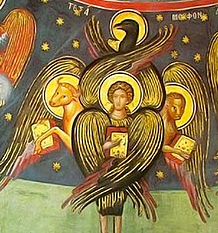
Gnosticism is a loose, collective term for a variety of religious systems from the second and third centuries. They originated mostly in the eastern Mediterranean and its environs—a territory lying more or less amid modern Egypt, Iran, Uzbekistan, and Greece. The looseness and variety of the term is key; there were many incompatible versions, with differing beliefs, ethics, and community structures. In some ways, the term Gnostic is a little like New Age—a mood more than a creed.
Conventionally, scholars have interpreted Gnosticism as a Christian heresy, or as a form of Christianity that was eventually rejected (and therefore labeled heretical) by the mainstream Church. However, some forms of Gnosticism may predate Christ, and the “mood” certainly existed before the Church did; a lot of it appears in the Dead Sea Scrolls. Many forms of Gnosticism regarded Jesus as the, or a, savior-figure, but some did not—the only definitely Gnostic religion that survives today, Mandæism, considers Jesus an apostate.
The salient marks of most kinds of Gnosticism were these:
- Moral and material dualism
- Complex theogonies
- Rejection of the Incarnation (in varying forms)
- Salvation by some type of secret knowledge (gnōsis in Greek)
- Extremist ethics, usually ascetic
All of these call for some unpacking.
Gnostic Metaphysics
Dualism can mean a few things. In this context, it tends to mean a picture of the universe that’s divided into two halves: good and evil, light and darkness, that sort of thing. These two halves are typically at war with each other, and this war is to culminate in a final Armageddon of some kind. This is one of the big features of apocalyptic literature, which flourished among the Jews during the Second Temple period (516 BC–AD 70); several books of the Bible, such as Zechariah, Daniel, and of course Revelation, are apocalypses or are influenced by apocalyptic thought.1
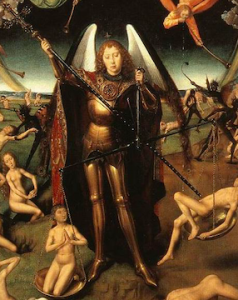
Weighing Souls on Judgment Day by Hans Memling, ca. 1466-1473
Gnosticism goes a step further. Apocalyptic thought features moral dualism; Gnosticism typically extends this dualism to its metaphysic: matter, as such, is base or even evil. The material world is the product not of the Father of all spirits, but of a demiurge, a spirit powerful enough to create matter but somehow blind to its frailty and corruption.
The demiurge is not the only spirit to fall into darkness, however. There are usually at least a few dozen important spirits, chains of emanations from the purest godhead down to the demiurge and sometimes further. Additionally, divine sparks were also scattered among humanity—these are the souls of the elect, who are capable of salvation. (In many forms of Gnosticism, only a fraction of humanity possesses this spark, and most people are incapable of spiritual enlightenment.)
The Gnostic Savior
As mentioned above, most forms of Gnosticism featured some messianic figure, and frequently but not always recruited Christ for the role. However, there is this key difference: Christ may be the savior, but the savior is never incarnate. At most, he assumes a human form, temporarily. But there is no true incarnation virginal or otherwise, no Passion,2 and no death—and as a corollary, no resurrection. The Gospels (when they were not dismissed or replaced altogether) received a few alternate Gnostic headcanons. Sometimes, Jesus was a real human and the Christ-spirit descended on him at baptism, departing some time around the arrest in Gethsemane. In a few tellings, Christ mysteriously escaped and some other person was crucified in his place, Judas being a popular choice.
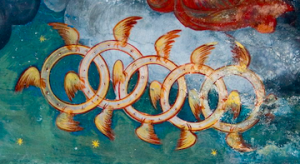
But, identity and other details aside, what was this messiah saving the elect from? Primarily, embodiment, and the ignorance that came with it. The hope of the Gnostic is not to receive bodily resurrection in a renewed cosmos, as it is for the Christian. Rather, the Gnostic wishes to escape the material world permanently, more akin (remotely) to the Buddhist or to some schools of Hinduism. In some versions, there is also a larger host of hostile spirits called the archons, who are allies of the demiurge and rule the planets, by which they seal souls into the material realm.
Gnostic Praxis
Asceticism was typical of Gnostics. Since sex is how material creation increases, not only among humans but animals as well, celibacy and vegetarianism were two of the most common types of asceticism—which was (and is) also true in other religions, for different reasons. A few Gnostic sects took the opposite tack, either in general or at least with the “lower rung” of believers: since the body was corruptible and transient anyway, what you did with it didn’t matter, so leading a hedonistic life was perfectly acceptable.3
The “secret knowledge” they had meant, in some versions, mysteries and allegories handed down from the Apostles separately from the main body of Christians. Whether it meant that or not, it normally included the intricate cosmologies and genealogies of spirits that particular Gnostic sect believed in. Sects that believed in the archons claimed to have magical passwords and incantations that the practicing Gnostic would use after death to force the archons aside.
Gnosticism and Modernity

As I said, Gnosticism was principally a second- and third-century phenomenon. Several subsequent movements, like the Manichees or the medieval Cathari, had similar beliefs, and there are some far-fetched but not impossible theories that they were fresh expressions of a Gnostic tradition that had survived underground. More probably, they drew on similar sources at most, or are simply examples of “parallel evolution”; humans in general seem prone to developing belief systems like this, which satisfy our intellectual “taste” for things like intricacy, austerity, and the thrill of being in on a secret.
But still, what does any of this have to do with modern belief systems? Well …
Footnotes
1It’s widely thought that apocalypticism, and Judaism more generally, were impacted during and after the Babylonian Exile by the Zoroastrian religion of Persia. This is a dualist religion. The good deity of light and truth, Ahura Mazda, is in a cosmic war with the evil deity of darkness and deceit, Angra Mainyu; Ahura Mazda will ultimately triumph. Zoroastrianism has a large hierarchy of semi-divine beings beneath Ahura Mazda—the hierarchies of angels in Second-Temple Jewish and primitive Christian theology probably owe something to this Zoroastrian belief. Later Gnostic-like religions, notably Manichæism,3 sometimes drew on Persian sources as well.
2The Gnostic distaste for the Passion seems to have been precisely that, a distaste; they considered it indecent and ridiculous to imagine a pure spirit suffering. To get some notion of how they felt, we might compare our feeling on hearing those garbled and heretical versions of the Annunciation in which some divine or angelic person, ah, engages with the Blessed Virgin to effect the conception of Jesus.
3Manichæism was a Gnostic-like religion, founded in third-century Persia and spreading into the Roman Empire by the fourth, which had this same two-tiered system. Credentes (“believers”) were the lesser body of the faithful, who served the needs of the perfecti (“the perfect” or “the complete”); the credentes could be libertines, while the perfecti lived as ascetics. St. Augustine, during his period of straying from the Christianity of his youth, was a Manichee for some time, which accommodated his sexual indiscretions.
Previous Post

June 14, 2022
The Church and the World
Next Post
July 12, 2022 Gnosticism Is Like a Religion,,, Part II
Browse Our Archives
Select a Category abuse antifascism art bad Catholic celibacy chastity Church crucifixion culture war eros forgiveness gay gender homophobia ikons language liturgy peace poems politics Pope Francis prayer pro-life race recommendations reform repentance review sacraments saints satire scandal schism scripture sex suffering theology Uncategorized violence
Select a Month October 2026 September 2026 August 2026 July 2026 June 2026 May 2026 April 2026 March 2026 February 2026 January 2026 December 2025 November 2025 October 2025 September 2025 August 2025 July 2025 June 2025 May 2025 April 2025 March 2025 February 2025 January 2025 December 2024 November 2024 October 2024 September 2024 August 2024 July 2024 June 2024 May 2024 April 2024 March 2024 February 2024 January 2024 December 2023 November 2023 October 2023 September 2023 August 2023 July 2023 June 2023 May 2023 April 2023 March 2023 February 2023 January 2023 December 2022 November 2022 October 2022 September 2022 August 2022 July 2022 June 2022 May 2022 April 2022 March 2022 February 2022 January 2022 December 2021 November 2021 October 2021 September 2021 August 2021 July 2021 June 2021 May 2021 April 2021 March 2021 February 2021 January 2021 December 2020 November 2020 October 2020 September 2020 August 2020 July 2020 June 2020 May 2020 April 2020 March 2020 February 2020 January 2020 December 2019 November 2019 October 2019 September 2019 August 2019 July 2019
Follow Us!
TAKE THE
Religious Wisdom Quiz
What food did God provide for Israel in the wilderness every morning?
Select your answer to see how you score.
Quail Manna Olives Barley
Related posts from Mudblood Catholic

The Sermon on the Mount, Part I: Matthew...

The Gospel of Matthew: Christ and Antichrist

John the Baptist and the Winnowing Fork: Matthew...

The Gospel of Matthew: The Coventry Carol
TRENDING AT PATHEOS Catholic

'Super Scam Me' Exposes AI Jon Bon Jovi...
Leslie Pickett believed she was in a relationship with Jon Bon Jovi....

The Brazilian Remake of Kendricks' 'Flywheel' Opens in...
“Flywheel,” the story that launched the Kendrick Brothers’ filmmaking career is getting...

The Dangers of Gradual Accommodation (Winking at Sin)
Recently, the “law of gradualness” resurfaced during the opening of a weeklong,...

The Iron Gates and the Lion of the...
Yesterday, I didn't finish my report about, well, yesterday. So I'll...

The Image: On the Horror of Capitalism and...
The Image Then went the Pharisees, and took counsel how they might...

We are approaching the date of our new American national holiday: October...
view all Catholic blogs
Ad-Free & Subscriber Log-In Subscription Support
- About Us
- 2026 Calendar
- Videos
- Podcasts
- Library of World Religions
- Faith In Media Tracker
- Advertise With Us
- Write for Us
- Privacy Policy
- Terms of Service
- Do Not Sell My Data
- Contact Us
- Radiant Digital
- Manage Newsletter Subscriptions
- Unsubscribe From Notifications
- Sitemap
Copyright 2008-2026, Patheos. All rights reserved.
Subscription Support Ad-Free & Subscriber Log-In
Follow Patheos