
BuddhistCatholicContemplativeEvangelicalGeneral ChristianHinduJewishLatter-day SaintMuslimNew VisionsProgressive Christian
Beliefs
- Buddhist
- Catholic
- Contemplative
- Evangelical
- General Christian
- Hindu
- Jewish
- Latter-day Saint
- More Voices
- Muslim
- New Visions
- Pagan
- Progressive Christian
Topics
- Religion News
- Food and Religion
- Sports and Religion
- Religious Art
- Religious Music and Entertainment
- Religious Events
- History and Religion
- Style and Religion
- Politics and Religion
- Women in Religion
- Recreation Outdoors and Religion
- Business Finance and Religion
- Careers Workplace and Religion
- Education and Religion
- Family Parenting and Religion
- Health Fitness and Religion
- Home and Religion
- Relationships and Religion
- Technology and Religion
- Travel and Religion
Columnists
- Buddhist Columnists
- Business Finance and Religion Columnists
- Careers Workplace and Religion Columnists
- Catholic Columnists
- Contemplative Columnists
- Education and Religion Columnists
- Evangelists Columnists
- Family Parenting and Religion Columnists
- General Christian Columnists
- Health Fitness and Religion Columnists
- Hindu Columnists
- History and Religion Columnists
- Home and Religion Columnists
- Jewish Columnists
- More Voices Columnists
- Latter Day Columnists
- Muslim Columnists
- New Visions Columnists
- Nonreligious Columnists
- Pagan Columnists
- Politics and Religion Columnists
- Progressive Columnists
- Recreation Outdoors and Religion Columnists
- Relationships and Religion Columnists
- Religion News Columnists
- Religious Art Columnists
- Religious Events Columnists
- Religious Music and Entertainment Columnists
- Sports and Religion Columnists
- Style and Religion Columnists
- Technology and Religion Columnists
- Travel and Religion Columnists
- Women in Religion Columnists
Resource Library
- 2026 Calendar
- Library of World Religions
- The 100 Most Holy Places on Earth
- Patheos Answers
- Podcasts
- Videos
- Faith Leaders Database
- Anglican Episcopalian
- Bahai
- Baptist
- Buddhism
- Christianity
- Confucianism
- Eastern Orthodoxy
- Hinduism
- Holiness and Pentecostal
- ISKCON
- Islam
- Judaism
- Lutheran
- Methodist
- The Church of Jesus Christ of Latter-day Saints
- New Age
- Paganism
- Presbytarian and Reformed
- Protestantism
- Religion Behind the Scenes
- Roman Catholic
- Scientology
- Shia Islam
- Sikhism
- Sufism
- Sunni Islam
- Taoism
- Zen
- See all religions
Research Tools
 Ad-Free & Subscriber Log-In Subscription Support
Follow Patheos 

- Trending:
- Advent
- |
- Forgiveness
- |
- Thanksgiving
- |
- Election
- |
- Seasonal Holidays
- |
- Marriage

- Home
- Catholic
- Time for a Little Pontification
Time for a Little Pontification
Last updated on: May 18, 2022 at 10:47 pm by Gabriel Blanchard
Time for a Little Pontification 2022-05-18T22:47:33-04:00 Gabriel Blanchard
Patheos Explore the world's faith through different perspectives on religion and spirituality! Patheos has the views of the prevalent religions and spiritualities of the world.
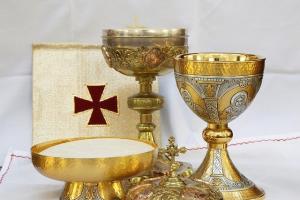
It’s been a while since I wrote something here that was just fun. In the name of fun, I’m going to indulge some of my worst trad tendencies for a moment here and tell everybody how I think liturgies ought to be celebrated. This isn’t an exhaustive list—just some of my personal pet causes, peeves, etc.—but y’all listen up.
The Liturgical Year
As regular readers may know, I’m a member of the Ordinariate, and our liturgical calendar is slightly better than that of the Ordinary Form of the Roman Rite. In particular, the insufferably-named season of “Ordinary Time” does not exist; we follow the schema used by the Church of England, which itself draws on medieval English practices. Our seasons are as follows:
I. Advent
II. Christmastide proper, a.k.a. Twelvetide (Dec. 25-Jan. 5)
III. Epiphanytide (sometimes known as “Sundays in” or “after Epiphany”)
IV. Shrovetide (or, more boringly, “Pre-Lent”—also informally called “the ‘Gesimas”)1
V. Lent
VI. Eastertide
VII. Whistunweek (formerly the Octave of Pentecost, though its status today is a little wobbly)
VIII. Trinitytide (sometimes known as “Sundays in” or “after Trinity”)
The season that would be “Ordinary Time” is thus divided into three segments: Epiphanytide, Shrovetide, and Trinitytide. Our lectionary is the same as the rest of the Roman Rite—our liturgy is a use, not a rite proper. But the propers, colors, and other “thematic” material preserve the Anglican pattern of the year, which corresponds in many respects to the Tridentine calendar. To me this is obviously preferable; I can’t imagine taking interest in a season called “Ordinary Time.” Some liturgists complain that it’s widely misunderstood—it means ordinal time, i.e. time throughout the year, not ordinary in the sense of “normal, humdrum”—but that’s not really better? It still doesn’t bestow any character on it, or recognize any mystery in it. And the fact that Trinitytide drags on so long (more than half the year) still makes the point that boring things can have profound meaning, so I consider “Ordinary Time” an all-around self-own on the part of liturgists. Or at least of the ICEL.
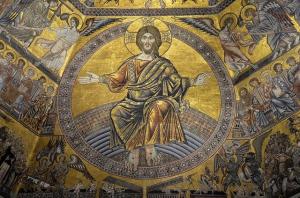
The Ordinariates do have some fun extra feasts and memorials as well, a little like religious orders do: Our Lady of the Atonement, for instance, or the Forty Martyrs of England and Wales just two weeks ago, or the Translation of St. Edward the Confessor. We also have some sort of “unofficial” seasons, like St. Michael’s Lent (between Assumption and Michaelmas) or Doomtide (from All Souls to the end of the year), though I’m not clear how much these are a product of the English spiritual heritage specifically, and how much they’re just “old stuff that Ordinariate Catholics are therefore apt to like.” I certainly like them either way, but will say no more about them here so that I have more time to rant about …
Liturgical Colors: Cycle
These are a mess, mostly because I’m not in charge. The current setup is as follows.
Obligatory colors (if you don’t have all of these, you technically cannot celebrate Mass according to the rubrics):
– Green, for (sigh) Ordinary Time
– Purple, for Advent and Lent (and an option for All Souls, funerals, and memorials)
– White, for the Christmas and Easter seasons, Maundy Thursday, memorials of non-martyred saints, and most other feasts and solemnities (also an option for funerals)
– Red, for Palm Sunday, Good Friday, Pentecost, and martyrs
Optional colors (if you have these, you can wear them, but they’re not de rigueur):
– Rose, for the Third Sunday of Advent and the Fourth Sunday in Lent (it’s meant to represent a “lightening” of violet, since these Sundays mark the halfway point through the two penitential seasons)
– Black, for All Souls and funerals
– Gold, which may technically be substituted for any other color when a liturgy is specially solemn, but in practice is largely reserved for Christmas and Easter
The general scheme is fine. However, black should be made the default (rather than just an option, though allowing other colors as options is fine) for Good Friday, All Souls, and funerals. Additionally, blue, a common historical color before the modern scheme was introduced at Trent and simplified at Vatican II, should be an option for Advent: both seasons are in some sense penitential, but Advent’s character is very different from that of Lent.
Liturgical Colors: (Throwing) Shade
White and black, obviously, don’t admit of much variation; gold technically has some range, but more or less any rendition of gold tends to come out fine in vestments, so for once I will be generous and allow variety and personal choice. However, green, purple, red, rose, and (since I’m reintroducing it) blue all call for comment.
The best shade of green is olive, though one that edges towards the green represented in the flags of India or Ireland are fine, too. Olive green, however, suggests the olive, a product of the Holy Land and an important element in some sacramentals, like chrism. What really mustn’t be allowed, however, are vestments in turquoise or the like that try to pass themselves off as green, which have a grotesquely neon appearance on the altar.

I chose the word purple rather than its near-synonym violet above, because the latter is a little too blue. Purple vestments are meant to call the Passion to mind. Therefore, starting from Tyrian purple but moving to something with a little more red, even inching toward wine-color, is the desideratum (especially since, while Mark and John agree in calling the robe Christ was mockingly arrayed in purple, Matthew actually describes it as scarlet, suggesting that this particular robe was a very reddish purple). Whatever exact chosen, richness and darkness should be the primary notes; on no account should purple vestments be either bright or pale—these are vestments, not pastel exhibitions or Lisa Frank trapper-keepers.
Which shade of red to use is a slight problem. On the one hand, it represents fire for Pentecost and votive Masses of the Holy Ghost; but whenever it is used elsewhere, it represents blood. I am halfway tempted to suggest two sets of red vestments—one in scarlet-vermilion territory (edging slightly towards orange), to match the idea of fire, and the other a darker, more crimson set, corresponding to blood. However, even I am not precious enough to seriously propose the expense of buying two full sets of vestments of the same color for such a small effect. So, since red is conventionally associated with fire anyway, the crimson or blood-red variety is preferable. Again, this shouldn’t be too bright, and above all it mustn’t stray into the territory of pink.
Which leads us to rose. Some priests throw fits, with varying levels of sincerity, about distinguishing rose from pink, often pointing out that rose is more of a salmon color than a pink proper. First of all, this could not possibly matter less; and secondly, no it isn’t. Salmon is almost an orange or coral sort of color, and—mercifully—I have yet to see vestments of that hideous profile (not that the color in itself is bad, just that it is not what one would call solemn in our cultural context). It is nicer to have a tinge of silver or champagne in the pink that we call rose, though a more ordinary pink will do fine as long as it isn’t too bright—and God help you if I catch you making rose vestments in anything approaching hot pink.
Lastly, blue. Many people assume that this color will be used to signify the Mother of God, and accordingly go for a sky blue or some other bright, light color. Both of these associations are incorrect: while blue vestments and associating blue with the Virgin are both quite old, using blue vestments on feasts of the Virgin is, curiously, not, or not in the English tradition.2 Rather, blue was a penitential color, suggesting both royalty and somberness; we are therefore looking for a comparatively dark shade of blue. However, if we select a Navy or midnight blue, it will be too easily confused with black. My preference is for slate blue, a mixture between a medium shade of blue (azure or a little lighter) and grey, perhaps with a very faint suggestion of silver. As always, the pastels and the neons are right out of it.
The Things Thus Colored
There’s a lot I have to say about vestments (optional and otherwise), adornments, instruments and vessels, etc. However, I’ve already stormed past 1400 words with hardly any effort, so I guess this is becoming a two-parter!
Footnotes
1The name Shrovetide comes from the obsolete verb to shrive, meaning to give a penitent the sacrament of confession. This is also where we get the archaic terms Shrove Tuesday for Mardi Gras, and short shrift for a dismissal or the like handled with great despatch—”short shrift” originally meant the kind of hurried confession a priest might administer to a criminal as he was on his way to be executed.
“The ‘Gesimas” refers to the three Sundays of this quasi-season, known in Latin as Septuagesima, Sexagesima, and Quinquagesima (the third from, next to, and last Sundays before Ash Wednesday). These words literally mean “seventieth,” “sixtieth,” and “fiftieth,” indicating the approximate number of days until Easter. Incidentally, the English name Lent for this season is rather unusual, coming from the Anglo-Saxon lencten, “spring,” as in the time when days lengthen. A more typical name is the Spanish Cuaresma, coming ultimately from the Latin quadragesima, “fortieth”—from the forty days of Lent.
2The Iberian tradition both Spanish and Portuguese, as well as its postcolonial counterparts in Latin America and the Philippines, does have a tradition of linking blue vestments with the Mother of God. I understand that blue is used for the Solemnity of the Immaculate Conception in these territories, or at least in some dioceses. (I’ve heard that this is inherited from the Mozarabic Rite, but I’m not clear whether that’s accurate.)
Previous Post

May 11, 2022
A New Page in History
Next Post
June 4, 2022 The Sorrows of the Sacred Heart
Browse Our Archives
Select a Category abuse antifascism art bad Catholic celibacy chastity Church crucifixion culture war eros forgiveness gay gender homophobia ikons language liturgy peace poems politics Pope Francis prayer pro-life race recommendations reform repentance review sacraments saints satire scandal schism scripture sex suffering theology Uncategorized violence
Select a Month November 2026 October 2026 September 2026 August 2026 July 2026 June 2026 May 2026 April 2026 March 2026 February 2026 January 2026 December 2025 November 2025 October 2025 September 2025 August 2025 July 2025 June 2025 May 2025 April 2025 March 2025 February 2025 January 2025 December 2024 November 2024 October 2024 September 2024 August 2024 July 2024 June 2024 May 2024 April 2024 March 2024 February 2024 January 2024 December 2023 November 2023 October 2023 September 2023 August 2023 July 2023 June 2023 May 2023 April 2023 March 2023 February 2023 January 2023 December 2022 November 2022 October 2022 September 2022 August 2022 July 2022 June 2022 May 2022 April 2022 March 2022 February 2022 January 2022 December 2021 November 2021 October 2021 September 2021 August 2021 July 2021 June 2021 May 2021 April 2021 March 2021 February 2021 January 2021 December 2020 November 2020 October 2020 September 2020 August 2020 July 2020 June 2020 May 2020 April 2020 March 2020 February 2020 January 2020 December 2019 November 2019 October 2019 September 2019 August 2019 July 2019
Follow Us!
TAKE THE
Religious Wisdom Quiz
Who led the first group of exiles back to Jerusalem to rebuild the Temple?
Select your answer to see how you score.
Haggai Zerubbabel Ezra Nehemiah
Related posts from Mudblood Catholic
Book III, Chapter 3: Christ "Classic" (Matt. 9:9-34)
What Kind of Man Do Wind and Sea...
The Sermon on the Mount, Part IV: Matthew...
TRENDING AT PATHEOS Catholic

If I Stop Becoming, Will I Disappear?
(At our most recent half day Zen retreat, Dr Chris Hoff, a...

A Modest Proposal for President Trump
Trump should just quit the loser Republicans who failed him so badly...
Jesus is Coming with Glory and Power
https://www.youtube.com/watch?v=_lt60EDHOQ4&list=RD_lt60EDHOQ4&start_radio=1

The Late Francis Frangipane & the Failure Too...
I learned today that another one of my heroes has gone to...

Thomas Paine, the Smiths, the apostles in England,...
I'm pleased to announce that the Becoming Brigham Black Friday Sale,...

CatholicTV Series: Six Black Catholics on Path to...
WATERTOWN, Mass., November 9, 2026 – In recognition of Black Catholic History...
view all Catholic blogs
Ad-Free & Subscriber Log-In Subscription Support
- About Us
- 2026 Calendar
- Videos
- Podcasts
- Library of World Religions
- Faith In Media Tracker
- Advertise With Us
- Write for Us
- Privacy Policy
- Terms of Service
- Do Not Sell My Data
- Contact Us
- Radiant Digital
- Manage Newsletter Subscriptions
- Unsubscribe From Notifications
- Sitemap
Copyright 2008-2026, Patheos, part of the Radiant Digital network of media brands. All rights reserved.
Subscription Support Ad-Free & Subscriber Log-In
Follow Patheos