
BuddhistCatholicContemplativeEvangelicalGeneral ChristianHinduJewishLatter-day SaintMuslimNew VisionsProgressive Christian
Beliefs
- Buddhist
- Catholic
- Contemplative
- Evangelical
- General Christian
- Hindu
- Jewish
- Latter-day Saint
- More Voices
- Muslim
- New Visions
- Pagan
- Progressive Christian
Topics
- Religion News
- Food and Religion
- Sports and Religion
- Religious Art
- Religious Music and Entertainment
- Religious Events
- History and Religion
- Style and Religion
- Politics and Religion
- Women in Religion
- Recreation Outdoors and Religion
- Business Finance and Religion
- Careers Workplace and Religion
- Education and Religion
- Family Parenting and Religion
- Health Fitness and Religion
- Home and Religion
- Relationships and Religion
- Technology and Religion
- Travel and Religion
Columnists
- Buddhist Columnists
- Business Finance and Religion Columnists
- Careers Workplace and Religion Columnists
- Catholic Columnists
- Contemplative Columnists
- Education and Religion Columnists
- Evangelists Columnists
- Family Parenting and Religion Columnists
- General Christian Columnists
- Health Fitness and Religion Columnists
- Hindu Columnists
- History and Religion Columnists
- Home and Religion Columnists
- Jewish Columnists
- More Voices Columnists
- Latter Day Columnists
- Muslim Columnists
- New Visions Columnists
- Nonreligious Columnists
- Pagan Columnists
- Politics and Religion Columnists
- Progressive Columnists
- Recreation Outdoors and Religion Columnists
- Relationships and Religion Columnists
- Religion News Columnists
- Religious Art Columnists
- Religious Events Columnists
- Religious Music and Entertainment Columnists
- Sports and Religion Columnists
- Style and Religion Columnists
- Technology and Religion Columnists
- Travel and Religion Columnists
- Women in Religion Columnists
Resource Library
- 2026 Calendar
- Library of World Religions
- The 100 Most Holy Places on Earth
- Patheos Answers
- Podcasts
- Videos
- Faith Leaders Database
- Anglican Episcopalian
- Bahai
- Baptist
- Buddhism
- Christianity
- Confucianism
- Eastern Orthodoxy
- Hinduism
- Holiness and Pentecostal
- ISKCON
- Islam
- Judaism
- Lutheran
- Methodist
- The Church of Jesus Christ of Latter-day Saints
- New Age
- Paganism
- Presbytarian and Reformed
- Protestantism
- Religion Behind the Scenes
- Roman Catholic
- Scientology
- Shia Islam
- Sikhism
- Sufism
- Sunni Islam
- Taoism
- Zen
- See all religions
Research Tools
 Ad-Free & Subscriber Log-In Subscription Support
Ad-Free & Subscriber Log-In Subscription Support
Follow Patheos 

- Trending:
- Forgiveness
- |
- Marriage
- |
- Consciousness
- |
- Death Penalty
- |
- Election
- |
- Halloween

- Home
- Catholic
- With My Body, I Thee Worship: Part Six
With My Body, I Thee Worship: Part Six
Last updated on: March 21, 2022 at 3:34 pm by Gabriel Blanchard
With My Body, I Thee Worship: Part Six 2022-03-21T15:34:16-04:00 Gabriel Blanchard
Patheos Explore the world's faith through different perspectives on religion and spirituality! Patheos has the views of the prevalent religions and spiritualities of the world.
Go here for Parts One, Two, Three, Four, and Five.
Last time, we closed on a question: what do the official documents of the Church on trans issues say?
Well—there aren’t any.
How Long? Oh, Lord
Okay, it is a little more complicated than that. But not by much, and certainly not by as much as I would’ve expected. First, at least as far as my (amateur) research shows, there has never been a document from a synod, an encyclical, or anything of that kind, stating “the Catholic view on trans issues.” There have been individual statements by bishops, up to and including popes, and a handful of dioceses have published policy and/or pastoral documents on the subject; that seems to be it. This isn’t that unusual in itself. The Church often moves to formalize her teaching very slowly. For instance, industrial capitalism began to emerge in the mid-eighteenth century, but the Church only began addressing the system in earnest around the close of the nineteenth. How long have modern ideas of transgender identities and “sex change” operations been going on, anyway?
The first recorded case is that of Lili Elbe, a Danish trans woman. She received what we now call gender-affirming surgery in 1930. So this has been around for over ninety years.
Again, it’s not unusual for the Church to take her time with dogmatic definitions; but as far as I know, no formal theological pronouncements of any kind have been made about these things by the Holy See, in all that time. And yes, the number of trans people in the world is statistically small—but a statistically small fraction of several billion is still millions of people, and these pronouncements would have implications for people in general as well as for trans people specifically.
Male and Female He Created Them
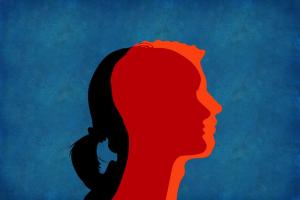
But let’s turn to the documents we do actually have. First, there is the Catechism.
Sexuality affects all aspects of the human person in the unity of his body and soul. It especially concerns affectivity, the capacity to love and to procreate, and in a more general way the aptitude for forming bonds of communion with others.
Everyone, man and woman, should acknowledge and accept his sexual identity. Physical, moral, and spiritual difference and complementarity are oriented towards the goods of marriage and the flourishing of family life. …
Each of the two sexes is an image of the power and tenderness of God, with equal dignity though in a different way.
—Catechism of the Catholic Church, §§2332-2333, 2335 (italics original)
What does this tell us about trans identities? At an obvious level, nothing; it doesn’t mention them. This is natural enough, given that the Catechism is an overview, and full details about exceptional cases aren’t always to be expected. The statement that every person “should acknowledge and accept his sexual identity” could be interpreted as meaning that trans identities aren’t valid or shouldn’t be embraced—but it could equally be understood as meaning the opposite. The anti-trans interpretation is only obvious if we start with the assumption that trans people aren’t accepting their sexual identities, which is circular reasoning.
Some people claim that trans identities are in some way an assault on the male-female paradigm set forth here and in Genesis. I don’t think that’s true. For one thing, intersex people exist; for another, most (though not all) trans identities are articulated precisely in terms of the male-female paradigm. It’s not an attack on the existence of a pattern to say there are exceptions, any more than it’s an attack on the existence of day and night to talk about twilight.
Et Cetera, Et Cetera, Et Cetera
And what else is there? Well, the only other thing I’ve found from the Holy See, after years of (admittedly casual) reading, is the passage from the Roman Rota cited in Part Five: “[W]hen there is a question of transsexuals … nothing prevents predominance from being assigned to the psychological sex [i.e., in modern parlance, gender identity] … ‘when there is a question of ordering one’s purely external and social life'”. In other words, things like clothes, names, and pronouns are things the individual may determine for themselves. Marriage and ordination, because they involve certain physical powers, “exceed the juridical capacity of the subject”; who we are in society does not.
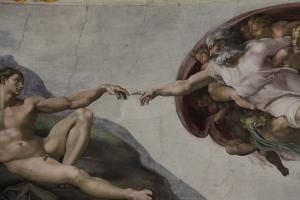
I also know of three dioceses—Arlington, Marquette, and Milwaukee—that have released pastoral and/or policy statements on trans issues in the last year or so. The Arlington statement makes at least some effort to acknowledge that it is asking a lot of trans people; however, even it contains flawed theological reasoning (the existence of the canonical judgment above is never so much as hinted at), and certain scientific statements that are extremely misleading or flat-out false (e.g., comparing puberty blockers to chemical castration, which implies that they are irreversible—when in fact the entire point of puberty blockers for trans or questioning teens is that they are reversible, and in fact were originally developed to treat precocious puberty).
These kinds of mistakes and omissions are incredibly irresponsible, and imply gross pastoral negligence on the part of these bishops. They have clearly made assumptions about what the sciences tell us about the human body and psyche, and then not bothered to check whether those assumptions are accurate before making them the basis of catechesis and pastoral policy!
A Better Source
Daniel Quinan, a canonist from the Archdiocese of St. Paul and Minneapolis who’s much more expert than me, offered a two-part analysis of the Milwaukee document a little over a month ago, over at Chris Damian’s Substack. Here are some of the highlights.
This bears repeating: gender confirmation procedures are often sought under the belief that the body is of fundamental significance for the human person. That is not a real point of disagreement. So while all of these things [in the introductory part of the Milwaukee document] about the human person are true, they don’t really matter any more in the context of this discussion than they would outside of it. … So if you think a deep-dive on [Thomism] is going to have some sort of game-changing influence on this debate, you’ve just implicitly admitted that you don’t really understand what you’re talking about.
The alleged immutability or changeability of human biological sex is properly a scientific question, which theological authority has no special competence to address. … One cannot simply “prooftext” from Genesis to end this conversation …
If a person actually reports struggling with dysphoria … then invoking “the acceptance of our bodies” does not prevent us from asking hard questions about treatment options, and applying the principle of double effect to an analysis of various medical or surgical procedures that are … expected to produce helpful results. Still less does it rule out the consideration of non-medical and non-surgical options …
We could have highlighted the fact that “the Catholic ethical tradition holds that destruction of a part or function of the body is morally acceptable only when it directly benefits the health of the person as a whole … [T]here is no consensus among Catholic moral theologians as to whether an adult who transitions is thereby departing from Catholic moral teaching.” We could have acknowledged the fact that “gender reassignment surgery … has never been mentioned in any official teaching document of the Church. … It is not mentioned in the Catechism of the Catholic Church nor in any statement by the Congregation for the Doctrine of the Faith.”
In order to “recognize only a person’s biological sex,” are employees going to be forced to ask an invasive question, when they are not certain? Are they even going to be allowed to believe the answer they are given, or are they going to demand medical proof? … And we haven’t even started to acknowledge the complexity that will inevitably get dragged into this, with modern trends in legal identification documents. … In my opinion, this is an absolutely awful, pastorally disastrous policy. … It’s something else entirely to universally prohibit even an option for discretionary flexibility, especially regarding something upon which (it bears repeating) the Church’s magisterium has in fact pronounced zero actual doctrinal teaching.
Something tells me nobody has really thought through what is going to happen if someday a socially “passing” trans man actually enters the women’s bathroom, as instructed.
Such a list [of diocesan-approved therapists and behavioral resources] must be publicly available—not locked behind a gatekeeper—so that the faithful have basic transparency about whose resources, education, and expertise is actually guiding these conversations behind closed doors. … The Church has now endured multiple decades of abuse scandals, directly tied to a lack of systemic transparency. … Vigilance in this regard is critical, lest harmful dynamics reappear in new contexts—or (in the context of conversion therapy) lest harmful, discredited, and abusive therapeutic practices be given a new foothold to operate quietly under the cover of ecclesiastical approval.
Yup.
A Matter of Conscience?
So what’s the upshot of all this?
Well, to begin with, it gives us—what we scarcely needed—yet another reason to be wary of our shepherds. I take no pleasure in saying this; but making scientifically baseless assertions about matters of which they repeatedly show themselves ignorant, and drawing theologically flawed or dubious conclusions from them, makes for damaging and abusive pastoral practice. They’re claiming to draw on Church teaching, but the teaching they’re claiming to draw on doesn’t exist. We have some premises available that we can build on, yes, but there is no explicit doctrine on transgender identities as such.
Moreover, the only thing we know reduces gender dysphoria (which can be severe enough to cause suicidal ideation) is transition. So even if everything in these diocesan documents were scientifically accurate—which again, it’s not—and the theological reasoning from those facts were far more scrupulous than it is, we’d still need to evaluate whether transition were permissible at the very least for people with severe dysphoria.
To me, the reasonable inference seems to be that, at least until the CDF formally addresses the matter, this may and should be treated as a matter of conscience. There are versions of “gender ideology” that are incompatible with Catholicism, yes, but being trans and pursuing transition doesn’t necessitate believing in them, and as far as I can tell most trans people don’t. Indeed, transition would make no sense if a person didn’t feel pretty strongly that the nature of their body was important.
Previous Post

February 28, 2022
With My Body, I Thee Worship, Part Five
Next Post
March 29, 2022 Rosary Meditations: Intro
Browse Our Archives
Select a Category abuse antifascism art bad Catholic celibacy chastity Church crucifixion culture war eros forgiveness gay gender homophobia ikons language liturgy peace poems politics Pope Francis prayer pro-life race recommendations reform repentance review sacraments saints satire scandal schism scripture sex suffering theology Uncategorized violence
Select a Month October 2026 September 2026 August 2026 July 2026 June 2026 May 2026 April 2026 March 2026 February 2026 January 2026 December 2025 November 2025 October 2025 September 2025 August 2025 July 2025 June 2025 May 2025 April 2025 March 2025 February 2025 January 2025 December 2024 November 2024 October 2024 September 2024 August 2024 July 2024 June 2024 May 2024 April 2024 March 2024 February 2024 January 2024 December 2023 November 2023 October 2023 September 2023 August 2023 July 2023 June 2023 May 2023 April 2023 March 2023 February 2023 January 2023 December 2022 November 2022 October 2022 September 2022 August 2022 July 2022 June 2022 May 2022 April 2022 March 2022 February 2022 January 2022 December 2021 November 2021 October 2021 September 2021 August 2021 July 2021 June 2021 May 2021 April 2021 March 2021 February 2021 January 2021 December 2020 November 2020 October 2020 September 2020 August 2020 July 2020 June 2020 May 2020 April 2020 March 2020 February 2020 January 2020 December 2019 November 2019 October 2019 September 2019 August 2019 July 2019
Follow Us!
TAKE THE
Religious Wisdom Quiz
What is the book of songs and prayers in the Bible called?
Select your answer to see how you score.
Genesis Psalms Proverbs Matthew
Related posts from Mudblood Catholic

The Sermon on the Mount, Part I: Matthew...

The Gospel of Matthew: Christ and Antichrist

John the Baptist and the Winnowing Fork: Matthew...

The Gospel of Matthew: The Coventry Carol
TRENDING AT PATHEOS Catholic

The Problem with False Prophets
Miller’s Station UMC| 10/18/26| Anchor Verse: Jeremiah 23: 1, 9-23 I...

Emotion in Early Christianity by Andrew Crislip
Andrew Crislip’s Emotion in Early Christianity examines an often overlooked dimension of...

16 Spiritual Touchstones for a More Grounded Life
After decades of spiritual study, here are 16 principles I try...

Catholic Evangelization: Sharing Your Faith Every Day
Welcome back to the Graceful Awakening mini-series called, “From Faith to Mission.” ...

The Pillar of the Boatmen: the Ancient Monument...
The Pillar of the Boatmen is a Romano-Gaulish sculpture that dates from...

In one sense walking into Westminster Abbey is like walking down the...
view all Catholic blogs
Ad-Free & Subscriber Log-In Subscription Support
- About Us
- 2026 Calendar
- Videos
- Podcasts
- Library of World Religions
- Faith In Media Tracker
- Advertise With Us
- Write for Us
- Privacy Policy
- Terms of Service
- Do Not Sell My Data
- Contact Us
- Radiant Digital
- Manage Newsletter Subscriptions
- Unsubscribe From Notifications
- Sitemap
Copyright 2008-2026, Patheos. All rights reserved.
Subscription Support Ad-Free & Subscriber Log-In
Follow Patheos