
BuddhistCatholicContemplativeEvangelicalGeneral ChristianHinduJewishLatter-day SaintMuslimNew VisionsProgressive Christian
Beliefs
- Buddhist
- Catholic
- Contemplative
- Evangelical
- General Christian
- Hindu
- Jewish
- Latter-day Saint
- More Voices
- Muslim
- New Visions
- Pagan
- Progressive Christian
Topics
- Religion News
- Food and Religion
- Sports and Religion
- Religious Art
- Religious Music and Entertainment
- Religious Events
- History and Religion
- Style and Religion
- Politics and Religion
- Women in Religion
- Recreation Outdoors and Religion
- Business Finance and Religion
- Careers Workplace and Religion
- Education and Religion
- Family Parenting and Religion
- Health Fitness and Religion
- Home and Religion
- Relationships and Religion
- Technology and Religion
- Travel and Religion
Columnists
- Buddhist Columnists
- Business Finance and Religion Columnists
- Careers Workplace and Religion Columnists
- Catholic Columnists
- Contemplative Columnists
- Education and Religion Columnists
- Evangelists Columnists
- Family Parenting and Religion Columnists
- General Christian Columnists
- Health Fitness and Religion Columnists
- Hindu Columnists
- History and Religion Columnists
- Home and Religion Columnists
- Jewish Columnists
- More Voices Columnists
- Latter Day Columnists
- Muslim Columnists
- New Visions Columnists
- Nonreligious Columnists
- Pagan Columnists
- Politics and Religion Columnists
- Progressive Columnists
- Recreation Outdoors and Religion Columnists
- Relationships and Religion Columnists
- Religion News Columnists
- Religious Art Columnists
- Religious Events Columnists
- Religious Music and Entertainment Columnists
- Sports and Religion Columnists
- Style and Religion Columnists
- Technology and Religion Columnists
- Travel and Religion Columnists
- Women in Religion Columnists
Resource Library
- 2026 Calendar
- Library of World Religions
- The 100 Most Holy Places on Earth
- Patheos Answers
- Podcasts
- Videos
- Faith Leaders Database
- Anglican Episcopalian
- Bahai
- Baptist
- Buddhism
- Christianity
- Confucianism
- Eastern Orthodoxy
- Hinduism
- Holiness and Pentecostal
- ISKCON
- Islam
- Judaism
- Lutheran
- Methodist
- The Church of Jesus Christ of Latter-day Saints
- New Age
- Paganism
- Presbytarian and Reformed
- Protestantism
- Religion Behind the Scenes
- Roman Catholic
- Scientology
- Shia Islam
- Sikhism
- Sufism
- Sunni Islam
- Taoism
- Zen
- See all religions
Research Tools
 Ad-Free & Subscriber Log-In Subscription Support
Ad-Free & Subscriber Log-In Subscription Support
Follow Patheos 

- Trending:
- Forgiveness
- |
- Marriage
- |
- Consciousness
- |
- Death Penalty
- |
- Election
- |
- Halloween

- Home
- Catholic
- With My Body, I Thee Worship, Part Five
With My Body, I Thee Worship, Part Five
Last updated on: March 26, 2022 at 5:58 pm by Gabriel Blanchard
With My Body, I Thee Worship, Part Five 2022-03-26T17:58:33-04:00 Gabriel Blanchard
Patheos Explore the world's faith through different perspectives on religion and spirituality! Patheos has the views of the prevalent religions and spiritualities of the world.
Go here for Parts One, Two, Three, and Four.
It’s been a mere month since the last time I wrote on this! Sorry there. Anyway.
An Exhaustive History of All Trans People and Issues
Obviously I’m not really offering that! No one could, and I’m less educated about trans issues than a lot of people I know. But I do want to make the point that, like intersex people, trans people actually have a long history—whatever self-appointed Christian culture warriors may say, being trans is not a new fad devised to destroy religion.
Now, the specific word transgender is fairly new (only a few decades old). Likewise, a lot of the ways people have talked about what gender is since, say, the 1950s are comparatively recent, and depend on certain concepts drawn from modern philosophy, especially modern feminism. But these words and ideas were brought in to discuss something that already existed, and was thought and talked about under different terms by other cultures.

Two of the most famous examples here are the hijra of South Asia and the “two-spirit” traditions of many Native American peoples. Hijra is a broad category, including intersex and transgender people, as well as eunuchs. They are a very ancient institution in South Asian culture, alluded to in the Kama Sutra, which dates at the latest to the third century. “Two-spirit” is another umbrella term for a lot of different gender-variant identities, all of which are understood in specific ways by the particular nations that use them (so, for instance, the Blackfoot a’yai-kik-ahsi isn’t just “the same thing” as the Ojibwe ikwekaazo, but both fall under the “two-spirit” umbrella, at least in theory). Not all nations treated two-spirit identities the same way, but a large number did at any rate recognize them and have a social role for them.
Again, and like intersexuality—which, for all the recent outcry against trans-affirming health care for teenagers, we’re quite happy to surgically eliminate in literal babies—being what we now call trans is not new. It’s a thing that has certainly existed, under various names, all over the world and for many hundreds of years. That doesn’t validate it, or invalidate it, but it does mean it’s wrong to dismiss it as a fad or a conspiracy.
In Western History
Okay, but what about the Church? She rebuked and corrected a lot of socially accepted conventions when she came into existence. Couldn’t that be why trans people were so invisible in western society until recently?
Well, it could, but I’ve had trouble finding evidence that it in fact was. Degrees of intersexuality were certainly recognized in the Medieval period, by both Jews and Christians, and this knowledge is reflected in both the Talmud and Catholic canon law; but of course intersexuality is more “objective” than trans identities.
Where things get really interesting is in stories of people like St. Marina the Monk, whose story is related in the Golden Legend. The story goes that she disguised herself as a man to be able to accompany her father when he retired to a monastery; after he died, she went on living as a monk, until a young woman in a neighboring village falsely claimed that Marina had impregnated her. The abbot, furious at his monk’s supposed transgression, made Marina care for the child and live in perpetual penance for breaking “his” vows. This lasted until Marina’s death, and when they came to wash the body, they discovered that she was female. Horror-stricken at their mistreatment, they venerated her as a saint for her unflinching patience, humility, and generosity.
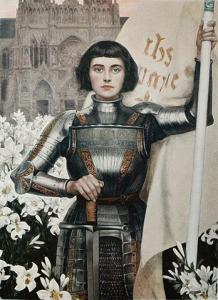
Except—wasn’t she lying to them all that time? Does this imply that presenting yourself as one gender when your physical sex is something else is okay? Well, yes. Strictly speaking, we already knew that, because St. Joan of Arc did it (in fact, it’s part of the reason she was wrongly condemned as a witch). But things get more interesting from here …
The Rotal Decision of 1975
In the early ’70s, an annulment case was brought before the Roman Rota due to the husband of the couple being (as was then the standard term) “transsexual.” The suit for nullity was ultimately refused, but the canonists handling the case made quite a startling assertion in their copious explanation of the case:
Because, when there is a question of transsexuals, a radical dissociation is found between psychological sex on the one hand and … somatic sex on the other hand, so that transsexuals feel like the soul of a woman in the body of a man or vice versa … nothing prevents predominance from being attributed to the psychological sex as regards those matters which do not exceed the juridical capacity of the subject. For the canonical teaching which, in cases of doubtful sexuality, recognized for the subject to make a definitive choice of sex, can be applied “when there is a question of ordering one’s purely external and social life, e.g., of wearing men’s or women’s clothing, of giving testimony in instruments, of the right to determine an heir.”
That’s a pretty remarkable statement! It seems to amount to saying that, while things like marriage (which, according to Catholic doctrine, depend on certain things that “exceed the juridical capacity” of any private person) may be biologically restricted, the way a person presents themselves to the world is and should be at their own discretion. This would presumably cover not only things like clothing, which the decision explicitly mentions, but name, and even—and yes, I know these aren’t in the Bible—pronouns.
Then again, this is canon law. What do the official teaching documents of the Church say about all this?
Previous Post

February 17, 2022
Lenten Reading for 2022
Next Post
March 21, 2022 With My Body, I Thee Worship: Part Six
Browse Our Archives
Select a Category abuse antifascism art bad Catholic celibacy chastity Church crucifixion culture war eros forgiveness gay gender homophobia ikons language liturgy peace poems politics Pope Francis prayer pro-life race recommendations reform repentance review sacraments saints satire scandal schism scripture sex suffering theology Uncategorized violence
Select a Month October 2026 September 2026 August 2026 July 2026 June 2026 May 2026 April 2026 March 2026 February 2026 January 2026 December 2025 November 2025 October 2025 September 2025 August 2025 July 2025 June 2025 May 2025 April 2025 March 2025 February 2025 January 2025 December 2024 November 2024 October 2024 September 2024 August 2024 July 2024 June 2024 May 2024 April 2024 March 2024 February 2024 January 2024 December 2023 November 2023 October 2023 September 2023 August 2023 July 2023 June 2023 May 2023 April 2023 March 2023 February 2023 January 2023 December 2022 November 2022 October 2022 September 2022 August 2022 July 2022 June 2022 May 2022 April 2022 March 2022 February 2022 January 2022 December 2021 November 2021 October 2021 September 2021 August 2021 July 2021 June 2021 May 2021 April 2021 March 2021 February 2021 January 2021 December 2020 November 2020 October 2020 September 2020 August 2020 July 2020 June 2020 May 2020 April 2020 March 2020 February 2020 January 2020 December 2019 November 2019 October 2019 September 2019 August 2019 July 2019
Follow Us!
TAKE THE
Religious Wisdom Quiz
True or False: Luke's Gospel is dedicated to someone named Theophilus.
Select your answer to see how you score.
FALSE TRUE
Related posts from Mudblood Catholic

The Sermon on the Mount, Part I: Matthew...

The Gospel of Matthew: Christ and Antichrist

John the Baptist and the Winnowing Fork: Matthew...

The Gospel of Matthew: The Coventry Carol
TRENDING AT PATHEOS Catholic

The Pillar of the Boatmen: the Ancient Monument...
The Pillar of the Boatmen is a Romano-Gaulish sculpture that dates from...

In one sense walking into Westminster Abbey is like walking down the...

'Super Scam Me' Exposes AI Jon Bon Jovi...
Leslie Pickett believed she was in a relationship with Jon Bon Jovi....

The Brazilian Remake of Kendricks' 'Flywheel' Opens in...
“Flywheel,” the story that launched the Kendrick Brothers’ filmmaking career is getting...

The Dangers of Gradual Accommodation (Winking at Sin)
Recently, the “law of gradualness” resurfaced during the opening of a weeklong,...

The Iron Gates and the Lion of the...
Yesterday, I didn't finish my report about, well, yesterday. So I'll...
view all Catholic blogs
Ad-Free & Subscriber Log-In Subscription Support
- About Us
- 2026 Calendar
- Videos
- Podcasts
- Library of World Religions
- Faith In Media Tracker
- Advertise With Us
- Write for Us
- Privacy Policy
- Terms of Service
- Do Not Sell My Data
- Contact Us
- Radiant Digital
- Manage Newsletter Subscriptions
- Unsubscribe From Notifications
- Sitemap
Copyright 2008-2026, Patheos. All rights reserved.
Subscription Support Ad-Free & Subscriber Log-In
Follow Patheos