
BuddhistCatholicContemplativeEvangelicalGeneral ChristianHinduJewishLatter-day SaintMuslimNew VisionsProgressive Christian
Beliefs
- Buddhist
- Catholic
- Contemplative
- Evangelical
- General Christian
- Hindu
- Jewish
- Latter-day Saint
- More Voices
- Muslim
- New Visions
- Pagan
- Progressive Christian
Topics
- Religion News
- Food and Religion
- Sports and Religion
- Religious Art
- Religious Music and Entertainment
- Religious Events
- History and Religion
- Style and Religion
- Politics and Religion
- Women in Religion
- Recreation Outdoors and Religion
- Business Finance and Religion
- Careers Workplace and Religion
- Education and Religion
- Family Parenting and Religion
- Health Fitness and Religion
- Home and Religion
- Relationships and Religion
- Technology and Religion
- Travel and Religion
Columnists
- Buddhist Columnists
- Business Finance and Religion Columnists
- Careers Workplace and Religion Columnists
- Catholic Columnists
- Contemplative Columnists
- Education and Religion Columnists
- Evangelists Columnists
- Family Parenting and Religion Columnists
- General Christian Columnists
- Health Fitness and Religion Columnists
- Hindu Columnists
- History and Religion Columnists
- Home and Religion Columnists
- Jewish Columnists
- More Voices Columnists
- Latter Day Columnists
- Muslim Columnists
- New Visions Columnists
- Nonreligious Columnists
- Pagan Columnists
- Politics and Religion Columnists
- Progressive Columnists
- Recreation Outdoors and Religion Columnists
- Relationships and Religion Columnists
- Religion News Columnists
- Religious Art Columnists
- Religious Events Columnists
- Religious Music and Entertainment Columnists
- Sports and Religion Columnists
- Style and Religion Columnists
- Technology and Religion Columnists
- Travel and Religion Columnists
- Women in Religion Columnists
Resource Library
- 2026 Calendar
- Library of World Religions
- The 100 Most Holy Places on Earth
- Patheos Answers
- Podcasts
- Videos
- Faith Leaders Database
- Anglican Episcopalian
- Bahai
- Baptist
- Buddhism
- Christianity
- Confucianism
- Eastern Orthodoxy
- Hinduism
- Holiness and Pentecostal
- ISKCON
- Islam
- Judaism
- Lutheran
- Methodist
- The Church of Jesus Christ of Latter-day Saints
- New Age
- Paganism
- Presbytarian and Reformed
- Protestantism
- Religion Behind the Scenes
- Roman Catholic
- Scientology
- Shia Islam
- Sikhism
- Sufism
- Sunni Islam
- Taoism
- Zen
- See all religions
Research Tools
 Ad-Free & Subscriber Log-In Subscription Support
Ad-Free & Subscriber Log-In Subscription Support
Follow Patheos 

- Trending:
- Forgiveness
- |
- Marriage
- |
- Consciousness
- |
- Death Penalty
- |
- Election
- |
- Halloween

- Home
- Catholic
- Another Preview
Another Preview
Last updated on: August 30, 2021 at 4:39 pm by Gabriel Blanchard
Another Preview 2021-08-30T16:39:52-04:00 Gabriel Blanchard
Patheos Explore the world's faith through different perspectives on religion and spirituality! Patheos has the views of the prevalent religions and spiritualities of the world.
August has been a busy month, and I haven’t had time to begin writing the new series I have planned. In lieu of that, here is another selection from the book I am currently working on, this time from the epilogue.
§§§
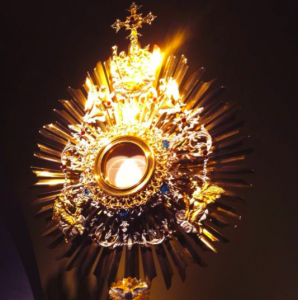
Our identity is in Christ, see. No, we don’t feel the need to bring that up with heterosexuals, but why would we? Straight people don’t invest our whole identity in our sexuality! I mean, yes, we talk pretty freely about our feelings for the opposite sex, or about whether our hobbies are manly enough, or about our relationships, but come on, why wouldn’t we talk about those things? Everybody does. It doesn’t mean we have a whole straight identity we filter everything through. Cisgender and heterosexual experience in art and entertainment, in politics and society, in thought and culture, that stuff’s just—I mean, it’s how most people are. It isn’t political to acknowledge that. Why do you have to make such a fuss about everything? Our use of words like “straight” is normal, come on! We shouldn’t be the ones who have to change! You’re the freaks!
We freaks have something to offer you, something you probably couldn’t get by yourselves: a hand down from that pedestal. Because the truth is, it has nothing to offer you. The feeling of being normal, and therefore the norm, is comforting, because it’s familiar. But it won’t actually furnish you with any insight or strength or joy or, well, anything worth having. We can tell you that, because we know what life is like without it. Queer people can perhaps see it better than anyone, since we usually spend at least part of our lives in the closet, and have a direct experience of the difference between what life is like when people think you’re straight and how different it often becomes when they find out you’re not. And we can see how insecure the pedestal seems to make you. When merely being aware of people who aren’t also on the pedestal makes you bullies in your bad moments, and patronizing in your better ones, I think the pedestal might be a bad place.
Just to be clear, I do not want to be on the pedestal either. That’s partly what I meant when I said I’m over pinning my hopes on getting straight Catholics to accept me; it was an attempt to participate vicariously in the pedestal, like I thought I was supposed to. But it doesn’t seem to make anybody better to be the center. And anyway, I already have problems. I don’t need those problems too. Gay problems form a full and demanding schedule; a thoroughgoing agenda, if you will.
When your identity and self-worth are, in any degree, tied up with being the norm by which other people should be defined, that is damaging for you, as well as your neighbor. It’s a shaky foundation, because it’s a false one. St. Bonaventure defined God as a circle whose center is everywhere and whose circumference is nowhere, and the book of Genesis defined man as the image, in Greek the ikon, of God. If every human being is an ikon of God then we are all at the center. When you try to redefine other people to bring them under your control, you are defacing one of the ikons that is meant to show you something about God that you can’t see in the mirror.
* * * * *
To my queer Christian audience, wondering about the title of this epilogue [“Queer Catholics—A Future”]: yes, we have a future. Of course we have a future! It took me so long to see it. I understand if it looks hopeless. I can only really speak from my own experience, but I’ve got a strong suspicion that nine-tenths of all our angst over exclusion and homophobia is rooted in the anxiety that they might be right. After all, we’ve all grown up in a culture (both secular and religious) that caters first and foremost to heterosexuals, that treats everything about them as the default—and left us feeling at fault for not being able to access that experience.
Breaking free of that mindset is hard. I still find it difficult to trust that God loves me, and likes me. And it’s a lot harder for those of us who have traditional beliefs about sexual mores, little though some of us may like to admit that. Because it is very threatening to admit that you hold beliefs which are easily twisted into something unhealthy, or worse, something that can be used as a tool to injure other people. But we won’t protect anybody by pretending that these risks aren’t there. We have to grapple with the possible costs of our convictions, for others as well as ourselves, if we want to take those convictions seriously; and we need to do it because the dangers are real, not because it looks better to non-Catholics. It might even be that many people cannot swallow this stuff, unless they have first received the promise that “if they drink any deadly thing it shall not hurt them.”
I’m surprisingly optimistic about our future as queer Christians, living our lives and taking care of each other. It’ll be rough. It always is. There is no one who can live any kind of Christian life without suffering; and being queer always means being different, and that can carry anguish with it even in accepting societies. But if there’s anything I have observed about LGBTQ people in the twenty years I’ve known I was one, it’s that we are tough. I don’t think I have ever met a queer person who did not strike me as a survivor.
There’s a famous story about St. Lawrence, a Roman deacon martyred in the third century. He was quietly approached by the prefect of Rome, who offered to leave him be if he handed over the treasure of the church; St. Lawrence asked for three days to collect it. The request was granted. Three days later, he appeared with a great mass of the city’s poor, telling the official that they were the Church’s treasure. Unamused, the prefect sentenced him to be roasted alive. At one point he reportedly told his executioners: Manduca, jam coctum est, which roughly translates to, “It’s done, have a bite.” That magnificent sass has exactly the same spirit I see in queer people. We get hurt and bloodied, and we smear the blood on our mouths like lipstick and hold our heads high. And I think God likes that.
Previous Post

August 11, 2021
Five Quick Takes
Next Post
September 11, 2021 9/11/2021
Browse Our Archives
Select a Category abuse antifascism art bad Catholic celibacy chastity Church crucifixion culture war eros forgiveness gay gender homophobia ikons language liturgy peace poems politics Pope Francis prayer pro-life race recommendations reform repentance review sacraments saints satire scandal schism scripture sex suffering theology Uncategorized violence
Select a Month October 2026 September 2026 August 2026 July 2026 June 2026 May 2026 April 2026 March 2026 February 2026 January 2026 December 2025 November 2025 October 2025 September 2025 August 2025 July 2025 June 2025 May 2025 April 2025 March 2025 February 2025 January 2025 December 2024 November 2024 October 2024 September 2024 August 2024 July 2024 June 2024 May 2024 April 2024 March 2024 February 2024 January 2024 December 2023 November 2023 October 2023 September 2023 August 2023 July 2023 June 2023 May 2023 April 2023 March 2023 February 2023 January 2023 December 2022 November 2022 October 2022 September 2022 August 2022 July 2022 June 2022 May 2022 April 2022 March 2022 February 2022 January 2022 December 2021 November 2021 October 2021 September 2021 August 2021 July 2021 June 2021 May 2021 April 2021 March 2021 February 2021 January 2021 December 2020 November 2020 October 2020 September 2020 August 2020 July 2020 June 2020 May 2020 April 2020 March 2020 February 2020 January 2020 December 2019 November 2019 October 2019 September 2019 August 2019 July 2019
Follow Us!
TAKE THE
Religious Wisdom Quiz
Who said, "He must increase, but I must decrease"?
Select your answer to see how you score.
John the Baptist Elijah Paul Peter
Related posts from Mudblood Catholic
With My Body, I Thee Worship: Part One

TRENDING AT PATHEOS Catholic

57th Dove Awards Honor Dolly Parton, Crown New...
On gospel music’s biggest night, the 57th annual GMA Dove Awards honored...

The First Eucharistic Controversy: Christ’s Real Presence
For Catholics, the Eucharist is the source and summit of the Christian...

What a Stop Sign Can Teach Us About...
How to Make a Decision When You Can't Hear God Main point:...

Archdiocese Hosts Military Marriage Retreat in Germany
RASTATT, Germany — The transient military lifestyle, with its frequent deployments and...

Nearly every morning, I make the drive to Detroit with my high-school-age...

The Real AI Story Is Adoption Without Trust
Artificial intelligence has crossed a political threshold. It is no longer a...
view all Catholic blogs
Ad-Free & Subscriber Log-In Subscription Support
- About Us
- 2026 Calendar
- Videos
- Podcasts
- Library of World Religions
- Faith In Media Tracker
- Advertise With Us
- Write for Us
- Privacy Policy
- Terms of Service
- Do Not Sell My Data
- Contact Us
- Radiant Digital
- Manage Newsletter Subscriptions
- Unsubscribe From Notifications
- Sitemap
Copyright 2008-2026, Patheos. All rights reserved.
Subscription Support Ad-Free & Subscriber Log-In
Follow Patheos